


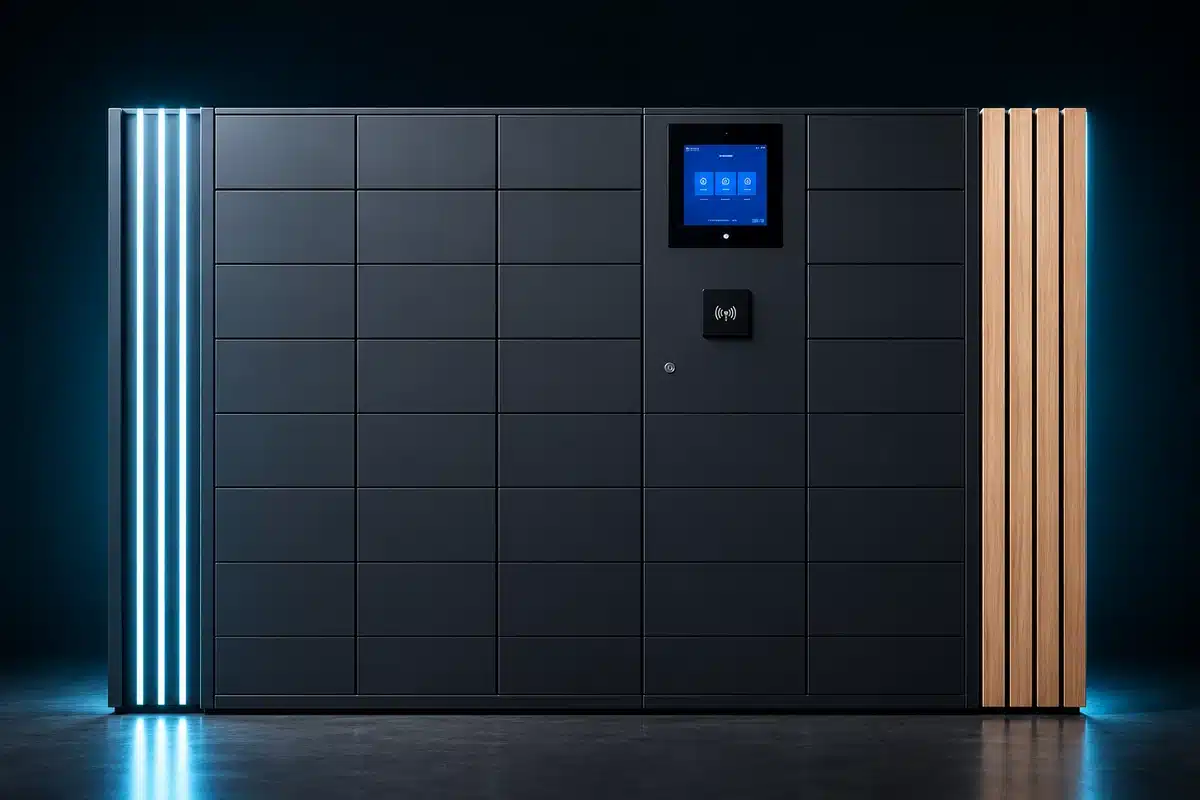





What Is Backroom Storage Overflow?
Backroom storage overflow occurs when the volume of items exceeds the available storage capacity and management capability of a space.
Common Environments Affected
Backroom storage overflow is common in:
- Event venues
- Stadiums and arenas
- Hotels and hospitality environments
- Offices and workplaces
- Parcel and delivery rooms
- Retail and logistics facilities
- Healthcare and education facilities
Typical Causes
Overflow often develops due to:
- High delivery volumes or seasonal demand
- Limited storage space
- Poor inventory visibility
- Inefficient storage layouts
- Delayed collection or distribution processes
- Lack of tracking and accountability
- Temporary storage becoming permanent
The Result
When overflow occurs, organisations often experience:
- Items stored in unplanned or unsafe areas
- Reduced organisation and operational efficiency
- Limited access and visibility of stored items
- Increased risk of loss, damage, or theft
- Fire safety and compliance concerns
- Delays for staff, visitors, and customers
- Poor user experience and workplace clutter
Why Backroom Storage Fails at Scale
1. Volume Exceeds Designed Capacity
Most storage areas are designed for:
- Average demand
- Predictable usage
But in reality:
- Demand spikes
- Volume fluctuates
- Peak periods overwhelm capacity
This leads to:
- Overflow into corridors and operational spaces
- Loss of structured storage
2. No Scalable Storage System
Backrooms typically rely on:
- Shelving
- Racks
- Open storage areas
These systems:
- Are static
- Cannot adapt to demand
- Lack scalability
As volume increases, organisation decreases.
3. Manual Organisation Breaks Down
Backroom storage depends on:
- Staff placing items correctly
- Staff remembering locations
- Manual sorting systems
At scale, this leads to:
- Misplaced items
- Inefficient storage use
- Increased retrieval times
4. Space Becomes Fragmented
As overflow increases:
- Items are placed wherever space is available
- Storage becomes unstructured
- Access routes become blocked
This creates:
- Inefficient layouts
- Reduced usable space
- Increased congestion
5. Retrieval Time Increases Rapidly
When storage becomes disorganised:
- Items are harder to locate
- Staff spend more time searching
- Delays increase
The more full the space becomes, the slower it operates.
6. No Real-Time Visibility
Backroom storage typically lacks:
- Tracking systems
- Digital records
- Real-time inventory visibility
This results in:
- Unknown item locations
- Duplicate handling
- Lost assets

The Hidden Impact of Storage Overflow
Safety Risk
Operational Inefficiency
Customer Experience Impact
Space Utilisation Decline
Why Traditional Fixes Don’t Work
Add More Shelving:
- Increases density
- Reduces accessibility
- Does not improve organisation
Expand Storage Space
- High cost
- Limited availability
- Delays the problem
Increase Staff
- Higher operational cost
- Does not improve system efficiency
Reorganise Periodically
- Temporary fix
- Quickly becomes disorganised again
The Core Problem: Unstructured Storage at Scale
Backroom storage fails because:
It is not designed as a system — it is just space.
At scale:
- Space fills unpredictably
- Organisation breaks down
- Efficiency collapses
The Scalable Solution: Structured, Automated Storage
To prevent overflow, storage must become:
- Structured
- Controlled
- Scalable
Smart Locker Systems
Smart lockers transform backroom storage into a controlled, high-efficiency system.
Structured compartments
- Every item has a defined space
- No overflow into unplanned areas
Controlled capacity
- Prevents overfilling
- Maintains organisation
Self-service access
- Reduces staff handling
- Faster storage and retrieval
Real-time tracking
- Know exactly where items are
- Eliminate lost assets
Optimised space usage
- Higher density without loss of access
- Better utilisation of available space
Staff Efficiency Increases
Real Operational Impact
With structured storage systems:
- Overflow is eliminated
- Retrieval times decrease significantly
- Staff efficiency improves
- Safety risks are reduced
- Space utilisation increases
See: Workplace Smart Lockers Solutions
Compare: Manual-security-handling-vs-automated-storage-systems
The Bottom Line
Backroom storage overflow is not just a space problem.
It is a system failure.
At scale:
- Volume increases
- Organisation breaks down
- Efficiency collapses
The solution is not more space.
It’s better systems for managing it.
The Vflex smart locker platform helps workplaces move away from unmanaged backroom storage by providing secure, digitally controlled access to personal items, parcels and shared assets.
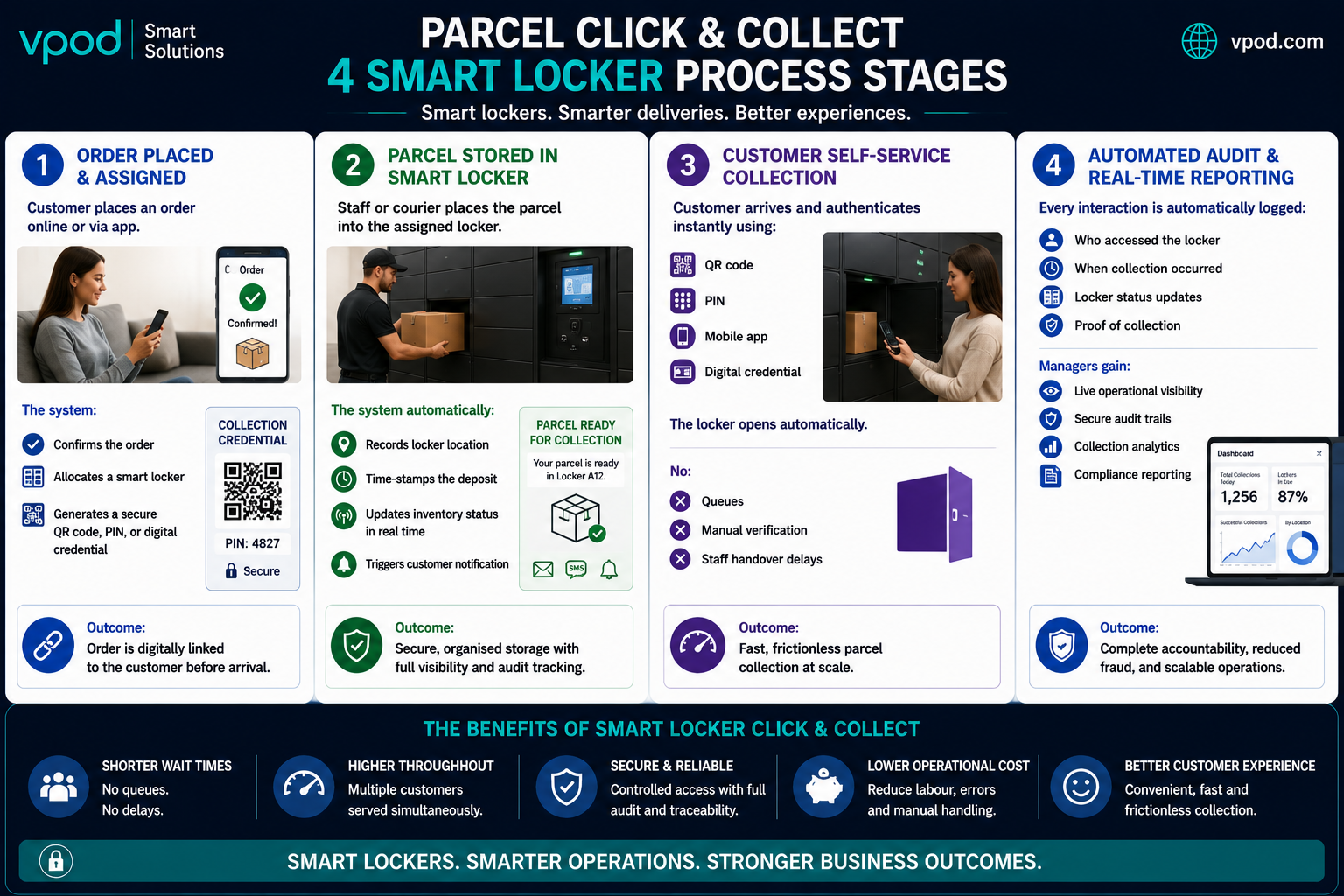
Parcel Locker 4 Step Process
Traditional Storage Fixes vs Smart Parcel Lockers





Mars Case Study
Mars Smart Locker System
Mars — Multi-Site Workplace Operations
Mars modernised visitor and contractor management across four UK sites using Vgreet and smart lockers. The deployment improved compliance, reduced manual processes, and created scalable infrastructure to support multi-region expansion and evolving enterprise requirements.
Related Solutions
Smart Backroom Storage Management
Operations Manager / Retail Operations Director & Security / Loss Prevention Manager
1. Operations Manager / Retail Operations Director
Areas of Responsibility
- Click & collect operations
- Customer flow and queue management
- Parcel collection efficiency
- Staffing and throughput performance
- Store or venue operational performance
- Order fulfilment and collection processes
Areas of Concern
- Peak-time congestion
- Long collection queues
- Collection speed and throughput
- Labour efficiency and staffing costs
- Customer satisfaction and retention
- Operational scalability across locations
Pain Points
- Staff overwhelmed during peak demand
- Slow manual parcel handovers
- Rising labour and operational costs
- Delays caused by searching for parcels
- Poor visibility across collection workflows
- Congestion impacting customer experience
- Inconsistent service levels between sites
Security / Loss Prevention Manager
Areas of Responsibility
- Secure parcel handoff
- Fraud prevention and access control
- Customer verification processes
- Asset and inventory protection
- Compliance and audit accountability
- Operational risk reduction
Areas of Concern
- Preventing fraudulent collections
- Unauthorized access to parcels
- Missing or stolen items
- Lack of auditability
- Secure chain of custody
- Maintaining control at scale
Pain Points
- Weak or inconsistent verification processes
- No real-time tracking visibility
- Missing audit trails during disputes
- Difficulty proving collection history
- High-pressure environments increasing risk
- Manual handovers creating errors and loss
- Limited accountability across teams and locations