Vflex Smart Rental Locker Brochure

Vflex Smart Locker Brochure

Vgreet Visitor Experience Brochure

Smart Asset Lockers for Secure Equipment Control and Asset Management

Shared equipment is expensive — and unmanaged access creates loss, downtime, and compliance risk. Whether you’re tracking IT devices, tools, radios, scanners, or sensitive assets, manual sign-out processes fail under real-world usage.

Vpod smart asset lockers automate the process of issuing, tracking, and returning shared equipment, providing secure access control, full audit trails, and clear accountability for every asset interaction.

Trusted by these customers

afas live logo
afas logo
colorado charlie logo
excel logo
flipout logo
health club jordaan logo
  • Deployed across 400+ locations in 25+ countries
  • Asset Loss Reduction ↓ 70–95% Smart lockers provide controlled access, user authentication and complete transaction tracking, dramatically reducing lost, misplaced or unaccounted-for assets.
  • IT & Facilities Workload Reduction ↓ 30–70% Automating equipment issue, return and collection removes manual handovers and administration.
  • Device Availability & Utilisation ↑ 20–50% Shared assets become easier to locate, access and return, increasing utilisation rates and reducing duplicate purchasing.

What Are Smart Asset Lockers?

what are smart asset lockers

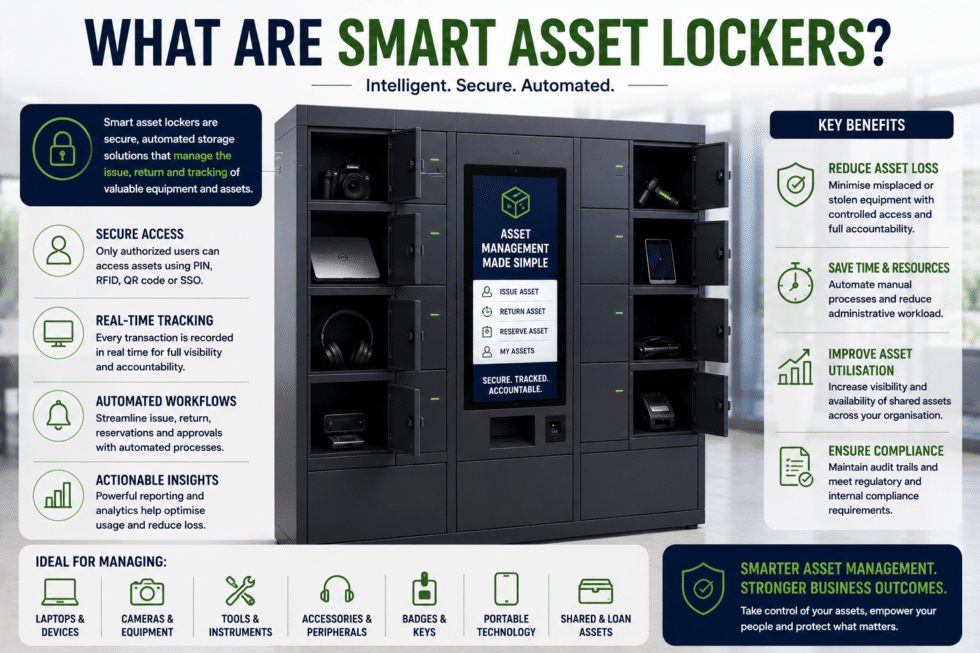
Smart asset lockers are secure, digitally managed storage systems that control the issuing, tracking, and return of shared equipment using PIN, RFID, or mobile access, with full audit trails and real-time visibility.

Designed for environments where equipment must be controlled and traceable, asset lockers automate access workflows and provide clear accountability for every asset interaction.

Guide ; To Workplace Asset Smart Lockers Efficiency & ROI


Executive Summary

KPI Typical Improvement
Asset Loss ↓ 70–95%
IT Service Desk Workload ↓ 30–70%
Manual Administration ↓ 50–90%
Device Availability ↑ 20–50%
Asset Utilisation ↑ 20–50%
Equipment Retrieval Time ↓ 70–95%
Audit Visibility 100% Tracking
Compliance Reporting 100% Digital Record

Bottom Line

Asset smart lockers help organisations achieve 70–95% reductions in lost assets, 30–70% lower IT administration workload, 20–50% better asset utilisation, and 100% transaction visibility, creating a more efficient, accountable and scalable asset management operation.

Why Traditional Asset Management Processes Fail

Assets go missing or are returned late

Without controlled issue and return processes, equipment is misplaced, held longer than intended, or never returned, reducing availability and increasing replacement cost.

Asset Logs are out of date
Manual logs are inaccurate or ignored

Paper sign-out sheets and spreadsheets rely on compliance that breaks down under real operational pressure, leading to incomplete or unreliable records.

→ Compare equipment rental desk vs locker-based systems

no visibility into usage patterns
No visibility into asset usage patterns

Teams lack insight into who is using assets, how often, or where bottlenecks occur, making it difficult to plan inventory or optimise utilisation.

Unclear accountability
Unclear accountability for shared equipment

When assets are shared informally, responsibility is diluted, increasing disputes and making it harder to investigate loss or misuse.

Compliance an audits fail
Compliance and audit requirements are difficult to meet

Regulated environments require traceable access records, but manual processes struggle to provide reliable, auditable evidence.

operational downtime cause by asset unavailability
Operational downtime caused by unavailable assets

Missing or late-returned equipment delays work, disrupts shifts, and impacts productivity across teams.

→ Compare staff cost vs locker automation ROI

How Asset Lockers for Asset Management Work

Secure user authentication

Secure User Authentication

Users access asset lockers using secure credentials such as PIN codes, access cards, or mobile authentication, ensuring only authorised personnel can issue or return equipment.

Role based access

Role-Based Access Control

Access permissions can be configured for teams, shifts, or individual users so that specific tools, devices, or equipment are only available to approved personnel.

Automated issue and return workflows

Automated Issue and Return Workflows


Shared equipment can be issued and returned through a self-service process, removing manual handover and allowing teams to access assets when needed.

time stamped activity logs

Time Stamped Activity Logs

Every locker interaction is automatically recorded, creating a digital history of who accessed an asset, when it was issued, and when it was returned.

Centralised visibility

Centralised Asset Visibility

A central management dashboard provides real-time visibility into asset availability, locker usage, and equipment access across sites.

a man using a vpod vflex smart locker

Asset Lockers for Different Equipment Types

Asset lockers provide a structured way to manage shared equipment through secure equipment management lockers with controlled access, tracking, and full usage visibility.

IT Asset Lockers

IT asset lockers provide secure storage and automated tracking for laptops, tablets, handheld devices, and mobile equipment used by employees or field teams. IT Directors use asset lockers to maintain control, auditability, and visibility across shared IT assets.

Tool Control Lockers

Tool control lockers ensure tools are issued and returned with full accountability, reducing loss and improving availability across maintenance or engineering teams. Operations Directors use these systems to reduce downtime and maintain consistent equipment availability across sites.

Equipment Lockers

Equipment lockers manage radios, scanners, safety equipment, and operational devices used across shifts, ensuring assets remain available and traceable. Facilities Managers use asset lockers to maintain organised, controlled storage and reduce asset loss across shared environments.

See How This Locker Solution Works in Practice

Watch short walkthroughs showing how this locker solution is used for real-world workflows, from access and handover to day-to-day operation.

Asset Management Outcomes with Asset Lockers

Smart Asset Locker Impact

Asset Smart Locker Outcome & Efficiency Numbers

Outcome Area Typical Improvement Operational Outcome
Traceable Asset Usage 100% Visibility Every asset transaction is recorded, searchable and reportable
Manual Logs ↓ 70–95% Eliminates paper logs, spreadsheets and manual data entry
Automated Audit Trails ↓ 80–100% Audit Preparation Time Instant access to complete asset history and chain of custody
Downtime Waiting for Equipment ↓ 20–60% Faster access to tools, devices and shared assets
Higher Asset Availability ↑ 20–50% More assets available when and where needed
Compliance Risk ↓ 50–90% Reduced policy breaches and audit failures
Auditable Access Control 100% User Verification Every access event linked to an authorised user
Asset Misuse ↓ 60–90% Reduced unauthorised use, damage and loss
Clear Accountability for Every User 100% Accountability Every issue, return and access event tied to a named individual
Operational Problem
Outcome with Asset Lockers
Missing equipment
Traceable asset usage 100% asset traceability
Manual logs
Automated audit trails 80–100% faster audits
Downtime waiting for equipment
Higher asset availability 20–50% higher asset availability
Compliance risk
Auditable access control 100% auditable access control
Asset misuse
Clear accountability for every user 100% user accountability
Reduced asset Loss
Reduced asset loss and shrink

Controlled access and traceable usage significantly reduce misplaced, lost, or unreturned equipment, lowering replacement and write-off costs.

higher asset uptime
Higher asset availability and uptime

Assets are returned on time and remain in circulation, ensuring tools, devices, and equipment are available when teams need them.

faster audit and incident control
Faster audits and incident resolution

Time-stamped access records make it easy to investigate issues, support audits, and resolve disputes without manual data gathering.

clear accountability
Clear accountability across teams and shifts

Every issue and return is linked to a specific user, removing ambiguity and improving responsibility for shared assets.

improved compliance
Improved compliance in regulated environments

Auditable access control supports compliance with internal policies and external regulatory requirements.

better insight and planning
Better insight for asset planning and optimisation

Usage data highlights demand patterns, helping organisations right-size inventory and reduce unnecessary purchases.

Guide: To Smarter Locker Efficiency

Smart Locker ROI Numbers for Asset Management

ROI Area Typical Improvement Business Impact
Asset Loss Reduction ↓ 50–90% Fewer lost, stolen or misplaced assets
Time Spent Managing Assets ↓ 35–80% Less administration and manual tracking
Asset Search Time ↓ 50–90% Faster location and retrieval of equipment
Asset Utilisation ↑ 15–50% More value from existing assets
Equipment Availability ↑ 20–60% Assets available when needed
Issue & Return Time ↓ 35–75% Faster access and return workflows
Manual Record Keeping ↓ 70–95% Reduced paperwork and spreadsheets
Audit Preparation Time ↓ 50–90% Faster compliance reporting
Compliance Administration ↓ 40–80% Lower governance overhead
Asset Misuse ↓ 50–90% Improved accountability and control
Equipment Downtime ↓ 25–60% Fewer delays caused by unavailable assets
Replacement Purchasing ↓ 20–50% Reduced duplicate purchases
Inventory Accuracy ↑ 90–100% Real-time asset visibility
Staff Productivity ↑ 20–40% More time spent on core tasks
Accountability 100% Traceability Every transaction linked to a user

Asset Lockers as Part of Operational Infrastructure

Asset control is not an isolated process — it forms part of a wider operational and technology infrastructure that governs how equipment is issued, tracked, and managed across teams and locations.

Smart asset lockers integrate with existing systems to provide controlled, auditable workflows for physical asset management.

Operational System Role in Asset Management
Access control systems Manage user authentication and permissions
Workforce management systems Align asset access with shifts, roles, and responsibilities
IT asset management (ITAM) platforms Track device lifecycle, allocation, and ownership
Smart asset lockers Control physical access, issue, and return of equipment

By connecting asset lockers to these systems, organisations can:

  • Automate equipment access based on user roles and schedules

  • Enforce return policies without manual intervention

  • Maintain real-time visibility of asset location and availability

  • Standardise asset control processes across sites and teams

This allows organisations to manage physical assets with the same level of control, visibility, and governance as digital systems.

→ Compare smart lockers vs mobile storage

Explore more real world examples of our smart lockers transforming spaces and workflows across a variety of industries

Who this is for

it directors
IT Directors
  • Maintain secure, auditable control over shared IT devices and equipment
  • Reduce reliance on manual sign-out processes and spreadsheets
  • Support compliance and incident investigation with reliable access records

Explore IT Asset Solutions

Operations Directors Leisure Clubs
Operations Directors
  • Ensure critical tools and equipment are available when needed
  • Reduce downtime caused by missing or late-returned assets
  • Standardise asset control processes across teams and sites

Explore Operations Asset Control Solutions

facilities managers leisure
Facilities Managers
  • Improve accountability for shared equipment and resources
  • Reduce loss, misuse, and informal storage of assets
  • Maintain organised, predictable asset storage without manual oversight

Explore Facilities Asset Locker Solutions

Guide: To Pain Points Smart Lockers Remove

Typical Financial ROI

Financial Area Typical Annual Saving
Labour Savings £15,000 – £150,000+
Reduced Asset Loss £10,000 – £100,000+
Lower Replacement Costs £5,000 – £50,000+
Audit & Compliance Savings £5,000 – £40,000+
Productivity Improvements £20,000 – £250,000+
Downtime Reduction £10,000 – £200,000+

Smart Asset Locker Systems for Equipment Tracking and Control

See how asset lockers automate equipment handovers, track usage, and provide full audit trails for secure, accountable asset management across workplaces and operational environments.

Manual Asset Logs vs Asset Lockers

Manual Asset Logs
Paper or spreadsheet tracking
Informal issue processes
Missing or unreturned equipment
Manual audits and reconciliation
Unclear accountability across teams
Smart Asset Lockers
Automated digital audit trails
Controlled assets access workflows
Fully traceable asset history
Real-time reporting and visibility
User-linked asset access and accountability

Control and Track Shared Assets with Smart Lockers

See how smart asset lockers help organisations control equipment access, reduce asset loss, and maintain reliable availability across teams and sites.

24/7

Support