Early arrivals
Travelers arrive from overnight journeys before beds are ready, concentrating storage demand around reception.


We design and deliver integrated systems for streamlined check-ins, secure storage, and enhanced visitor management. Our trusted partner network and focus on sustainability, data security, and customer success drives us to provide the most effective and user-friendly solutions.


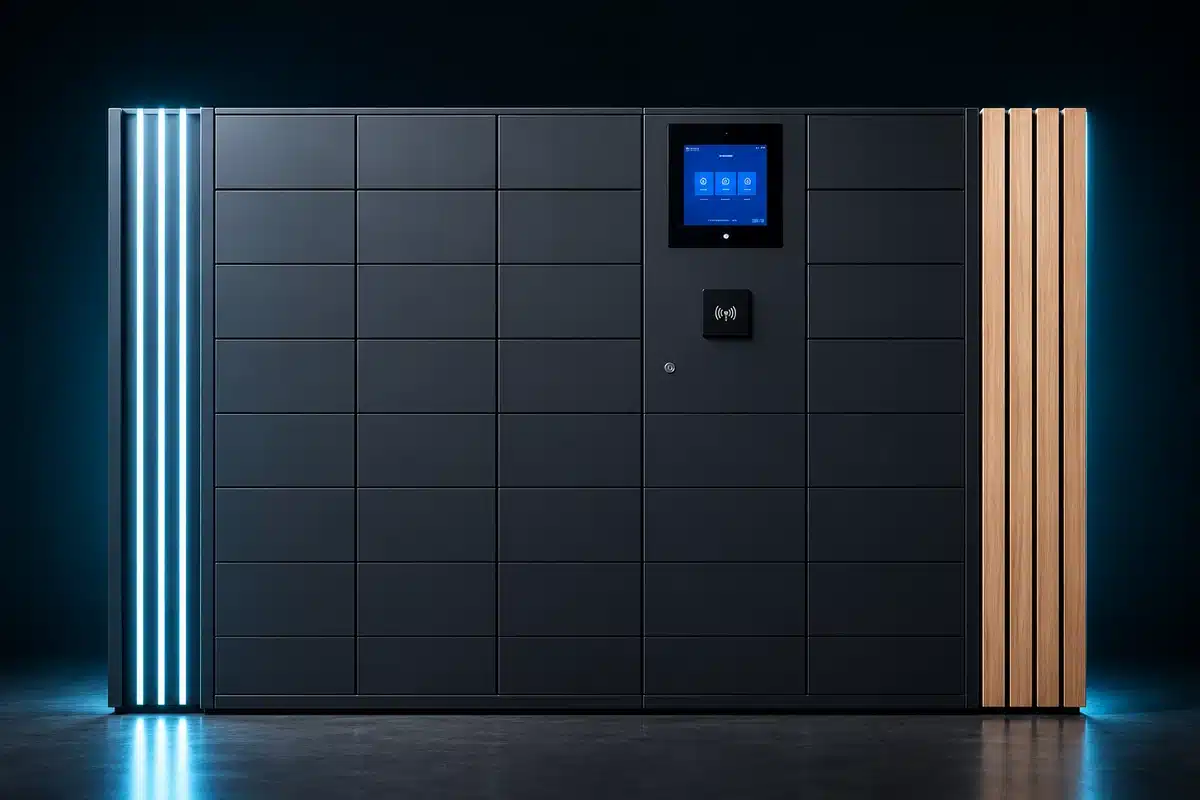




We design and deliver integrated systems for streamlined check-ins, secure storage, and enhanced visitor management. Our trusted partner network and focus on sustainability, data security, and customer success drives us to provide the most effective and user-friendly solutions.
We design and deliver integrated systems for streamlined check-ins, secure storage, and enhanced visitor management. Our trusted partner network and focus on sustainability, data security, and customer success drives us to provide the most effective and user-friendly solutions.
Hostels & shared accommodation
Keep backpacks out of communal spaces, reduce reception handling and give travelers independent access before check-in, after checkout and throughout their stay.

The hostel operating environment
This page addresses how storage operates inside hostels. Locker hardware and product specifications remain on the dedicated Luggage Lockers solution page.
Travelers arrive from overnight journeys before beds are ready, concentrating storage demand around reception.
Backpacks left in dorms, corridors and lounges increase risk, clutter and guest anxiety.
Every manual deposit and retrieval interrupts check-in, inquiries and core guest support.
Frequent arrivals and departures create constant handling that informal storage rooms cannot scale.
Festivals, holidays and group travel can push storage beyond normal capacity within hours.
Guests need secure storage after checkout without being tied to reception opening or staffing levels.

Protect the social spaces
Hostels depend on welcoming, uncluttered communal areas and small teams that stay available to guests. Self-service storage moves repetitive handling away from reception while giving travelers secure individual access.
A seven-step guest journey
A simple self-service flow designed for international travelers, short stays and round-the-clock movement.
Before check-in or after checkout.
Matched to daypack, backpack or case.
Using the configured guest journey.
The selected door opens automatically.
PIN, QR or configured access method.
No dependency on reception hours.
A fast, recorded completion.
Configured by hostel model
Capacity, access, compartment mix and the commercial approach should follow the property—not a standard specification.
High volumes arriving from airports and stations throughout the day.
Large parties arriving and leaving within narrow windows.
Travelers carrying devices and belongings that need secure access over longer periods.
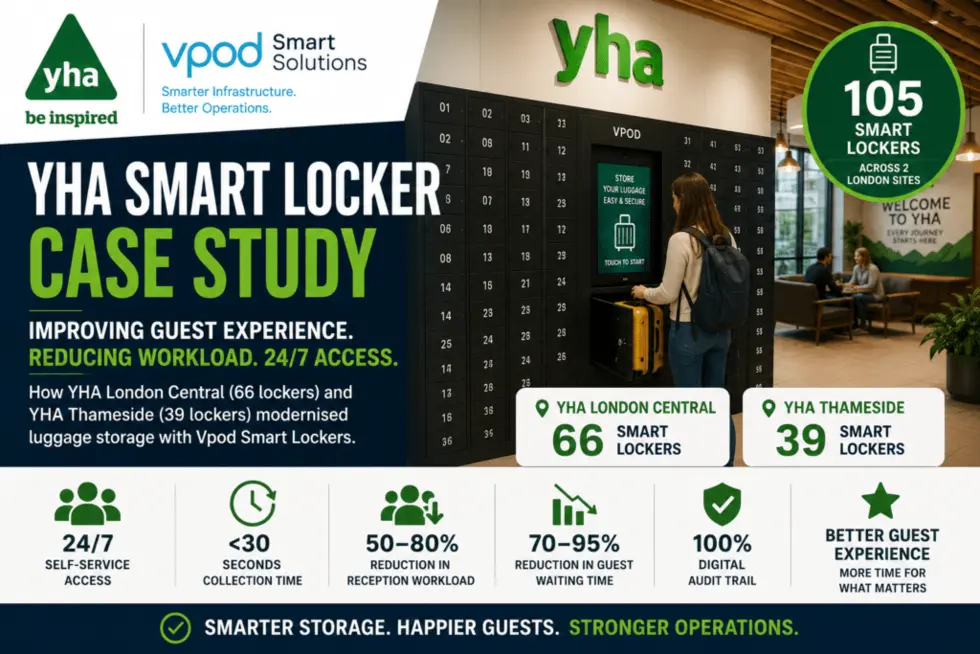
Featured hostel evidence
YHA London Central and Thameside replaced reception-led bag handling with secure self-service access, giving travelers more flexibility while improving operational visibility.
Build the business case
Move from operational pressure to evidence, comparison and commercial modeling without duplicating the solution page.
Understand why informal storage becomes harder to control as occupancy, turnover and shared access increase.
Review deployment evidence →Compare staff dependency, access hours, transaction records and guest convenience.
Compare the approaches →Estimate how demand, pricing, utilization and the commercial model affect the opportunity.
Calculate hostel potential →Operational comparison
A hostel-operating view focused on staff time, shared spaces and the traveler journey.
One platform across the hostel estate
Configure compartment sizes, access, pricing and capacity for each property while managing usage and availability through a central platform.
Explore the Vpod platform →For hostel decision-makers
Connect the industry journey to role-specific priorities without competing with the Hostel Managers persona page.
Protect guest experience, reduce reception interruptions and keep shared areas organized.
Explore the Hostel Manager view →Standardize service, capacity and performance across one site or a wider hostel estate.
Explore operations priorities →Evaluate utilization, pricing, ancillary revenue and eligible capex-free deployment.
Model the commercial opportunity →Discuss your hostel environment
Share your bed count, arrival pattern, available space and commercial goals. Vpod will recommend the right workflow, capacity and deployment model.