Assess demand
Validate visitor need, footfall patterns, dwell time, seasonality and existing storage friction.



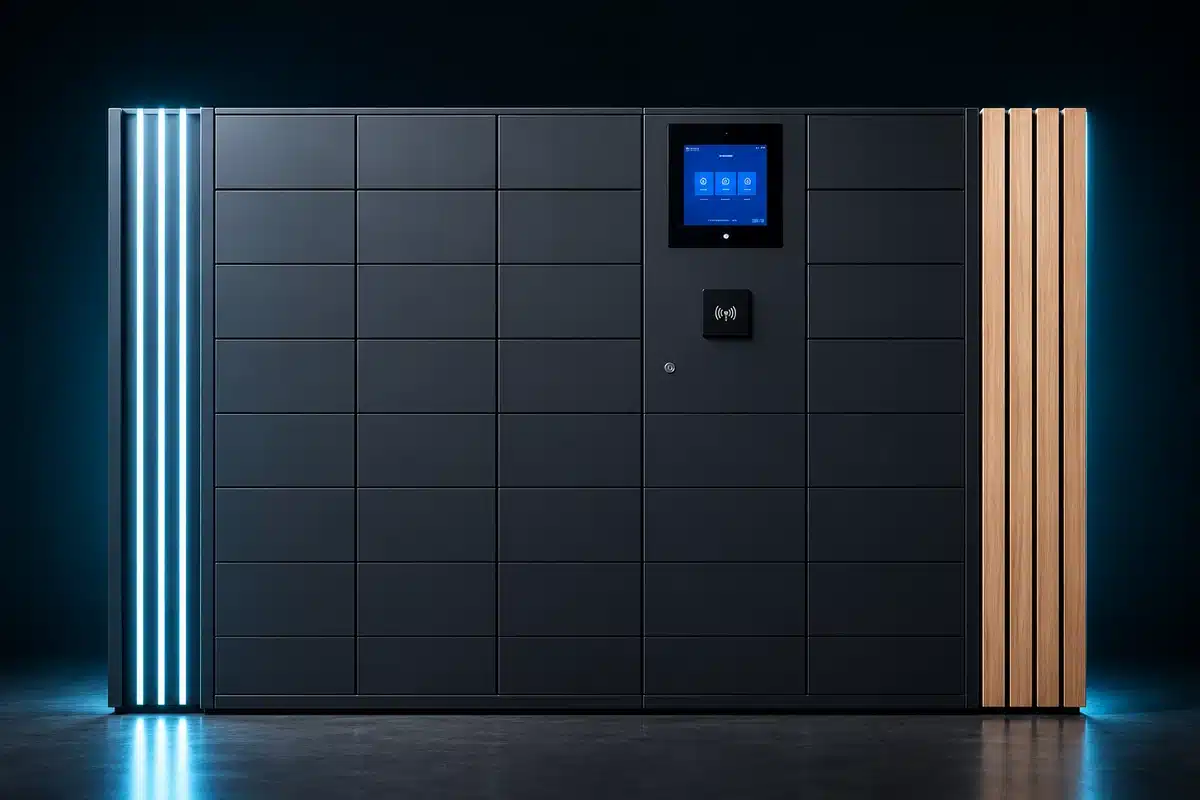
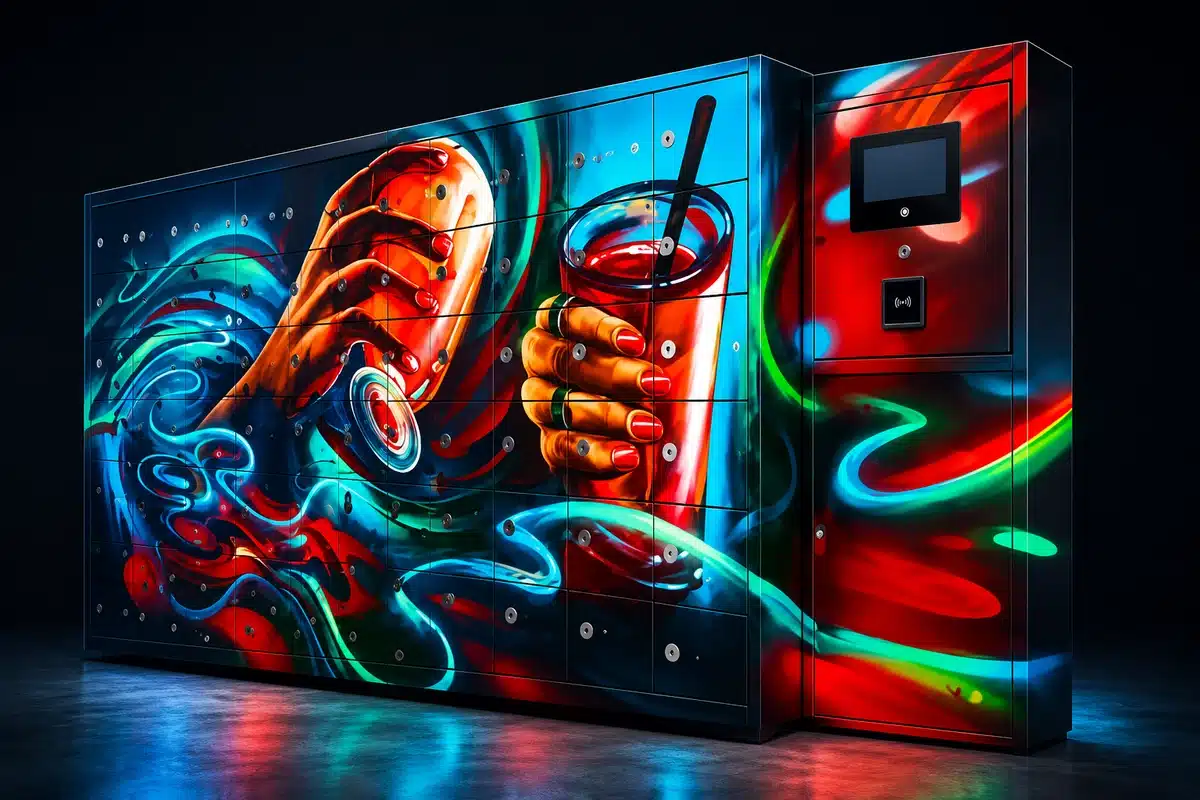

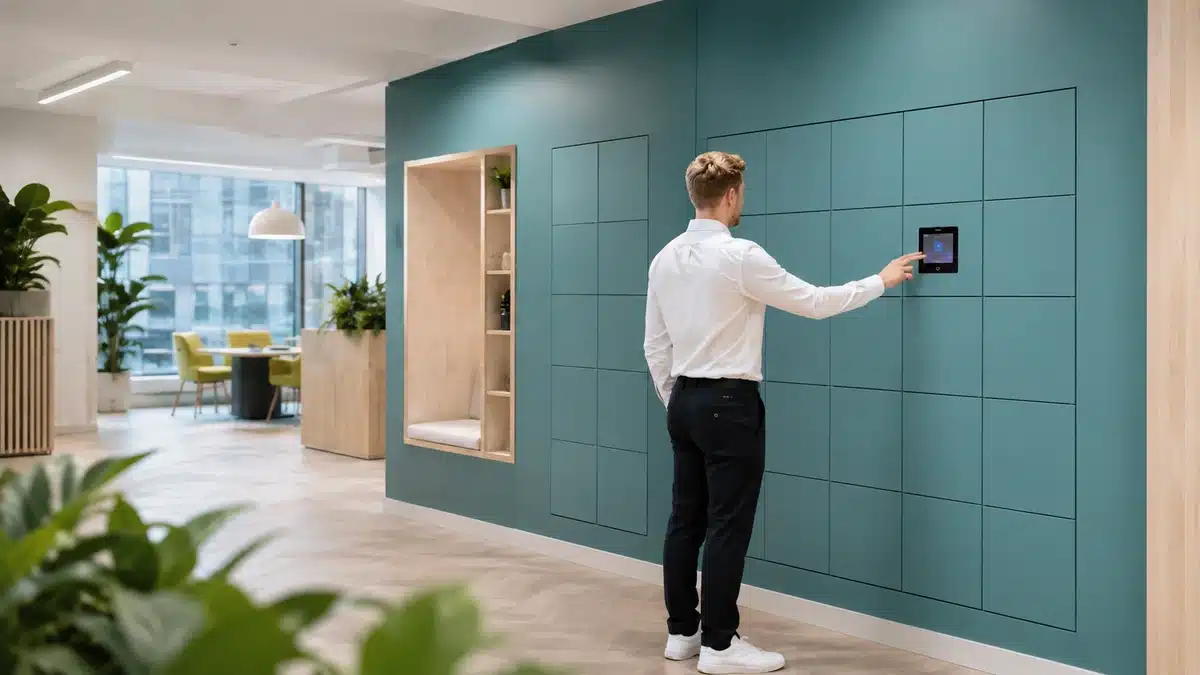

We design and deliver integrated systems for streamlined check-ins, secure storage, and enhanced visitor management. Our trusted partner network and focus on sustainability, data security, and customer success drives us to provide the most effective and user-friendly solutions.
We design and deliver integrated systems for streamlined check-ins, secure storage, and enhanced visitor management. Our trusted partner network and focus on sustainability, data security, and customer success drives us to provide the most effective and user-friendly solutions.

We design and deliver integrated systems for streamlined check-ins, secure storage, and enhanced visitor management. Our trusted partner network and focus on sustainability, data security, and customer success drives us to provide the most effective and user-friendly solutions.
Vpod buyer’s guide
Explore how a shared-revenue model can turn convenient, self-service storage into a managed commercial service—without relying on assumptions about whether it fits your site.
The commercial model
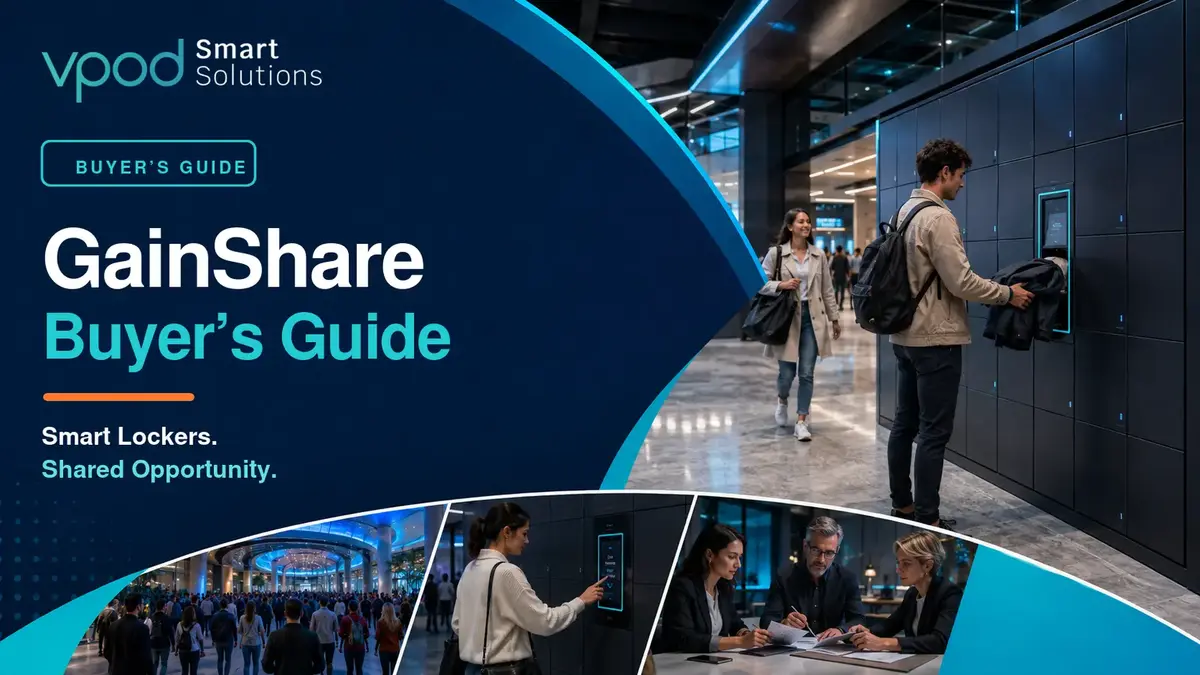
GainShare smart lockers for venues provide a commercial route for suitable locations where paid-for smart lockers can serve a genuine visitor need. Rather than treating lockers only as a capital purchase, the parties agree how the service will be deployed, operated and how eligible revenue will be shared.
The exact model is site-specific. Demand, location, capacity, pricing, responsibilities and contract terms should be assessed before any commitment is made.
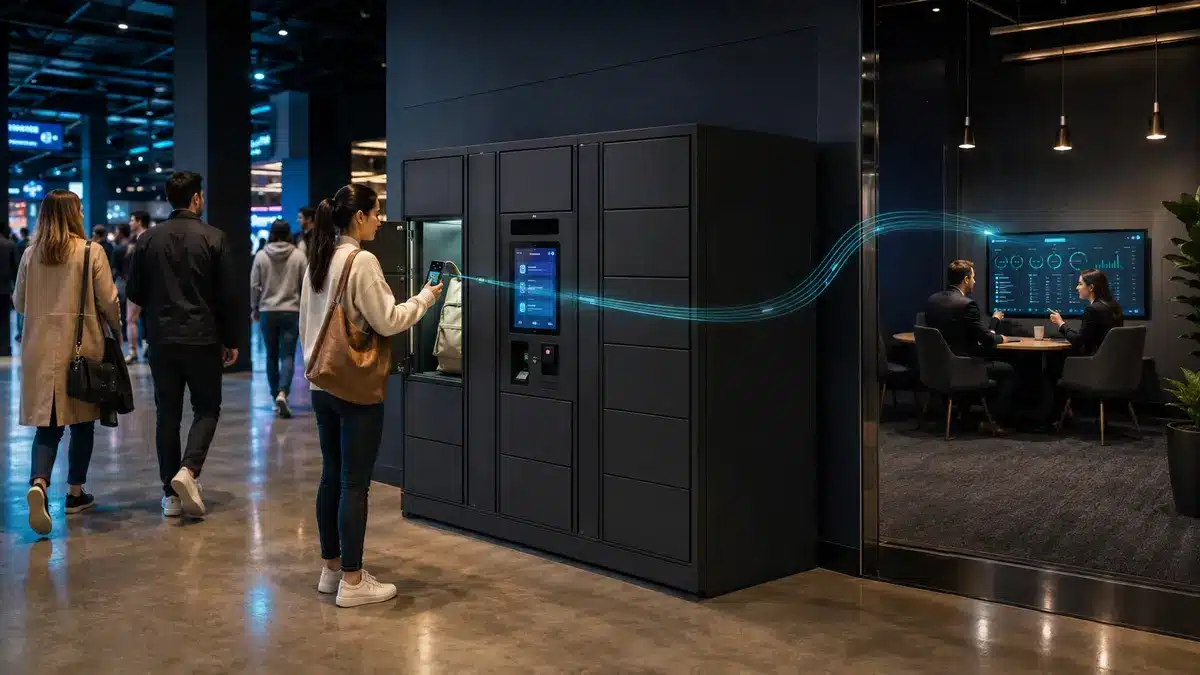
Validate visitor need, footfall patterns, dwell time, seasonality and existing storage friction.
Match locker mix, capacity, placement, pricing and the customer journey to the location.
Define installation, promotion, payments, support, maintenance, reporting and governance.
Use agreed performance data to review occupancy, revenue, customer use and service health.
Buyer fit
A strong opportunity begins with a real storage need—not simply available floor space. The guide helps buyers test the evidence behind the proposal.
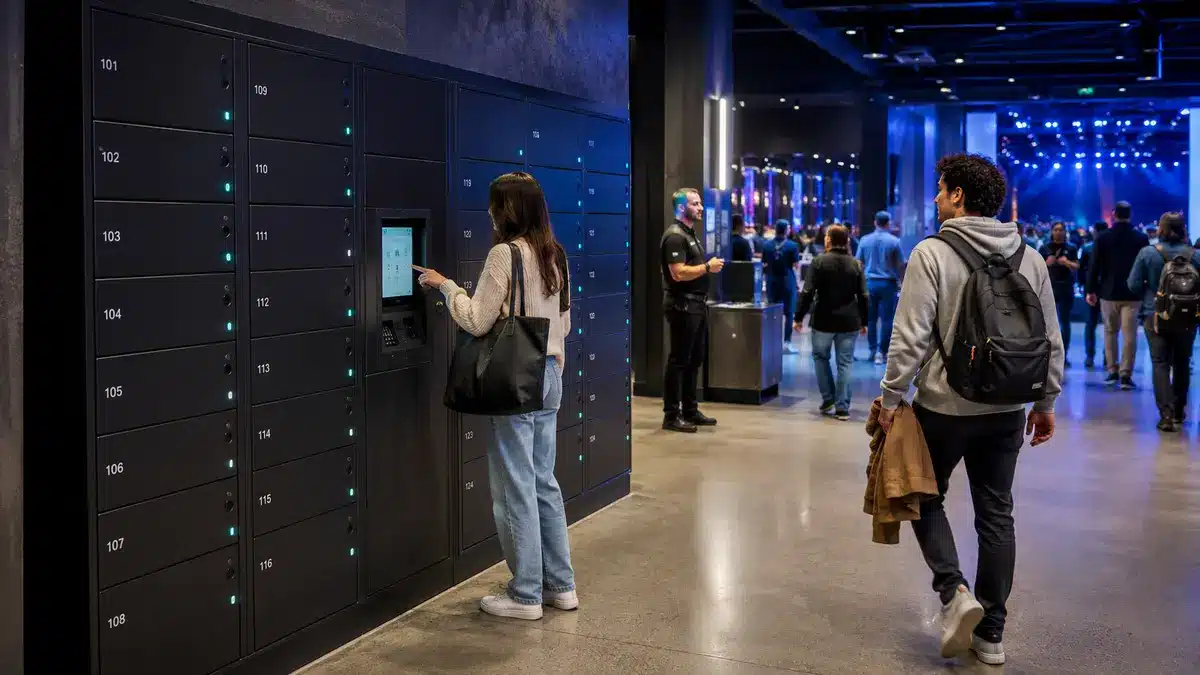
Visitors regularly carry bags, coats, equipment or valuables they would prefer to store.
The lockers can be visible, convenient and integrated into the arrival or activity journey.
Users can understand, pay for and access storage through a clear self-service experience.
Both parties can support agreed service, escalation, maintenance and performance processes.
GainShare suitability and commercial results are not guaranteed. Vpod assesses each proposed deployment individually.
Commercial decision
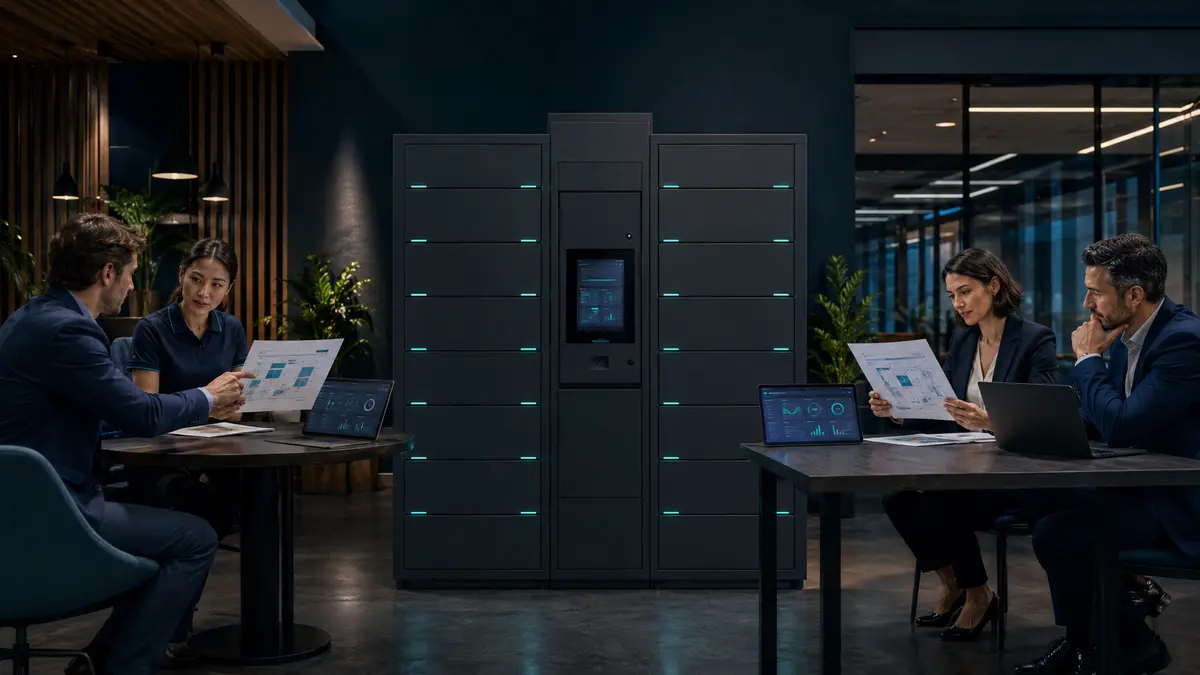
Neither route is automatically better. The right choice depends on strategic priorities, available capital, expected demand and the desired allocation of responsibilities. Use the Vpod GainShare Calculator to explore the site-specific commercial opportunity.
| Decision area | GainShare route | Direct purchase route |
|---|---|---|
| Commercial structure | Revenue-sharing terms agreed for the site | Buyer funds and owns the agreed solution |
| Upfront investment | Defined by the approved GainShare proposal | Capital or financed purchase is usually required |
| Control and flexibility | Governed by the agreement and shared operating model | Typically gives the buyer greater direct commercial control |
| Performance exposure | Revenue outcome depends on site performance and agreed terms | Buyer retains the financial effect of performance |
| Best starting point | Evidence-led site and opportunity assessment | Requirements, solution design and total-cost assessment |
Buyer due diligence
Use these prompts alongside the guide to make the commercial and operational responsibilities explicit.
Open the complete GainShare guide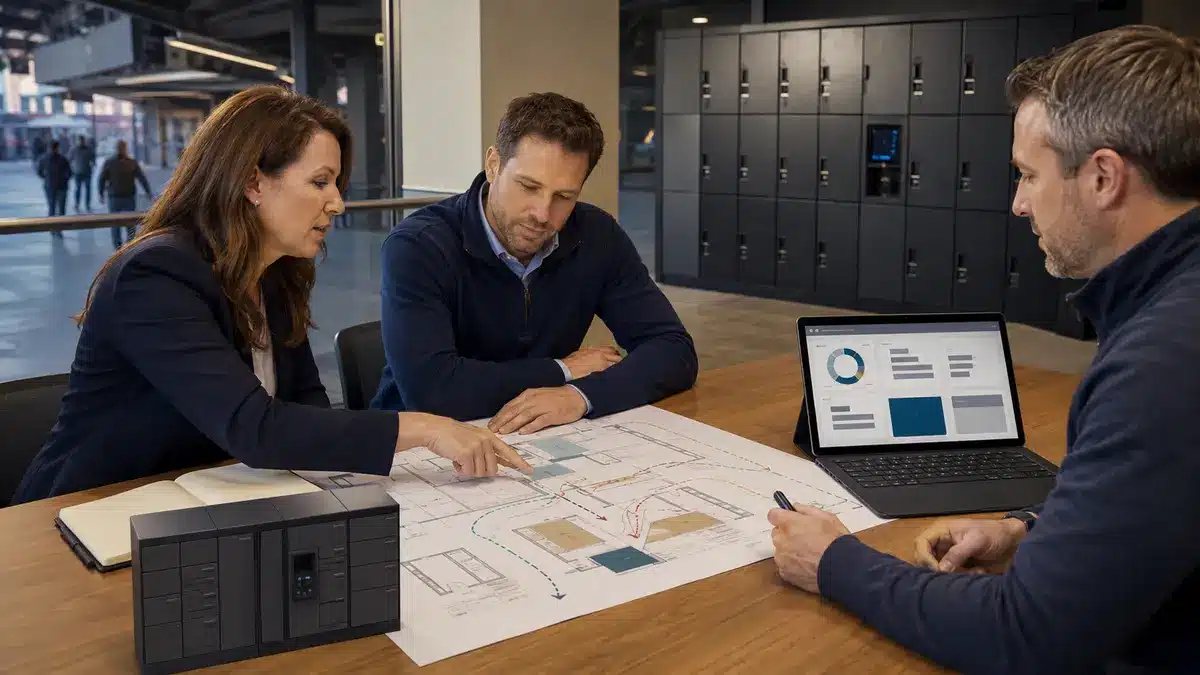
Evidence: What demand, footfall and use assumptions support the opportunity?
Economics: How are prices, payment costs, eligible revenue and the share calculated?
Responsibilities: Who owns installation, power, connectivity, promotion, support and maintenance?
Technology: What locker management software, payment journey, reporting and integrations are included?
Governance: How are performance, service levels, changes, data and escalations reviewed?
Lifecycle: What are the contract term, renewal, relocation, expansion and exit provisions?
Connected smart locker capability
A viable service also depends on the right hardware, software, payment journey, support and operational design. Explore how Vpod applies connected locker technology across relevant environments.
Your next step
Download the guide, then speak with Vpod about your location, audience and operational requirements.