Physical enclosure
Cabinet material, hinges, fixings, door fit, lock behaviour, location, surveillance and resistance appropriate to the stored items and public exposure.


We design and deliver integrated systems for streamlined check-ins, secure storage, and enhanced visitor management. Our trusted partner network and focus on sustainability, data security, and customer success drives us to provide the most effective and user-friendly solutions.


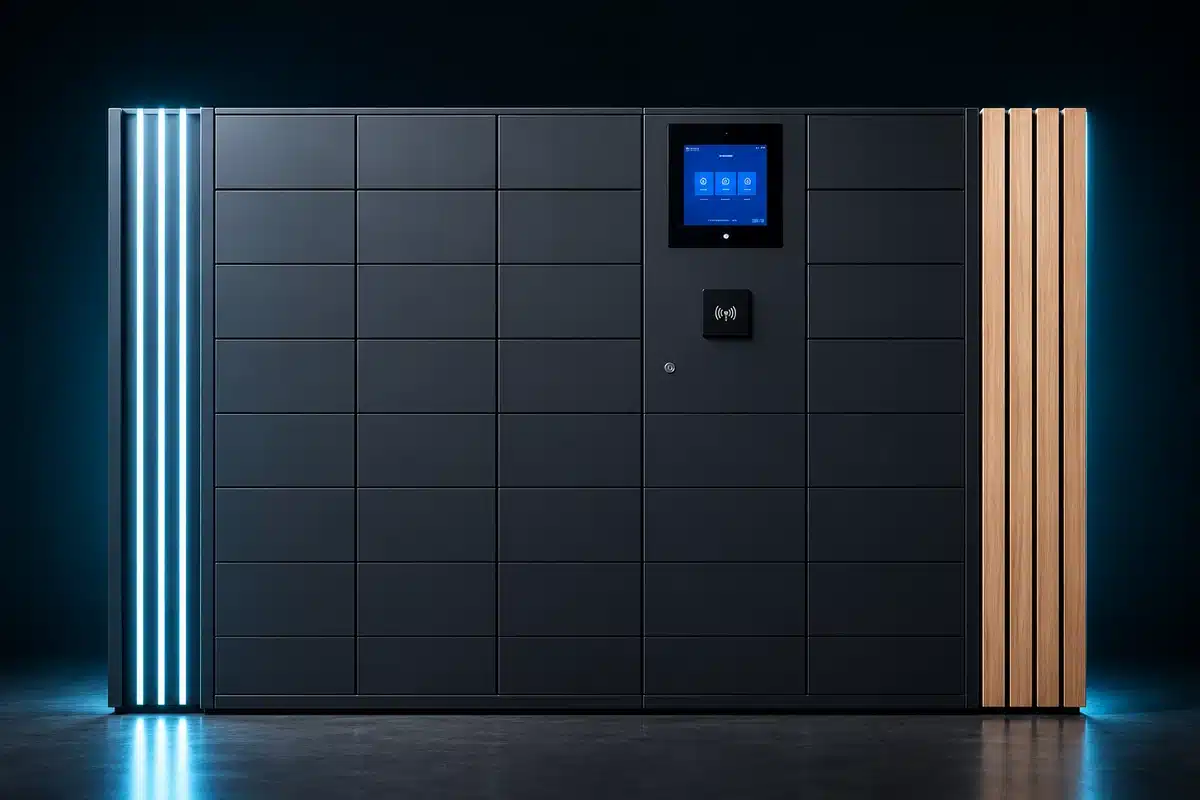




We design and deliver integrated systems for streamlined check-ins, secure storage, and enhanced visitor management. Our trusted partner network and focus on sustainability, data security, and customer success drives us to provide the most effective and user-friendly solutions.
We design and deliver integrated systems for streamlined check-ins, secure storage, and enhanced visitor management. Our trusted partner network and focus on sustainability, data security, and customer success drives us to provide the most effective and user-friendly solutions.
Smart locker risk and compliance guide
Assess the complete control environment: cabinet and lock security, user authentication, administrator permissions, audit trails, hosting, privacy and operational response.
The short answer
A secure deployment combines suitable cabinet construction and locking hardware with verified identities, least-privilege administration, protected communications, controlled data retention, monitored events and tested incident procedures. The correct controls depend on the contents, users, site and consequences of unauthorised access or service failure.
Digital access and auditability can improve control compared with unmanaged keys, but connectivity creates responsibilities around accounts, endpoints, cloud services, integrations and personal data. A product feature or certification can support assurance; it does not make every customer configuration automatically compliant.
Record these controls and acceptance tests within the guide to specifying an enterprise smart locker system.
Defence in depth
Cabinet material, hinges, fixings, door fit, lock behaviour, location, surveillance and resistance appropriate to the stored items and public exposure.
Identity proofing, credential strength, expiry, anti-sharing controls and step-up authentication matched to the workflow risk.
Named accounts, role separation, least privilege, strong authentication, joiner-mover-leaver controls and review of privileged activity.
Secure configuration, encryption where appropriate, tenant separation, logging, backup, vulnerability handling and controlled software change.
Authenticated interfaces, limited permissions, protected secrets, validation, monitoring and safe failure across every integration.
Ownership, training, overrides, maintenance access, incident response, continuity, evidence review and periodic testing.
Identity and access control
Vflex can support multiple access methods where configured. The buyer must decide how identity is established, how long the credential remains valid and what happens when it is copied, lost or unavailable.
| Access approach | Useful where | Security questions |
|---|---|---|
| Enterprise badge or SSO | Known employees and contractors using managed identity. | Is access removed promptly? Are groups and claims mapped correctly? Is stronger authentication applied to administrators? |
| QR, barcode or temporary link | Visitors, collection, hospitality and short-lived transactions. | Is it unique, time-limited, single-use where required and protected from predictable or replayed values? |
| PIN | Simple temporary or self-service journeys. | What length, retry limit, expiry and reset process applies? Can codes be observed, shared or guessed? |
| Mobile app or wallet | Repeat users and phone-led journeys. | How is the device enrolled, credential revoked and account recovered? What data does the application collect? |
| Biometric | Selected higher-assurance scenarios after specialist review. | Is biometric use necessary and proportionate? Where is the template processed, how is consent or another lawful basis handled, and what alternative exists? |
| Administrator override | Support, emergency, maintenance and exception resolution. | Who may override, under what approval, with what user verification, logging and post-event review? |
Permissions and audit
Use role-based access for site operators, support teams, security personnel, auditors and platform administrators. Limit each role by site, workflow and function, and avoid shared administrator accounts.
Audit records should answer who performed an action, what occurred, which locker or account was affected, when it happened and whether it succeeded. Protect logs from inappropriate alteration and set retention from a documented operational or legal need.
Connect access design to the chosen fixed, flexible or dynamic allocation model, because assignment and override permissions differ by workflow.
Privacy by design
An assignment, access event, collection record or administrator action may become personal data when connected to an identifiable individual. Map the data before choosing fields, reports or retention periods.
State why each item of personal data is processed and establish the appropriate lawful basis before deployment.
Collect identifiers and event detail necessary for the workflow; avoid importing wider HR or visitor data without a defined need.
Tell users what is collected, why, who receives it, how long it is kept and how they can exercise their rights.
Set defensible periods by data category and ensure deletion, anonymisation, backup handling and legal holds operate as intended.
Identify controller and processor roles, subprocessors, data locations, transfer arrangements, assistance obligations and audit evidence.
Screen the processing early and complete a data protection impact assessment where the planned processing is likely to create high risk.
Availability and incident response
Define permitted offline operations, cached credentials, reconciliation, duration limits and the point at which service stops safely.
Document safe access, mechanical or electrical override, authorisation, logging, repair ownership and protection of stored contents.
Provide rapid revocation, user verification, alternative access and investigation of related events.
Set reporting routes, containment responsibilities, evidence preservation, controller notification and regulatory-assessment procedures.
Require a reporting route, triage expectations, supported versions, patch process, customer communication and risk-based remediation.
Define backups, recovery objectives, dependencies, restored-data integrity checks and periodic continuity testing.
Buyer assurance checklist
Data-flow diagram, trust boundaries, hosting model, tenant separation and integration paths.
User and administrator roles, authentication, privileges, approval and access-review process.
Fields, purposes, locations, recipients, subprocessors, retention and deletion behaviour.
Certification scope, independent test summaries, vulnerability management and secure-development evidence.
Monitoring, logging, backup, disaster recovery, maintenance access and support responsibilities.
Notification route and timing, investigation support, evidence access and remediation responsibilities.
Update policy, supported versions, component end-of-life, data return and secure deletion at exit.
Invalid credential, expired user, privilege boundary, offline mode, override, log export and recovery scenarios.
Move from claims to controls
Bring your workflows, identity sources, stored items, sites, privacy requirements and assurance standards. Vpod can help map them to an appropriate smart locker design and technical discovery process.