







Trusted by these customers





- Reduce IT Support & Device Administration ↓ 30–70% IT Support Workload Automate laptop issue and return, equipment loans, device swaps and staff onboarding/offboarding—freeing IT teams for higher-value work.
- Improve Device Availability ↑ 20–50% Higher Device Availability Ensure laptops, tablets, scanners and other shared assets are securely stored, charged and always available when needed, reducing downtime.
- Eliminate Asset Loss & Improve Accountability ↓ 70–95% Asset Loss 100% Transaction Accountability Every issue, return and access event is digitally recorded, creating a complete audit trail and clear user accountability.
- Deliver Complete Asset Visibility Near 100% Real-Time Asset Visibility Track asset location, usage, availability and user activity across one or multiple sites from a central management platform.
Common IT Asset Management Challenges
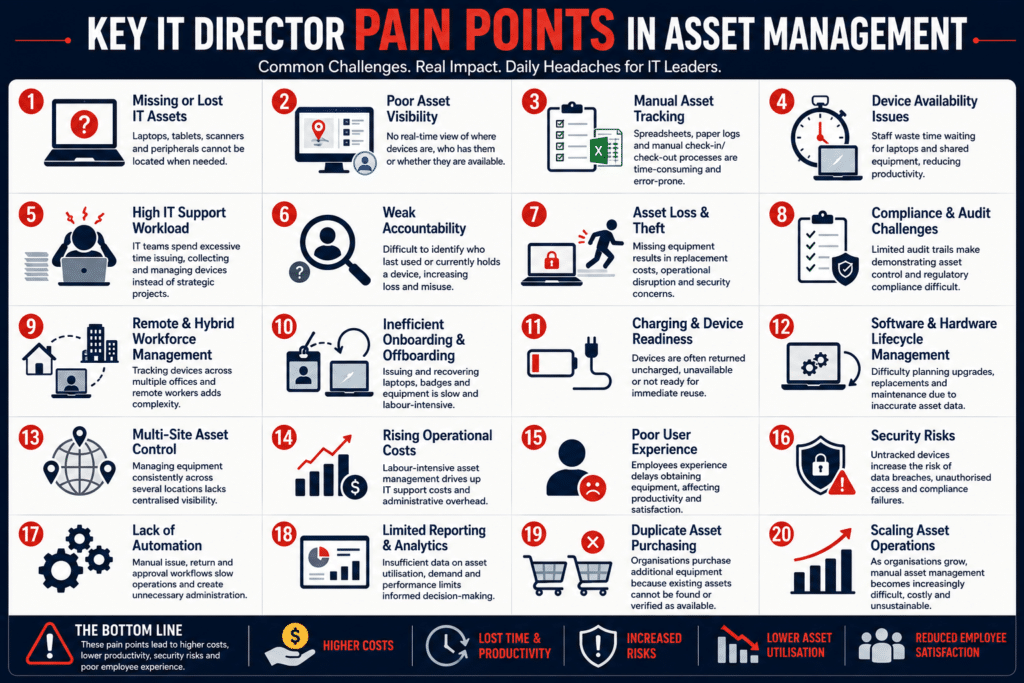
Key IT Director Pain Points in Asset Management
- Missing or Lost IT Asset
- Poor Asset Visibility
- Manual Asset Tracking
- Device Availability Issues
- High IT Support Workload
- Weak Accountability
- Asset Loss & Theft
- Compliance & Audit Challenges
- Remote & Hybrid Workforce Management
- Inefficient Onboarding & Offboarding
- Charging & Device Readiness
- Software & Hardware Lifecycle Management
- Multi-Site Asset Control
- Rising Operational Costs
- Poor User Experience
- Security Risks
- Lack of Automation
- Limited Reporting & Analytics
- Duplicate Asset Purchasing
- Scaling Asset Operations
We remove large parts of these common root causes of pain
Check if we have them right?
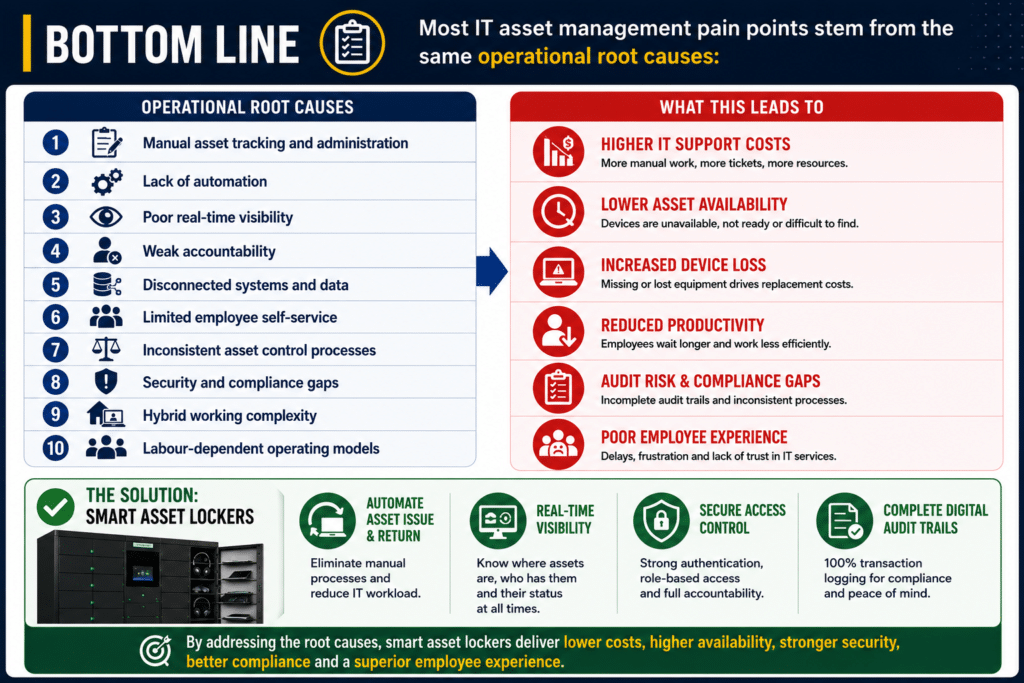
Top 5 Root causes of Asset Management Pain
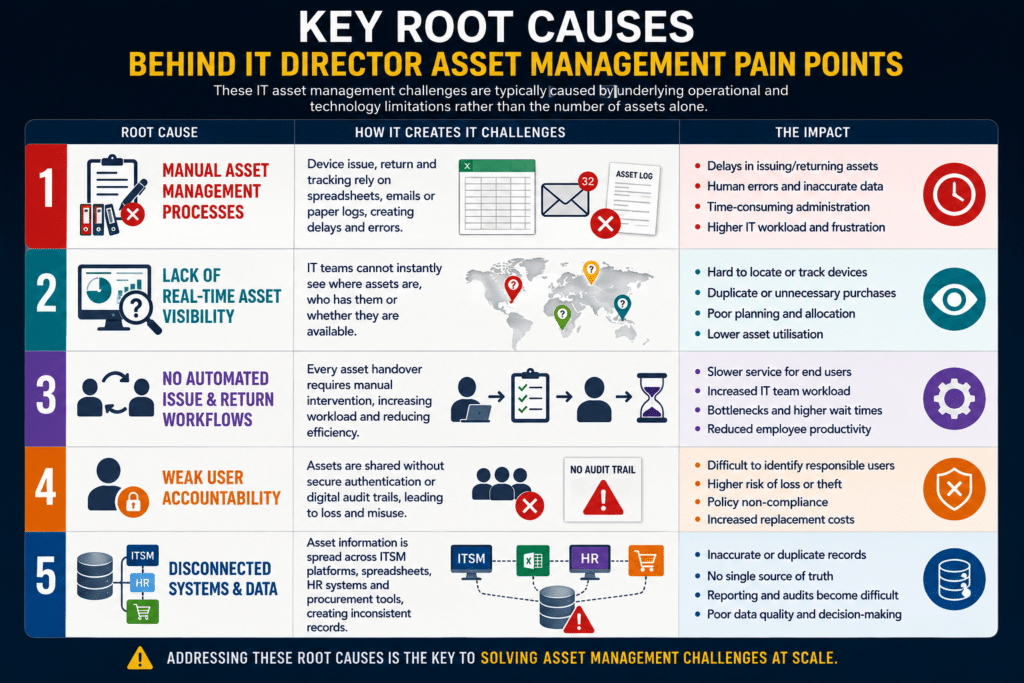
Next Tier Root causes of asset management pain
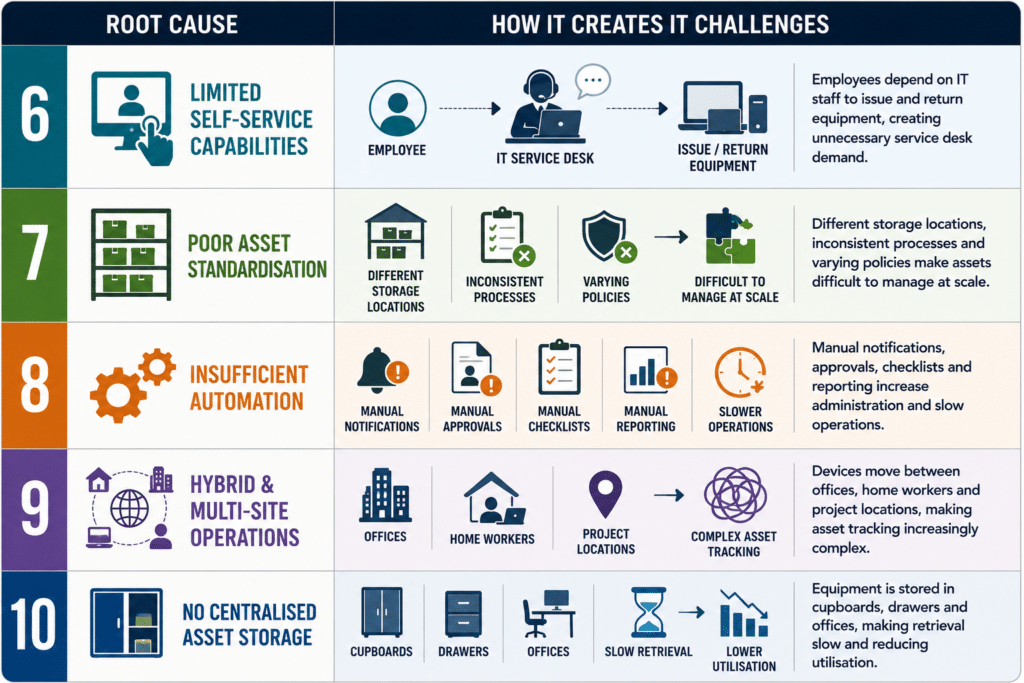
Why Asset Control Matters to IT
IT teams are accountable for:
- Protecting high-value devices
- Controlling access to sensitive equipment
- Maintaining audit trails for compliance
- Reducing loss without increasing admin workload
Manual logs and spreadsheets don’t scale to these requirements.

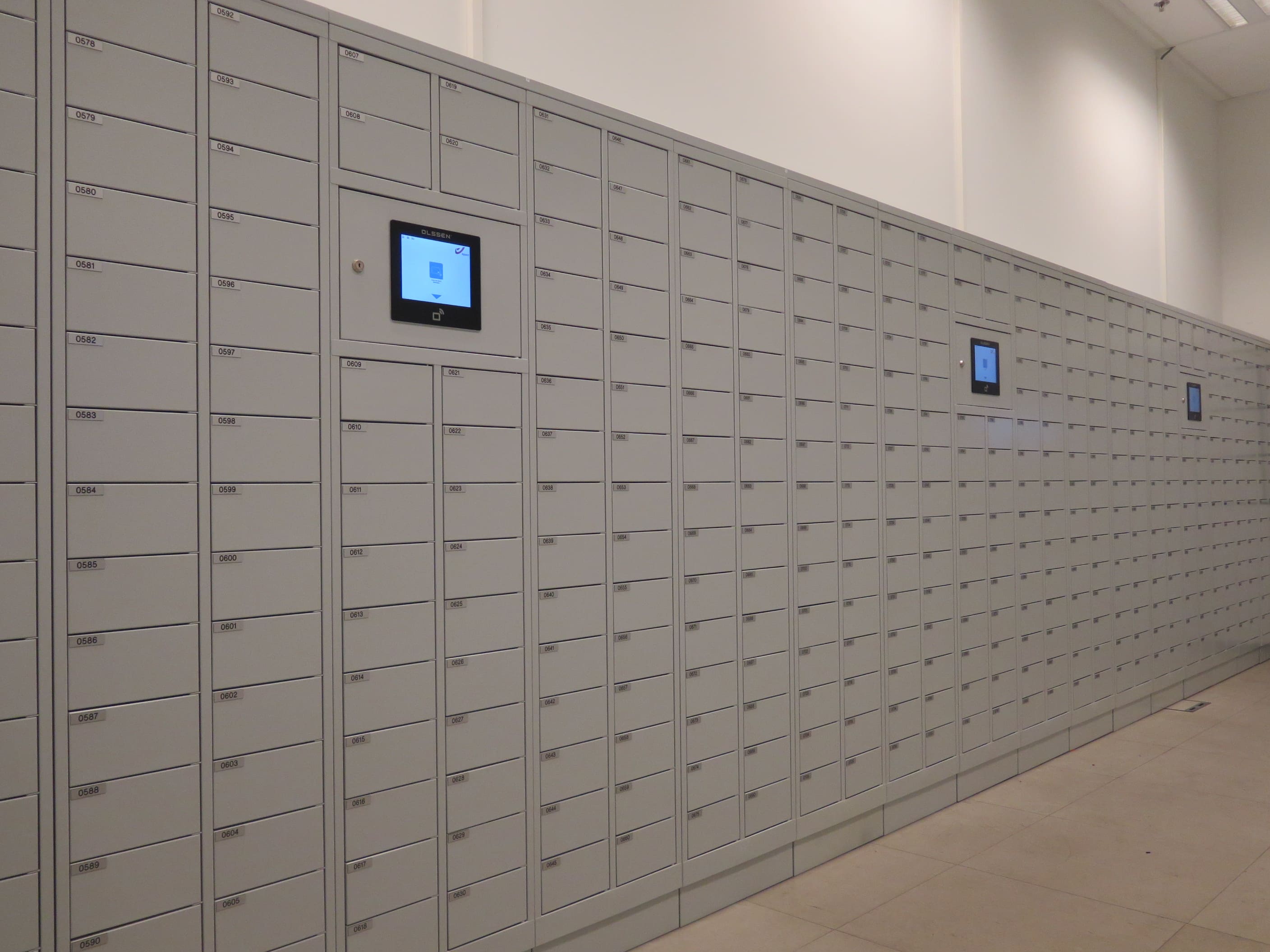
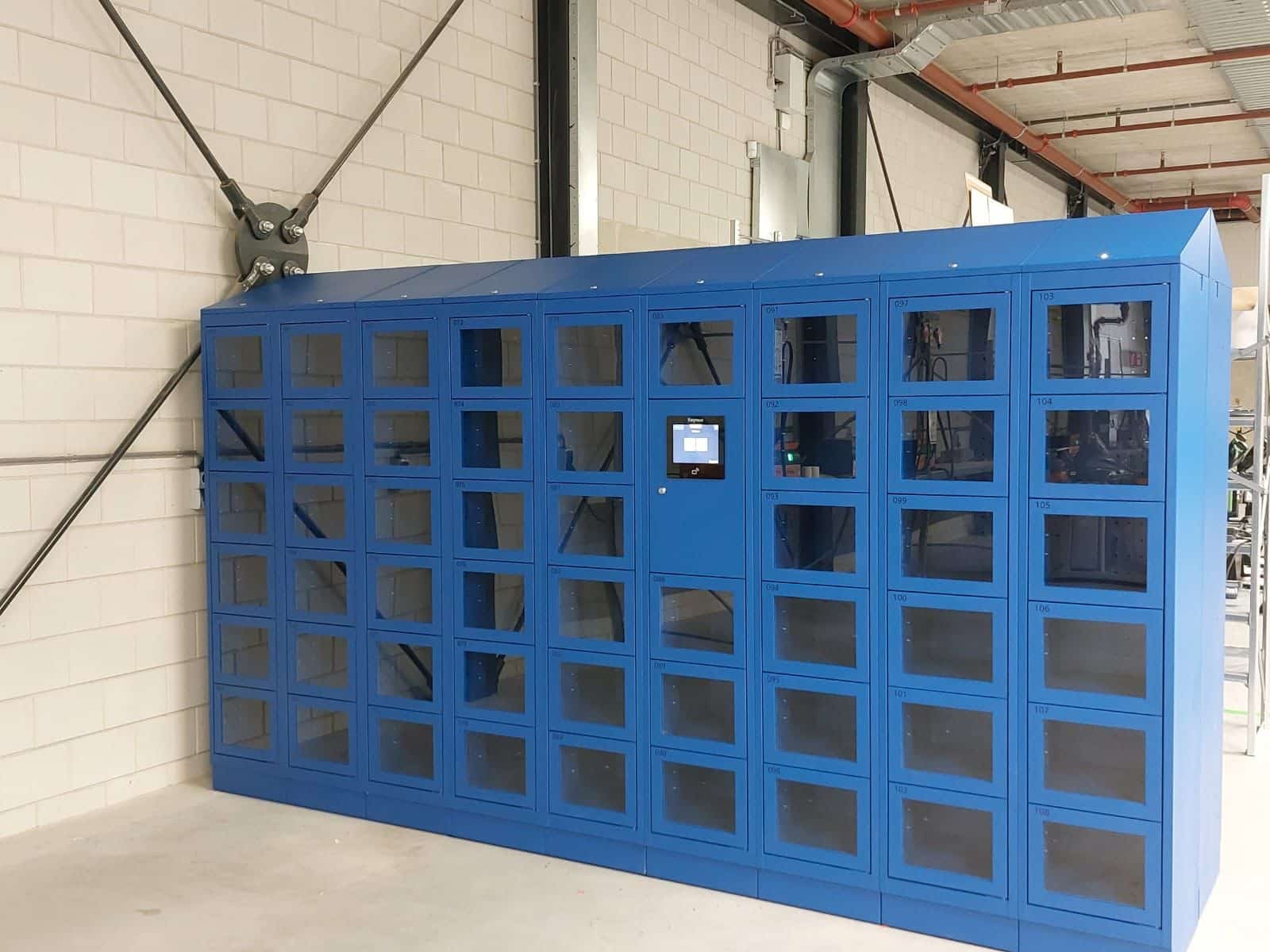
How Asset Lockers Fit IT Governance
Access is role-based and identity-linked
Every interaction is time-stamped and recorded
Usage data supports audits and investigations
Central management simplifies oversight across sites
Smart Locker Systems as Part of Asset Management Operational Strategy
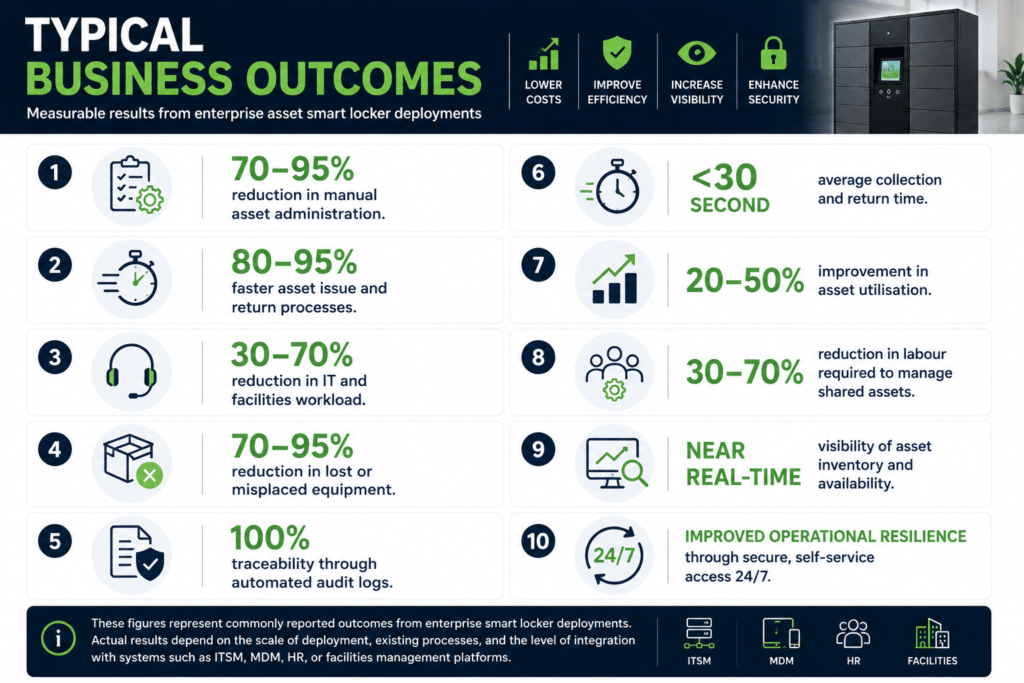
Top 5 Reasons to Make Smart Locker Systems Part of Your Asset Management Operational Strategy
1. Automate Asset Issue, Return and Tracking
Replace manual handovers, spreadsheets and paper logs with automated workflows that provide secure self-service access and real-time transaction records.
Operational Impact
- Reduce manual administration by 70–95%
- Faster issue and return processes
- Standardised workflows
- 24/7 self-service access
2. Improve Asset Visibility and Availability
Know exactly where every laptop, tablet, scanner, radio or tool is, who has it, and whether it is available for immediate use.
Operational Impact
- Near real-time asset visibility
- 20–50% higher asset utilisation
- Reduced equipment search time
- Better workforce productivity
3. Reduce Costs and Protect Asset Investments
Minimise loss, theft, duplicate purchases and unnecessary labour while extending the value of existing equipment through better utilisation.
Operational Impact
- 70–95% reduction in asset loss
- 20–50% fewer duplicate purchases
- Lower labour costs
- Reduced operational downtime
4. Strengthen Security, Governance and Compliance
Every asset transaction is authenticated, time-stamped and fully auditable, improving accountability and supporting regulatory compliance.
Operational Impact
- 100% transaction traceability
- Complete chain of custody
- Role-based access control
- Faster audits and incident investigations
5. Enable a Scalable, Data-Driven Asset Management Strategy
Smart lockers provide the operational data and automation needed to support organisational growth without increasing administrative overhead.
Operational Impact
- Supports multi-site operations
- Integrates with ITSM, MDM, HR and ERP platforms
- Provides utilisation analytics for smarter procurement
- Typical ROI payback in 12–24 months
Bottom Line
Smart locker systems transform asset management from a labour-intensive, reactive process into a secure, automated and data-driven operation. As part of an operational strategy, they help organisations:
- Reduce operating costs
- Increase asset availability and utilisation
- Improve security and compliance
- Enhance employee productivity and experience
- Scale operations efficiently without adding proportional staffing resources
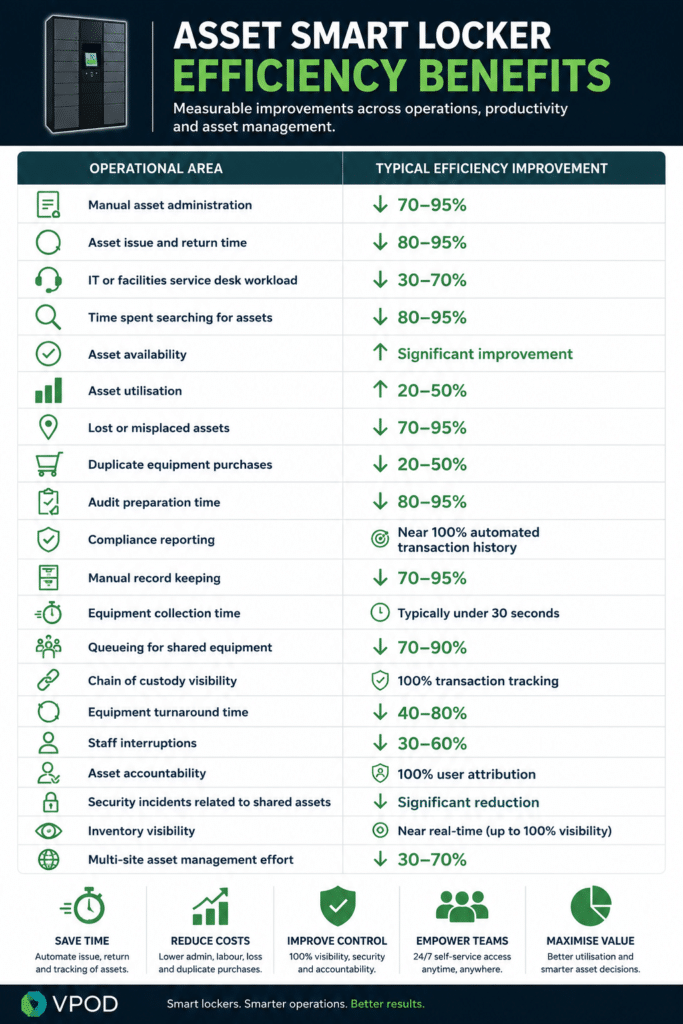
Smart Asset Lockers v Asset Management Room
Scalable Device Control Across Teams & Locations
Why Asset Retrieval Delays increase downtime
Find out more →
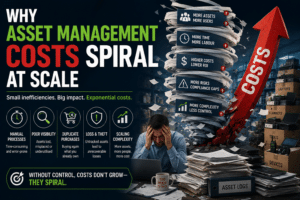
Why asset Management Costs Spiral at Scale
Find out more →
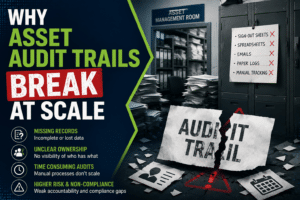
Why Asset Audit Trails Break at Scale
Find out more →
Asset Tracking Problems break at scale

Find out more →
Guide To Efficiency & ROI
Find out more →
Outcomes IT Directors Care About
Improved security for physical assets
Clear audit trails for compliance
Reduced admin effort
Better governance across locations
Security, Compliance & Chain-of-Custody Assurance

See How Secure Device Access Works
Explore IT Challenges
-
Secure device access
-
Maintain audit and compliance records
-
Integrate asset access with identity systems
-
Reduce asset loss without manual tracking
Why Asset Management Costs Spiral at Scale
Guide: Why Asset Audit Trails Break at Scale and How to Fix It