


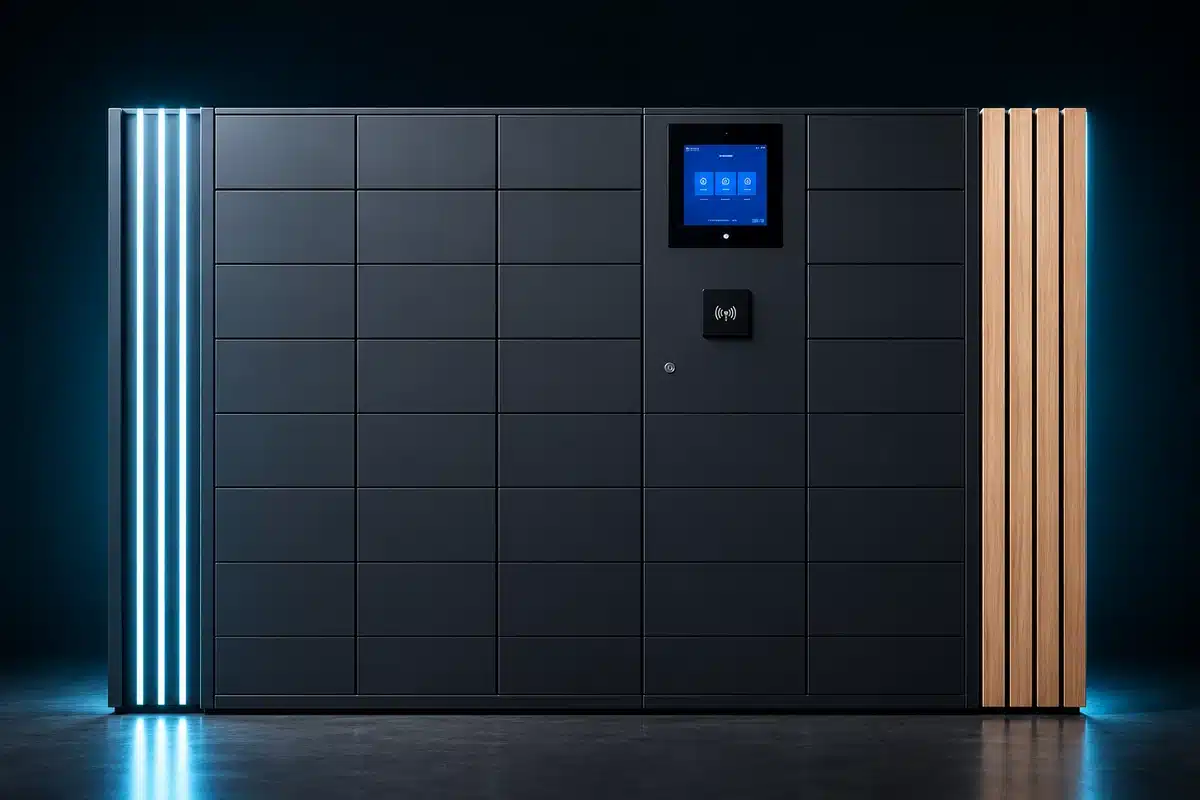


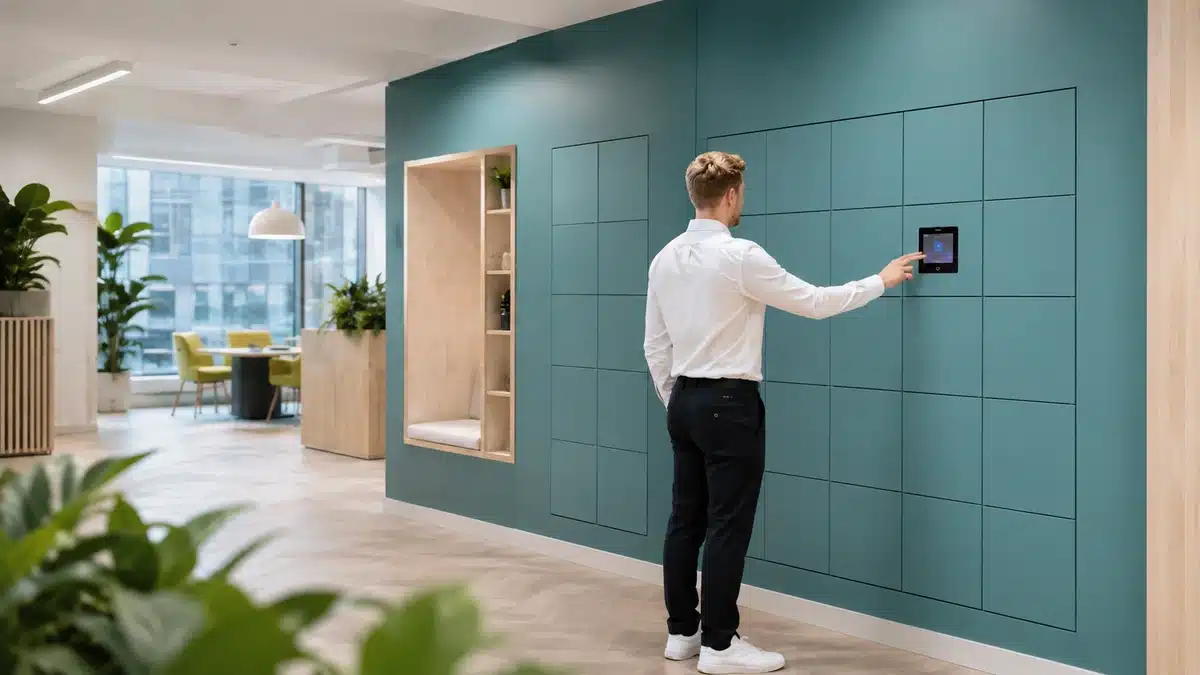


UK cost and ROI guide
How Much Do Smart Lockers Cost in the UK?
Smart locker costs depend on much more than the number of doors. Use this guide to compare hardware, software, integrations, installation and whole-life value on a like-for-like basis.
The short answer
There is no useful single price per smart locker
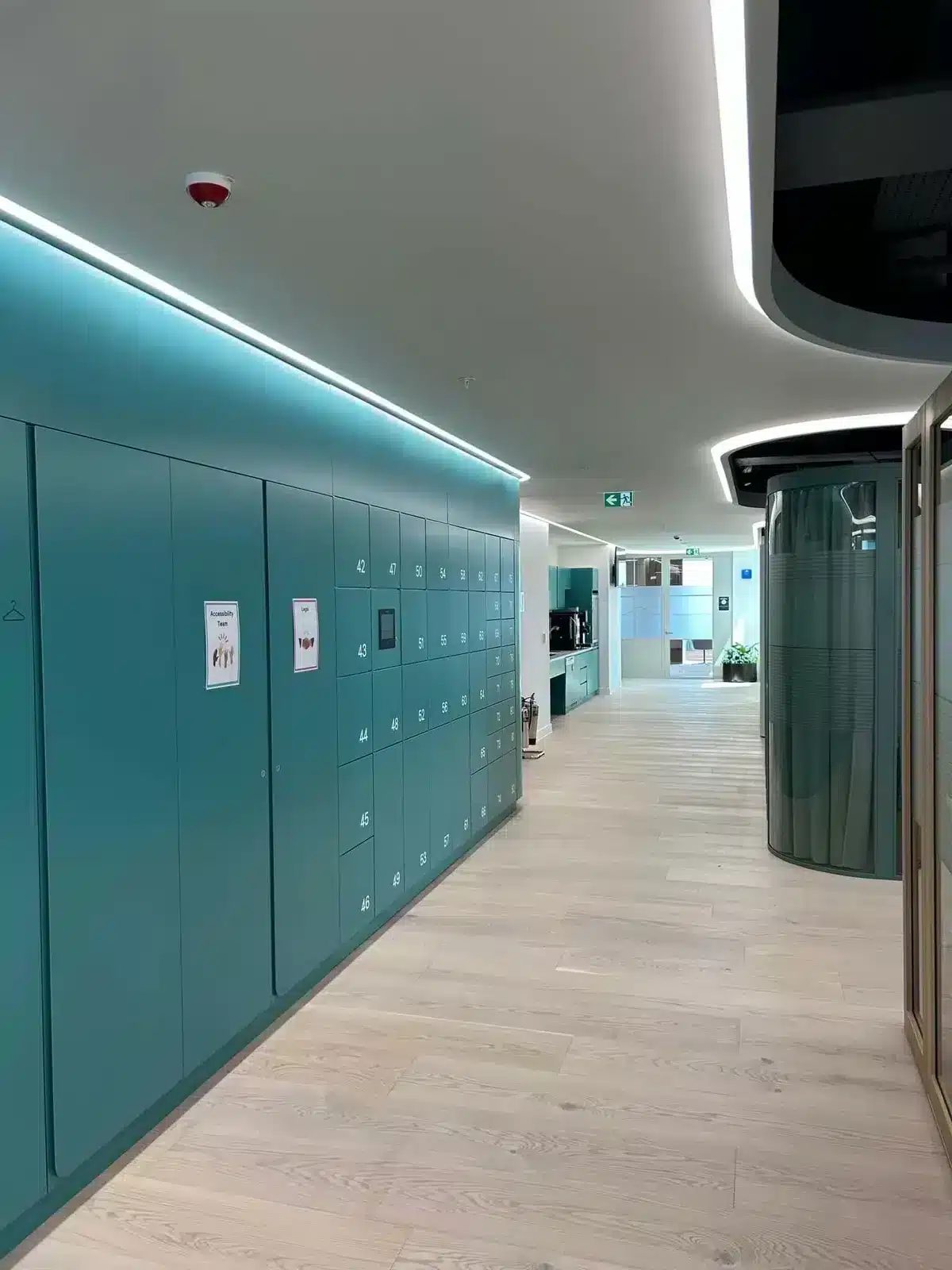
A small standalone installation and an enterprise, multi-site system may look similar in a photograph but have very different requirements. Compartment mix, finishes, electronic locks, access credentials, software, integrations, installation and support all affect the final figure.
Ask suppliers to price the same compartment schedule, access method, software scope, integration boundary, installation service and support period. That produces a meaningful comparison.
If you are still defining the solution, start with Vpod’s smart locker systems overview before requesting a site-specific quotation.
The cost model
Seven factors determine smart locker cost in the UK
Cabinet specification
Door count, compartment sizes, materials, finishes, accessibility and bespoke joinery.
Locking hardware
Electronic locks, controllers, touchscreens, scanners, payment terminals and credential readers.
Software
Cloud management, workflows, user administration, alerts, reporting and multi-site control.
Access method
RFID, mobile, QR code, PIN, digital identity, payment or existing building credentials.
Integrations
Identity, access control, workplace, ITSM, visitor, booking, parcel and payment platforms.
Delivery and installation
Survey, manufacture, transport, positioning, power, network, commissioning and training.
Support and lifecycle
Software subscriptions, service cover, replacement parts, changes and future expansion.
Like-for-like comparison
What should a smart locker quote include?
| Cost area | Ask the supplier to show | Common omission |
|---|---|---|
| Locker wall | Quantity, dimensions, door mix, finishes and accessibility | End panels, fillers or bespoke sizes |
| Technology | Locks, controller, screen, readers and connectivity | Additional terminals or network equipment |
| Software | Included modules, users, locations, reporting and term | Recurring licence or hosting charges |
| Integration | Systems, interfaces, testing, ownership and change control | Third-party licences or professional services |
| Deployment | Survey, delivery, installation, commissioning and training | Site preparation, power and data |
| Support | Coverage, response targets, escalation and spare parts | Travel, out-of-hours support or exclusions |
Give every shortlisted supplier the same specification. Vpod’s enterprise smart locker specification guide can help structure the brief.
Beyond purchase price
Calculate the whole-life cost
The lowest initial quote is not necessarily the lowest-cost system. Include the evaluation period—often three to five years—and make the same assumptions about inflation, support, subscription terms, spare parts, upgrades and expected growth.
Direct costs
- Hardware and cabinetry
- Software and hosting
- Implementation and integration
- Training, service and maintenance
- Expansion and change requests
Potential value
- Less manual administration
- Reduced key and asset loss
- Better space utilisation
- Faster collection and return
- Rental revenue where applicable
Value and payback
Model ROI using your real operating assumptions
Workplace and asset lockers usually create value through efficiency, control, experience and better use of space. Rental lockers can also generate direct revenue. Keep those business cases separate so the result remains credible.
For venue and public-space rental scenarios, use Vpod’s calculator to test locker quantity, occupancy, price and operating frequency.
Use the ROI calculator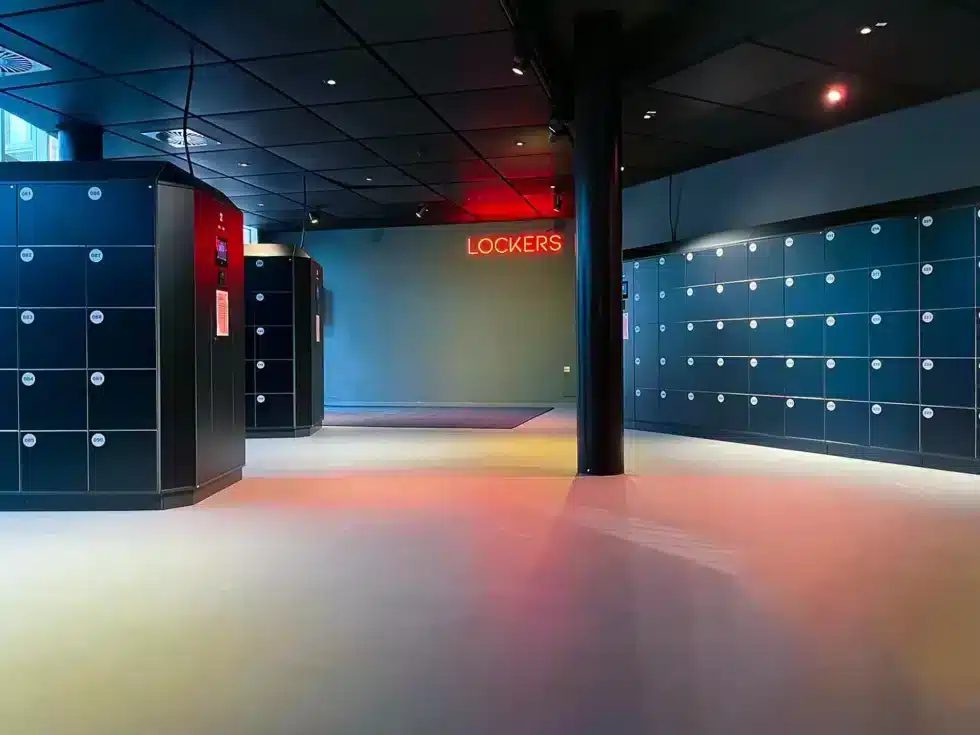
Watch GainShare
See how smart lockers can create revenue without upfront capital
These Vpod videos explain the GainShare commercial model, the venue opportunity and how self-service visitor storage can become a measurable income stream.

Smart locker revenue share for venues
Understand how venues can introduce paid smart storage through a shared-revenue model.
Watch on YouTube →Smart lockers without upfront capital
See how GainShare changes the investment conversation for suitable visitor-storage locations.
Watch on YouTube →Turn visitor storage into revenue
A concise introduction to converting an operational requirement into a guest service and revenue opportunity.
Watch on YouTube →Commercial options
Purchase, lease or revenue share?
Purchase
Higher upfront commitment with ownership and the potential for stronger long-term returns.
Lease
Spreads cost over time and may simplify budgeting, subject to the contract and total finance cost.
Revenue share
Can reduce upfront investment for suitable paid-storage locations while sharing future income.
The right route depends on the use case, cash position, appetite for ownership and expected utilisation. Compare total payments, contractual flexibility, risk allocation and end-of-term position—not only the monthly figure.
Procurement checklist
Questions to ask before accepting a price
- Which workflows and exceptions are included?
- What is included in the hardware and cabinet specification?
- Which software modules and recurring charges apply?
- Who owns each integration, test and third-party dependency?
- What must the customer provide at the site?
- What are the support hours, response targets and exclusions?
- How will expansion, relocation and configuration changes be priced?
- Which comparable live deployments can be referenced?
Get a relevant figure
Price the workflow you actually need.
Share your users, compartment mix, site, access method and integration requirements with Vpod.