




What Is Delivery Congestion in Buildings?
Delivery congestion occurs when the volume of incoming parcels exceeds a building’s ability to:
- Receive deliveries
- Process items
- Store parcels
- Distribute to recipients
This is common in:
- Offices and workplaces
- Residential buildings
- Mixed-use developments
- Universities and campuses
- Healthcare facilities
The result:
- Overflowing reception areas
- Delayed deliveries
- Disorganised storage
- Increased operational pressure
Related Links
/pain-points/backroom-storage-overflow-scale/
/pain-points/delivery-chain-of-custody-scale/
/pain-points/asset-tracking-problems-scale/
/pain-points/reception-congestion/
/pain-points/manual-parcel-handling/
/pain-points/package-room-overflow/
Why Delivery Congestion Gets Worse at Scale
1. Delivery Volume Has Exploded
E-commerce and hybrid working have driven:
- More frequent deliveries
- Smaller, individual shipments
- Higher daily parcel volumes
Buildings that once handled dozens of deliveries now handle:
- Hundreds per day
2. Deliveries Arrive in Waves
Couriers operate on schedules, not building capacity.
This creates:
- Peak delivery windows
- Sudden surges of parcels
- Backlogs at reception
3. Reception Becomes the Bottleneck
Most buildings rely on reception to:
- Accept deliveries
- Log parcels
- Notify recipients
- Store items
This creates a centralised, manual bottleneck.
One desk cannot handle hundreds of deliveries efficiently.
4. Storage Space Is Not Designed for Volume
Typical building storage:
- Limited backroom space
- No structured system
- No scalability
As volume increases:
- Space fills quickly
- Overflow spreads into public areas
- Organisation breaks down
5. Manual Handling Slows Everything Down
Each delivery requires:
- Acceptance
- Logging
- Sorting
- Storage
This creates:
- Delays per item
- Staff dependency
- Reduced throughput
6. Collection Adds More Congestion
The problem doesn’t stop at delivery.
When recipients arrive to collect items:
- Queues form
- Staff are interrupted
- Congestion increases
This creates a second wave of operational pressure.

The Hidden Impact of Delivery Congestion
Safety Risk
Bag Handling and Security Friction
Poor Space Design
Lack of Real-Time Control
Why Traditional Parcel Rooms Fail at Scale
- No structured storage
- No visibility
- Manual retrieval
- Overflow during peak periods
- Difficult to scale
- Security issues
- Shared access problems
Signs Your Building Has a Delivery Congestion Problem
- Reception desks covered in parcels
- Overflow into corridors
- Staff interrupted constantly
- Long collection queues
- Complaints about missing parcels
- Lack of parcel visibility
- Shared spaces becoming cluttered
Smart Locker Technology Features
- Real-time parcel tracking
- Automated notifications
- Chain of custody visibility
- Access control
- API integrations
- Delivery analytics
- Audit trails
- Cloud-based management
The Core Problem: Centralised, Manual Systems
Centralised Reception Bottlenecks
Delivery congestion exists because most buildings still rely on a single, staff-dependent system to manage every incoming parcel.
Reception teams are expected to:
- Accept deliveries
- Log parcels manually
- Organise storage
- Notify recipients
- Manage collections
At low volume, this process may seem manageable.
At scale, it quickly becomes a bottleneck.
As parcel demand increases:
- Volume increases
- Processing slows
- Storage areas overflow
- Staff pressure grows
- Congestion builds
Distributed Delivery Infrastructure
To eliminate delivery congestion, buildings must move away from centralised, staff-dependent parcel handling systems.
Modern delivery operations require infrastructure built for continuous parcel flow at scale.
This means shifting from:
- Centralised → Distributed
- Manual → Automated
- Staff-dependent → Self-service
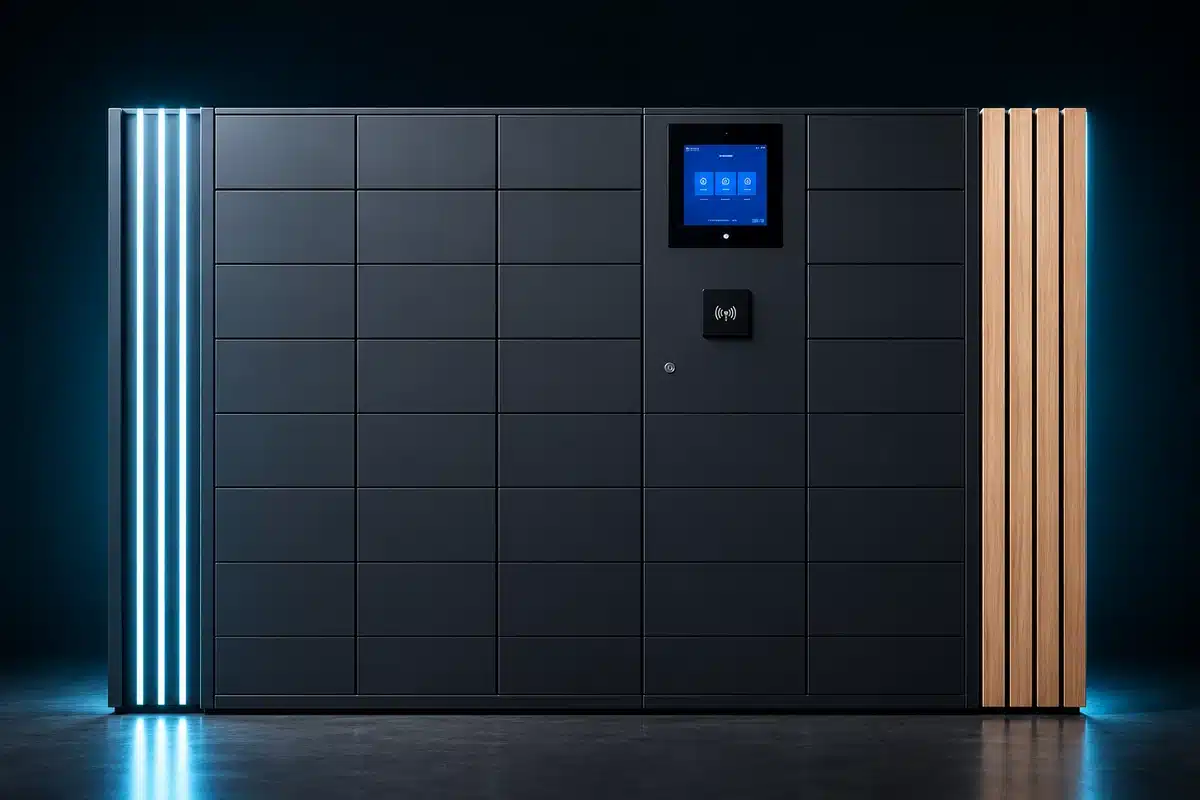
Smart locker systems help decentralise delivery management by reducing pressure on reception teams and distributing parcel activity across secure automated storage points.
The Scalable Solution: Distributed, Self-Service Delivery Systems
1. Direct-to-Locker Delivery
Couriers place parcels directly into secure smart lockers instead of handing everything to reception.
This helps:
- Remove reception bottlenecks
- Reduce manual parcel handling
- Speed up delivery intake
- Prevent delivery backlogs
Outcome: Faster parcel processing with less pressure on front-of-house teams.
2. Controlled Parcel Storage
Smart lockers create structured, secure storage for incoming deliveries.
This helps:
- Prevent parcel overflow
- Keep corridors and reception areas clear
- Improve space utilisation
- Reduce lost or misplaced parcels
Outcome: Better organisation and safer shared spaces
Real-Time Visibility & Self-Service Collection
3. Self-Service Collection
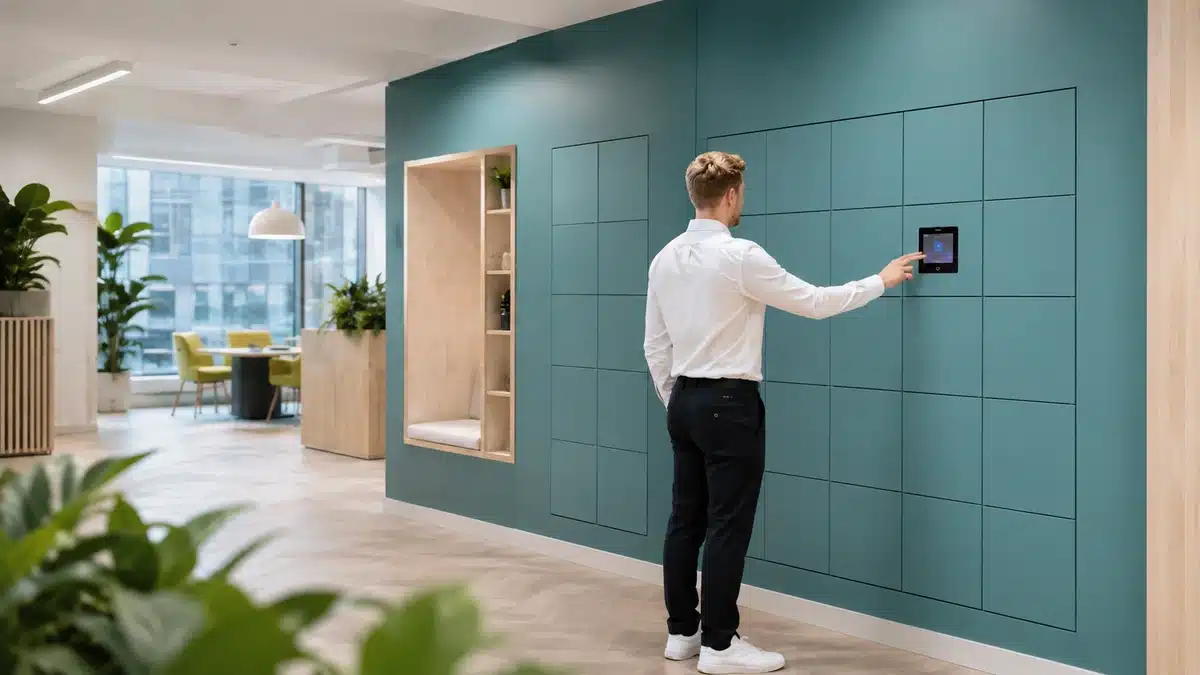
Recipients collect parcels independently using secure digital access credentials.
This helps:
- Remove collection queues
- Reduce staff interruptions
- Improve occupant convenience
- Speed up parcel retrieval
Outcome: Smoother collection with no staff dependency.
4. Real-Time Delivery Visibility
Smart locker systems give teams better visibility across the parcel journey.
This helps:
- Track deliveries in real time
- Improve chain of custody
- Reduce confusion and disputes
- Support better operational control
Outcome: Scalable parcel management with improved security and efficiency.
Delivery Congestion Management Process
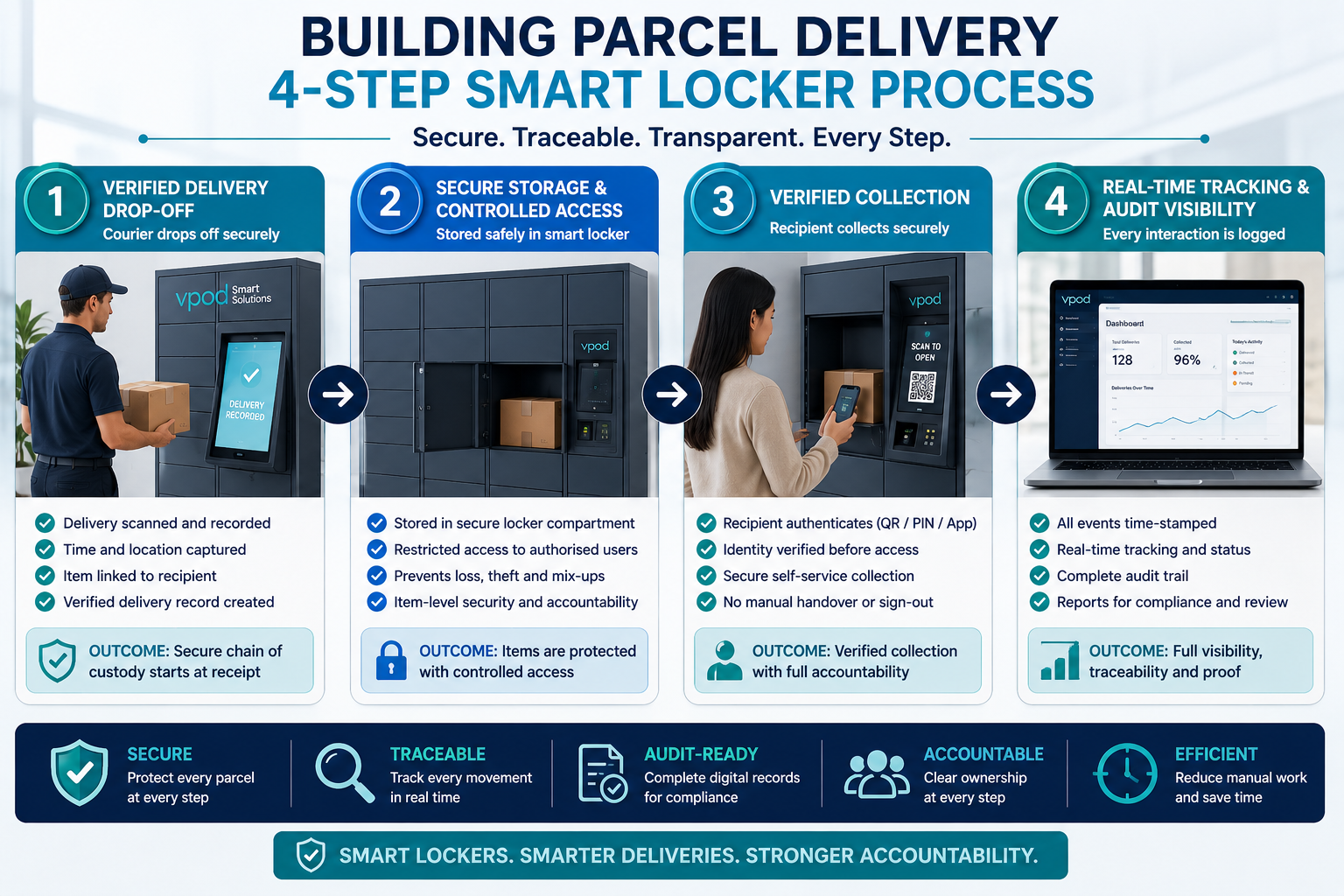
Traditional Delivery Management vs Smart Locker Delivery Systems





Real Workplace Operations Results
Skyscanner — Enabling Scalable Hybrid Workplace Operations
Skyscanner deployed Vpod smart lockers across offices in Edinburgh, Glasgow, and London to support flexible hybrid working and reduce operational complexity.
Results Delivered
- Reduced workplace administration overhead
- Improved office space utilisation
- Enabled remote locker management
- Supported hybrid and mobile working
- Created a consistent multi-site employee experience
- Reduced dependency on on-site support teams
“The technology is aligned with how we are moving forward as a workplace environment.”
— Gonzalo, Senior Workplace Manager, Skyscanner
Related Solutions
Who Is Affected by Delivery Congestion at Scale?
Building Facilities Manager / Building Operations Manager
Building Facilities Manager
Areas of Responsibility
- Parcel and delivery management
- Reception and mailroom operations
- Building workflow and efficiency
- Occupant experience
- Space utilisation
- Operational performance during peak delivery periods
Areas of Concern
- Reception congestion
- Parcel overflow
- Delivery bottlenecks
- Limited storage capacity
- Staff workload pressure
- Maintaining operational efficiency at scale
Pain Points
- Overflowing reception and parcel storage areas
- High parcel volumes overwhelming staff
- Manual logging slowing delivery processing
- Congestion around collection points
- Limited visibility across parcel movement
- Growing delivery demand without scalable infrastructure
Building Operations Manager
Areas of Responsibility
- Building performance and tenant satisfaction
- Operational cost management
- Health and safety compliance
- Space optimisation
- Long-term building scalability
- Service quality across shared spaces
Areas of Concern
- Rising operational costs linked to parcel handling
- Poor occupant experience caused by delivery delays
- Safety risks from cluttered communal areas
- Inefficient use of valuable building space
- Increasing parcel demand across the property
Pain Points
- Complaints about delayed or missing deliveries
- Reception areas becoming overcrowded
- Valuable space consumed by parcel storage
- Increasing staffing requirements to manage deliveries
- Difficulty scaling operations as parcel volumes grow
- Manual systems creating long-term operational inefficiencies