





Trusted by these customers






Common [Persona] Challenges
Why Workplace Lockers Operational Control Matters
Operations teams encounter friction when:
- Locker allocation is manual and time-consuming
- Storage is underutilised or misused
- Policies are inconsistently enforced
- Admin overhead grows with headcount and site count
These issues quietly reduce efficiency and create employee frustration.
For organisations managing laptops, tools and other shared resources,
asset lockers for shared equipment
provide controlled access, greater visibility and a traceable equipment handover process.


How Workplace Lockers Improve Operational Control
Storage access is allocated automatically or on demand
Rules are enforced consistently across sites
Usage is visible and auditable
Operations scale without increasing admin workload
Locker Systems as Part of [Operational Strategy]
[Solution] vs [Alternative]
Workplace Lockers Operational Control Across Hybrid Workplaces
Outcomes Operations Directors Care About
Reduced administrative overhead
Higher utilisation of workplace resources
More predictable day-to-day operations
Improved employee experience in hybrid environments
Workplace Lockers Operational Control and Governance
Explore specific use cases

Skyscanner — Hybrid Workplace Enablement
Hybrid Storage at Scale
Skyscanner deployed smart lockers across multiple UK offices to support hybrid working and fluctuating attendance. The system reduced administrative overhead, enabled flexible day-use allocation, and allowed remote management across locations.
For Operations leadership, this created predictable locker availability and estate-wide policy consistency — without increasing support workload.
Result: Improved space utilisation and scalable hybrid storage control.

ADP — Global Workplace Lockers & Visitor Journeys
Multi-Floor, Multi-Site Locker Governance
ADP implemented Vflex smart lockers alongside Vgreet to support a flexible global workforce. Assigned day lockers, integrated storage cupboards, and centralised configuration created full visibility and operational control.
Operations teams gained structured allocation, reduced friction, and scalable infrastructure across expanding locations.
Result: Greater occupancy control, visibility, and operational predictability.
Who This is For
Who This is For
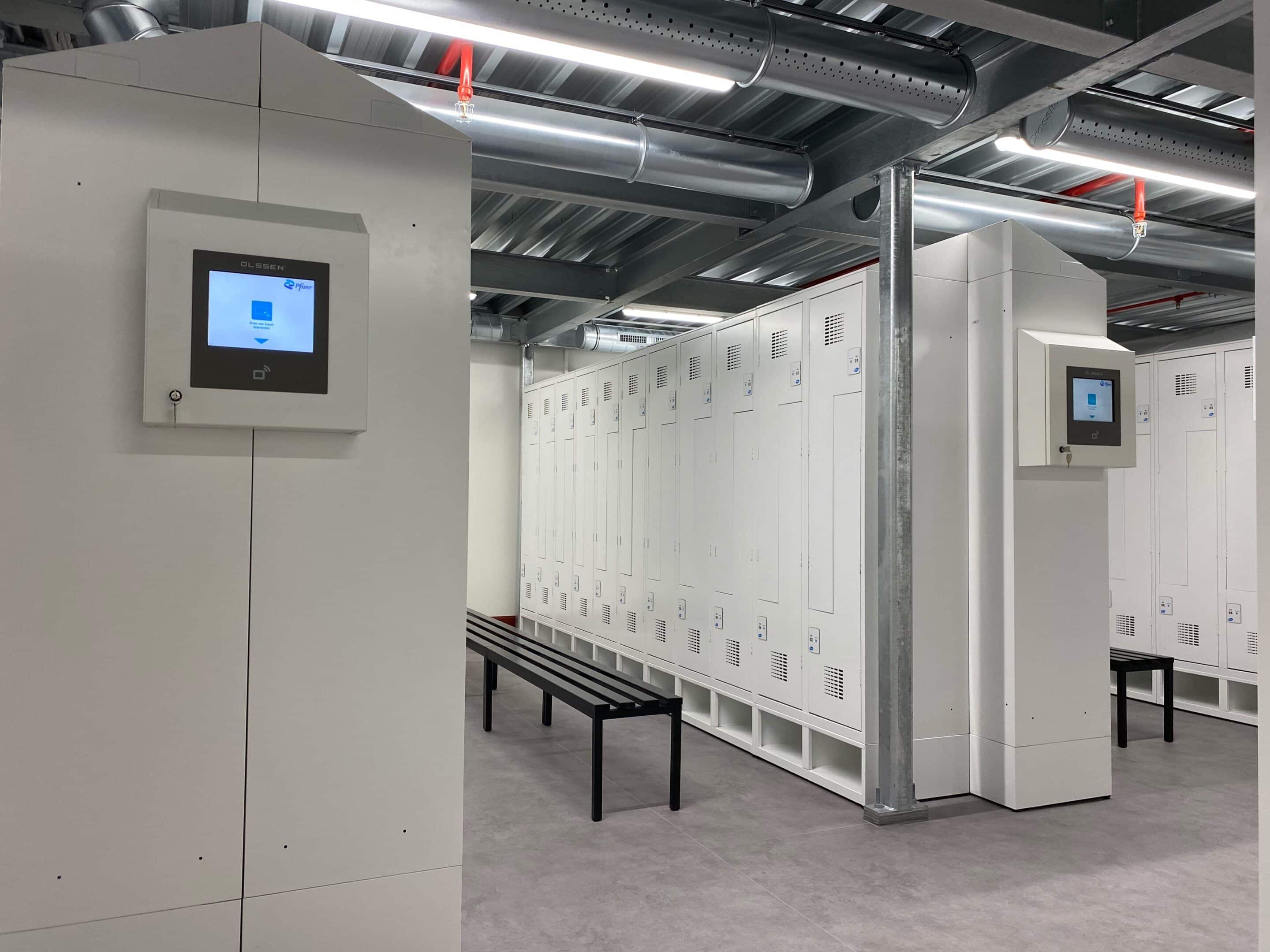
See How Workplace Lockers Operate in Hybrid Environments
Explore Operational Challenges
-
Reduce workplace admin overhead
-
Support hybrid work storage
-
Enforce storage policies consistently
-
Improve operational visibility
- Why Asset Tracking Problems Break at Scale (And Why Visibility Disappears)
- Why Asset Audit Fails at scale