







What Are Asset Tracking Problems?
Asset tracking problems occur when organisations cannot reliably:
- Locate items in real time
- Track movement history
- Identify who handled an item
- Confirm where assets are stored
This leads to:
- Lost or misplaced items
- Delays in retrieval
- Disputes and complaints
- Operational inefficiency
Why Asset Tracking Fails at Scale
1. Manual Systems Cannot Keep Up
Many organisations rely on:
- Paper logs
- Manual tagging
- Staff memory
- Basic spreadsheets
At scale, these systems:
- Break under volume
- Miss transactions
- Contain inaccurate data
If tracking relies on people, it will fail at scale.
2. Volume Overwhelms Processes
As operations grow:
- Hundreds or thousands of assets move daily
- Peak periods create intense activity
- Speed becomes prioritised over accuracy
This results in:
- Missing records
- Incorrect tracking
- Untraceable items
3. Multiple Touchpoints Create Gaps
Assets typically move through several stages:
- Drop-off
- Handling
- Storage
- Retrieval
Each stage introduces risk:
- Data not recorded
- Ownership unclear
- Information lost
4. No Real-Time Visibility
Traditional tracking systems provide:
- Delayed updates
- Partial visibility
- No live tracking
This means:
- Items cannot be located instantly
- Issues escalate before detection
- Operations slow down
5. Data Is Fragmented Across Systems
Tracking information is often split across:
- Storage logs
- Security systems
- Operational tools
This creates:
- Data silos
- Incomplete records
- Lack of end-to-end visibility
6. Human Error Increases with Scale
As volume increases:
- Items are mislabelled
- Records are skipped
- Incorrect data is entered
This leads to:
- Lost assets
- Retrieval delays
- Customer complaints
For better visibility and accountability, organisations can
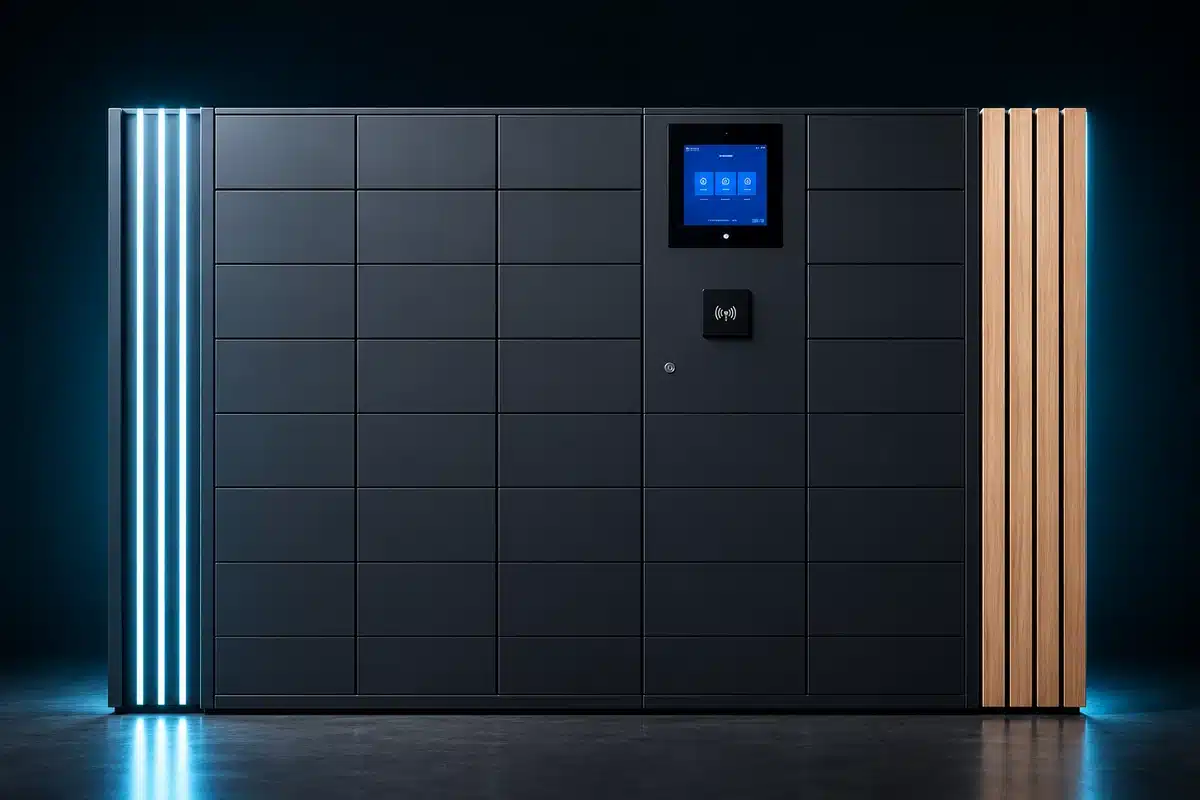
track equipment through asset lockers.

The Hidden Impact of Asset Tracking Failure
Security Risk
Compliance Risk
Financial Loss
Customer Experience Breakdown
Why Traditional Tracking Solutions Fail
Paper-Based Tracking
- Easily lost
- No real-time visibility
- High error rates
Manual Digital Systems
- Dependent on accurate input
- Often incomplete
- Time-consuming
Barcode Systems Without Automation
- Require manual scanning discipline
- Miss transactions
- Limited real-time visibility
Staff-Led Processes
- Inconsistent execution
- Difficult to enforce at scale
The Core Problem: No System-Enforced Visibility
It relies on processes instead of systems.
Asset tracking fails because:
It relies on processes instead of systems.
At scale:
- Processes are skipped
- Data is incomplete
- Visibility is lost
Without automation, tracking becomes unreliable.
The Scalable Solution: Automated, Real-Time Asset Tracking
To solve tracking problems, organisations must move to:
- Automated data capture
- Real-time visibility
- System-driven tracking
Smart Locker Systems with Integrated Tracking
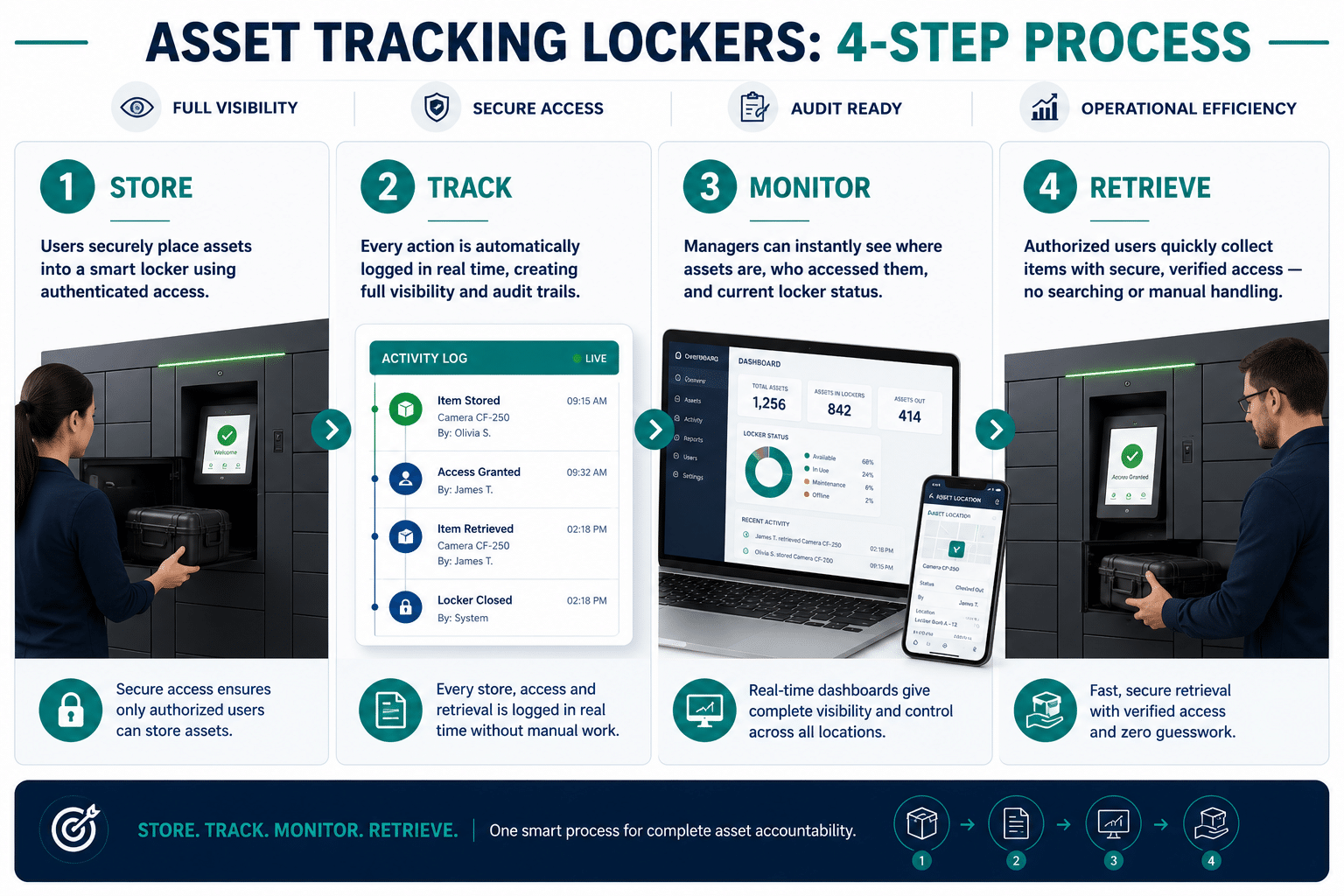
Smart lockers provide end-to-end asset tracking.
Automatic transaction recording
- Every storage and retrieval logged
- No manual input required
User-linked activity
- Each action tied to a specific user
- Full accountability
Real-time visibility
- Know exactly where assets are
- Instant access to information
Secure access control
- Only authorised users can retrieve items
- Reduced risk of loss
Centralised tracking platform
- All data in one system
- Full reporting and analytics
Real Operational Impact
With automated tracking systems:
- Full asset visibility
- Reduced loss and misplacement
- Faster retrieval times
- Improved compliance
- Lower operational cost
See: /solutions/workplace-smart-lockers/
Compare: /manual-security-handling-vs-automated-storage-systems/
Explore: /integrations/
The Bottom Line
Asset tracking problems are not caused by poor management.
They are caused by:
Systems that cannot maintain visibility at scale.
At scale:
- Data breaks down
- Tracking becomes unreliable
- Risk increases
The solution is not better processes.
It’s automated, real-time tracking built into the system.
Smart Asset Tracking Lockers
Total Visibility. Full Control. Secure Asset Management.
1. Real-Time Asset Tracking
Know exactly where every asset is, who accessed it, and when — with live visibility and complete audit trails.
2. Reduced Loss & Operational Risk
Secure, user-authenticated access reduces misplacement, unauthorized handling, and costly asset disputes.
3. Faster, More Efficient Operations
Automate storage and retrieval processes to eliminate manual handling, reduce delays, and improve productivity at scale.
Smart Asset Lockers V Manual Storage





Proven in High-Turnover Event Environments
Mars
Mars — Scalable Locker Deployment
Mars modernised visitor and contractor management across four UK sites using Vgreet and smart lockers.
The deployment improved compliance, reduced manual processes, and created scalable infrastructure to support multi-region expansion and evolving enterprise requirements.
Related Solutions
Who This Is For
Operations Manager / Facilities Manager - Security / Compliance Manager
Operations Manager / Facilities Manager
Primary Responsibility
- Maintaining operational efficiency,
- asset control, and
- day-to-day workflow management.
Key Pain Points
- Lost or misplaced assets
- Time wasted searching for items
- Poor visibility across locations
- Delays impacting productivity
- Manual tracking errors and disputes
What They Need
- Real-time asset visibility
- Faster retrieval processes
- Automated tracking and reporting
- Reduced operational overhead
Security / Compliance Manager
Primary Responsibility
- Protecting assets,
- enforcing accountability,
- ensuring compliance standards are met.
Key Pain Points
- No clear chain of custody
- Unauthorized access risk
- Missing audit trails
- Compliance exposure
- Inability to verify asset handling history
What They Need
- Secure access control
- Full auditability
- User-linked activity tracking
- Centralized reporting and compliance visibility