






Trusted by these customers







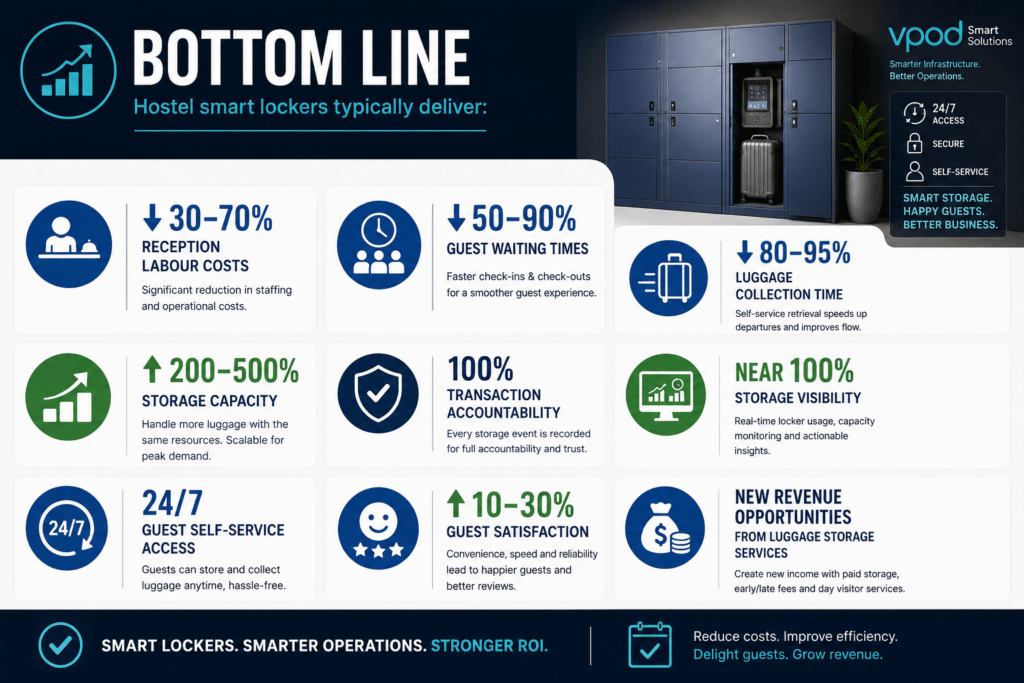
- Faster Guest Check-In & Check-Out ↓ 50–90% Luggage Handling Time
- Reduced Reception Workload ↓ 30–70% Reception Labour
- Faster Luggage Collection ↓ 80–95% Collection Time
- Reduced Queue Formation ↓ 50–90% Guest Waiting Times
Hostel Manager Key Challenges

Guests frequently arrive before check-in or stay after checkout, creating constant demand for storage throughout the day.
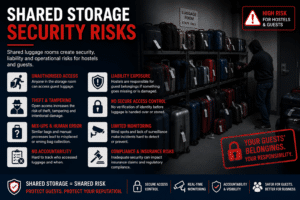
Open luggage rooms and unsupervised areas increase the risk of lost or stolen belongings, creating disputes and damaging guest trust.
Vpod’s smart locker systems for guest storage help hostels provide secure self-service luggage storage while reducing reception workload and improving guest convenience.
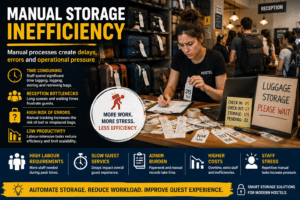
Staff are required to manage, monitor, and resolve storage issues — reducing time spent on guest service and operations.
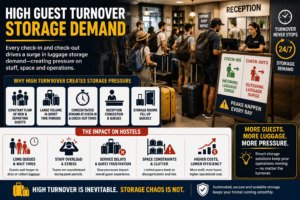
Frequent guest movement creates spikes in storage demand that manual systems cannot absorb.
Hostel Manager Top 20 challenges
How to Solve These?
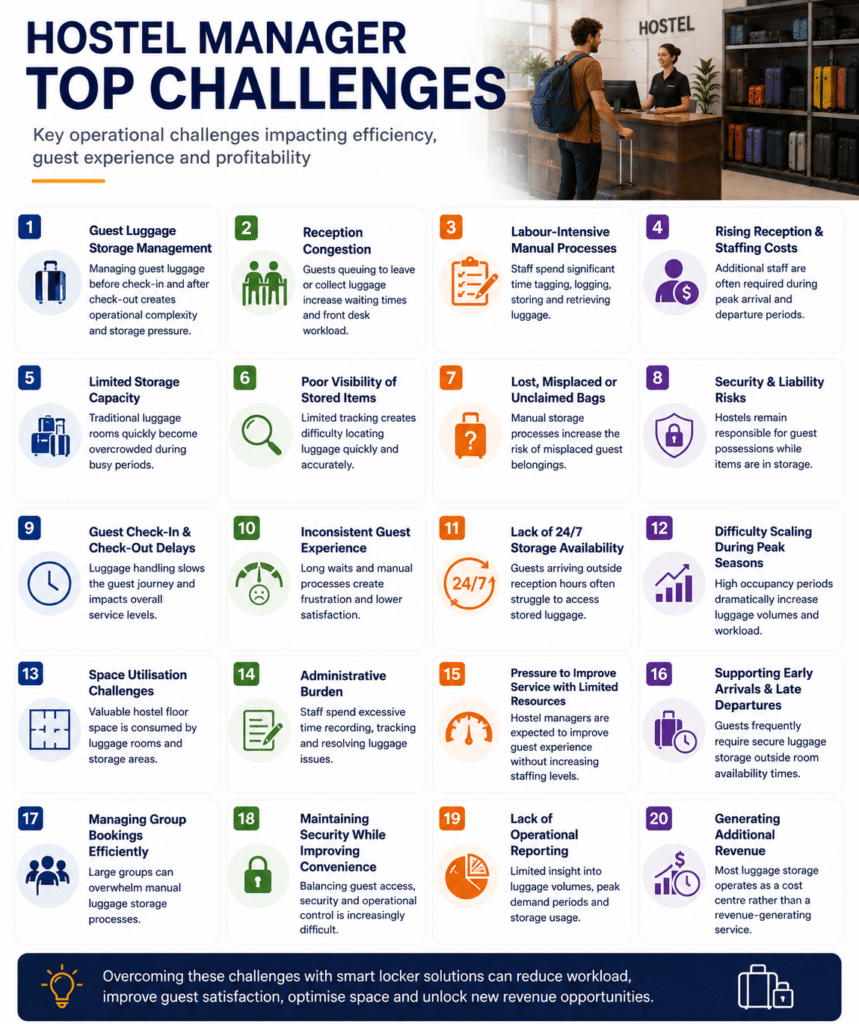
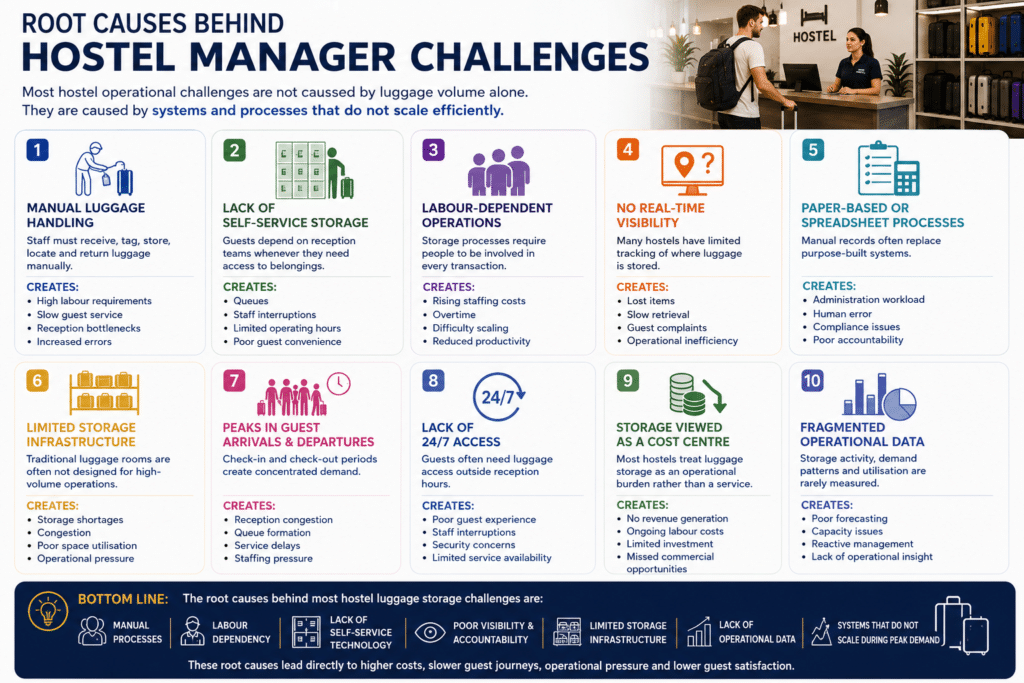
The Root Causes of the Challenges
Luggage Storage Challenges for Hostel Managers
Top 10 Luggage Storage Challenges for Hostel Managers (And How Smart Lockers Help)
1. Reception Congestion & Queues
Challenge: Guests queue to drop off and collect luggage during busy periods.
Smart Locker Impact:
- ↓ 50–90% Guest Waiting Times
- ↓ 30–70% Reception Workload
- Faster guest flow
2. Manual Luggage Handling
Challenge: Staff spend time tagging, storing, locating and returning luggage.
Smart Locker Impact:
- ↓ 30–70% Labour Costs
- ↓ 80–95% Luggage Collection Time
- Reduced administration
3. High Check-In & Check-Out Demand
Challenge: Peak arrival and departure times overwhelm operations.
Smart Locker Impact:
- ↑ 200–500% Storage Processing Capacity
- Reduced bottlenecks
- Consistent peak-time performance
4. Limited Storage Capacity
Challenge: Traditional luggage rooms fill quickly during busy periods.
Smart Locker Impact:
- ↑ 200–500% Storage Capacity
- ↑ 20–50% Better Space Utilisation
- More luggage stored in less space
5. Lost, Misplaced or Unclaimed Bags
Challenge: Manual processes create tracking errors and guest complaints.
Smart Locker Impact:
- ↓ 60–95% Lost Property Workload
- 100% digital tracking
- Faster issue resolution
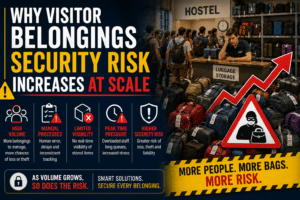
6. Security & Liability Risks
Challenge: Hostels remain responsible for guest belongings.
Smart Locker Impact:
- 100% Transaction Accountability
- Controlled user access
- Reduced theft and liability exposure
7. Lack of 24/7 Storage Access
Challenge: Guests often need access outside reception hours.
Smart Locker Impact:
- 24/7 Self-Service Access
- Reduced out-of-hours staff requests
- Improved guest convenience
8. Poor Visibility of Stored Items
Challenge: Staff cannot easily see what is stored, where, and for how long.
Smart Locker Impact:
- Near 100% Storage Visibility
- Real-time locker monitoring
- Better operational control
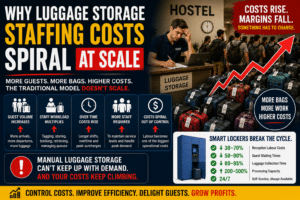
9. Rising Reception & Staffing Costs
Challenge: More staff are needed as luggage volumes increase.
Smart Locker Impact:
- ↓ 30–70% Reception Labour Costs
- Reduced overtime
- Fewer temporary staff
10. Luggage Storage Generates Cost but No Revenue
Challenge: Traditional storage operates as a cost centre.
Smart Locker Impact:
- New Recurring Revenue Stream
- Paid luggage storage
- Early arrival storage fees
- Late departure storage fees
- Day visitor storage services
- High volumes of early arrivals and late departures
- Limited staff available for manual handling
- Shared storage areas with security risks
- Guests moving frequently and unpredictably


How Luggage Lockers Support Hostel Managers
Guests store bags independently
Storage rules are enforced automatically
Security improves in shared environments
Staff are removed from luggage workflows
Locker Systems as Part of a Hoste Operational Efficiency Strategy

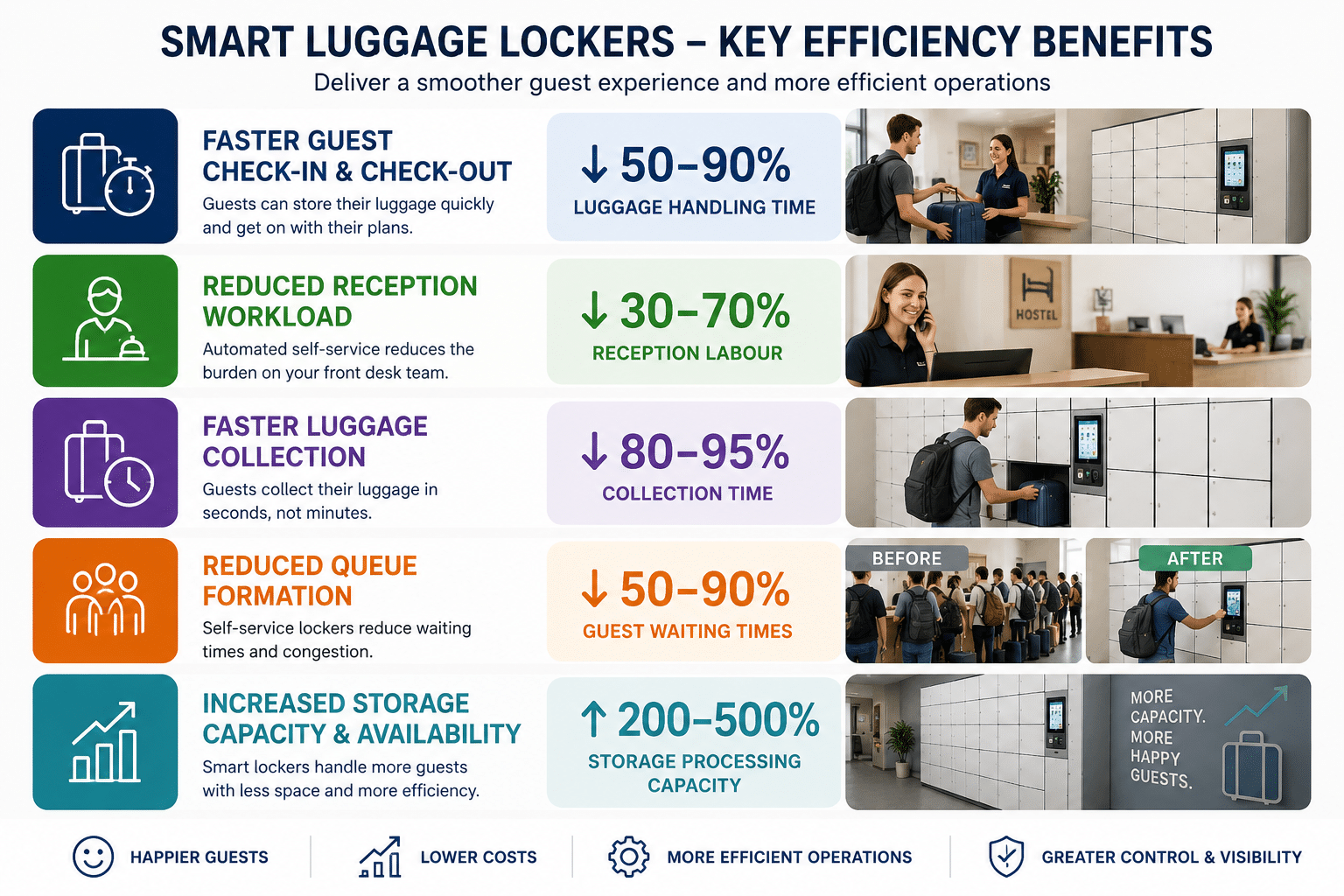
Staffed Luggage Solutions vs Hostel Self Service Smart Lockers
Designed for High-Turnover, Shared Environments
Outcomes Hostel Managers Care About
Reduced staff stress
Faster guest flow
Improved security
Better use of limited space
Security & Accountability Without Extra Staff
Explore specific use cases
Ibis Hotel Geneva — Self-Service Storage at Scale
Ibis Geneva implemented digital luggage lockers to remove manual handling pressure from front desk teams during high-turnover periods. Guests stored belongings independently, reducing operational friction and disputes.
Result: Faster guest movement, lower staff intervention, and structured, auditable storage control.
Hostel Manager Pain Points
Key Scale Pain Points
Pain
Outcomes
See How It Works in Practice
Explore Hostel-Specific Challenges
-
Manage early arrivals
-
Reduce staff involvement in storage
-
Improve security in shared spaces
-
Control storage demand
Smart Luggage Locker Solutions
Other Useful Links
Why Hotel Luggage Storage Problems Break at Scale