






Trusted by these customers





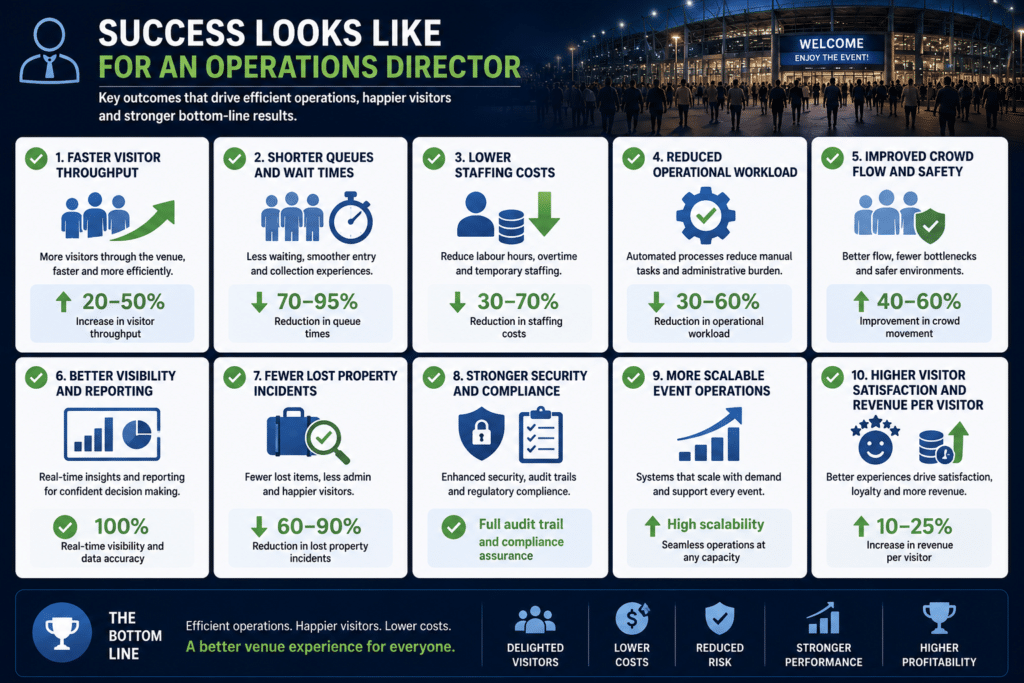
- Staff Time Managing Storage ↓ 50–80%
- Bag Search & Retrieval Time ↓ 80–95%
- Security Incident Risk ↓ 40–80%
- Event Entry Throughput ↑ 20–50%
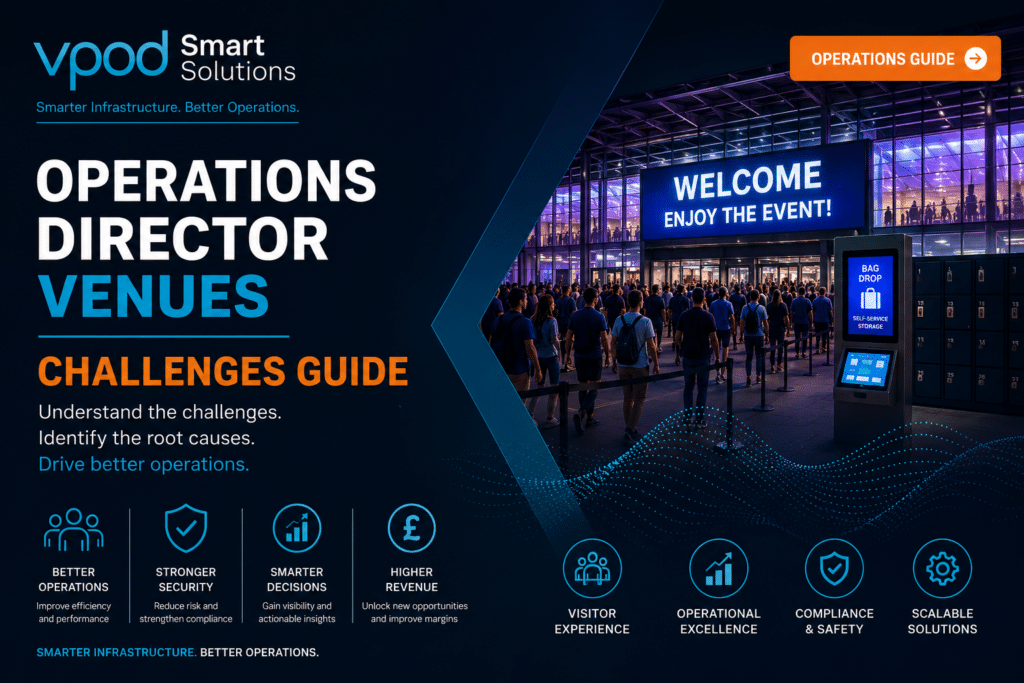
Operations Director Venues "Common Challenges"
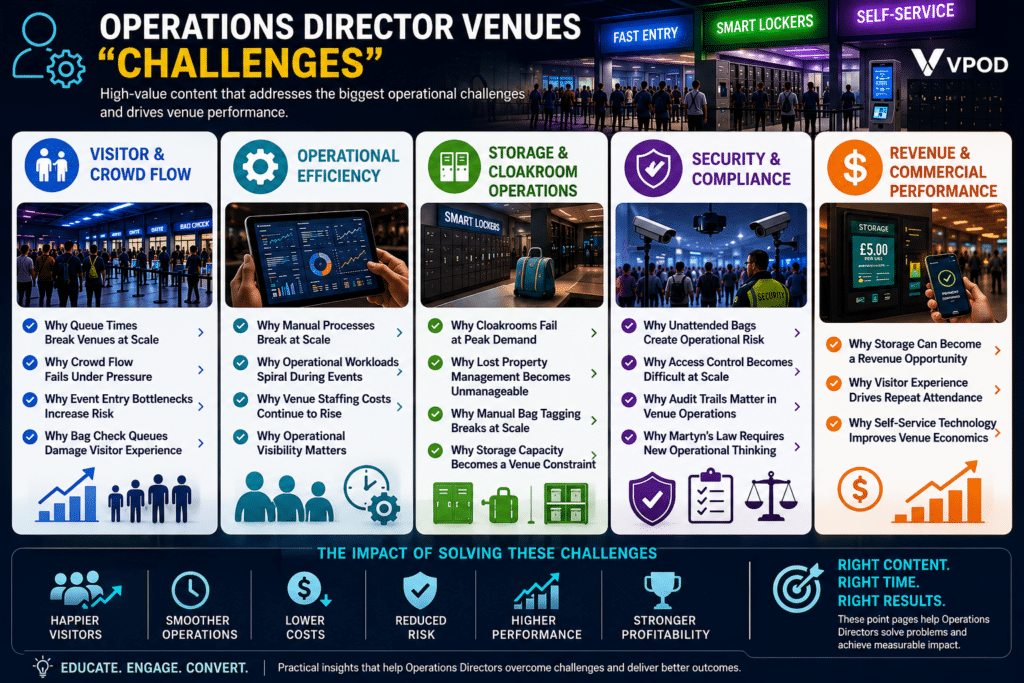
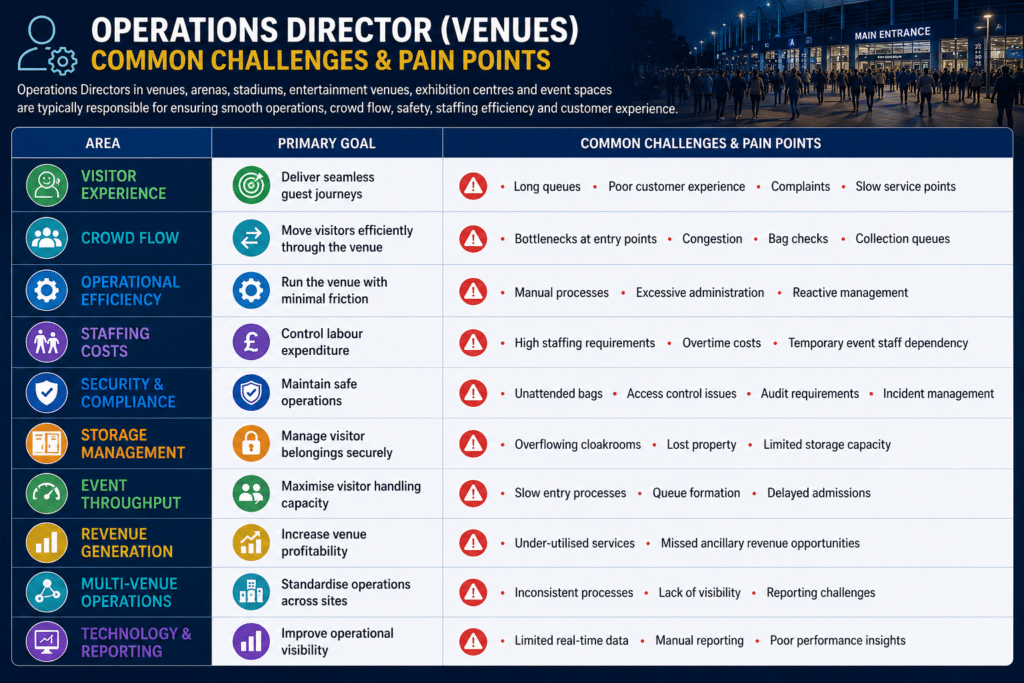
Often The Pain Points and Challenges are Symptoms
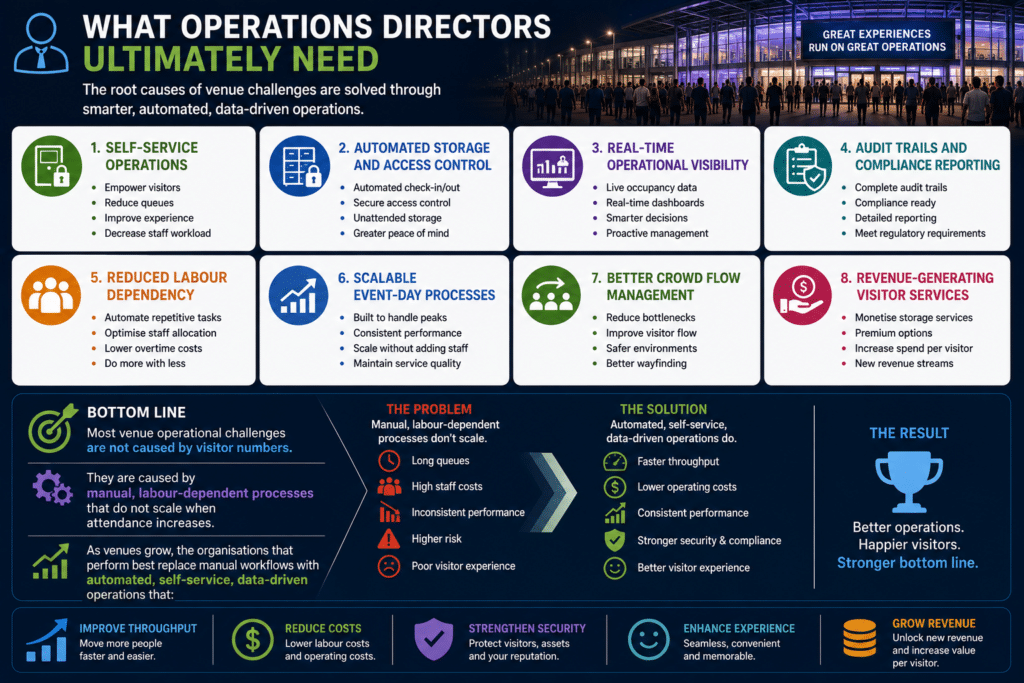
Challenge 1 : Long Visitor Queues
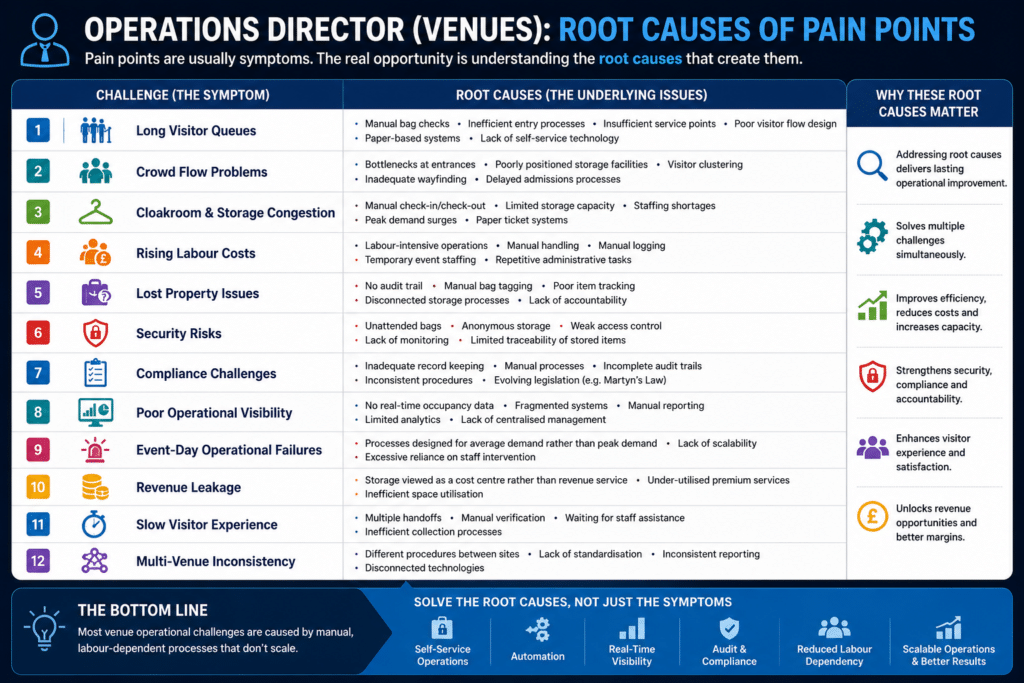
- Manual bag checks,
- inefficient entry processes,
- insufficient service points,
- poor visitor flow design,
- paper-based systems,
- lack of self-service technology
Crowd Flow Problems
- Bottlenecks at entrances,
- poorly positioned storage facilities,
- visitor clustering,
- inadequate wayfinding,
- delayed admissions processes
Cloakroom & Storage Congestion
- Manual check-in/check-out,
- limited storage capacity,
- staffing shortages,
- peak demand surges,
- paper ticket systems
Why Storage Impacts Venue Operations
Operations teams experience disruption when:
- Bag policies require manual enforcement
- Guests have no storage alternative
- Entry queues grow unpredictably
- Staff are pulled into conflict resolution
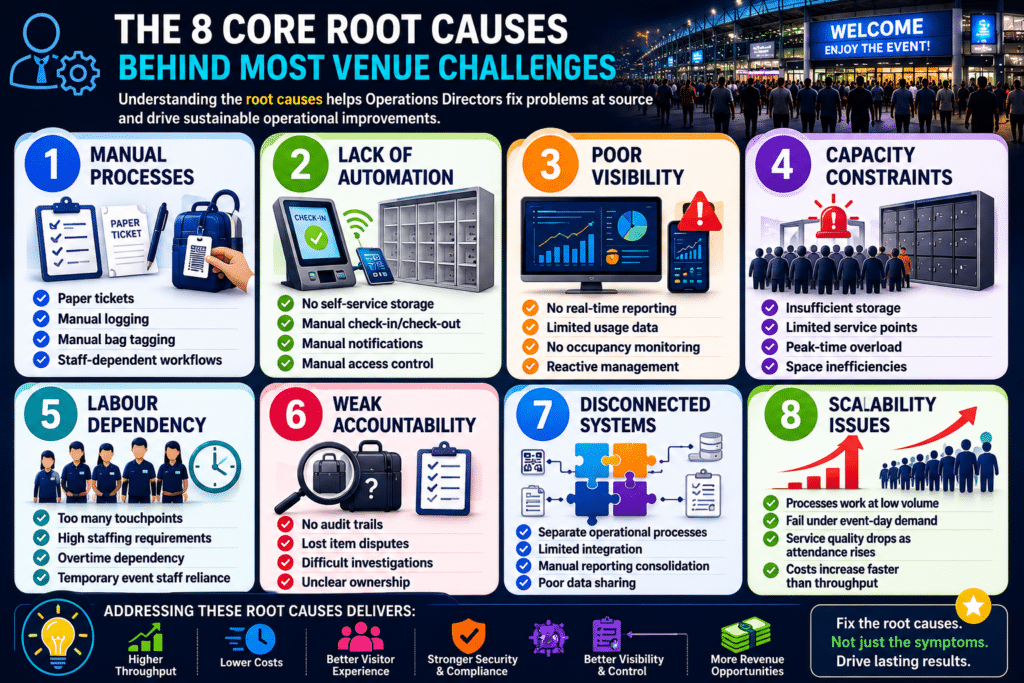
The Causes are:
1. Manual Processes
- Paper tickets
- Manual logging
- Manual bag tagging
- Staff-dependent workflows
2. Lack of Automation
- No self-service storage
- Manual check-in/check-out
- Manual notifications
- Manual access control
3. Poor Visibility
- No real-time reporting
- Limited usage data
- No occupancy monitoring
- Reactive management
4. Capacity Constraints
- Insufficient storage
- Limited service points
- Peak-time overload
- Space inefficiencies
5. Labour Dependency
- Too many touchpoints
- High staffing requirements
- Overtime dependency
- Temporary event staff reliance
6. Weak Accountability
- No audit trails
- Lost item disputes
- Difficult investigations
- Unclear ownership
7. Disconnected Systems
- Separate operational processes
- Limited integration
- Manual reporting consolidation
- Poor data sharing
8. Scalability Issues
- Processes work at low volume
- Fail under event-day demand
- Service quality drops as attendance rises
- Costs increase faster than throughput


How Venue Lockers Support Operational Flow
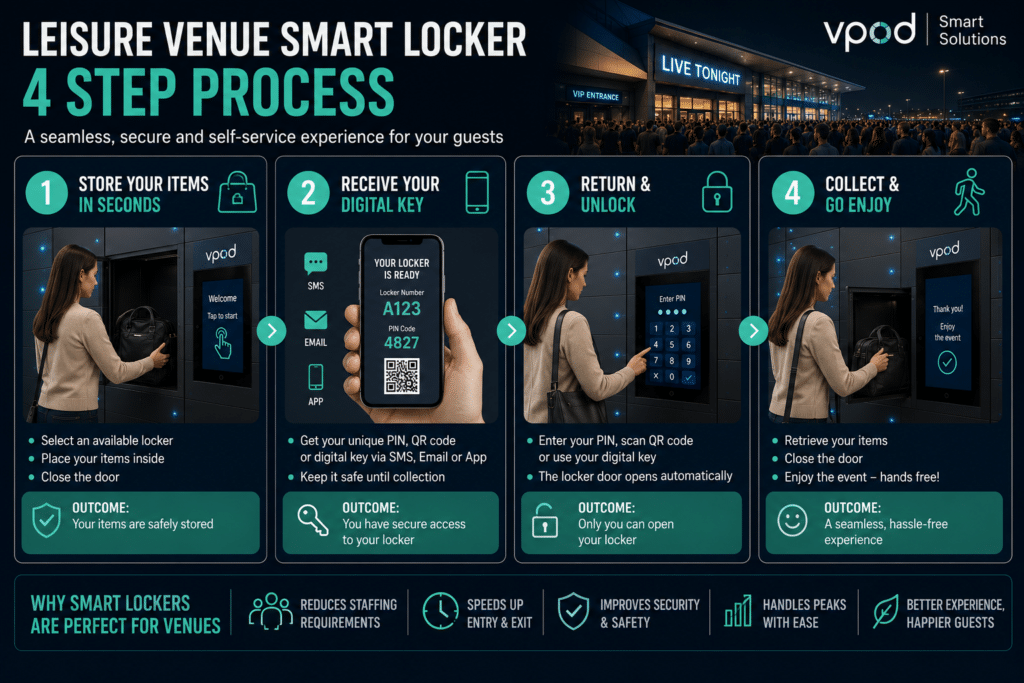
Guests self-store prohibited or bulky items
Entry points remain clear
Policies are enforced consistently
Peak ingress is absorbed without delay
Locker Systems as Part of a Venues Operational Strategy
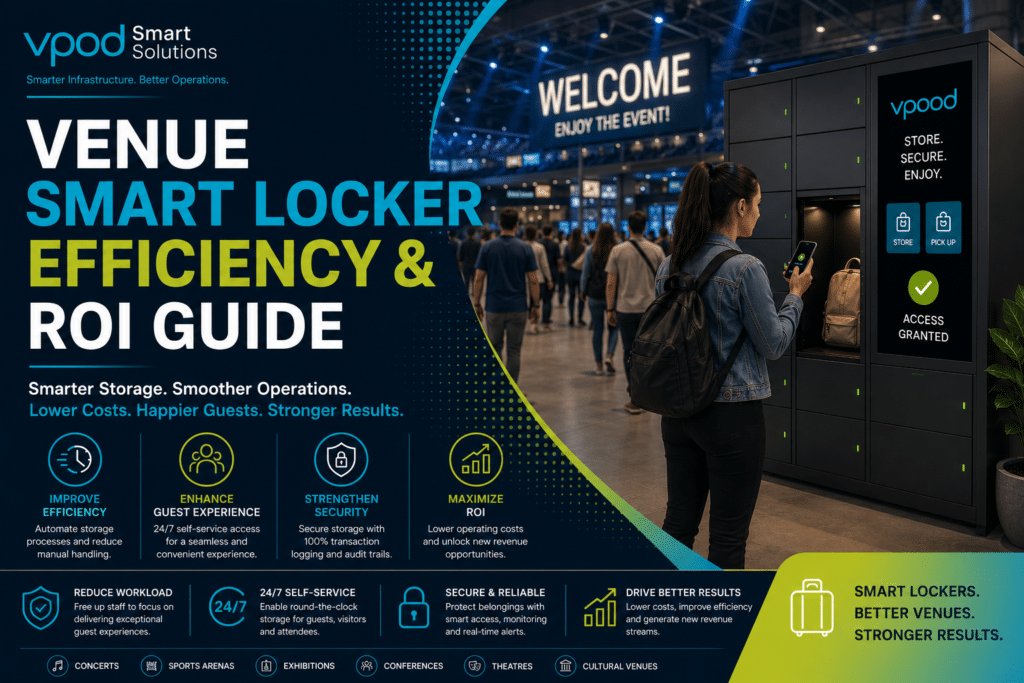
For venues, smart locker systems are no longer simply a storage solution. They are increasingly becoming a core part of operational strategy, helping venues improve visitor flow, reduce staffing costs, strengthen security, increase operational visibility, and enhance the overall guest experience.
Whether deployed in stadiums, arenas, exhibition centres, conference venues, leisure destinations, theatres, or entertainment venues, locker systems help operators manage high visitor volumes more efficiently while creating scalable, self-service operations.
1. Improve Visitor Flow & Throughput
One of the biggest operational challenges for venues is moving large numbers of visitors quickly and safely.
Smart lockers help by:
- Reducing cloakroom queues
- Eliminating manual bag check processes
- Accelerating visitor entry
- Supporting self-service bag storage
- Reducing congestion at service points
Operational Impact
Faster admissions
Reduced bottlenecks
Improved crowd flow
Increased venue capacity utilisation
2.Reduce Labour Dependency
Traditional cloakrooms and storage services require significant staffing.
Smart lockers automate:
- Bag storage
- Item collection
- Access control
- User notifications
- Transaction logging
Operational Impact
Lower staffing costs
Reduced overtime requirements
Less reliance on temporary event staff
More efficient staff allocation
3. Enhance Security & Compliance
Security is a critical operational priority for venues.
Smart locker systems provide:
- Controlled user access
- Digital authentication
- Transaction records
- Audit trails
- Secure storage environments
Operational Impact
- Reduced security risk
- Improved accountability
- Stronger compliance support
- Faster incident investigations
4. Improve Visitor Experience
Visitors increasingly expect fast, frictionless self-service experiences.
Smart lockers provide:
- Quick bag storage
- Contactless access
- Self-service retrieval
- Reduced waiting times
- Convenient collection processes
Operational Impact
- Higher visitor satisfaction
- Better event experience
- Increased likelihood of repeat attendance
- Improved venue reputation
5. Increase Operational Visibility
Most venues lack real-time visibility into storage utilisation and visitor demand.
Smart locker platforms provide:
- Occupancy monitoring
- Usage reporting
- Peak demand analysis
- Collection trends
- Operational dashboards
Operational Impact
- Better planning decisions
- Proactive management
- Improved resource allocation
- Data-driven operational improvements
6. Support Event-Day Scalability
Many venue processes work at low attendance levels but fail during peak periods.
Smart lockers scale automatically during:
- Major events
- Concerts
- Sports fixtures
- Conferences
- Festivals
Operational Impact
- Consistent service quality
- Reduced operational pressure
- Higher throughput during peak demand
- More predictable operations
7. Reduce Lost Property & Disputes
Lost property administration consumes significant venue resources.
Smart lockers create:
- Digital transaction records
- User accountability
- Time-stamped activity logs
- Item traceability
Operational Impact
- Fewer lost property incidents
- Reduced administration workload
- Faster issue resolution
- Improved customer service
8. Create New Revenue Opportunities
Locker systems can generate revenue rather than simply supporting operations.
Examples include:
- Premium bag storage
- Event-day locker rental
- VIP storage services
- Merchandise collection points
- Click & collect services
Operational Impact
- New revenue streams
- Increased spend per visitor
- Better utilisation of venue space
- Higher operational ROI
Venue Smart Locker V Cloakroom
Designed for Peak Ingress & High-Capacity Events
Outcomes Operations Directors Care About
Faster ingress and egress
Reduced queue congestion
More predictable crowd flow
Lower operational risk
Risk Reduction & Operational Visibility
Explore specific use cases
Ziggo Dome — High-Volume Event Storage
Ziggo Dome installed thousands of smart lockers to replace coin-operated systems. Exit times reduced dramatically, and staff inefficiencies were eliminated.
For Operations Directors, this improved ingress and egress predictability during high-capacity events.
Result: Faster crowd flow and reduced operational strain.

AFAS Live — Peak Flow Optimisation
AFAS Live reduced post-event exit times significantly after deploying large-scale locker infrastructure.
Result: Faster crowd dispersal and improved operational control during peak events.

See How Venue Lockers Operate During Live Events
Explore Operational Challenges
-
Enforce bag policy compliance
-
Reduce ingress congestion
-
Improve crowd flow
-
Reduce staff intervention