



What Is Cloakroom Inefficiency?
Cloakroom inefficiency refers to the inability of manual bag storage systems to handle demand during peak event periods.
This typically results in:
- Long queues at drop-off and collection
- Delays at entry points
- Lost or mishandled items
- Overloaded staff
- Poor visitor experience
1. Manual Processes Limit Throughput
Every bag requires:
- Physical handover
- Tagging and logging
- Storage and retrieval
This creates a linear process:
One staff member = one bag at a time
Typical capacity:
- 60–120 bags per hour per staff member
At scale, this is not enough.
2. Demand Peaks Overwhelm Capacity
At most events:
- 30–50% of attendees arrive with bags
- 60–80% arrive within a short time window
This creates:
- Immediate queue formation
- Rapid system overload
3. Double Queue Problem
Cloakrooms create two bottlenecks:
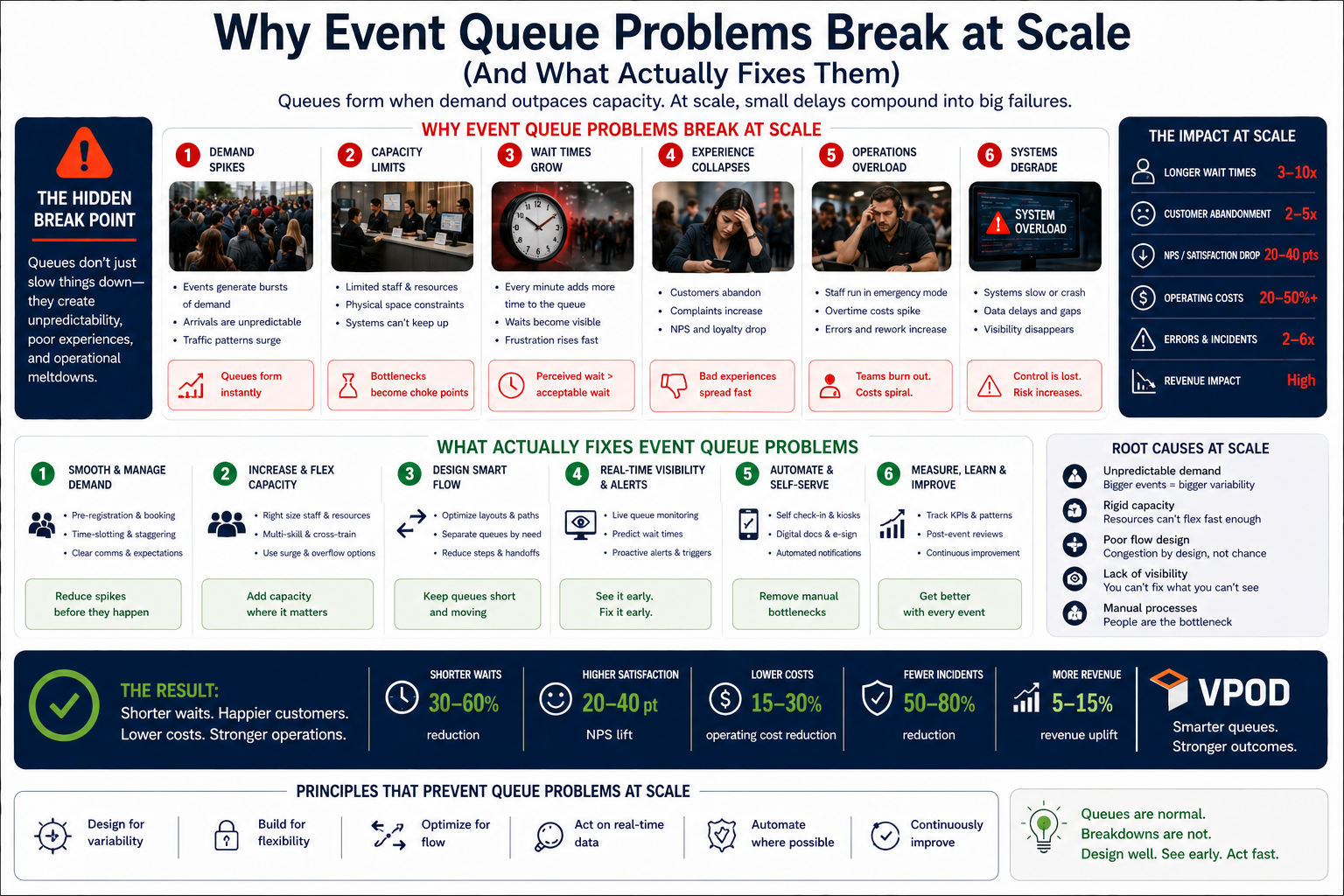
- Entry queue (bag drop) Entry Queue problems at scale
- Exit queue (bag collection)
This means inefficiency impacts both:
- Ingress
- Egress
4. Bag Handling Slows Security
Before reaching the cloakroom, bags must often be:
- Checked
- Inspected
- Cleared
This adds friction at:
- Security lanes
- Entry points
Cloakrooms don’t remove the problem — they sit after it.
5. Space Constraints Limit Scaling
Cloakrooms require:
- Physical storage areas
- Racking systems
- Staff operating zones
At large venues:
- Space is limited
- Expansion is costly
- Layouts are fixed
6. Human Error Increases with Volume
Manual systems introduce risk:
- Lost tickets
- Misplaced items
- Incorrect handovers
As volume increases, so does error rate.

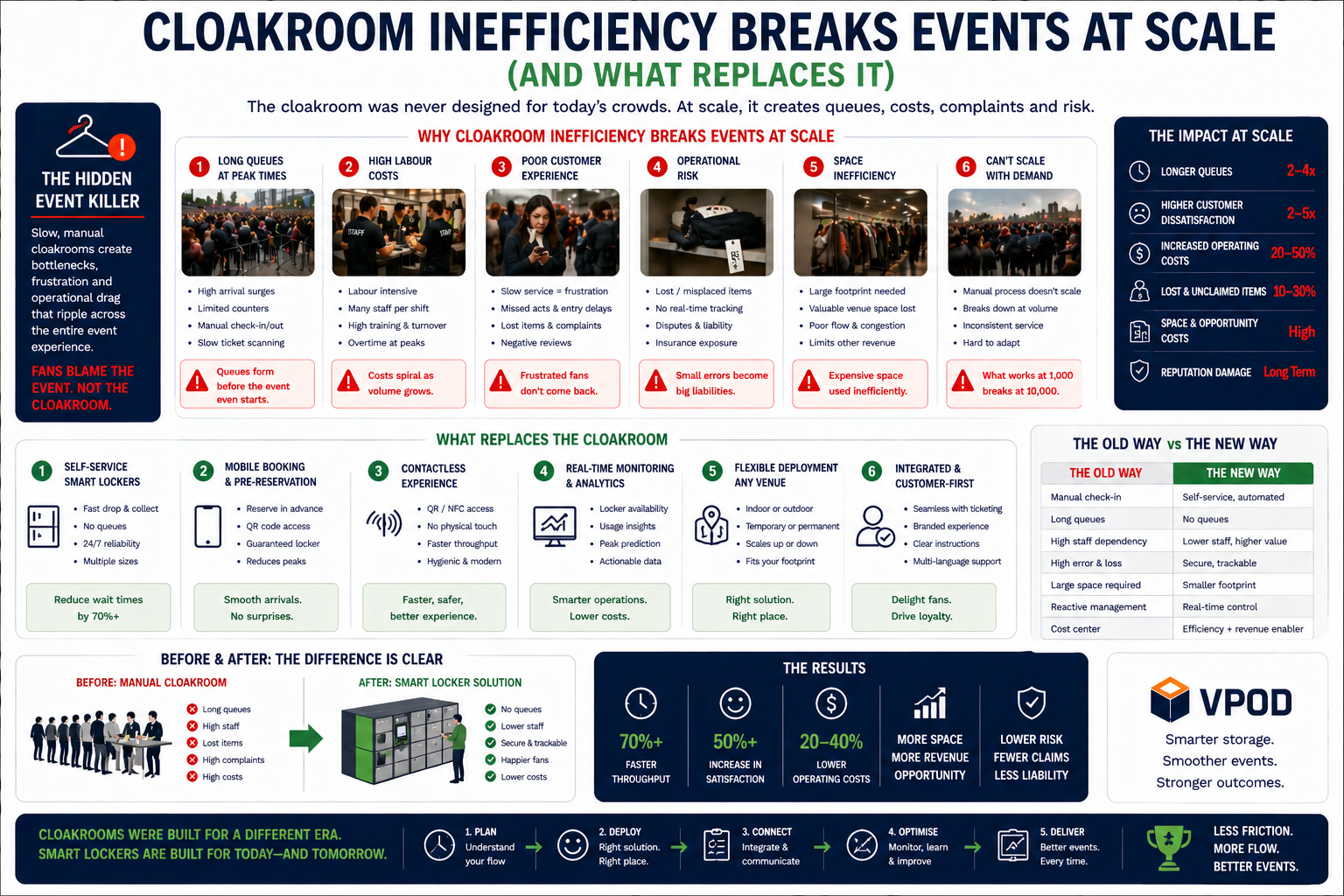
The Hidden Impact of Cloakroom Inefficiency
Security Risk
High Operational Costs
Poor Visitor Experience
Event Flow Disruption
Why Traditional Fixes Don’t Work
Add More Staff
- Increases cost significantly
- Limited improvement in throughput
Expand Cloakroom Size
- Space constraints
- High setup cost
- Still manual
Improve Tagging Systems
- Reduces errors slightly
- Does not increase speed
Restrict Bags
- Poor attendee experience
- Difficult to enforce
The Core Problem: Linear Systems vs Exponential Demand
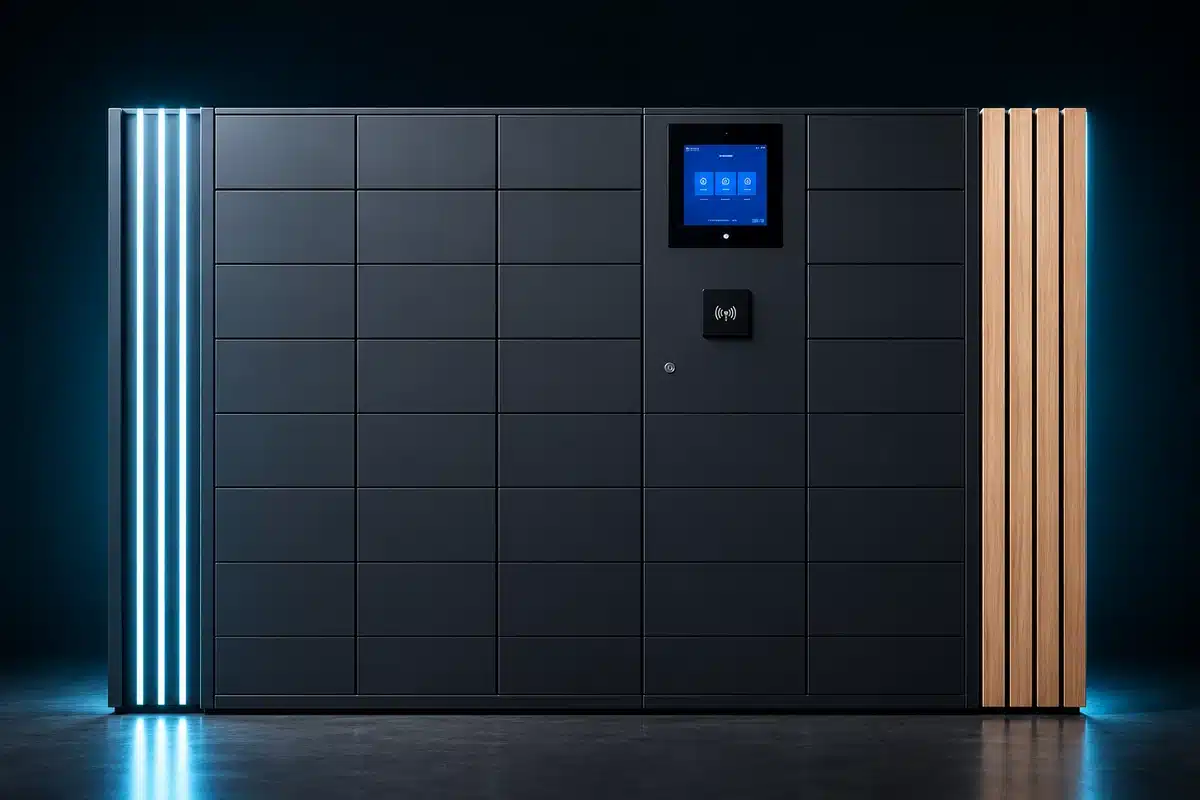
The Scalable Alternative: Self-Service Smart Lockers
Parallel Processing (Not Linear)
- Hundreds of users can store bags simultaneously
- No dependency on staff
No Entry or Exit Queues
- Instant bag storage
- Instant retrieval
Removes Bottlenecks Before They Form
- No manual handling
- No tagging
- No waiting
Reduces Security Friction
- Bags stored before entry
- Faster screening
- Increased throughput
Lower Operational Cost
- Fewer staff required
- No temporary infrastructure
- Scalable system
Real Operational Impact
Replacing cloakrooms with smart lockers delivers:
- 2–4x increase in storage throughput
- Significant reduction in queue times
- Lower staffing costs
- Improved security flow
- Better visitor experience
See: /solutions/event-smart-lockers/
Compare: /cloakrooms-vs-lockers-event-security/
Calculate ROI: /roi-calculator/
The Bottom Line
Cloakrooms were designed for smaller events.
At scale, they:
- Create queues
- Increase costs
- Introduce risk
They are not a solution.
They are a bottleneck.
The future of event storage is:
- Self-service
- Scalable
- Designed for flow
Perimeter Smart Event Lockers
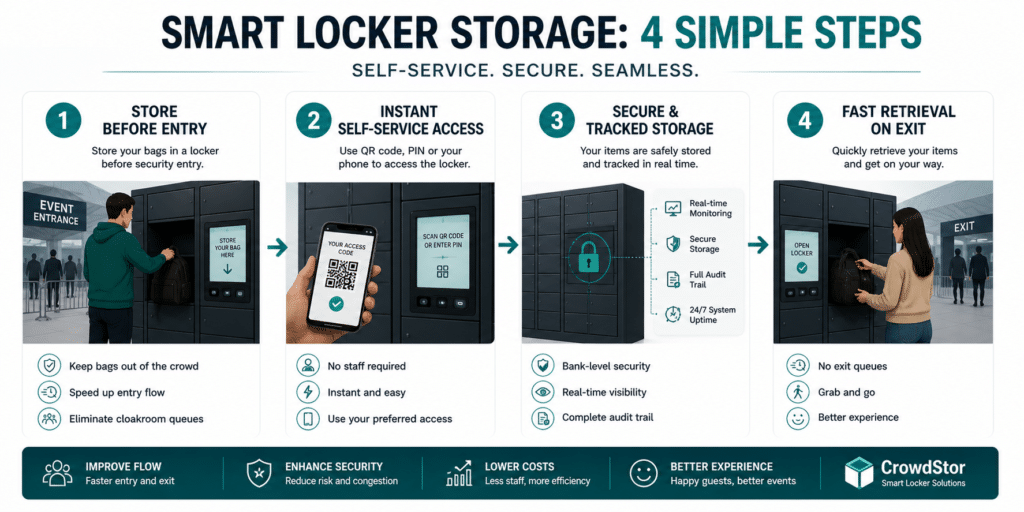
- Users access lockers via QR code, PIN, or mobile app — no staff required.
- How Lockers Work
Outcome
-
- Faster entry throughput
- Reduced queue times
- Lower staffing costs
- Improved visitor experience
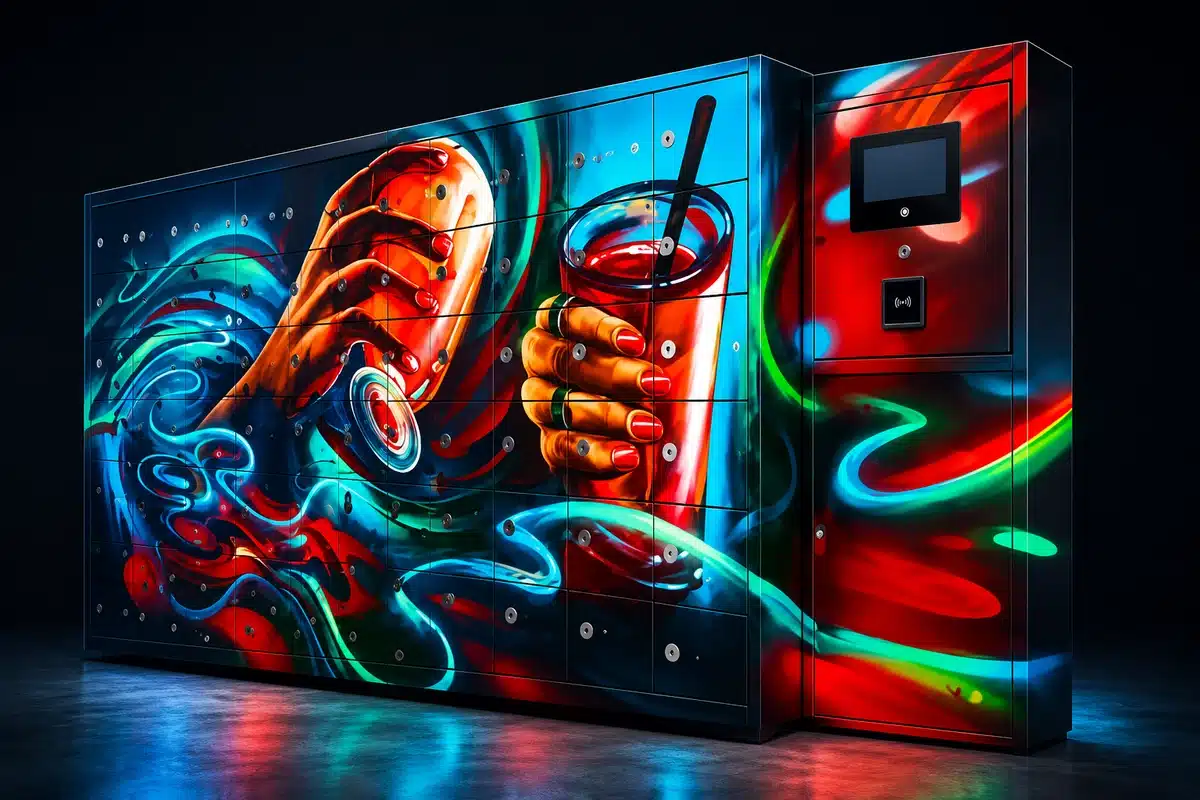
Venue & Event Smart Lockers
Manual Storage V Smart Lockers (Bags)




Proven in High-Turnover Event Environments
AFAS Live
- Increased Revenue from Lockers
- Reduced Queuing and Increased Customer Experience
- Reduce staff Pressure and costs
- Reduced Risk
Who This Is For
Event Operations Director / Head of Security
Event Operations Director
Why we think this is of interest:
Cloakroom inefficiency directly impacts throughput, staffing, and event performance — their core KPIs.
Key concerns
- Entry bottlenecks caused by bag drop queues
- Inability to handle peak arrival demand
- Linear processes limiting throughput (staff = capacity cap)
- Double queues (entry + exit) disrupting full event lifecycle
- Event start delays due to slow ingress
- Over-reliance on staff to scale operations
- Space constraints preventing operational expansion
Operational concern areas
- Throughput collapse during peak windows
- Staffing inefficiency and rising labour costs
- End-to-end flow disruption (ingress → dwell → egress)
- Poor scalability of current systems
- Reduced dwell time and revenue impact
“This is why your entry system collapses under pressure.”
Head of Security
Why this may be of interest:
Cloakroom queues create uncontrolled crowd build-up before screening, which is a direct security risk.
Key concerns
- Unscreened crowds forming outside the venue
- Bag handling slowing down security checks
- Increased exposure time at perimeter
- Lack of control over queue density
- Cloakrooms adding friction after security, not removing risk
Security concern areas
- Perimeter vulnerability due to queue build-up
- Delayed screening increasing threat exposure
- Reduced visibility across crowd clusters
- Increased likelihood of unmanaged incidents
- Non-optimised security throughput
“This is why your highest-risk area is outside the venue.”