




Estimated reading time: 9 minutes
Table of contents
- Standard Tier Events
- Enhanced Tier Events
- Martyn’s Law Event Security Implementation Timeline
- The Hidden Security Risk: Entry Queues
- Why Bags Create the Biggest Bottleneck
- A 10,000 Visitor Event Example
- How Smart Lockers Transform Event Ingress
- Queue Reduction and Throughput Gains
- The Economic Case for Event Lockers
- Martyn’s Law and the Future of Event Infrastructure
- Security Through Speed
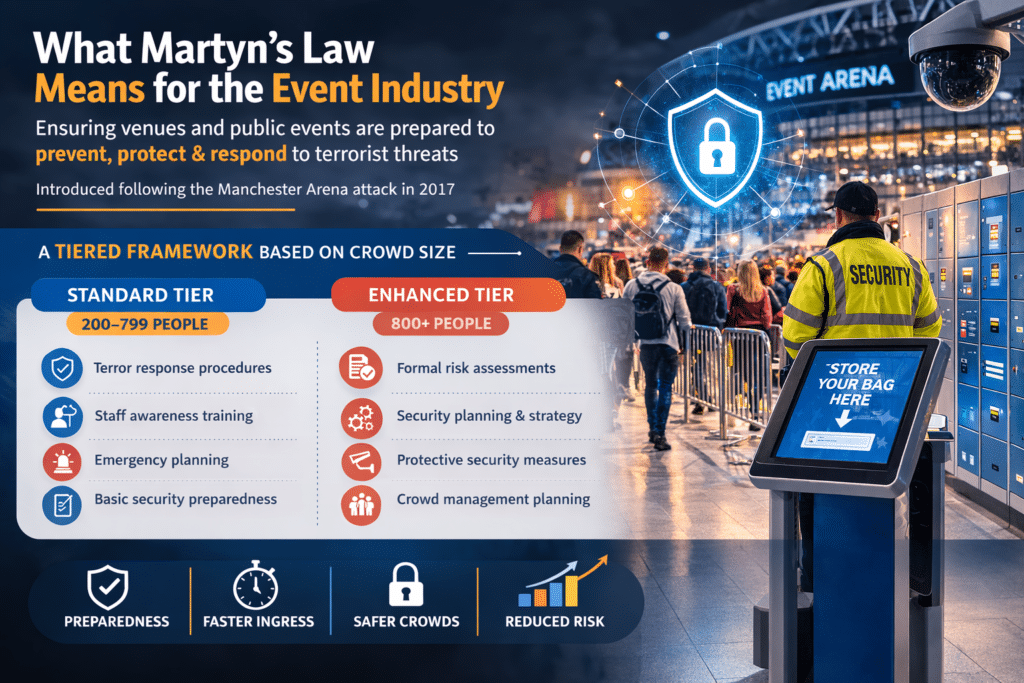
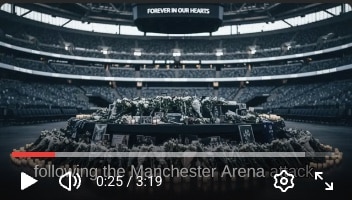
Martyn’s Law was introduced following the Manchester Arena attack in 2017. Its goal is to ensure venues and public events take proportionate steps to prepare for and mitigate potential terrorist incidents.The primary purpose to improve via Martyn’s Law event security. prepare for and mitigate potential terrorist incidents
The legislation introduces a tiered framework based on crowd size.
Standard Tier Events
Events with 200–799 people must implement:
- Terror response procedures
- Staff awareness training
- Emergency planning
- Basic security preparedness
Enhanced Tier Events
Events with 800+ attendees must implement additional measures such as:
- Formal risk assessments
- Security planning
- Protective security measures
- Crowd management planning
event security planning for large venues
This category includes most:
- music concerts
- sporting events
- exhibitions
- conferences
- festivals
crowd management infrastructure for events
For many venues, compliance will require re-engineering their entire entry process.venue security compliance solutions
Martyn’s Law Event Security Implementation Timeline
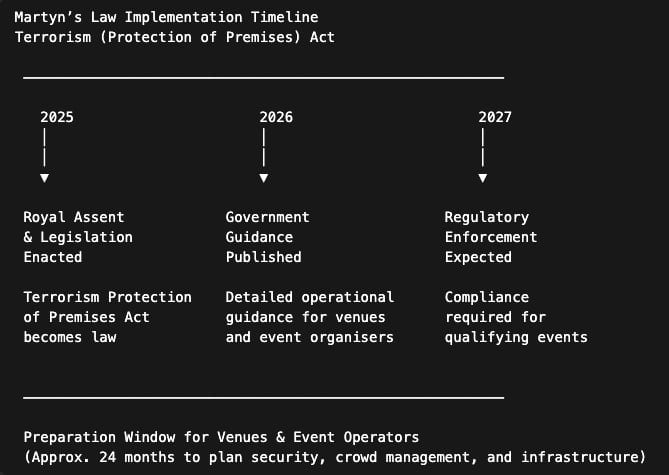
The law received Royal Assent in April 2025, but the government has provided a preparation window.
Expected timeline:
| Year | Milestone |
|---|---|
| 2025 | Martyn’s Law enacted |
| 2026 | Government guidance published |
| 2027 | Regulatory enforcement expected |
This gives venues approximately 24 months to prepare operational changes.
However, major venues are already planning infrastructure adjustments.
Because one operational challenge stands out above all others.
Event ingress.how to improve venue entry flow
The Hidden Security Risk: Entry Queues
Security screening inevitably slows entry.
Bag searches, manual inspections and cloakroom processes all reduce visitor throughput.
When thousands of visitors arrive during a short pre-event window, queues can grow rapidly.
This creates several problems:
- frustrated visitors
- operational delays
- perimeter congestion
- increased safety risk
reducing queues at large venues
In extreme cases, large queues outside venues can themselves become security vulnerabilities.
For this reason, modern venue security planning increasingly focuses on throughput rather than simply security presence.
Security must be both effective and fast.
Why Bags Create the Biggest Bottleneck
One of the largest contributors to entry delays is bags and personal belongings.
When visitors arrive with bags, venues must either:
- search them
- restrict them
- store them
Traditional cloakrooms are often the default solution.event bag storage solutions
However, manual bag handling creates major operational inefficiencies.
Staff must:
- receive the bag
- label it
- store it
- retrieve it later
Each transaction typically takes 30–40 seconds.manual cloakroom inefficiencies
When thousands of bags are involved, queues can quickly spiral.event ingress bottlenecks
A 10,000 Visitor Event Example
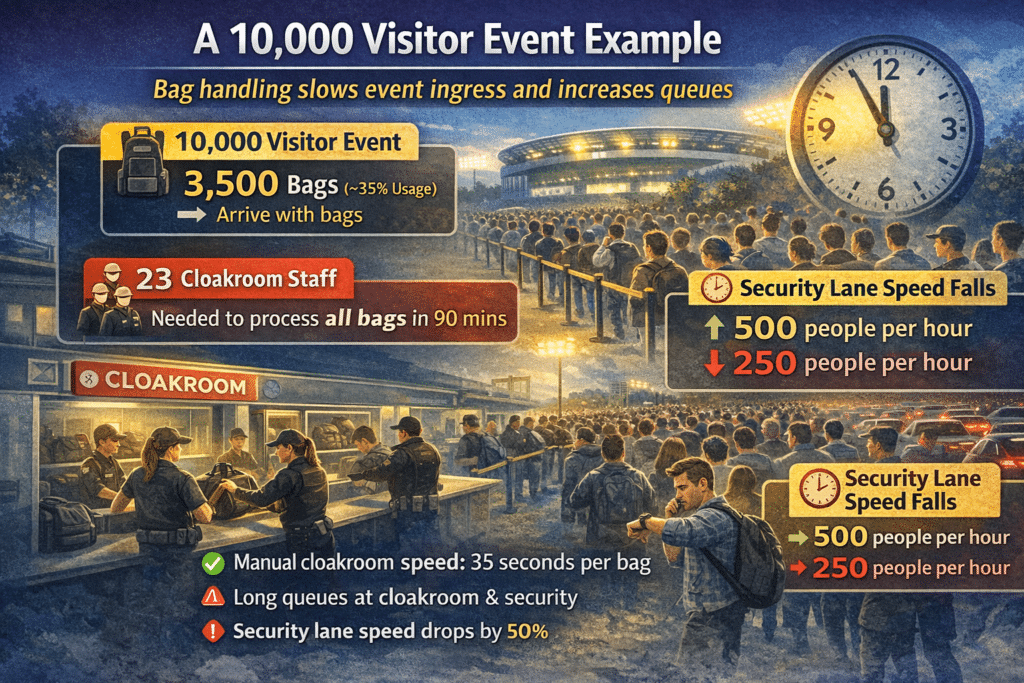
Consider a typical 10,000 visitor arena event.
Research shows roughly 30–40% of visitors arrive with bags.
Assuming 35% bag usage, the venue must process:
3,500 bags.
With manual cloakroom handling taking around 35 seconds per bag, a single staff member can process about 103 bags per hour.
To process all bags within a 90-minute arrival window, venues would need approximately:
23 cloakroom staff.
Even with this staffing level, queues can easily exceed 400–800 people during peak arrival periods.
And because many bags still reach security lanes, screening speed is reduced.
Security lane throughput may fall from:
500 people per hour to roughly 250 people per hour.
This dramatically increases entry queues.
How Smart Lockers Transform Event Ingress
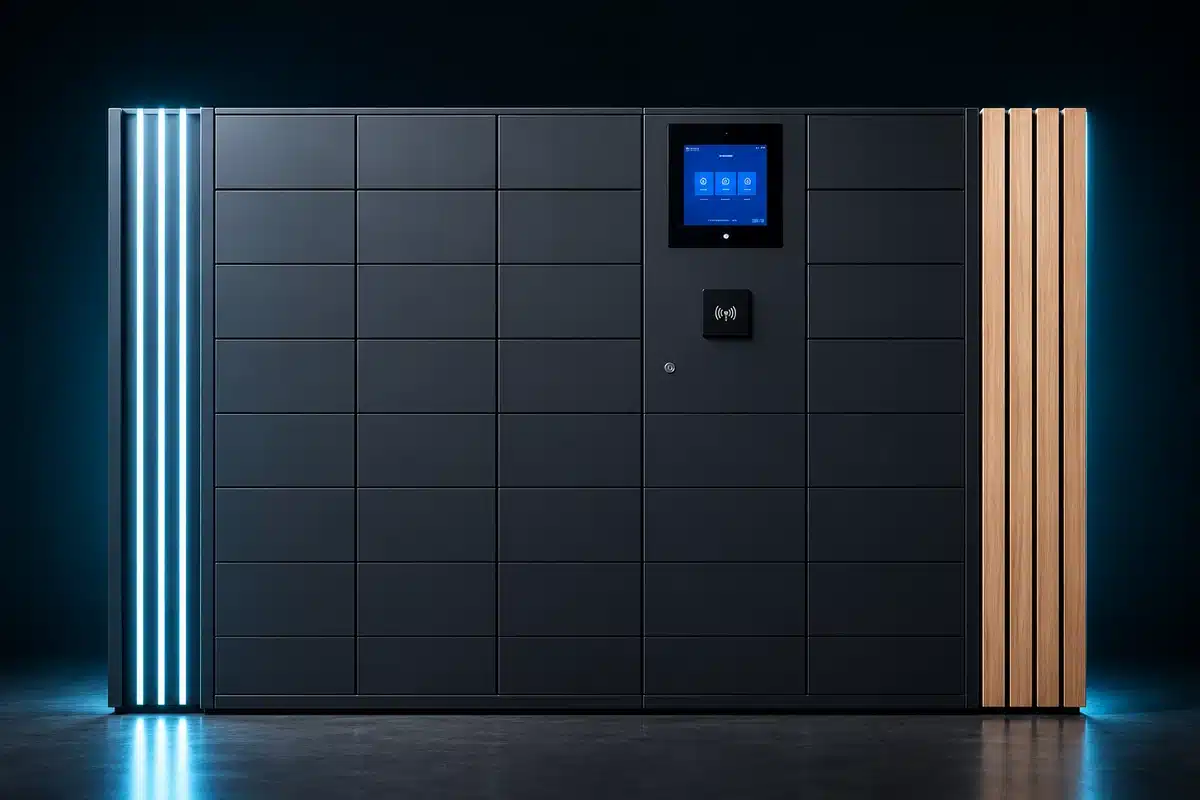
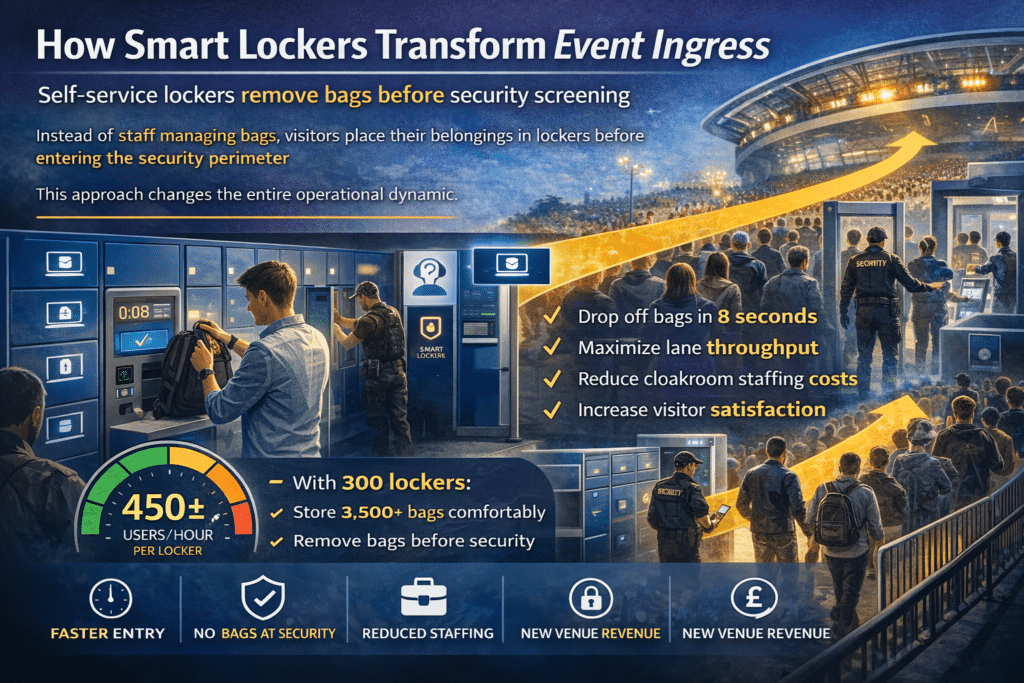
An increasingly popular alternative is self-service smart locker systems.
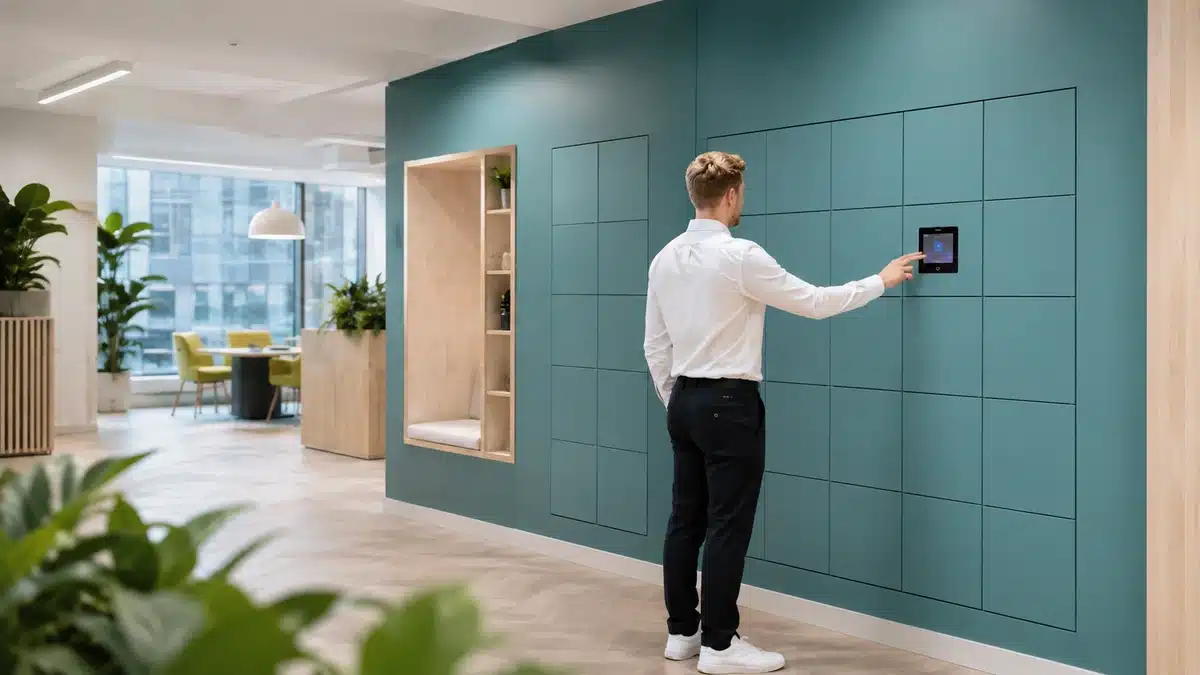
Instead of staff managing bags, visitors place their belongings in lockers before entering the security perimeter.
This approach changes the entire operational dynamic.
Locker transactions typically take around 8 seconds, compared with 35 seconds for manual cloakrooms.
A single locker can process approximately 450 uses per hour.
Even a modest locker installation — for example 300 lockers — can comfortably process thousands of bags within a short arrival window.
Because lockers remove bags before security screening, they also allow security lanes to operate at maximum throughput.smart rental lockers for venues
Queue Reduction and Throughput Gains
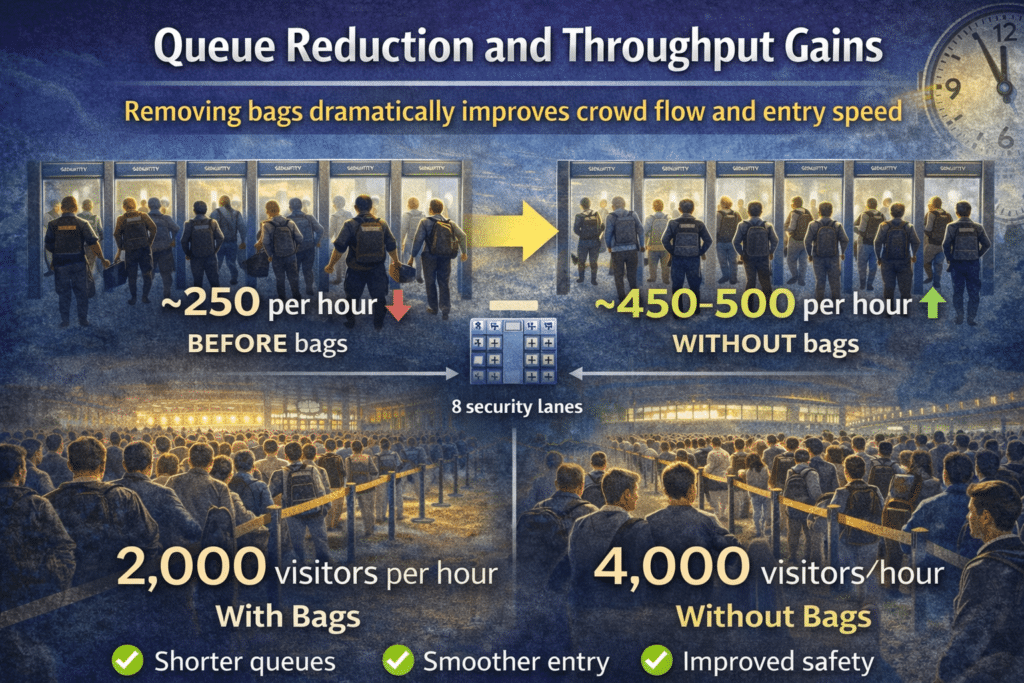
Removing bags from entry lanes has a dramatic effect on crowd flow.
Security lane throughput can increase from:
~250 people per hour to around 450–500 people per hour.improving security lane throughput
For a venue with eight security lanes, this increases total entry capacity from:
2,000 visitors per hour to up to 4,000 visitors per hour.
The result:
- shorter queues
- smoother entry
- improved safety around the venue perimeter
The Economic Case for Event Lockers
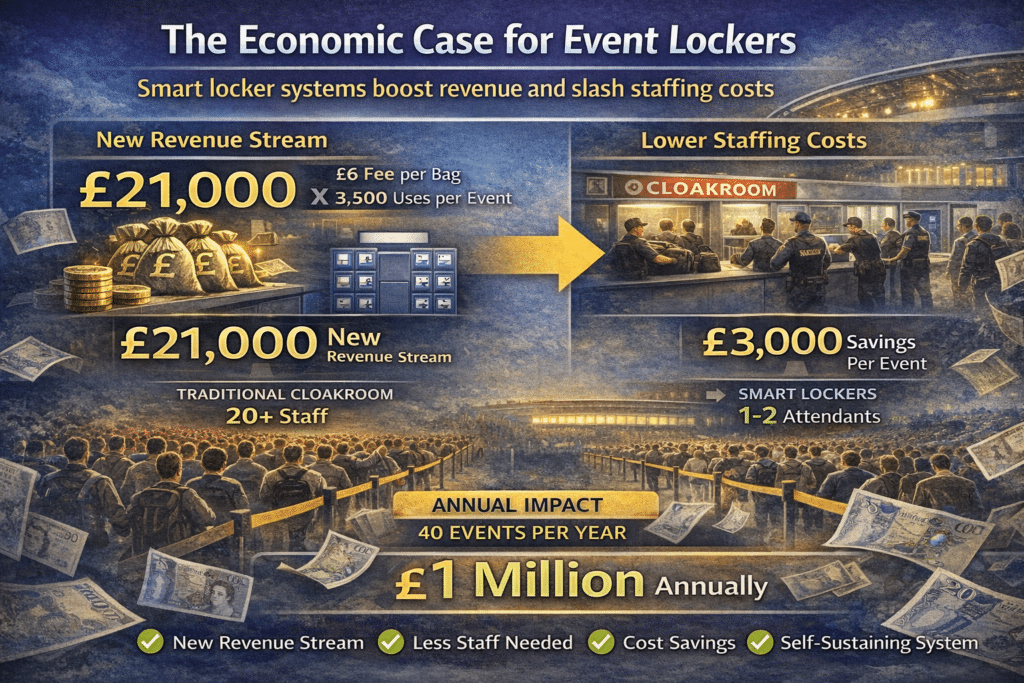
Smart locker systems do more than improve operations.
They also generate new event revenue streams.
If locker use is priced at £6 per bag, and 3,500 visitors store bags, revenue per event can reach:
£21,000.
At the same time, locker systems dramatically reduce staffing requirements.
Where a traditional cloakroom might require 20+ staff, locker systems typically need only one or two attendants.
This can reduce staffing costs by over £3,000 per event.
For venues hosting 40 events per year, the combined financial impact can approach:
£1 million annually.event locker ROI calculator
Martyn’s Law and the Future of Event Infrastructure
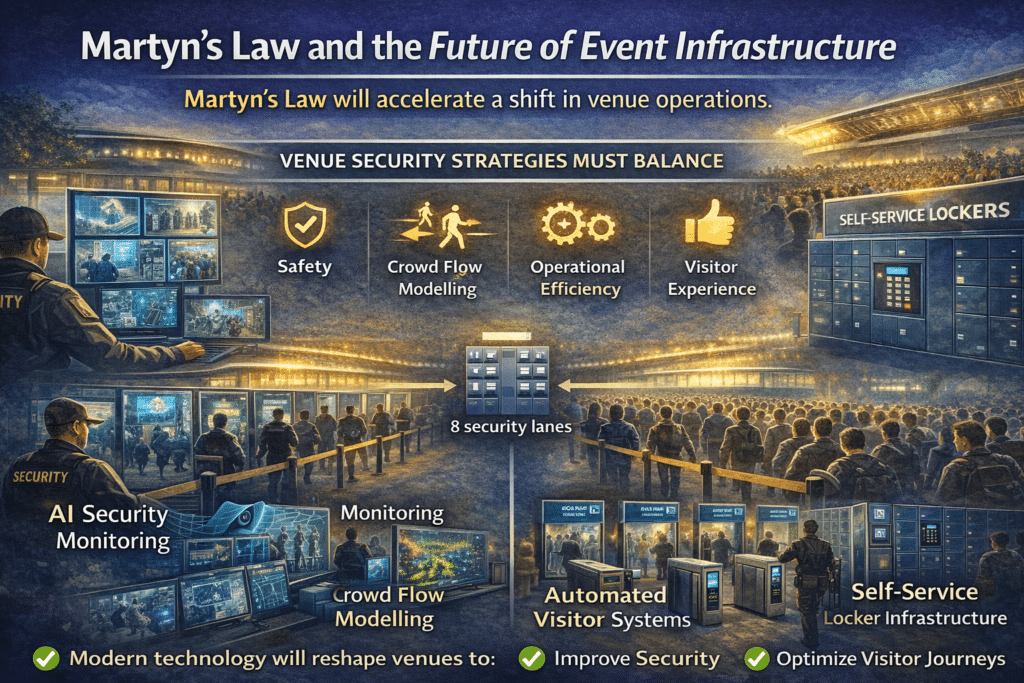
Martyn’s Law will accelerate a shift already underway in venue operations.
Security planning is evolving from a reactive process into a core infrastructure design challenge.
Modern venues must balance:
- safety
- crowd flow
- operational efficiency
- visitor experience
Technology solutions that improve throughput while maintaining security will become increasingly important.
This includes:
- AI security monitoring
- crowd flow modelling
- automated visitor systems
- self-service locker infrastructure smart venue technology solutions
Security Through Speed
The central lesson of Martyn’s Law is that security is not only about protection.
It is also about how efficiently people move through venues.
Long queues, congestion and perimeter crowding introduce risks that modern venues must manage carefully.
By improving ingress speed and reducing bag-related bottlenecks, venues can enhance both security compliance and operational performance.
Smart locker infrastructure is one of the simplest ways to achieve this.
Because in the new era of event security, the goal is clear:
Move crowds safely, efficiently and intelligently.book a demo for event locker systems
What is Martyn’s Law and how does it affect event venues?
Martyn’s Law is UK legislation designed to improve security at public venues and events following the Manchester Arena attack. It requires venues to implement proportionate security measures based on capacity, including risk assessments, staff training and emergency planning.
Martyn’s Law introduces two categories:
Standard Tier (200–799 people): Basic security procedures, staff training and emergency planning
Enhanced Tier (800+ people): Formal risk assessments, security planning, crowd management and protective measures
Most large events such as concerts, festivals and sporting events fall into the Enhanced Tier.
Martyn’s Law received Royal Assent in April 2025. Government guidance is expected in 2026, with enforcement likely beginning in 2027. This gives venues a limited window to prepare operational and infrastructure changes.
Large queues outside venues create congestion and increase vulnerability to potential threats. Under modern security planning, managing crowd flow and reducing wait times is critical to minimising risk and ensuring safe entry.
Event ingress refers to the process of moving visitors into a venue. Efficient ingress is essential because delays can lead to long queues, operational disruption and increased safety risks, especially during peak arrival periods.
Bags require additional handling such as searches, restrictions or storage. Manual processes like cloakrooms can take 30–40 seconds per transaction, significantly reducing throughput and increasing queue times.
Traditional cloakrooms rely on manual processes, requiring staff to receive, label, store and return items. This creates bottlenecks, increases staffing costs and slows overall entry flow, particularly at large events.
Smart lockers allow visitors to store bags independently before entering security. This removes manual handling, reduces transaction times to around 8 seconds and significantly increases entry throughput.
By removing bags from security lanes, smart lockers can increase throughput from around 250 people per hour to up to 500 people per hour per lane. This can halve queue times and improve crowd flow.
Yes. Smart lockers support compliance by improving crowd management, reducing perimeter congestion and enabling safer, more efficient entry processes—key requirements under the Enhanced Tier.
Yes. Many venues charge for locker use, typically around £5–£6 per bag. At large events, this can generate significant revenue while also reducing staffing costs associated with manual cloakrooms.
Unlike traditional cloakrooms that may require 20+ staff, smart locker systems typically require only one or two attendants, significantly reducing operational costs.
Smart lockers are most effective at large events with 1,000+ attendees, particularly where 30–40% of visitors carry bags. However, they can also improve operations at smaller venues.
In addition to smart lockers, venues are increasingly using:
AI-powered security monitoring
Crowd flow modelling
Automated visitor systems
Digital access control
These technologies help balance security, efficiency and visitor experience.
The biggest challenge is managing event ingress—ensuring visitors enter safely and efficiently without creating high-risk queues or congestion outside the venue.