
Event Ingress Bottlenecks Explained | Why Entry Systems Fail at Scale

Understand why event entry systems break under pressure — and how to fix bottlenecks that cause queues, delays, and security risks.

Event ingress is one of the most critical — and most fragile — parts of venue operations.

When thousands of visitors arrive within a short time window, even small inefficiencies can trigger:

  • long queues
  • delayed entry
  • perimeter congestion
  • increased safety risk

Most venues don’t have a security problem — they have a throughput problem.

See manned cloakroom inefficiency

Cloakroom v Smart Lockers

Trusted by these customers

afas live logo
afas logo
colorado charlie logo
excel logo
flipout logo
health club jordaan logo
heineken logo
jassie logo
ldlc logo
nextvenue logo
paradiso logo
patronaat logo
ahoy logo
snowworld logo
toverland logo
  • +30% to +100% increase in entry throughput
  • Up to 50–80% reduction in peak queue length
  • 20–60% reduction in screening time per person

Powerful metrics to reduce queue risk at venues and events in peak traffic periods

When combined, these metrics prove:
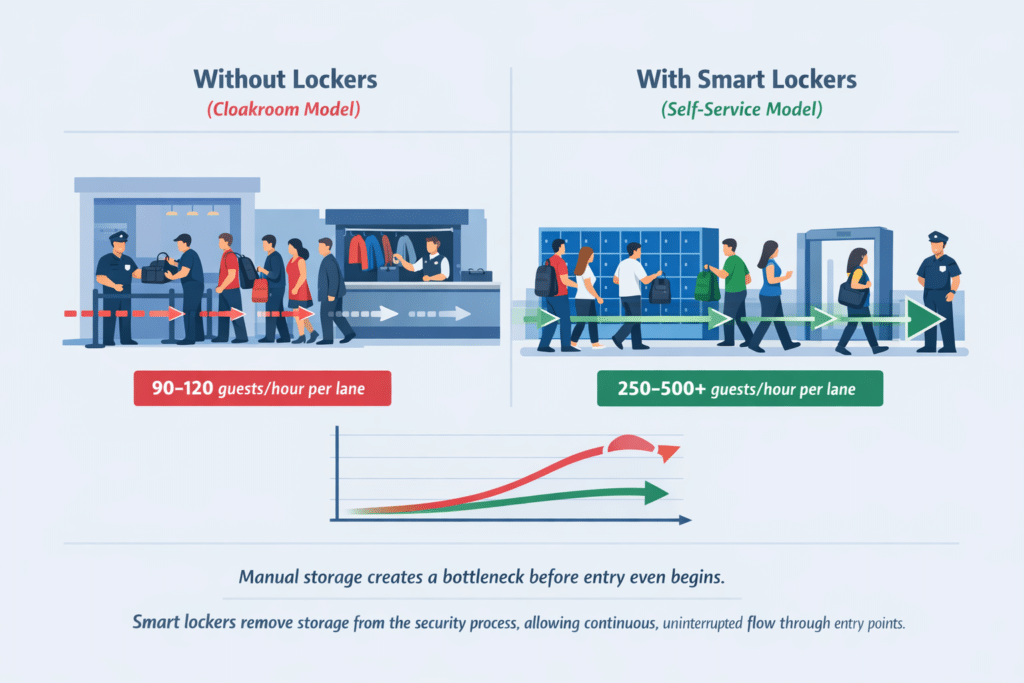
Which aligns directly with:

  • Martyn’s Law
  • Crowd safety
  • Operational efficiency
+30% to +100% increase in entry throughput
Up to 50–80% reduction in peak queue length
20–60% reduction in screening time per person

On This Page

1. Why this problem happens
2. What breaks at scale
3. How lockers solve it
4. Real-world example
5. FAQs

Why Queues Happen

Ingress fails when more people arrive than you can process

This is the fundamental equation:

Arrival Rate > Throughput = Queues

What this means in reality:

  • 5,000 people arrive in 45 minutes
  • Security can process 80 people per minute

Capacity = 3,600 people
Demand = 5,000 people

1,400 people have nowhere to go → queue forms

1. Peak Arrival Behaviour (Human Factor)

People don’t arrive evenly.

They arrive:

  • Just before doors open
  • Just before kickoff / show start

Creates a massive surge

2. Limited Throughput (System Constraint)

Every entry system has a cap:

  • Security lanes = fixed capacity
  • Staff = limited
  • Space = constrained

You cannot scale instantly

3. Bags (The Biggest Hidden Killer)

Bags dramatically slow everything down:

  • Add inspection time
  • Increase variability
  • Require manual handling

One bag can double processing time

4. Variability (Unpredictable Processing Time)

Not every guest takes the same time:

  • Some pass instantly
  • Others require secondary checks

This creates inconsistent flow, which breaks systems

5. Poor System Design (Structural Issue)

Many venues weren’t built for:

  • Modern security requirements
  • High-density arrival waves
  • Continuous flow

Creates choke points and congestion zones
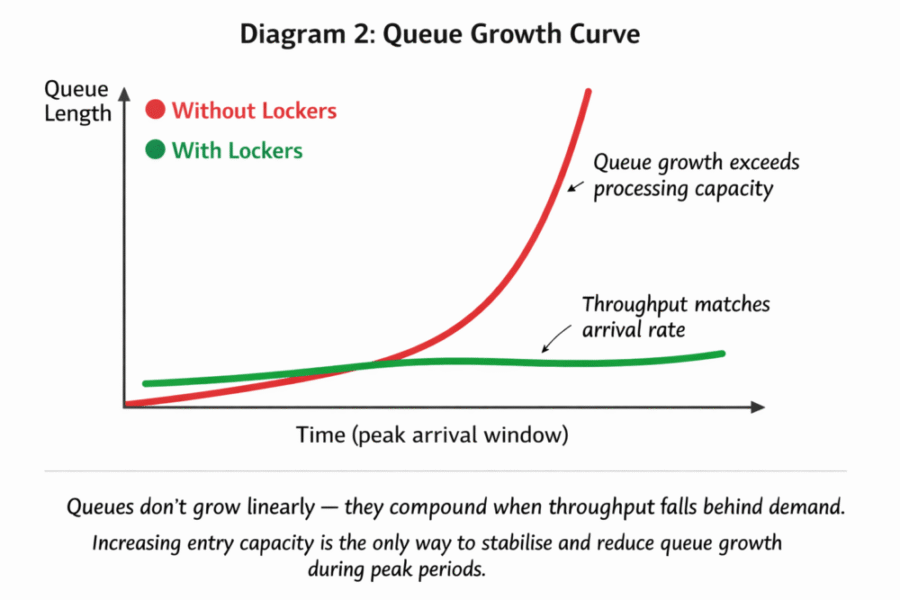
Queue growth is never steady its exponential
The Real Problem: Queue Growth Is Exponential

Why do queues form exponentially

Because:

  • Delays stack
  • Throughput drops under pressure
  • People keep arriving

Example:

  • 2-minute delay → small queue
  • 5-minute delay → large queue
  • 10-minute delay → system failure

Once queues form, they are very hard to recover from

The Feedback Loop That Breaks Ingress

Ingress problems create a vicious cycle:

  1. Throughput slows
  2. Queue builds
  3. Crowd density increases
  4. Staff pressure increases
  5. Processing slows further

System collapses under its own weight

The Critical Insight

Most venues think the problem is:

  • Not enough staff
  • Not enough lanes

But the real problem is:

Too much friction per person


What Actually Causes Friction

  • Bags
  • Manual processes
  • Multiple checkpoints
  • Poor layout
  • Unpredictable screening

Why Traditional Fixes Fail

Venues try to solve ingress problems by:

  • Adding staff
  • Adding lanes
  • Extending entry time

The Real Solution Principle

Ingress improves when you:

Reduce what needs to be processed

Not just process faster.


Simple Way to Think About It

Ingress is like a motorway:

  • More cars than lanes → traffic jam
  • Slower cars (bags) → worse congestion

You don’t fix traffic by:

  • Adding more traffic lights

You fix it by:

  • Reducing friction
  • Increasing flow

Bottom Line

Ingress problems occur because:

Too many people + too much friction + not enough throughput

“Ingress problems happen when arrival demand exceeds processing capacity — and friction like bag checks slows throughput, causing queues to grow exponentially.”
How Self-Service Lockers Dramatically Increase Event Ingress Speed

  • Remove bags from the entry process → fewer items to screen
  • Increase throughput per lane → more guests processed per minute
  • Reduce variability → faster, more consistent screening times
  • Eliminate cloakroom queues → no secondary bottlenecks before entry
  • Lower staff dependency → smoother, more predictable flow
  • Shorten overall entry time → guests move quickly from arrival to access
Fix Venue Ingress - Martyn's Law

Design out queues with faster throughput

The result: faster ingress, shorter queues, and higher-capacity entry systems without adding more staff or lanes.

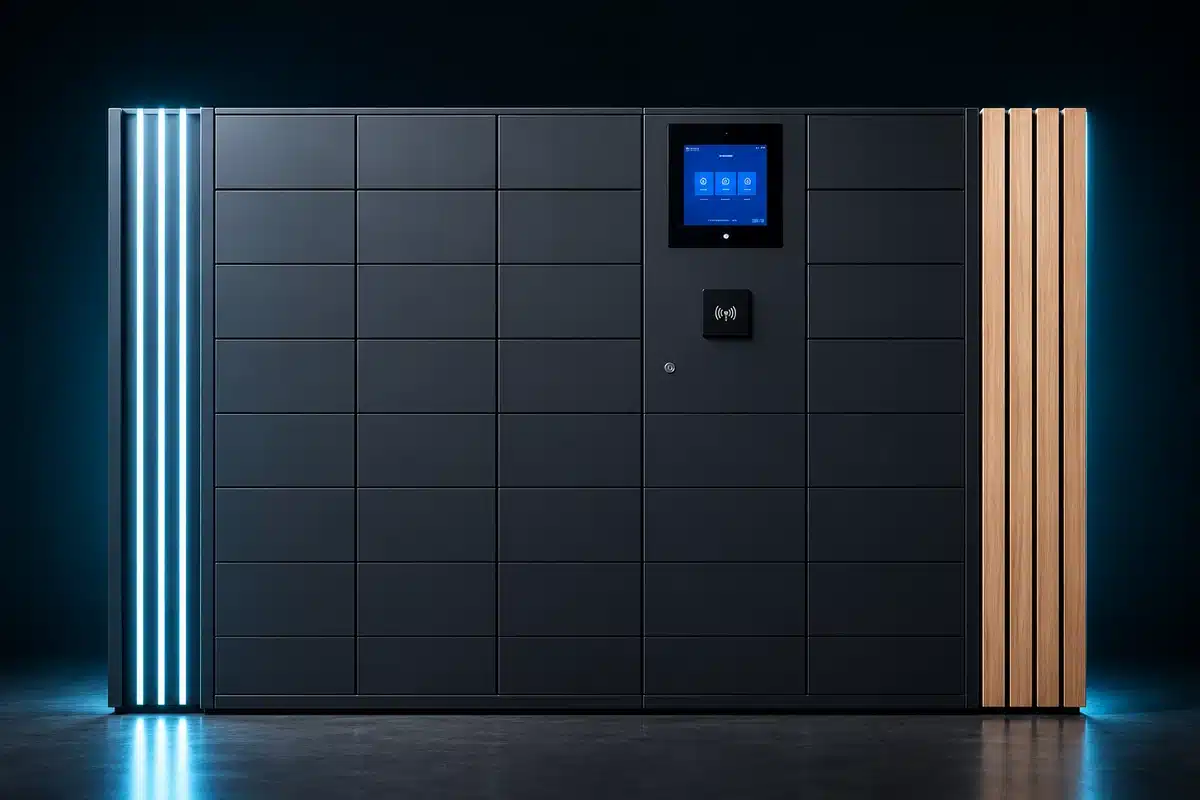
Traditional Cloak Room vs Pre Entry Smart Lockers

Bag Checks (Manual Security Screening)
Reactive (inspect bags at entry)
Bags brought into security zone
Manual bag checks
20–40 sec per bag
~200–250 people/hour per lane
Slows screening significantly
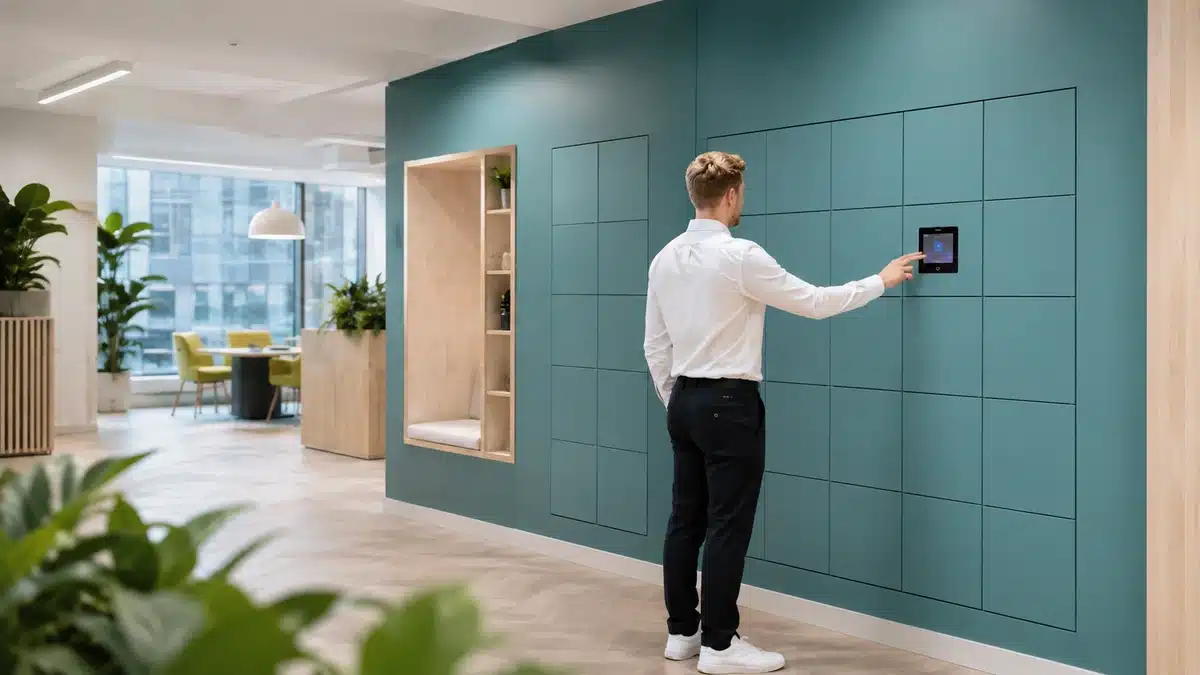
Smart Lockers
Preventative (remove bags before entry)
Bags stored before security
No bag inspection required (reduced volume)
5–10 sec per transaction
~450–500 people/hour per lane
Speeds up screening

Operational Impact

Bags Stored pre entry - Self Service
Reduced Queues , Faster Ingress speeds
No Bag Inspection workload / staffing / Liability
75% reduction in entry transaction speed

Case Study

Paradiso

Challenge

Reduce queues

Increase Revenue

Reduce Ingress Friction – case study video

Cut staff Costs – case study pdf


Solution

7 Proven Strategies to Reduce Event Queues


1. Remove Storage from Entry

Cloakrooms create queues before entry even begins.

Fix:

  • move storage outside entry flow
  • eliminate manual handling

cloakroom inefficiency explained → /pain-points/cloakroom-inefficiency-events


2. Reduce Bag Volume at Entry

Bags slow security and create bottlenecks.

Fix:

  • enforce bag policies
  • provide alternative storage options

bag check delays explained → /pain-points/bag-check-delays-security


3. Introduce Pre-Entry Storage (Smart Lockers)

The most effective way to reduce queues is to remove bags entirely.

Result:

  • faster security
  • no storage queues
  • improved flow

event locker systems → /solutions/event-venue-lockers


4. Increase Security Lane Efficiency

Don’t just add lanes — improve performance.

Fix:

  • reduce inspection time
  • remove unnecessary steps
  • optimise processes

5. Separate Entry Flows

Mixing processes creates congestion.

Fix:

  • separate storage, security, and ticketing
  • create clear flow paths

6. Design for Peak Demand

Most events experience demand spikes.

Fix:

  • plan for 60–90 minute arrival windows
  • scale systems for peak load

7. Use Data to Optimise Flow

You can’t fix what you can’t measure.

Fix:

  • track entry times
  • analyse bottlenecks
  • adjust operations
Results

Traditional Entry

  • bag checks at entry
  • cloakroom queues
  • slow throughput
  • long external queues

Optimised Entry

  • pre-entry storage
  • clear security lanes
  • faster throughput
  • minimal queue formation

cloakroom vs lockers comparison → /comparisons/event-lockers-vs-cloakrooms

Related Solutions

Operations Directors  improve flow and performance
Security Managers reduce risk and congestion
Venue Operators deliver better events

Related Personas

Operations Directors
Facilities Managers
Security Managers

Frequently Asked Questions

How do you reduce queues at events?

By increasing throughput, removing bottlenecks, and improving crowd flow.

 What causes long queues at venues?

Bag checks, manual storage, peak arrivals, and limited processing capacity.

How do lockers reduce queues?

They remove storage delays and allow faster entry through security.

Can queues be eliminated completely?

Yes — if throughput matches or exceeds arrival rate.

Watch the economics of smart Locker equipped venues video

Reduce Risk, Cut staffing , increase revenue