


What Are Retail Collection Delays?
Retail collection delays occur when customers must wait to:
- Pick up online orders
- Collect reserved items
- Receive in-store purchases
This typically happens in:
- Click & collect counters
- Customer service desks
- Store pickup areas
The result:
- Long wait times
- Queue congestion
- Frustrated customers
Why Collection Delays Increase at Scale
1. Demand Arrives in Peaks
Retail collection is highly concentrated:
- Lunch breaks
- Evenings after work
- Weekends and promotions
This creates:
- Sudden surges in demand
- Immediate pressure on staff
Collection demand spikes, it doesn’t flow.
2. Manual Handover Limits Throughput
Most collection systems rely on:
- Staff retrieving items
- Verifying order details
- Completing handover
This creates a linear process:
- One staff member
- One customer
- One order at a time
At scale:
Throughput is capped — delays are inevitable.
Guide:Why Retail Collection Staffing Costs Spiral at Scale
3. Retrieval Time Slows the System
Each order must be:
- Located in storage
- Verified
- Brought to the customer
If storage is:
- Disorganised
- Overfilled
- Frequently moved
Then:
- Retrieval time increases
- Queue speed decreases
4. Storage Inefficiency Compounds Delays
Retail backrooms often lack:
- Structured storage
- Defined locations per order
- Real-time visibility
This leads to:
- Time spent searching
- Incorrect items retrieved
- Delays per transaction
The harder it is to find items, the slower the queue moves.
5. Verification Slows Down Each Transaction
Manual collection requires:
- Order number checks
- ID verification
- Staff confirmation
At scale:
- These steps slow throughput
- Staff rush and make errors
- Delays increase
Manual Storage Vs Smart Lockers
6. Staffing Cannot Scale Efficiently
To manage demand, retailers:
- Add more staff
- Increase counter capacity
But:
- Costs rise quickly
- Efficiency gains are limited
Improve collection speed with lockers

The Hidden Impact of Collection Delays
Customer Experience Suffers
Lost Revenue
Operational Inefficiency
Store Performance Declines
Collection Delay Risks: The Key Issues
The Core Problem: Collection Systems Cannot Handle Peak Demand
Collection delays rarely happen because of a single slow transaction.
They occur when demand spikes, manual processes, and limited throughput create bottlenecks that slow collections and increase waiting times.
1. Peak Demand Creates Queues
Collection demand often arrives in concentrated periods such as evenings, weekends, and promotional events.
Impact: Longer queues and increased customer waiting times.
2. Manual Retrieval Slows Throughput
Staff must locate, retrieve, and hand over each order individually.
Impact: Slower collections and reduced processing capacity.
3. Disorganised Storage Delays Collections
Orders stored in busy or overcrowded backrooms take longer to locate.
Impact: Increased retrieval times and customer frustration.
4. Staff Dependency Creates Bottlenecks
Every collection requires staff involvement to complete the handover process.
Impact: Reduced efficiency and limited ability to scale during busy periods.
Retail lockers for operations directors
Why Traditional Collection Processes Fail
Peak Demand Creates Collection Bottlenecks
Most retail collection operations experience concentrated demand during evenings, weekends, and promotional periods. As customer volumes increase, collection points quickly become overwhelmed.
Common issues include:
- Long customer queues
- Increased waiting times
- Staff under pressure
- Reduced service levels
Compare staff cost vs locker automation ROI
Compare manual storage vs lockers
Manual Handover Slows Collections
Traditional click & collect relies on staff retrieving, verifying, and handing over every order individually.
Challenges include:
- Slower customer throughput
- Retrieval delays
- Increased labour requirements
- Limited scalability
Storage Inefficiency Delays Retrieval
Many retail backrooms lack structured storage and real-time visibility, making orders harder to locate during busy periods.
This results in:
- Time spent searching for orders
- Slower collection speeds
- Increased customer frustration
- Reduced operational efficiency
How Smart Lockers Eliminate Collection Delays
Smart parcel lockers transform click & collect into a fast, self-service experience.
Benefits include:
- Instant order retrieval
- Simultaneous customer collections
- Reduced staff dependency
- Faster customer throughput
- Secure, verified collection
- Improved store efficiency
By replacing manual collection processes with automated smart lockers, retailers can reduce queues, increase throughput, and deliver a faster, more scalable click & collect operation.
Retail Collection Delay Process
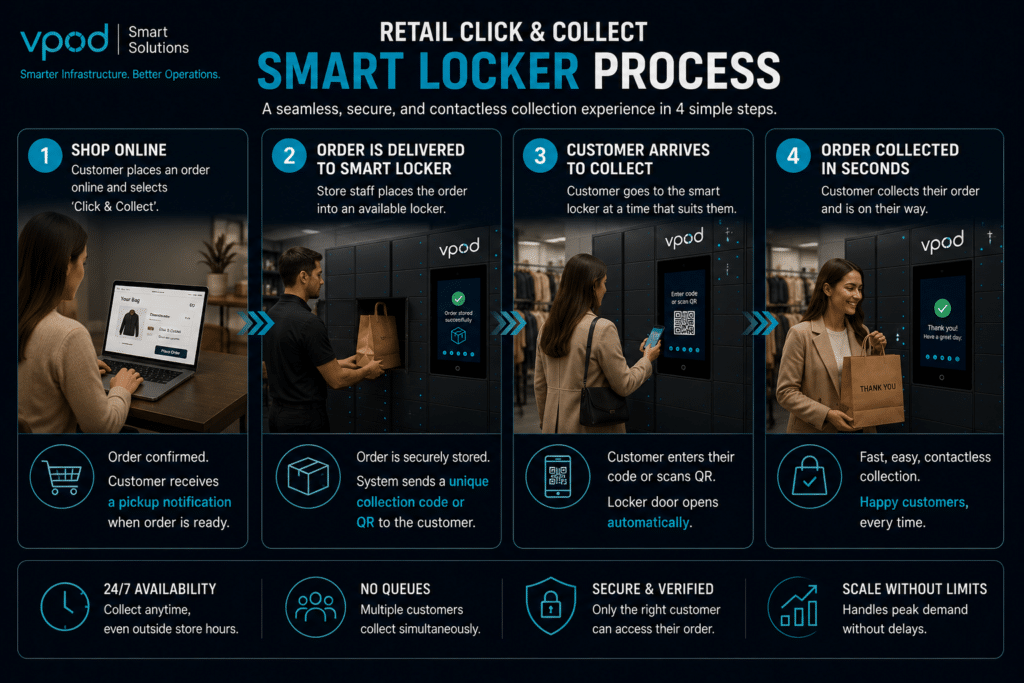
Traditional Click & Collect vs Smart Locker Collection Systems




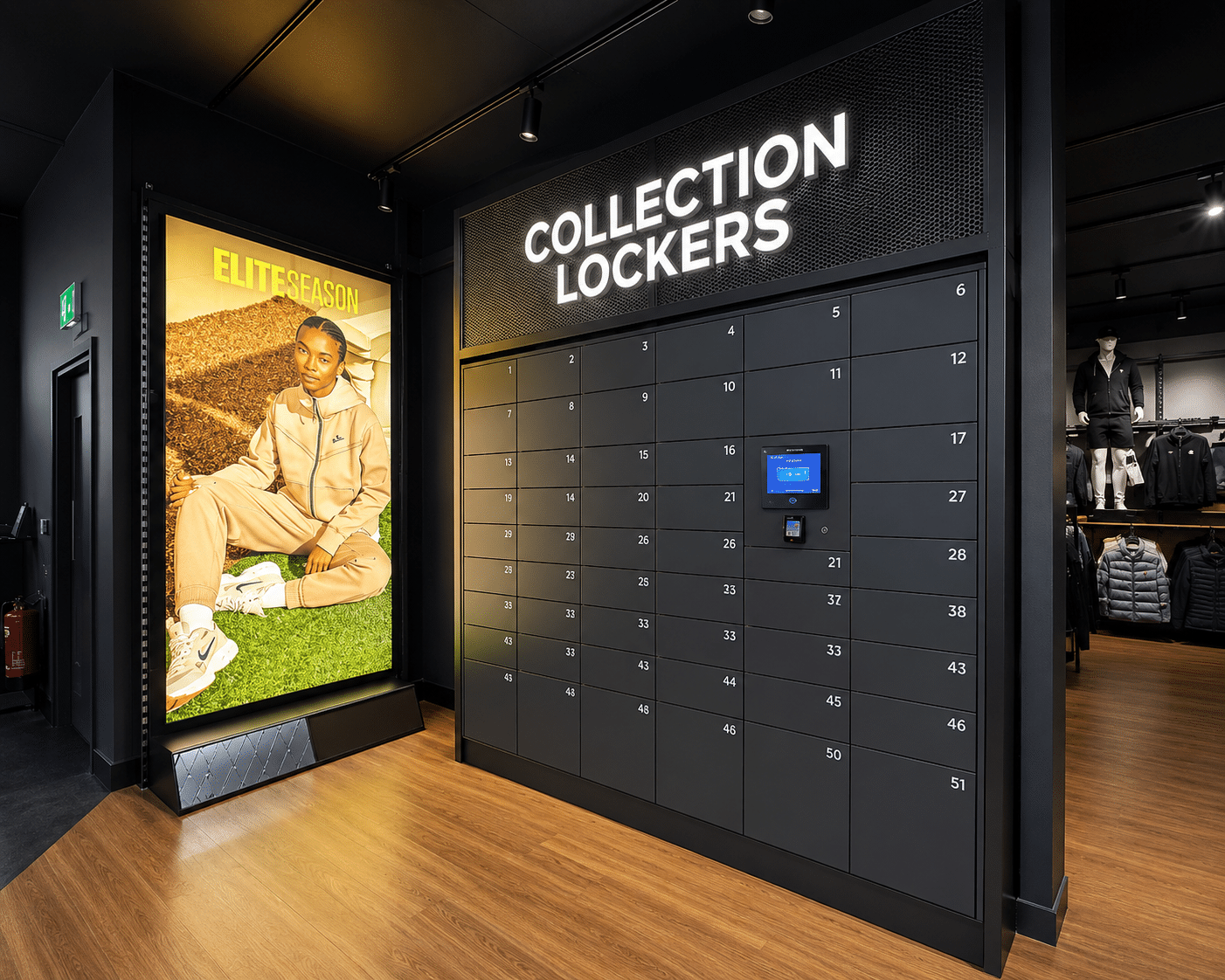
Case Study: Leading Footwear Retailer & VPOD
How Smart Lockers Reduced Retail Collection Delays
A leading UK footwear retailer implemented 51 smart locker compartments to automate click & collect and returns. The self-service solution reduced collection bottlenecks, improved throughput, and created a faster customer collection experience.
Key Results:
- 78% reduction in collection handling time
- Reduced click & collect queue congestion
- Faster order retrieval and collection
- Improved store efficiency and customer satisfaction
Who Is Affected by Collection Delays?
Store Operations & Retail Teams / Customers
Store Operations & Retail Teams
Key Challenges
Managing peak collection demand
Maintaining fast customer service
Reducing queue congestion
Improving collection throughput
Supporting efficient store operations
Operational Pain Points
Time spent managing collection queues
Staff diverted from customer service
Collection bottlenecks during peak periods
Increased operational pressure
Reduced store efficiency