


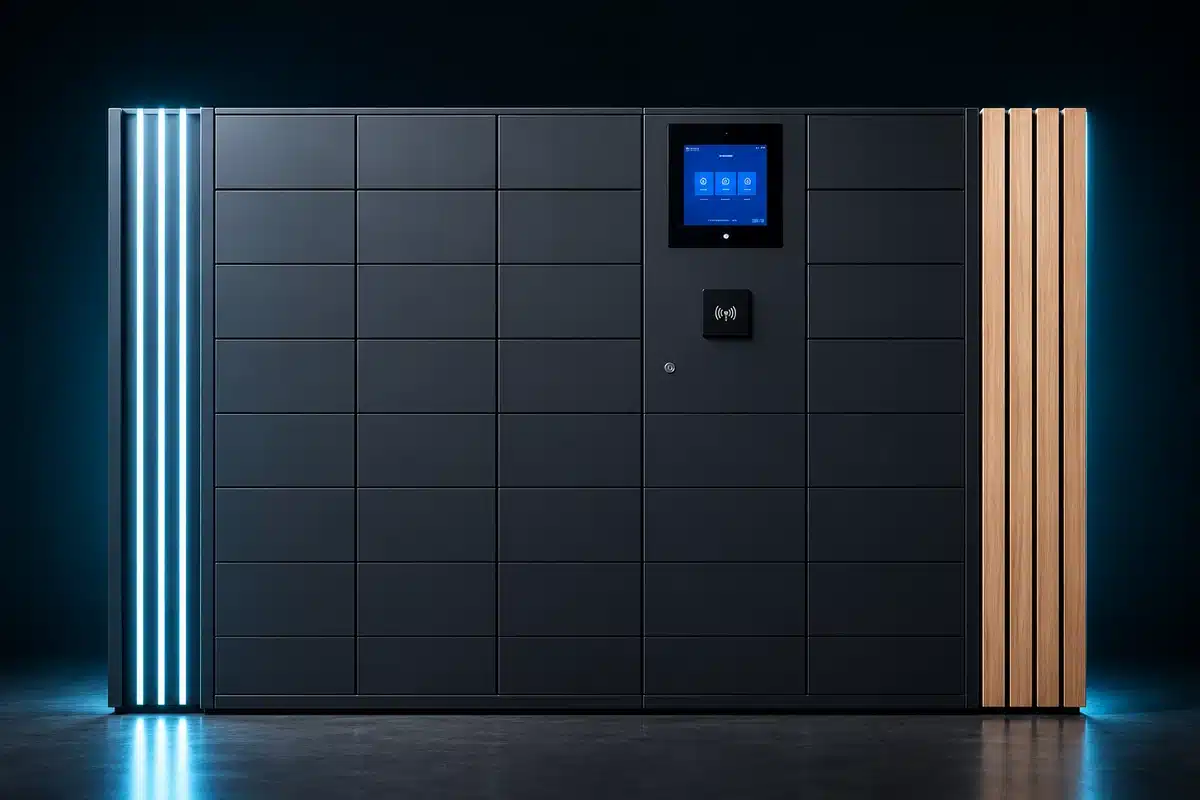


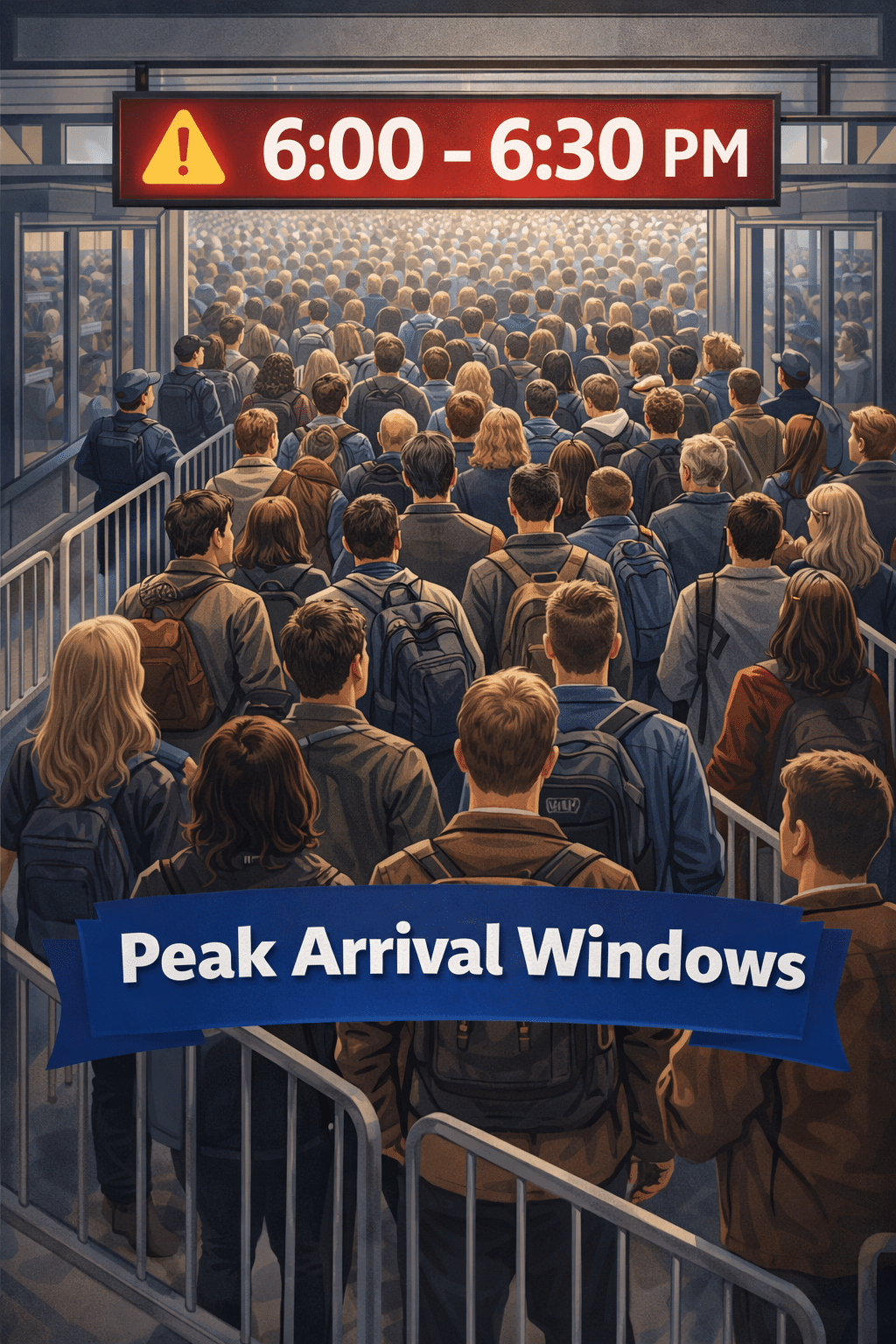
Removing bags from entry can increase security lane throughput by up to 100%.
Trusted by these customers















- Smart lockers process 5–10 seconds per user vs 30–60 seconds for cloakrooms
- Events using self-service lockers can reduce queue lengths by 70–90% during peak ingress
- Manual cloakrooms require 10–20+ staff for large events, while lockers operate with minimal or zero staff
Powerful metrics to reduce queue risk at venues and events in peak traffic periods
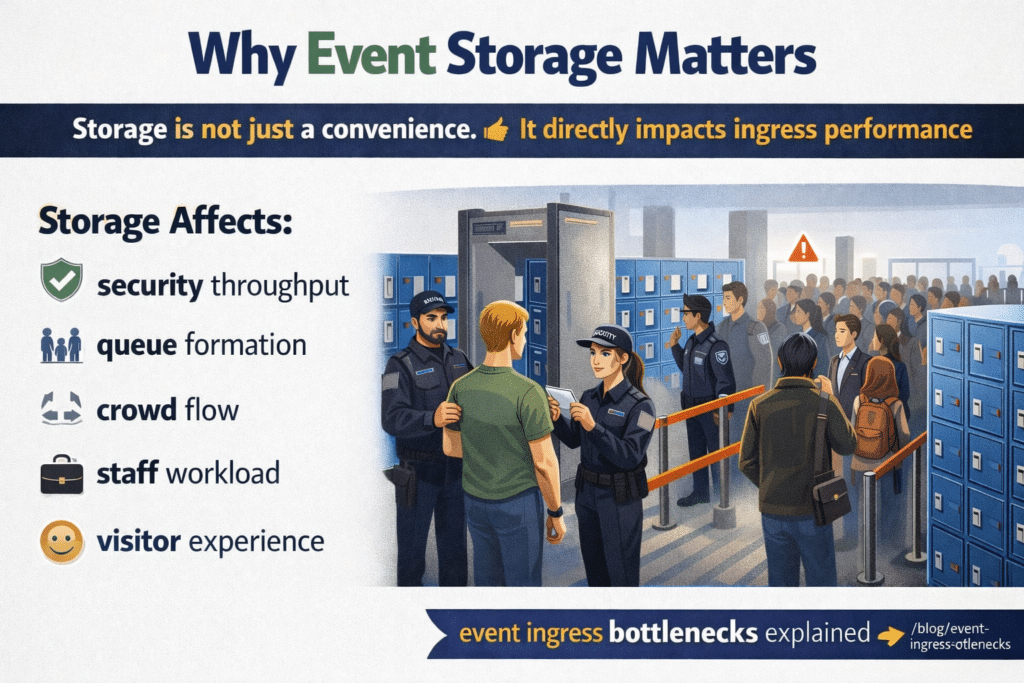
Why Event Storage Matters
- Storage is not just a convenience.It directly impacts ingress performance
Storage Affects:
- security throughput
- queue formation
- crowd flow
- staff workload
- visitor experience
event ingress bottlenecks explained →
/blog/event-ingress-bottlenecks
On This Page
The Three Main Event Storage Options
1. Cloakrooms (Manual Storage)
Traditional and widely used.
How It Works:
- staff receive bags
- items are tagged and stored
- guests return later to collect
Advantages:
- simple to deploy
- familiar to guests
Limitations:
- slow (30–60 sec per item)
- queues form quickly
- high staffing requirement
- difficult to scale
cloakroom inefficiency explained → /pain-points/cloakroom-inefficiency-events
2. Smart Lockers (Self-Service Storage) Event Storage Solutions
Modern, automated storage solution.
How It Works:
- guests store items independently
- access via PIN, QR, or mobile
- no staff required
Advantages:
- fast (5–10 sec per transaction)
- no queues
- scalable
- secure and auditable
- can generate revenue
Considerations:
- requires upfront infrastructure
- needs clear placement and signage
event locker solutions → /solutions/event-venue-lockers
3. Bag Policies (Restriction-Based)
Limits or eliminates bags entirely.
How It Works:
- restrict bag size or type
- enforce “no bag” rules
- rely on compliance
Advantages:
- reduces volume at entry
- simplifies security
Limitations:
- difficult to enforce
- poor visitor experience
- can cause entry conflict
- requires alternative storage
bag check delays explained → /pain-points/bag-check-delays-security
Why Bag Policies Alone Don’t Work
Many venues try to solve the problem by banning bags.
Challenges:
- guests still arrive with bags
- enforcement creates conflict
- delays shift to entry points
Without storage:
you move the problem, not solve it
Best Practice: Combine Policy + Storage
The most effective approach event storage solution is:
Smart Strategy
- enforce reasonable bag policies
- provide locker storage
- remove bags before security
Result:
- faster entry
- reduced queues
- better compliance
- improved experience
bag check vs lockers comparison → /comparisons/bag-check-vs-lockers-security
Choose Cloakrooms If:
- small events
- low bag volume
- minimal peak demand
Choose Bag Policies If:
- very low bag tolerance
- strong enforcement capability
Choose Smart Lockers If:
- high attendance events
- security screening required
- need to reduce queues
- want scalable infrastructure
Real-World Example
10,000 Visitor Event
Cloakroom Model
- ~35 sec per bag
- 20+ staff required
- queues of 400–800+ people
Bag Policy Only
- some bags prevented
- enforcement delays
- guest frustration
Smart Locker Model
- ~8 sec per transaction
- minimal staff
- no queue buildup
calculate event ROI → /roi-calculator
How to Increase Event Throughput
1. Remove Bags from Entry
The biggest gain comes from eliminating bag friction.
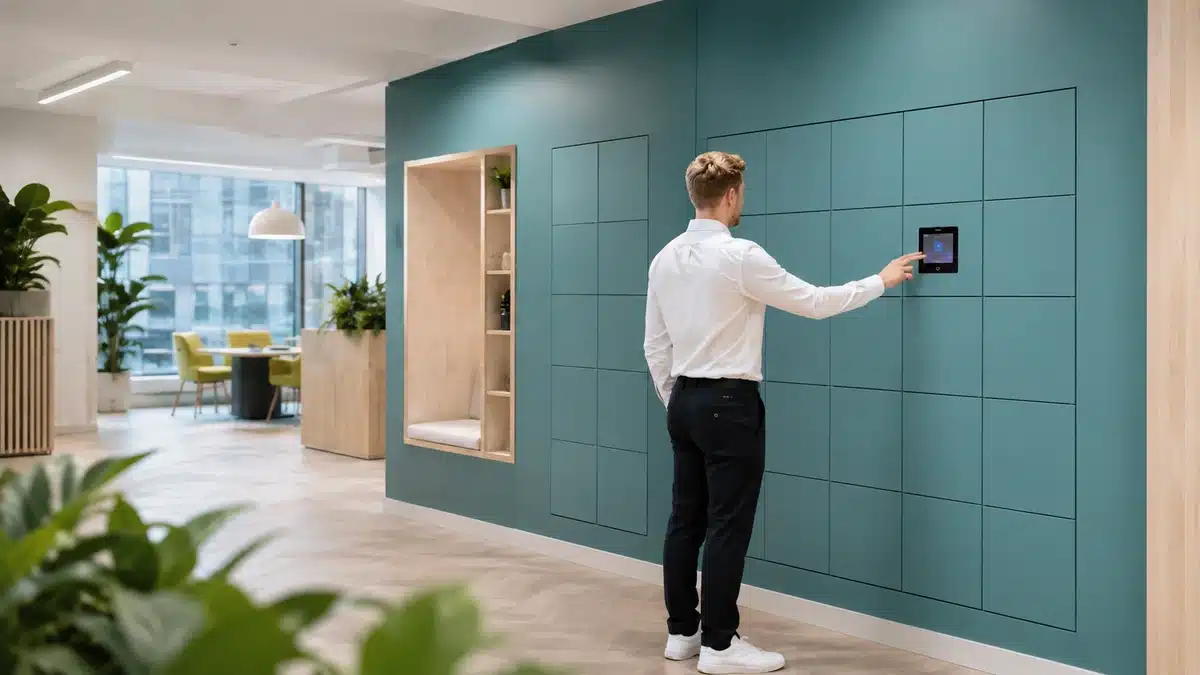
smart lockers allow bags to be stored before security
2. Reduce Processing Time
- streamline checks
- remove unnecessary steps
3. Increase Parallel Capacity
- more lanes
- more entry points
4. Separate Processes
- storage outside entry
- clean security flow
5. Design for Peak Demand
- plan for arrival spikes
- not average flow
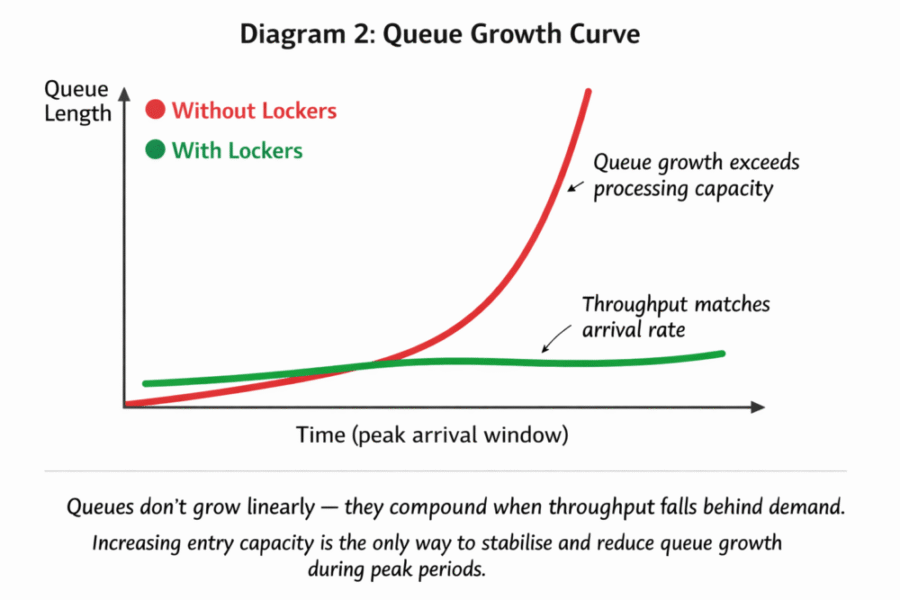
Installing automated Lockers has three huge impacts
- You Increase throughput by 100% minimum
- Depending on the number of lockers and the bag / person ratios
- We advocate testing and flexing your locker volumes to remove queues at peak ingress periods
2. You cut Bag Screening Staff by 90%
- If you had 20 people in the manual clock room, you may need two supervising Self Service lockers
3. You Increase event revenue
- We have a simple event revenue sensitivity calculator
- We can take you through in a discovery call.
Traditional Cloak Room vs Pre Entry Smart Lockers
Operational Impact
Case Study
Paradiso
Reduce queues
Increase Revenue
Reduce Ingress Friction – case study video
Cut staff Costs – case study pdf
7 Proven Strategies to Reduce Event Queues
1. Remove Storage from Entry
Cloakrooms create queues before entry even begins.
Fix:
- move storage outside entry flow
- eliminate manual handling
cloakroom inefficiency explained → /pain-points/cloakroom-inefficiency-events
2. Reduce Bag Volume at Entry
Bags slow security and create bottlenecks.
Fix:
- enforce bag policies
- provide alternative storage options
bag check delays explained → /pain-points/bag-check-delays-security
3. Introduce Pre-Entry Storage (Smart Lockers)
The most effective way to reduce queues is to remove bags entirely.
Result:
- faster security
- no storage queues
- improved flow
event locker systems → /solutions/event-venue-lockers
4. Increase Security Lane Efficiency
Don’t just add lanes — improve performance.
Fix:
- reduce inspection time
- remove unnecessary steps
- optimise processes
5. Separate Entry Flows
Mixing processes creates congestion.
Fix:
- separate storage, security, and ticketing
- create clear flow paths
6. Design for Peak Demand
Most events experience demand spikes.
Fix:
- plan for 60–90 minute arrival windows
- scale systems for peak load
7. Use Data to Optimise Flow
You can’t fix what you can’t measure.
Fix:
- track entry times
- analyse bottlenecks
- adjust operations
How would your venue metrics look if every event you:
- Remove the risk of queues and the security risk they pose
- You reduced manual bag screening
- Bag storage handling staff were reduced by 90%
- You increased revenue from Self Service Lockers
Talk through your venues metrics in a discovery call.