


Trusted by these customers



- 50–80% Reduction in Reception Workload
- 70–90% Faster Luggage Handling
- £25,000–£180,000+ Annual Revenue
- 20–40% Improvement in Guest Satisfaction
Secure, Self-Service Luggage Storage for Hostels
Common Hostel Storage Challenges
Hostel environments operate with high guest turnover, shared accommodation, and limited staffing — making luggage storage a constant operational pressure point. When storage systems are manual, unstructured, or unsecured, they create friction across reception flow, guest experience, and day-to-day operations.
→ Compare manual luggage storage vs self-service lockers

Backpacker Luggage Storage Before Check-In
Hostel guests frequently arrive before check-in, often from overnight travel, creating concentrated demand for early luggage storage. Without structured systems, backpacks and suitcases quickly build up around reception areas, increasing congestion and slowing guest processing.
→ Hostel luggage storage challenges
→ Luggage lockers for hostels

Security Risks in Shared Dorm Storage
In shared hostel environments, guests often lack secure personal storage. Bags left in dorms or communal areas increase the risk of theft, loss, or misuse — particularly as occupancy and turnover increase.
→ Hostel luggage security risks
→ Secure luggage lockers

Reception Overload During Peak Check-In
Hostel reception teams operate with lean staffing models, yet must manage high volumes of arrivals within short timeframes. When storage is handled manually, queues grow, staff are diverted from service, and overall operations slow down.
→ Hostel storage solutions for operations directors
→ Reduce reception workload in hostels
→ Compare hotel concierge storage vs lockers

Unmanaged Bags in Communal Areas
Shared hostel spaces such as lounges, kitchens, and corridors quickly become cluttered when luggage is unmanaged. This restricts movement, reduces cleanliness, and negatively impacts the guest experience.
→ Hostel storage problems
→ Self-service luggage lockers
Hostel Lockers vs Informal Storage Areas
Where Hostel Luggage Storage Breaks Down
Hostel luggage storage problems appear across communal spaces and high-turnover guest journeys, particularly in shared accommodation environments where manual processes cannot scale. As demand increases, these pressure points create congestion, security risks, and operational inefficiencies.
Vpod’s smart locker systems for self-service storage allow hostel guests to store and retrieve luggage securely without relying on reception staff.
Early Arrival and Late Departure Luggage Storage
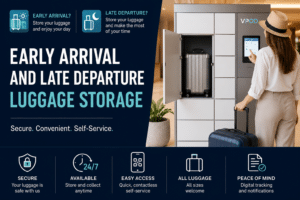
Hostel luggage storage for early arrivals and late departures is one of the most consistent operational challenges in backpacker environments. Guests often arrive before check-in or leave long after check-out, creating continuous demand for temporary storage.
Without structured systems:
- Reception areas become congested with backpacks and luggage
- Staff are required to manage and monitor belongings
- Storage becomes disorganised during peak periods
→ Explore hostel luggage storage challenges
→ Luggage lockers for hostels

Shared Dormitory and Communal Living Spaces
In shared accommodation, guests have limited private space, increasing reliance on secure hostel luggage storage outside dormitories.
Without proper storage:
- Bags are left in dorms or communal areas
- Hostel luggage security risks increase
- Guest disputes and complaints become more frequent
→ Explore hostel luggage security
→ Secure luggage lockers
Backpacker-Heavy Urban Hostel Locations
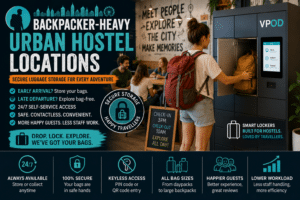
Urban hostels experience constant guest movement, with travellers arriving from airports, trains, and buses throughout the day. This creates ongoing demand for backpacker luggage storage.
In these environments:
- Storage demand is continuous, not peak-based
- Reception teams handle repeated storage requests
- Guest flow is disrupted by manual processes
→ Explore hostel guest flow challenges
→ Self-service luggage lockers
High Guest Turnover and Short-Stay Pressure
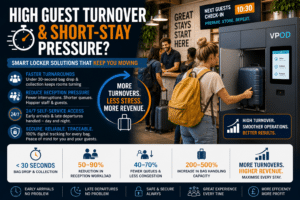
Hostels operate with frequent check-ins and check-outs, amplifying pressure on hostel bag storage systems.
Without scalable storage:
- Storage areas quickly become overcrowded
- Staff workload increases during peak turnover
- Processes become inconsistent across busy periods
→ Explore hostel storage problems
→ Scalable locker systems
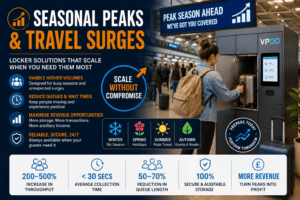
Seasonal Peaks and Travel Surges
Holiday seasons, festivals, and peak travel periods significantly increase demand for hostel luggage storage.
Without structured systems:
- Storage demand exceeds capacity
- Delays and confusion increase for guests
- Staff struggle to manage volume efficiently
→ Explore hostel peak demand challenges
→ High-volume locker systems

Group Bookings and Social Travel
Group bookings, tours, and social travel introduce concentrated luggage volumes within short timeframes, creating operational strain.
Without structured storage:
- Backpacks accumulate in shared spaces
- Reception teams become overwhelmed
- Check-in processes slow significantly
→ Explore hostel group storage challenges
→ Luggage lockers for hostels
Drive Hostel Efficiency Levels Higher
Take these improvements to your Profit & Loss
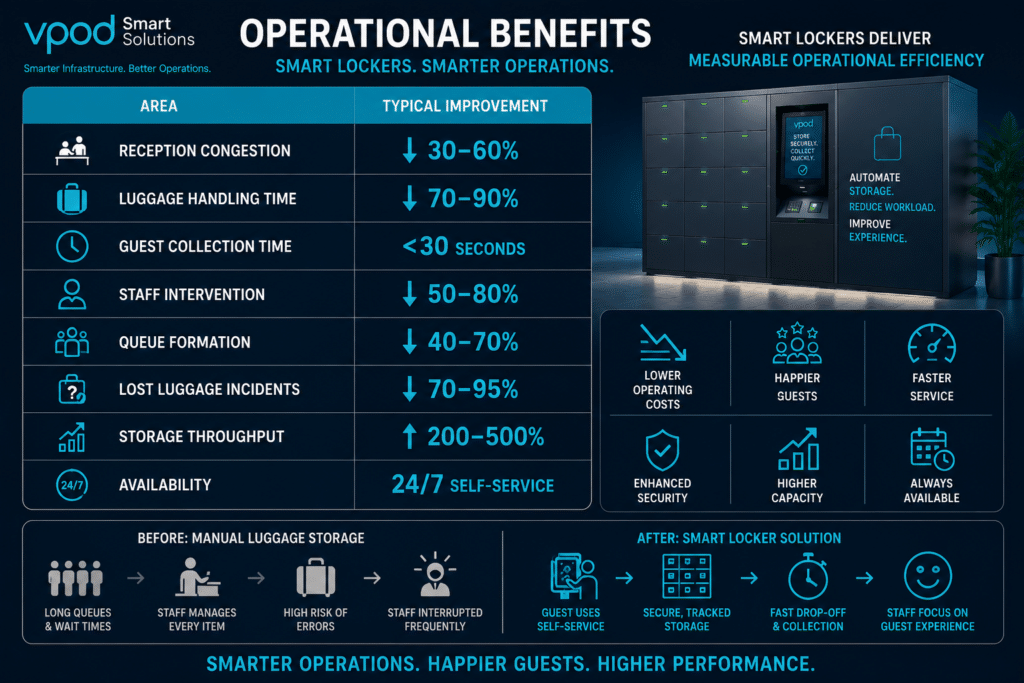


How Hostel Luggage Storage Fits Into Hostel Operations
Hostel Luggage Storage Should Support Shared Spaces — Not Staff Workflows
In hostel environments, hostel luggage storage must support shared accommodation without becoming a staff-managed process. When storage relies on reception teams, it creates bottlenecks that slow operations and impact guest experience.
Managing Early Arrivals and Late Departures
Backpackers and budget travellers frequently arrive before check-in or depart after check-out, creating constant demand for hostel luggage storage early arrival and short-term backpack storage.
Without structured storage systems:
- Reception teams manage high volumes of backpacks and luggage
- Storage requests interrupt check-in processes
- Guest flow becomes inconsistent during peak periods
→ Explore hostel luggage storage challenges
→ Luggage lockers for hostels
Reducing Congestion in Communal Areas
Hostels rely on shared spaces such as dormitories, lounges, and kitchens. Without structured hostel bag storage, these areas quickly become congested.
This results in:
- Backpacks left in walkways and communal zones
- Reduced space for guest movement and social interaction
- A decline in cleanliness and overall guest experience
Hostel smart locker solutions can support early arrivals and late departures while creating a more convenient guest experience.
Supporting High-Turnover, Self-Service Guest Flow
With frequent check-ins, short stays, and high guest turnover, hostel storage must support fast, independent use without relying on staff.
Without self-service systems:
- Guests queue for luggage storage at reception
- Processes vary depending on staff availability
- Delays and confusion increase during busy periods
Structured, self-service hostel luggage storage systems enable predictable operations, reduce staff involvement, and improve guest flow across high-turnover environments.
→ Improve hostel operations efficiency
→ Scalable luggage lockers for hostels
Hostel Backpacker Luggage Storage Workflow: Traditional vs Smart Lockers
This comparison shows how backpacker luggage storage in hostels shifts from manual, staff-managed processes to structured, self-service systems using smart luggage lockers — improving security, reducing congestion, and supporting high guest turnover.
Traditional Hostel Luggage Storage Workflow
- Backpacker arrives early from bus or train
- Dorm is not ready
- Guest asks reception for hostel luggage storage
- Staff place bags in storage room
- Guest explores the city
- Guest returns later
- Staff retrieve belongings
Operational Challenges
→ Compare manual luggage storage vs self-service lockers
- Reception queues during peak check-in periods
- Staff diverted from guest support and check-in
- Risk of misplaced, unsecured, or mixed-up backpacks
- Limited access outside reception hours
- Manual hostel luggage storage that does not scale in high-turnover environments
Smart Locker Workflow for Hostel Luggage Storage
- Backpacker arrives early
- Dorm is not ready
- Guest stores backpack in a self-service luggage locker
- Secure access code is generated
- Guest explores the city
- Guest returns later
- Guest retrieves belongings directly
Operational Advantages
- Removes staff involvement from hostel luggage storage
- Provides 24/7 backpack storage access without reception
- Reduces congestion in communal and reception areas
- Improves security in shared accommodation environments
- Supports high guest turnover without increasing staff workload
- Enables scalable, self-service hostel storage systems
Explore:
→ Luggage lockers for hostels
→ Reduce hostel reception workload
→ Improve hostel guest flow
Hostel Efficiency & Benefits Statistics
Hostel Reception Benefits
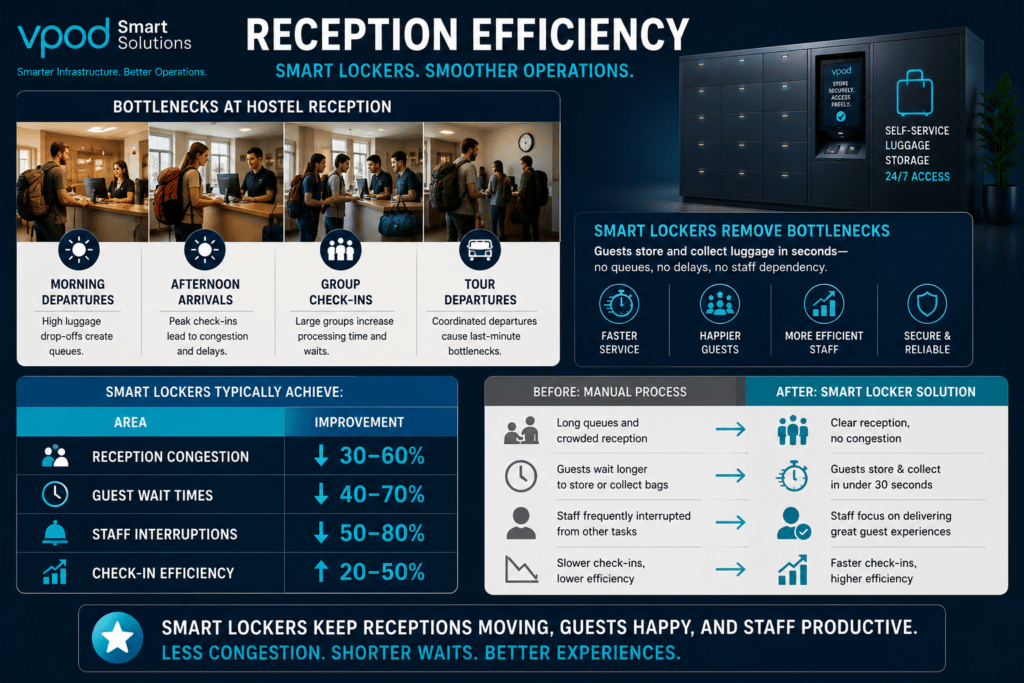
The Comparative Numbers for Traditional Storage V Hostel Smart Lockers are Detailed below:
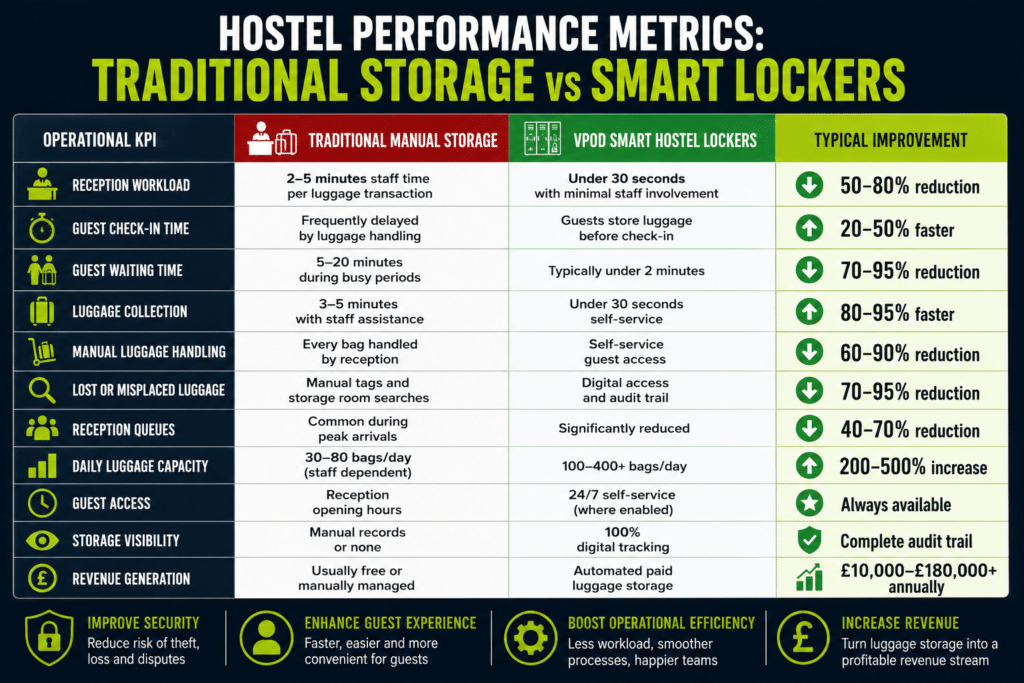
The Efficiencies are Compelling:
- More Revenue
- Less Staff Workload
- And More Customer Flexibility
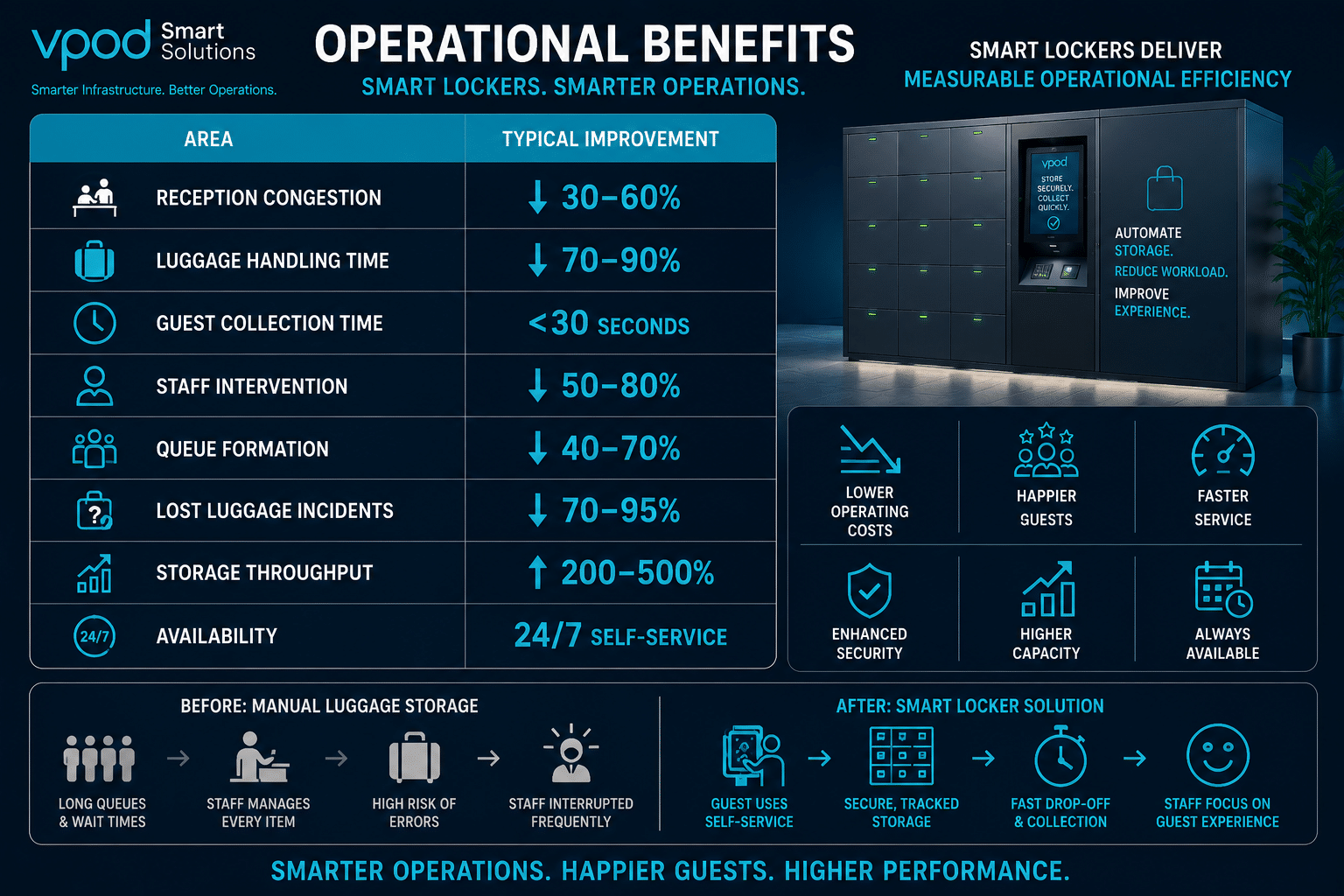
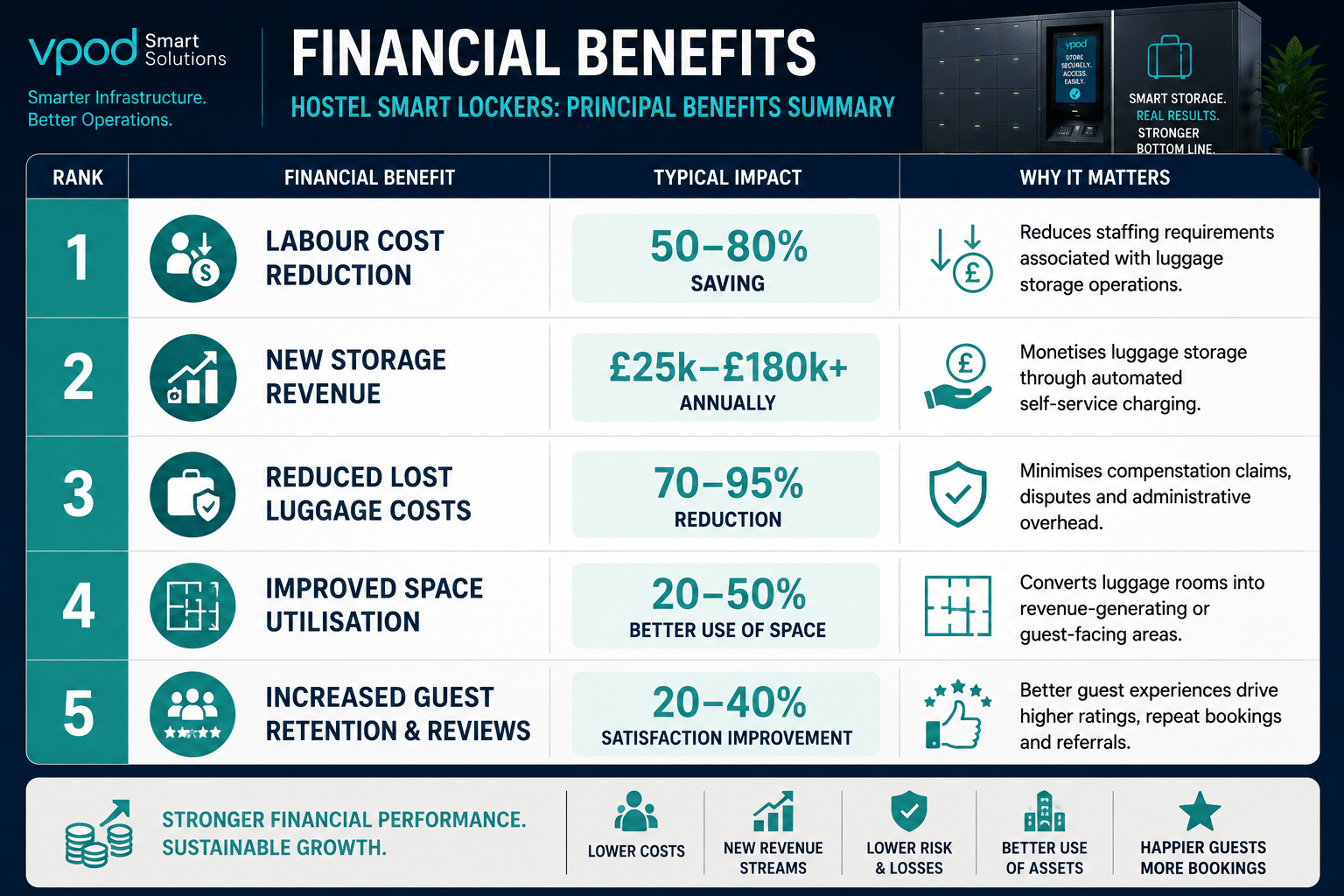
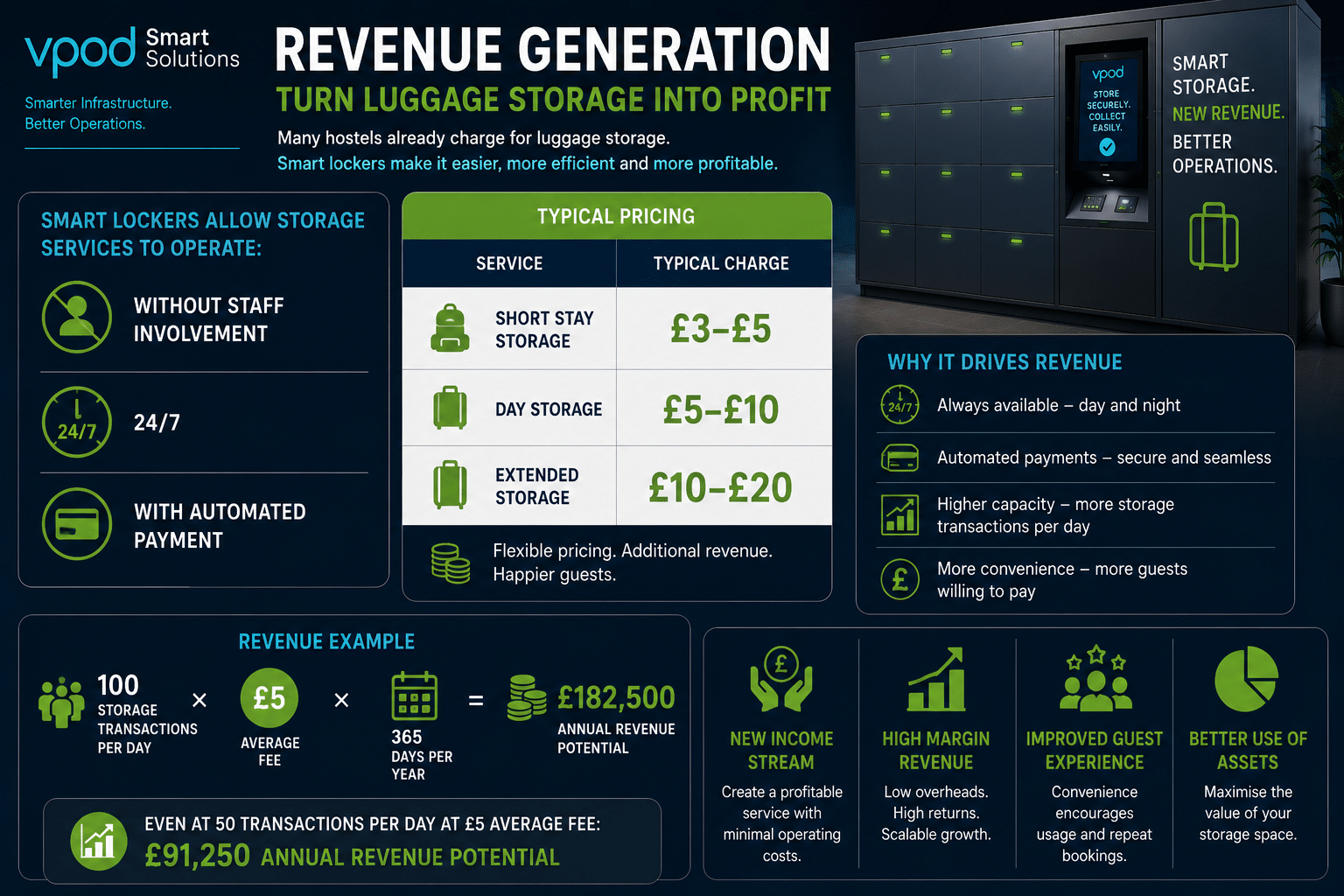
Hostel Operational Benefits
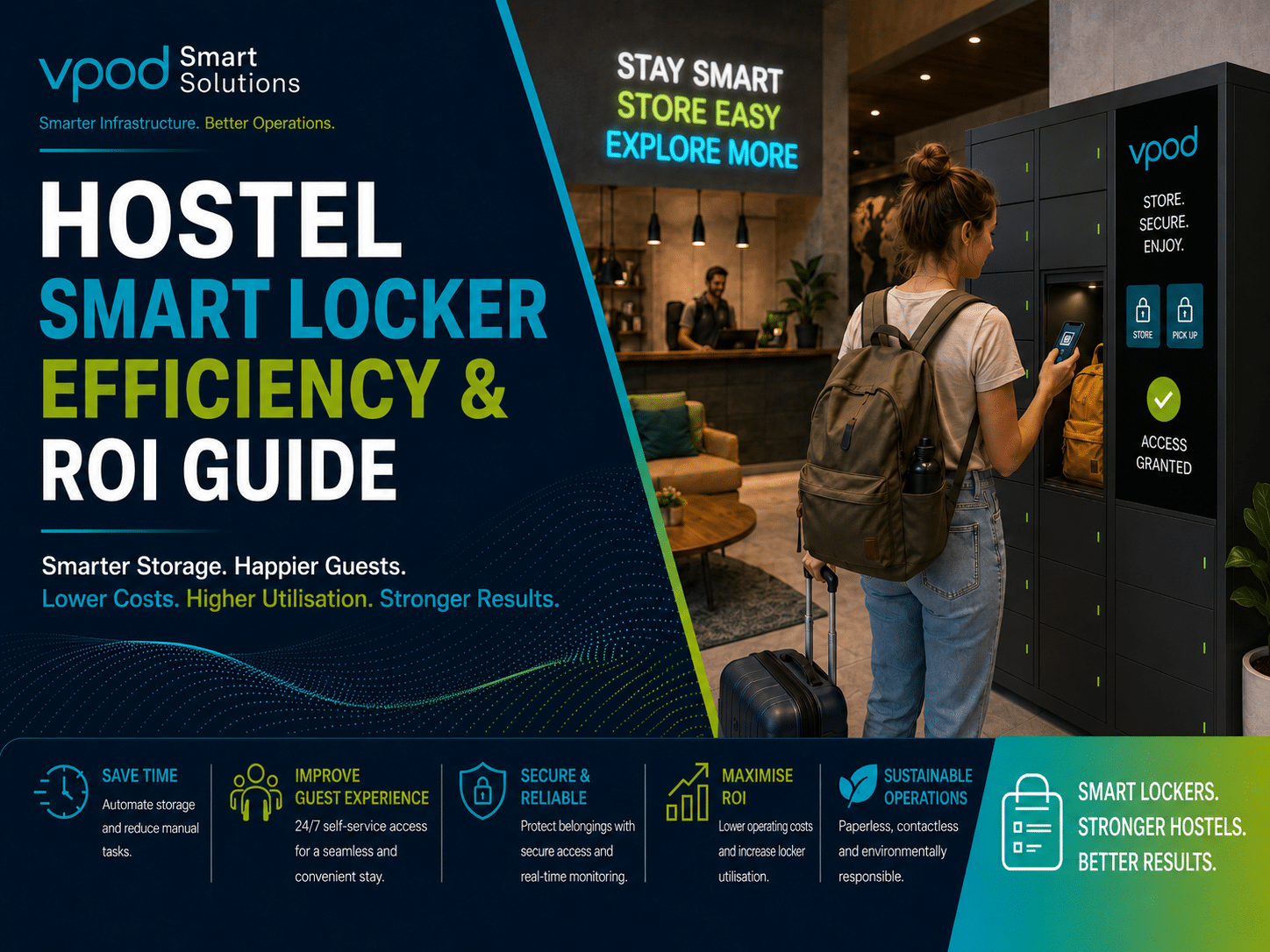
Download the full guide
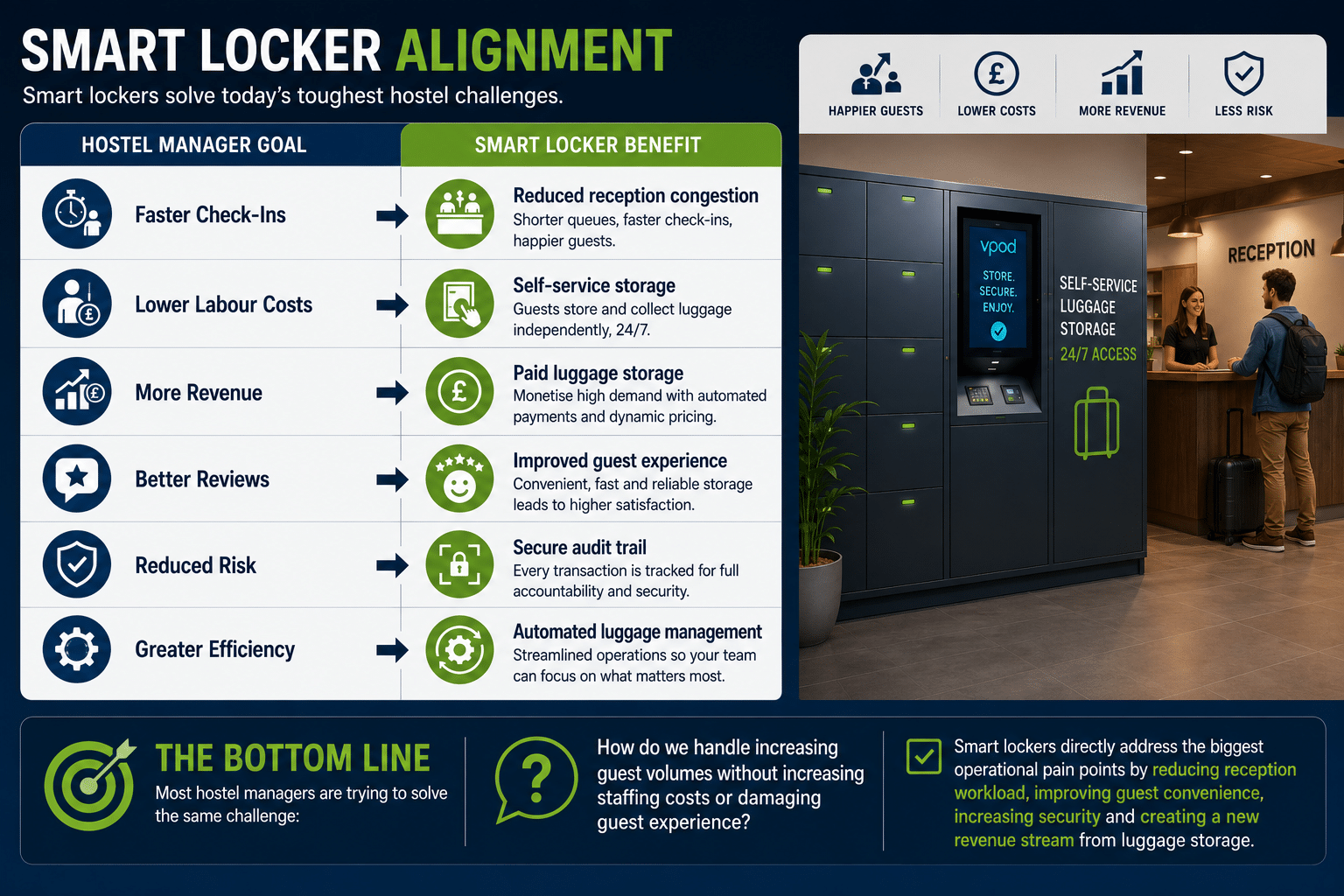
Hostel Management Challenges
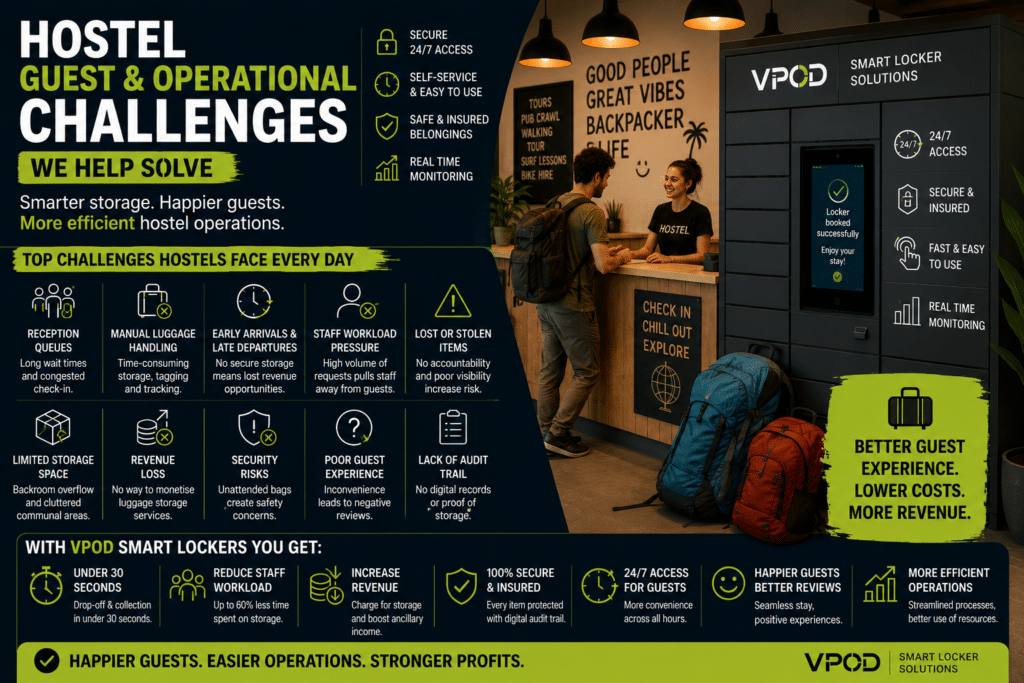
We have a section where we look at Hostel Challenges and how smart lockers address the root causes of those challenges

These Types of Guest Luggage Pain Points are cover here in this hostel lockers section
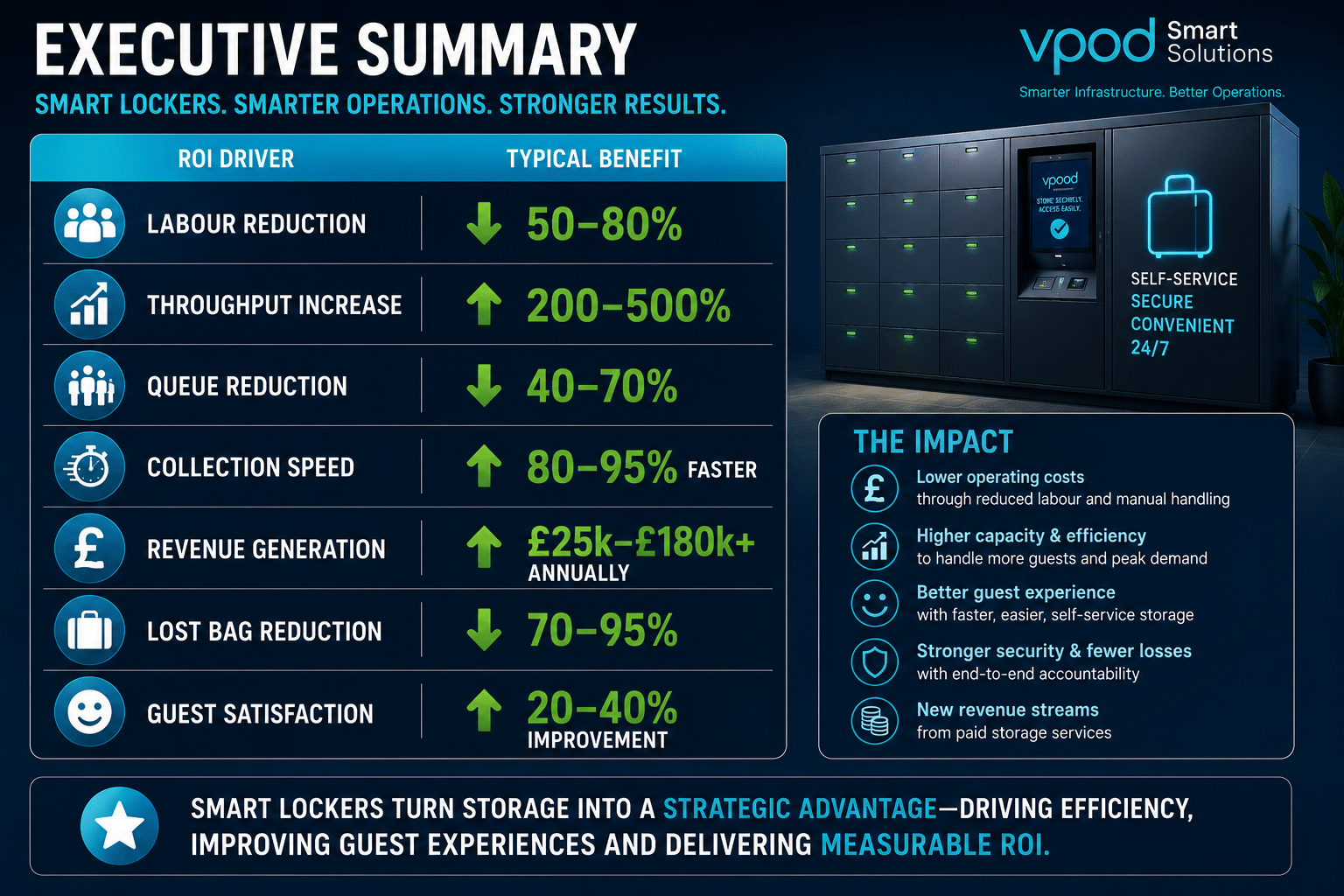
ROI Efficiency of Hostel Lockers
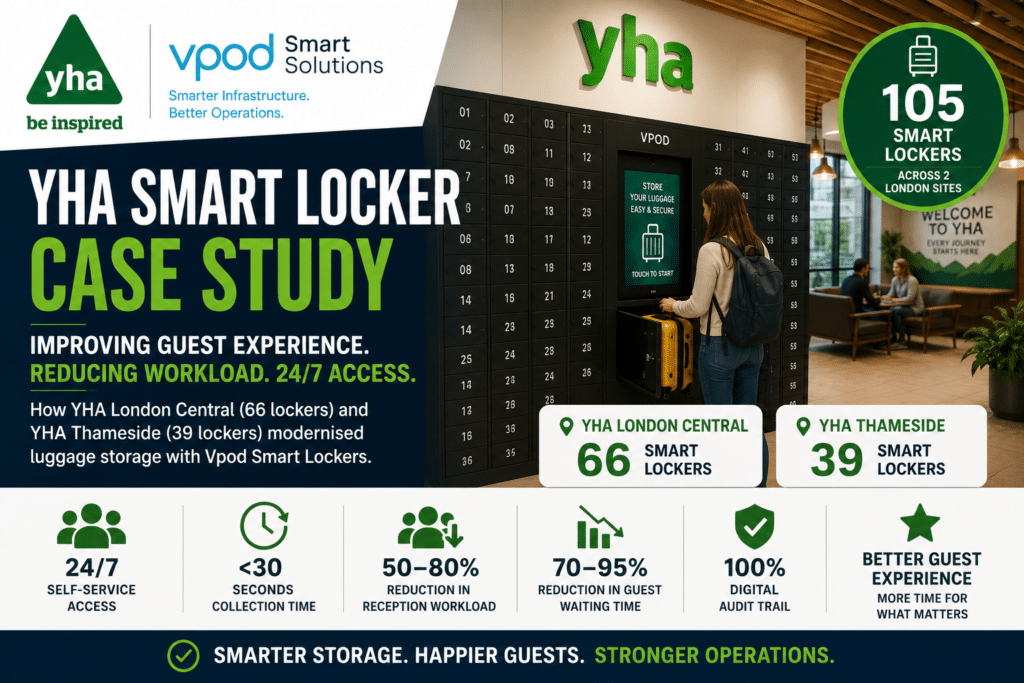

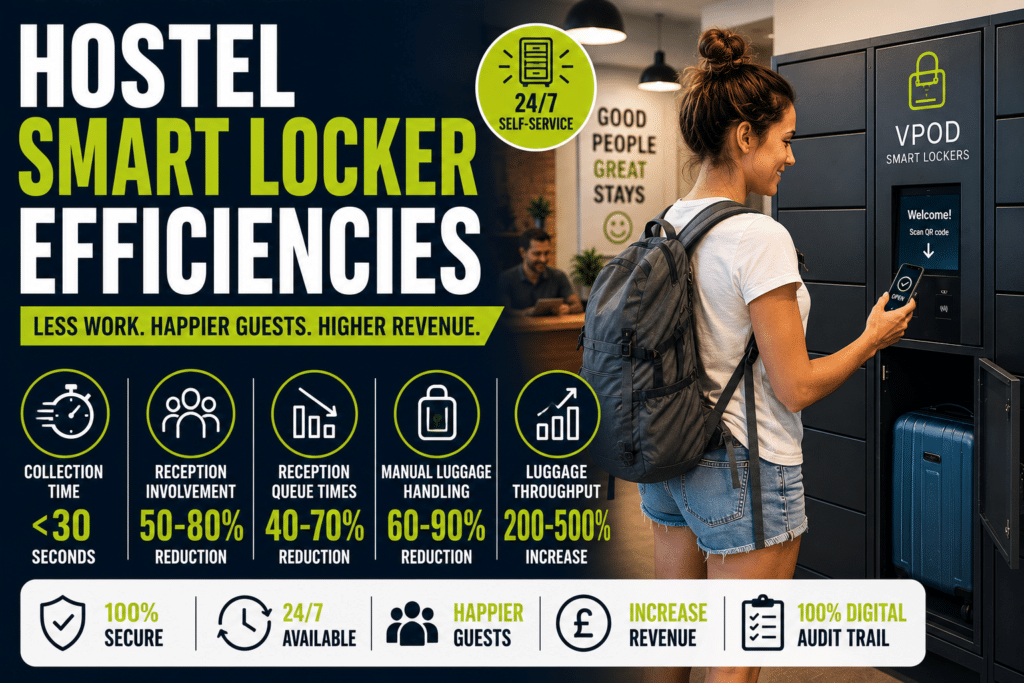
See how Hostels achieve three worthwhile goals
- Reduce reception workload by 70%
- Increase Revenue from storage
- Increase customer satisfaction
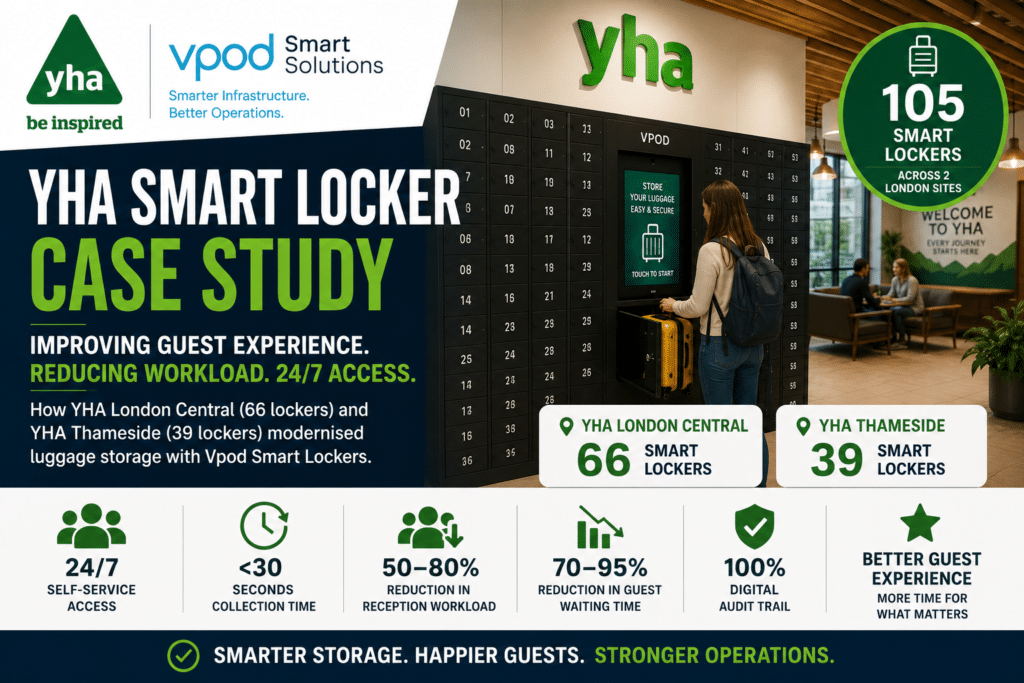
YHA Smart Locker Case Study – London Central and Thameside Deployment
Why YHA Chose Smart Lockers – Manual Luggage Storage vs Vpod Self-Service Lockers
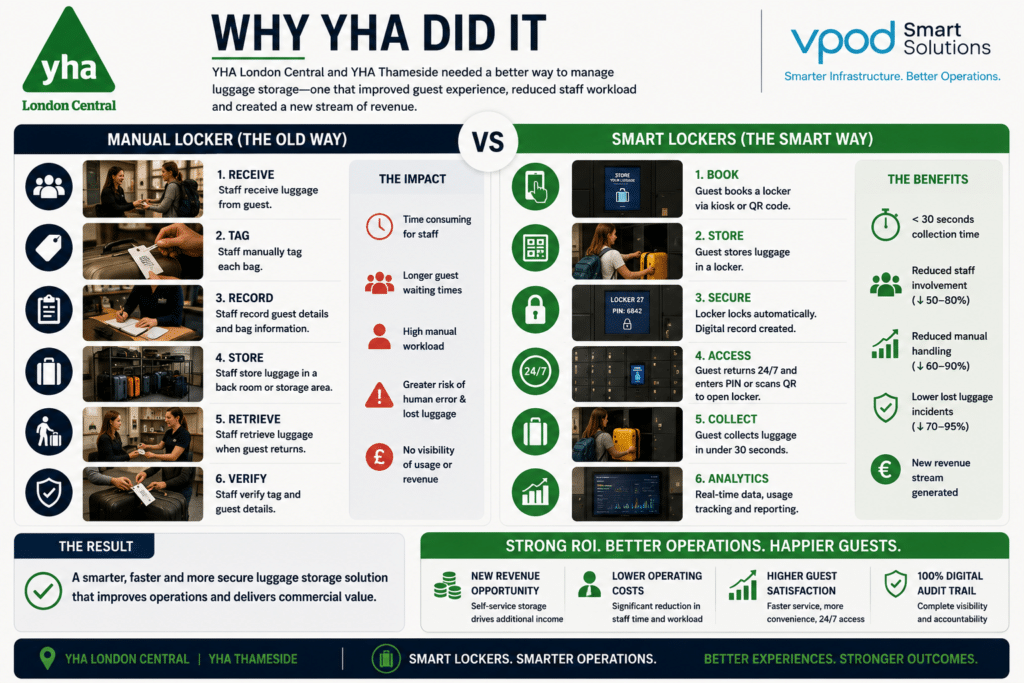
This YHA smart locker comparison explains why YHA London Central and YHA Thameside moved from manual luggage handling to Vpod self-service smart lockers.
The traditional process required reception staff to receive each bag, attach a luggage tag, record guest details, move luggage into a storage room and retrieve it when the guest returned.
This created longer waiting times, increased manual workload and raised the risk of handling errors or lost luggage. It also provided limited visibility of locker usage and potential storage revenue.
Vpod smart lockers create a faster and more secure digital process. Guests can book a locker using a kiosk or QR code, store their luggage independently and access it 24/7 using a PIN or digital credential.
Each locker transaction is recorded automatically, creating a complete digital audit trail.
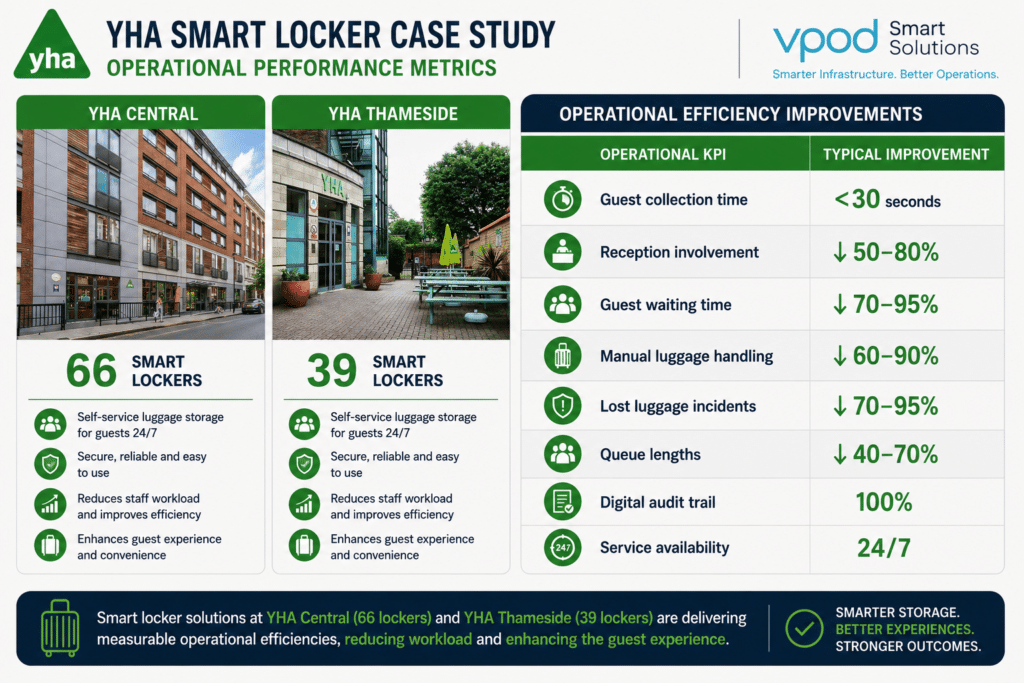
The smart locker workflow can deliver collection times of under 30 seconds, reduce staff involvement by 50–80%, lower manual handling by 60–90% and reduce lost luggage incidents by 70–95%.
Real-time analytics also provide YHA with visibility of usage, availability and revenue performance.
For hostels, hotels and visitor accommodation providers, smart luggage lockers improve guest convenience, reduce operating costs and create a scalable self-service storage solution.
YHA Smart Locker Case Study – Thameside and London Central Results
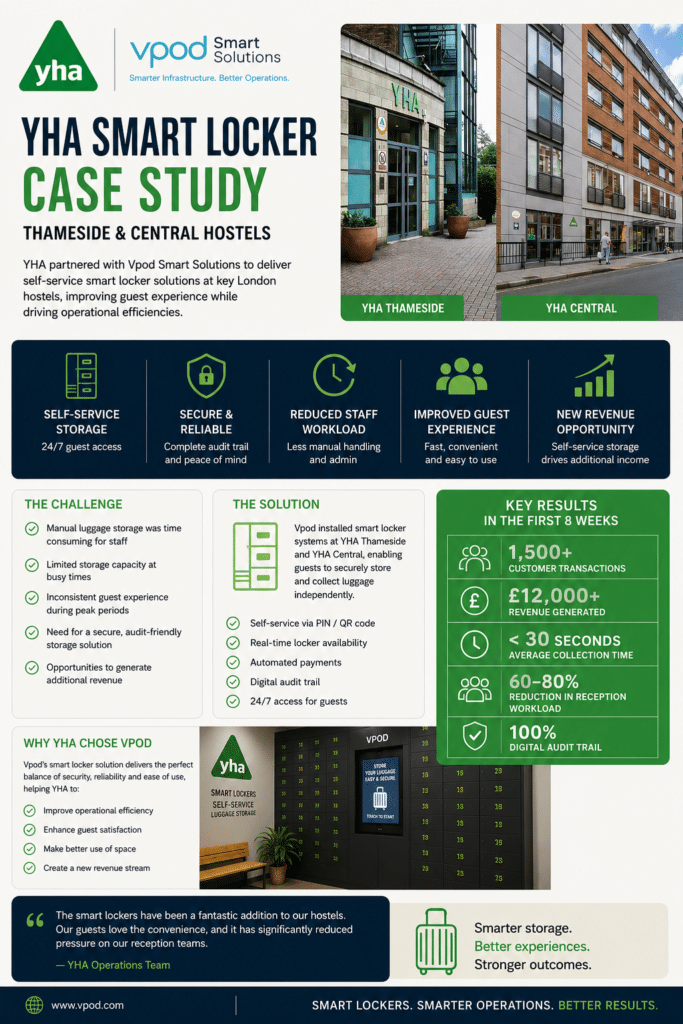
This YHA smart locker case study shows how YHA Thameside and YHA London Central introduced Vpod self-service luggage lockers to improve guest experience, reduce reception workload and create a more efficient storage process.
Before the deployment, manual luggage storage was time-consuming for staff, limited during busy periods and difficult to monitor. YHA needed a secure, reliable and audit-friendly solution that could also support additional revenue generation.
Vpod installed smart locker systems that allow guests to store and collect luggage independently using a PIN or QR code. The solution provides real-time locker availability, automated payments, a complete digital audit trail and 24/7 access.
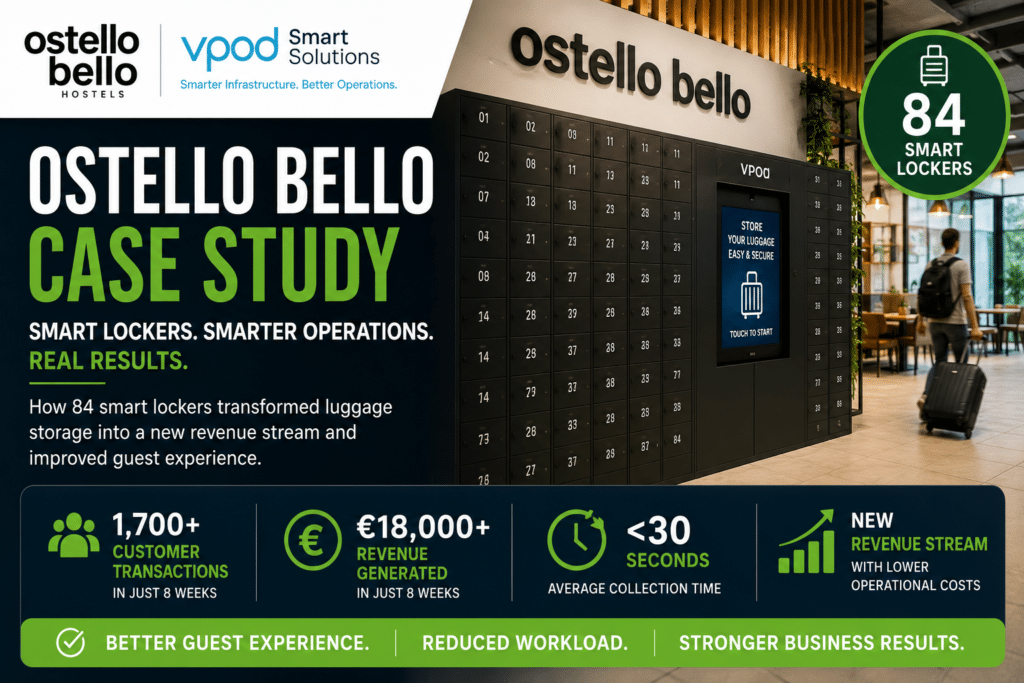
During the first eight weeks, the deployment generated more than 1,500 customer transactions and over £12,000 in revenue. Average collection time was under 30 seconds, reception workload reduced by 60–80%, and every transaction was supported by a 100% digital audit trail.
For hostels and hotels, Vpod smart luggage lockers provide secure self-service storage, stronger operational efficiency, improved guest convenience and a scalable new revenue opportunity.
YHA Smart Locker Operational Performance Metrics – London Central and Thameside
Hostel Locker Solutions for Luggage Storage and Shared Environments

Hostel environments differ from hotels due to shared accommodation, higher guest turnover, lean staffing models, and constant demand for hostel luggage storage and backpacker luggage storage.
With limited space and high volumes of early arrivals and late departures, storage systems must be secure, self-service, and scalable.
Hostel locker solutions provide a structured way to manage luggage, reduce staff involvement, and maintain organised communal spaces across high-turnover properties.
Luggage Lockers for Hostel Luggage Storage
Luggage lockers for hostels are designed to support hostel luggage storage before check-in and after check-out, replacing informal storage rooms with secure, self-service systems.
They enable hostels to:
- Remove manual backpack handling from reception teams
- Provide secure backpacker luggage storage in shared environments
- Reduce congestion in reception and communal areas
- Offer 24/7 self-service storage without staff involvement
- Improve security with controlled access and audit trails
- Support high guest turnover and peak arrival periods
→ Explore luggage lockers for hostels
Leisure Lockers for Communal and Day-Use Storage
Leisure lockers for hostels are used for short-duration and day-use storage within communal areas such as lounges, kitchens, and social spaces.
They enable:
- Secure storage for belongings outside dormitories
- Reduced clutter in shared and high-traffic areas
- Predictable, self-service usage across communal spaces
- A consistent guest experience without staff intervention
Why Hostels Use Locker-Based Storage Systems
Hostels implement self-service locker systems to manage storage demand without increasing staffing or operational complexity.
Across hostel environments, lockers consistently deliver:
- Reduced staff workload for luggage handling
- Improved hostel luggage storage security in shared spaces
- Faster guest flow during check-in and check-out
- Less congestion in communal and reception areas
- Scalable storage systems that adapt to high guest turnover
By replacing informal storage with structured hostel locker systems, properties can improve operational efficiency, reduce risk, and deliver a more consistent guest experience.
→ Compare staff cost vs locker automation ROI
Who Hostel Locker Solutions Are Designed For

Hostel Managers
Hostel managers are responsible for maintaining organised shared spaces, managing guest flow, and delivering a consistent experience across high-turnover environments. As hostel luggage storage demand increases, informal systems create clutter, security risks, and guest dissatisfaction.
Pain:
Unmanaged backpack storage, disputes over belongings, and congestion in communal areas caused by manual hostel luggage storage.
Outcome:
Secure, self-service hostel luggage storage systems that reduce disputes, improve organisation, and maintain a consistent guest experience.
Explore:

Operations Directors
Operations directors are responsible for maintaining efficiency across hostel properties, particularly in high-turnover environments with frequent check-ins and check-outs.
Pain:
Manual luggage handling increases staff workload, slows check-in processes, and creates inconsistent operations across locations.
Outcome:
Reduced staff involvement, faster guest flow, and scalable hostel luggage storage systems that standardise operations across multiple sites.
Explore:
Locker solutions for hostel operators
Improve hostel operations efficiency
Hostel Industry Guide – Management Challenges, Pain Points & Guide
Outcomes Hostels Prioritise
Across hostel environments, operators prioritise outcomes that improve hostel luggage storage efficiency, reduce staff workload, and maintain a consistent guest experience in high-turnover, shared accommodation settings.
When hostel luggage storage systems are structured and self-service, hostels consistently achieve:
- Reduced staff workload from manual luggage handling – → Compare staff cost vs locker automation ROI
- Faster guest flow during check-in and check-out periods
- Improved hostel luggage storage security in shared and communal spaces
- Reduced congestion in reception, dormitories, and social areas
- Controlled use of limited storage capacity across high-demand periods
- Consistent, scalable backpacker luggage storage across all guest journeys
When these outcomes are delivered, hostels maintain operational efficiency, reduce friction in shared environments, and provide a smoother, more reliable guest experience – even during peak travel periods.
Turn Hostel Luggage Storage Into a Revenue Stream
Hostel luggage storage presents a strong opportunity to generate revenue, particularly in high-turnover, backpacker-focused environments where demand for short-term storage is constant.
Many hostels already charge for backpacker luggage storage, but manual systems limit scalability, create inconsistencies, and require ongoing staff involvement.
Smart luggage lockers transform hostel bag storage into a structured, self-service revenue stream.
→ Compare free storage vs paid locker systems
How Hostels Monetise Luggage Storage
With smart lockers, hostels can introduce:
- £2–£10 per use typical pricing depending on location and duration
- Automated payments with no staff involvement
- Unattended, 24/7 access for guests
- Consistent, trackable revenue across all usage
This removes friction for both guests and staff while maximising usage throughout the day.
Why Revenue Scales in Hostel Environments
Hostel environments are uniquely suited to monetised hostel luggage storage due to:
- High guest turnover with frequent arrivals and departures
- Strong demand for backpacker luggage storage
- Limited private space in shared dormitory settings
- Constant need for early arrival and late departure storage
As demand increases, structured locker systems allow hostels to scale revenue without increasing operational complexity.
From Operational Burden to Commercial Asset
Manual hostel luggage storage is typically treated as a service cost — requiring staff time, space, and oversight.
Smart lockers reverse this model by:
- Removing staff involvement from storage handling
- Creating predictable, automated income
- Reducing disputes and lost item risk
- Improving guest convenience and experience
This enables hostels to turn storage into a scalable, revenue-generating asset rather than an operational burden.
Explore:
→ Calculate hostel luggage storage ROI
→ Monetise hostel storage with lockers
→ Luggage lockers for hostels
→ Compare capex vs opex locker model
