


What Is Hotel Storage Overflow?
Hotel storage overflow occurs when luggage volume exceeds the hotel’s ability to:
- Store bags efficiently
- Organise items
- Retrieve luggage quickly
- Maintain safe, usable space
This typically happens during:
- Peak check-in and check-out periods
- Group arrivals and tours
- High occupancy seasons
The result:
- Bags stored in unplanned areas
- Disorganised storage rooms
- Slower retrieval times
- Increased operational pressure
Related Links
Why Hotel Storage Overflows at Scale
1. Peak Demand Creates Sudden Volume Surges
Hotels experience concentrated demand:
- Morning check-outs → high luggage drop
- Early arrivals → pre-check-in storage
- Events and group bookings → bulk luggage
This leads to:
- Dozens or hundreds of bags arriving at once
- Immediate capacity strain
- Rapid overflow
Storage is overwhelmed in hours, not days.
Why Luggage Storage Problems Break at Peak Demand in Hotels
2. Storage Space Is Fixed – Demand Is Not
Most hotels have:
- Limited backroom space
- Small luggage areas
- No scalable storage infrastructure
As demand increases:
- Space fills quickly
- Overflow spreads into operational areas
- Capacity becomes constrained
Hotel Luggage Room Vs Smart Lockers
3. Manual Handling Creates Disorganisation
Staff must:
- Place bags wherever space is available
- Move items multiple times
- Manage storage under pressure
At scale, this results in:
- Loss of organisation
- Increased retrieval difficulty
- Growing inefficiency
4. Retrieval becomes slower as storage fills
As storage overflows:
- Bags become harder to locate
- Items are buried or moved
- Search time increases
This creates:
- Delays at collection
- Queues at reception
- Guest frustration
5. No Real-Time Visibility of Capacity
Hotels typically lack:
- Visibility of available storage space
- Data on usage patterns
- Control over capacity
This leads to:
- Overfilling
- Poor planning
- Reactive management\
Related Links

The Hidden Impact of Storage Overflow
Safety Risk
Guest Experience Breakdown
Increased Operational Cost
Reception Congestion
Why Guest Experience Is Changing Hotel Luggage Storage
Why Guest Experience Is Changing Hotel Luggage Storage
Faster Arrival & Departure Expectations
Modern hotel guests expect fast, low-friction arrival and departure experiences without long luggage queues, delayed bag retrieval, or overcrowded reception areas during peak check-in and check-out periods.
Self-Service Guest Convenience
Travellers increasingly prefer self-service luggage storage and retrieval that allows them to access bags independently without relying on hotel staff or waiting for manual luggage handling processes.
Hotels Need Faster Guest Flow
As occupancy and luggage volume increase, hotels need more efficient luggage storage operations that improve guest flow, reduce reception congestion, and streamline front-desk operations during busy operational periods.
Related Links
Why Traditional Hotel Luggage Rooms Cannot Scale
Unstructured Storage Creates Hotel Storage Overflow
Traditional hotel luggage rooms often lack defined storage locations and organised workflows, making hotel storage overflow increasingly difficult to manage during peak occupancy and high guest turnover periods.
Manual Handling Slows Guest Luggage Operations
Staff-dependent luggage handling requires hotel teams to manually receive, move, organise, and retrieve bags throughout the day, increasing reception congestion and slowing guest processing workflows.
Limited Storage Space Restricts Scalability
Most hotels rely on fixed luggage rooms and back-office storage areas that cannot scale efficiently as luggage volume increases during busy check-in, check-out, and group arrival periods.
Lack of Visibility Reduces Operational Control
Without real-time visibility across luggage storage capacity and retrieval activity, hotels struggle to manage hotel luggage operations efficiently, leading to delays, overflow, and reduced operational efficiency at scale.
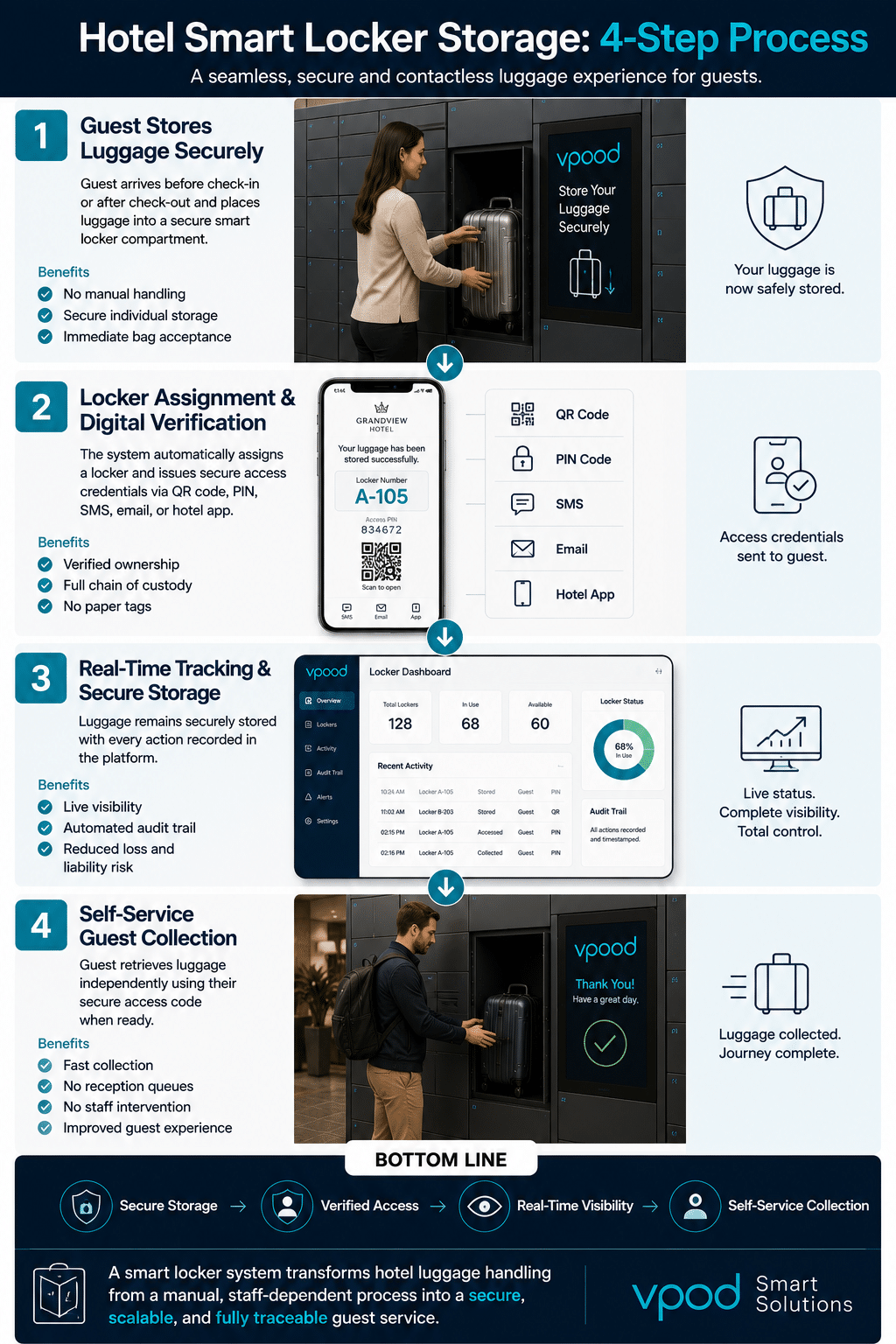
Hotel Smart Luggage Storage 4 Step Process
Traditional Hotel Storage vs Smart Locker Storage Solutions




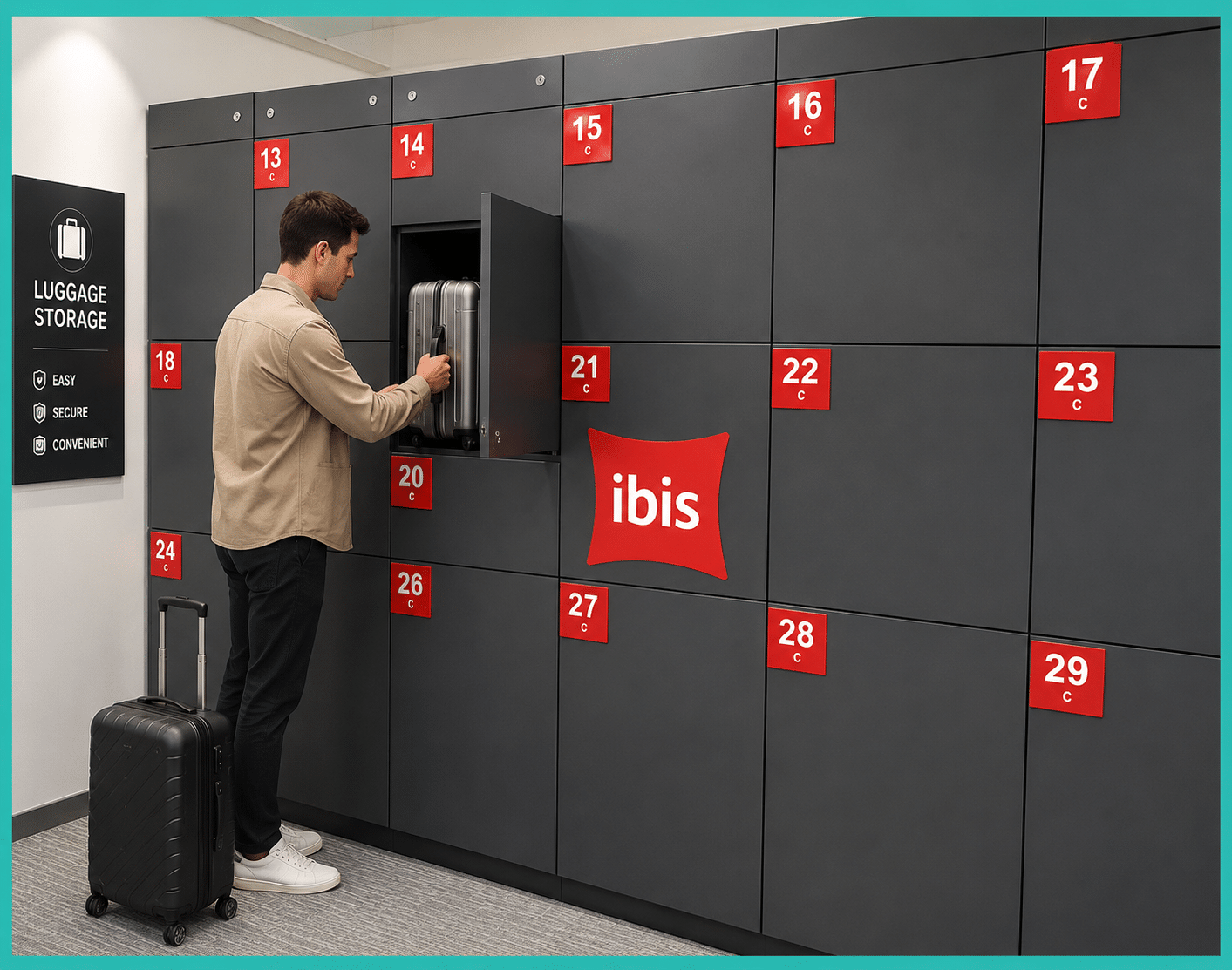
Case Study: Ibis Geneva & VPOD
Managing Hotel Storage Overflow at Scale
Who Is Affected by Hotel Storage Overflow?
Hotel Operations & Front Office Storage Manager
Hotel Operations Manager
Key Responsibilities
- Guest journey and service delivery
- Operational efficiency and process improvement
- Luggage handling and storage operations
- Staffing, labour utilisation, and productivity
- Risk management and compliance
- Security and asset protection
- Guest satisfaction and reputation management
- Revenue optimisation and ancillary services
- Technology and systems implementation
- Cost control and budget management
Key Challenges
- Hotel storage overflow during peak occupancy periods
- Check-in bottlenecks created by luggage overflow
- Limited luggage storage capacity at scale
- Slow luggage retrieval and guest processing
- Rising operational pressure on front desk teams
- Difficulty managing high luggage volume efficiently
Operational Pain Points
- Staff manually handling guest luggage
- Overflow spreading into operational areas
- Delays during check-in and check-out periods
- Disorganised luggage storage reducing efficiency
- Increased guest waiting times and frustration