


What Are Staffing Cost Challenges in Leisure Venues?
Staffing costs include all labour required to operate the venue:
- Security and bag checks
- Entry management and ticket scanning
- Cloakrooms and storage
- Food, beverage, and retail
- Customer service and operations
At scale, these costs increase due to:
- Higher volume
- Peak demand
- Operational complexity
Why Staffing Costs Increase at Scale
1. Labour Scales Linearly — Demand Does Not
Venue demand behaves like this:
- Thousands of people arrive in a short window
- Activity spikes before and during events
But staffing works like this:
- One staff member
- One interaction at a time
Demand grows exponentially. Labour grows linearly.
This mismatch creates:
- Staffing pressure
- Rising costs
- Operational strain
2.Peak Periods Force Overstaffing
Venues must staff for:
- Pre-event ingress
- Half-time or interval surges
- Post-event exit
This leads to:
- Large teams during peak windows
- Idle staff during off-peak periods
You pay for peak demand — even when it’s not happening.
Why Manual Storage Fails at Scale | Smarter Venue Storage Solutions
3. Manual Processes Drive Labour Demand
Many venue operations are still manual:
- Bag checks
- Ticket scanning
- Cloakroom handling
- Retail transactions
These require:
- Staff interaction
- Sequential processing
Which leads to:
- High labour dependency
- Limited throughput
4. Bottlenecks Require More Staff
When systems slow down:
- Queues form
- Congestion increases
- Additional staff are deployed
This creates a cycle:
More demand → slower processes → more staff → higher cost
Why Bag Policy Delays Venues at Scale | Reduce Entry Bottlenecks
5. Double Handling Increases Labour Load
In areas like cloakrooms:
- Items are handled at drop-off
- Handled again at collection
This doubles:
- Labour requirement
- Processing time
- Staffing cost
6. Staff Productivity Decreases Under Pressure
At scale:
- Staff work under time pressure
- Accuracy decreases
- Efficiency drops
This leads to:
- Slower service
- Increased errors
- More staff required to compensate

The Hidden Cost Multipliers
Cost Per Collection Increases
Operational Pressure Grows
Time Becomes a Bottleneck
ustomer Experience Suffers
The Key Issues Behind Venue Growth
The Core Problem: Traditional Systems Don’t Scale
Staffing challenges rarely result from a single busy period.
They occur when growing visitor numbers, peak demand, and manual processes require increasing levels of labour to maintain operations.
1. Peak Demand Drives Overstaffing
Venues must deploy large teams to manage short periods of intense activity.
Impact: Higher labour costs and underutilised staff during quieter periods.
2. Manual Processes Increase Labour Dependency
Many venue operations still rely on staff interaction and manual handling.
Impact: Increased staffing requirements and reduced operational efficiency.
3. Bottlenecks Require Additional Resources
As queues and congestion increase, more staff are needed to maintain service levels.
Impact: Rising operational costs and reduced profitability.
4. Labour Productivity Declines Under Pressure
High-volume environments place staff under constant operational pressure.
Impact: Reduced efficiency, increased errors, and greater staffing demand.
Why Traditional Systems Struggle
Staffing Costs Increase as Venues Scale
The biggest staffing cost leisure venue operators face is the need to increase labour as visitor numbers grow. Many venue operations still rely on staff-intensive processes that become increasingly expensive at scale.
Common issues include:
- Rising staffing costs
- Increased labour dependency
- Greater operational overhead
- Reduced workforce efficiency
Peak Periods Create Operational Pressure
Leisure venues experience significant spikes in visitor demand before, during, and after events. To maintain service levels, venues often need to increase staffing levels.
Challenges include:
- Labour bottlenecks during peak periods
- Overstaffing to meet demand
- Rising workforce costs
- Reduced operational efficiency
Manual Processes Slow Operations
Many venue operations continue to depend on manual processes for storage, guest services, and operational management.
This results in:
- Higher staffing requirements
- Increased labour costs
- Lower productivity
- Reduced scalability
Learn why event ingress is a security risk under Martyn’s Law
How Automation Improves Efficiency
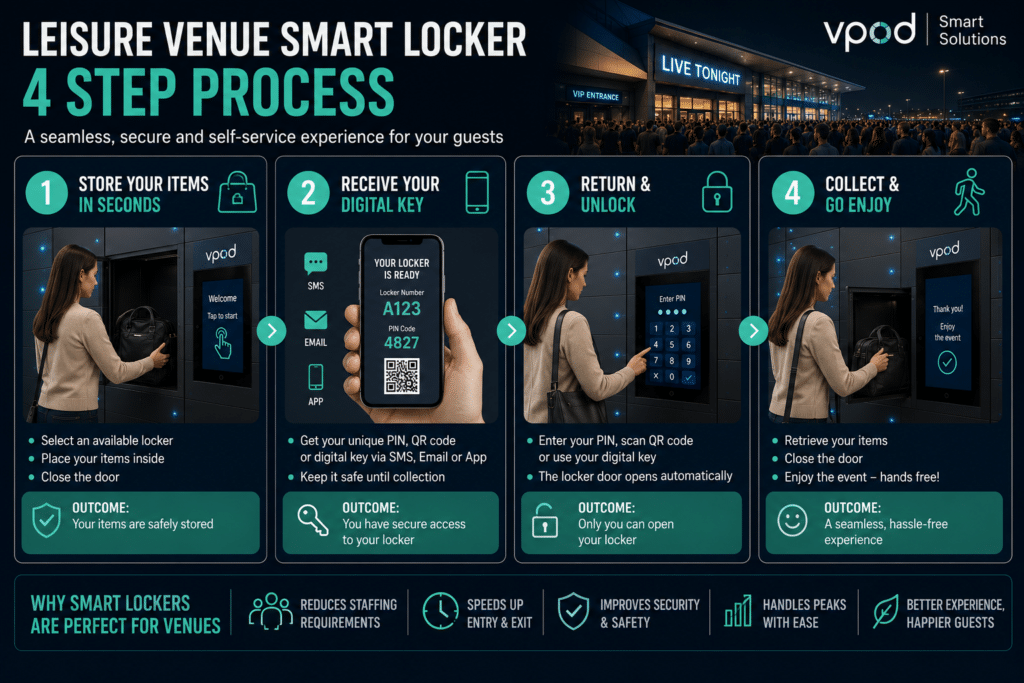
Smart locker systems help reduce staffing cost leisure venue operators face by automating storage and collection processes.
Benefits include:
- Reduced staffing costs
- Lower labour dependency
- Improved workforce efficiency
- Faster guest throughput
- Reduced operational overhead
- Increased venue scalability
How Leisure Venue Smart Lockers Work
Traditional Operations vs Smart Locker Systems




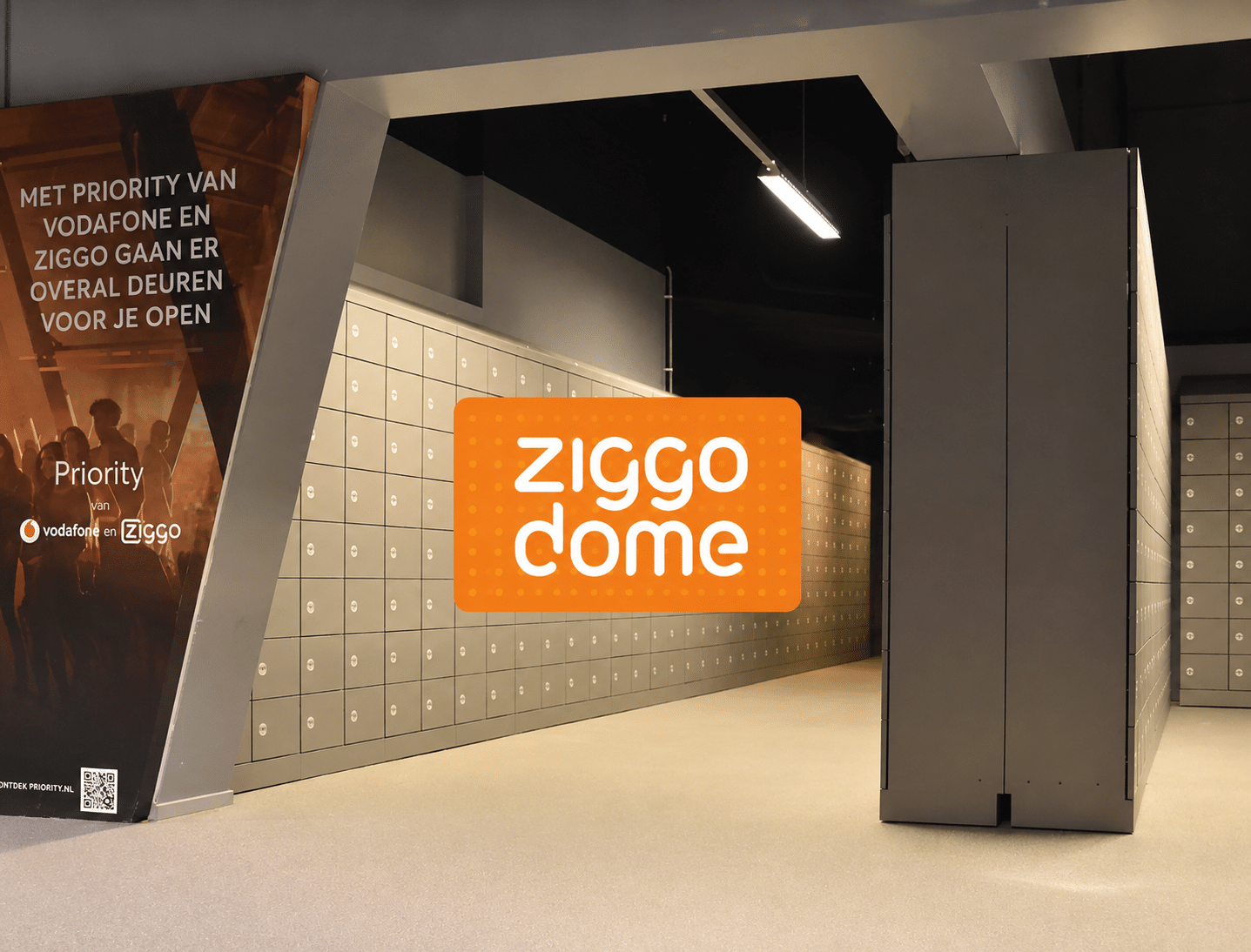
Case Study: Ziggo Dome & VPOD
How Ziggo Dome Improved Operational Efficiency
Amsterdam’s Ziggo Dome installed 4,608 smart lockers to replace traditional coin-operated storage systems and support high-volume event operations. The automated solution reduced manual intervention, improved visitor flow, and increased staff efficiency during events hosting up to 17,000 visitors.
Key Results:
- 4,608 smart lockers deployed
- Improved staff efficiency during major events
- Reduced reliance on manual storage operations
- Faster visitor entry and exit flow
- Increased operational capacity at scale
- Enhanced visitor experience through self-service storage
Who Is Affected by Rising Labour Costs?
Venue Operations Teams / Venue Owners & Management
Venue Operations Teams
Key Challenges
- Managing staffing costs efficiently
- Handling peak visitor demand
- Maintaining operational performance
- Reducing labour dependency
- Improving workforce productivity
Operational Pain Points
- Rising labour costs
- Staffing shortages during peak periods
- Increased operational overhead
- Workforce management complexity
- Reduced operational efficiency