


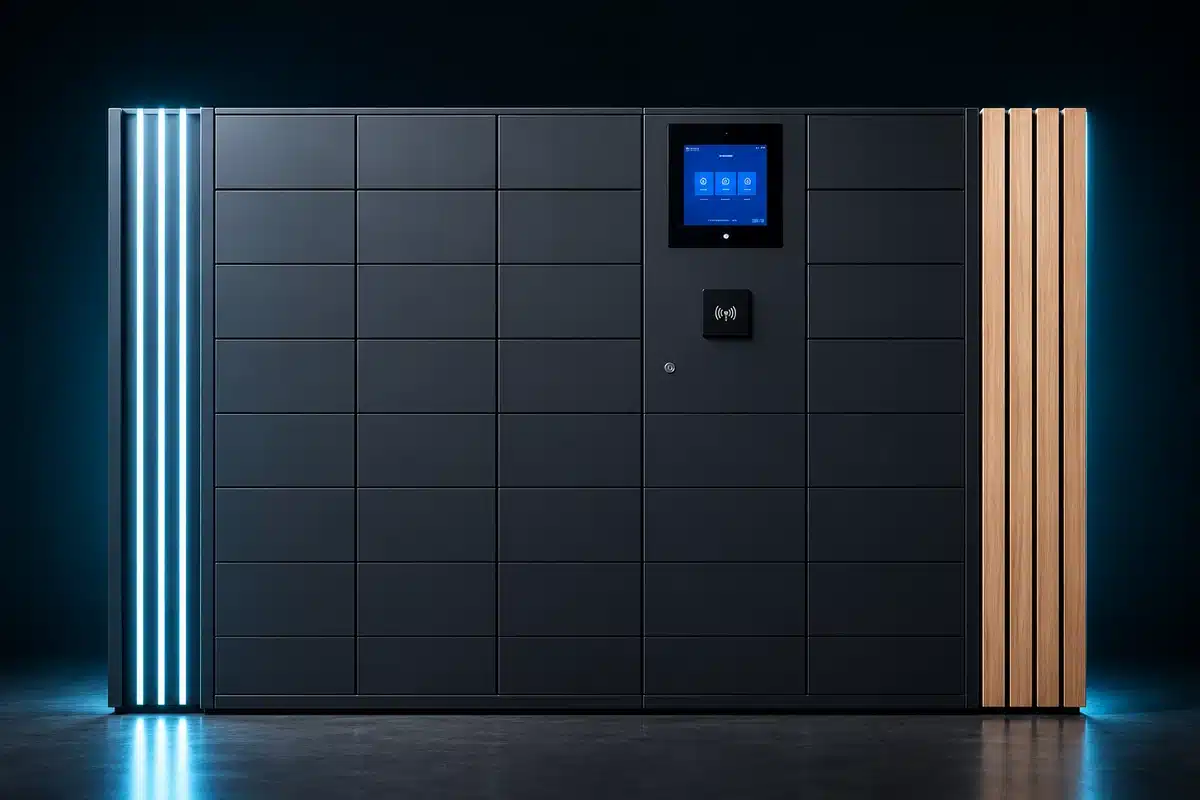

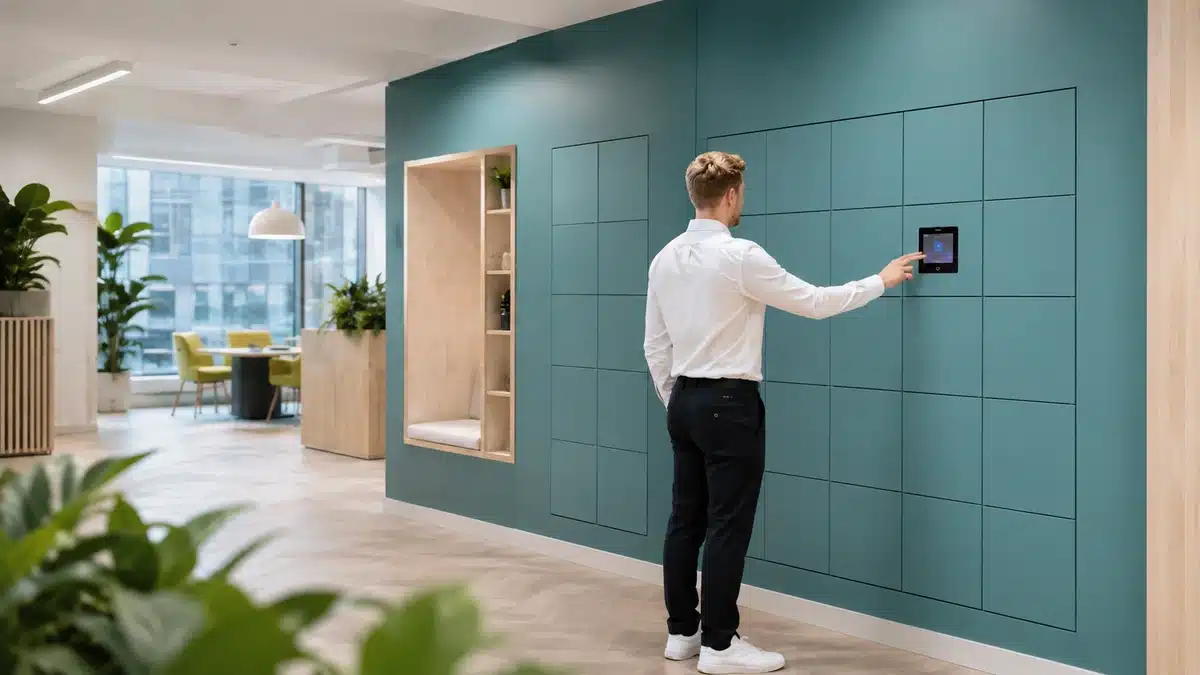


What Is Self-Service Cloakroom Storage?
Self-service cloakroom storage allows guests to securely store and retrieve their belongings without relying on a staffed cloakroom counter.
Instead of handing a bag to an attendant and receiving a paper ticket, guests independently access a locker using a secure PIN, QR code, RFID credential or mobile access method.
Cloud-connected locker systems also give nightclub operators live visibility of locker occupancy, availability and system performance from a central management platform.
Self-service storage helps nightclubs process more guests, reduce operational pressure and provide a faster, more secure cloakroom experience.
Why Cloakroom Queues Break Nightclubs at Scale
1. Entry Teams Are Already Under Pressure
Nightclub entrance teams manage ticket checks, identification, guest lists, security screening and crowd control.
Adding manual cloakroom transactions creates another point of delay in an already busy arrival process.
This often results in:
- Longer entrance queues
- Slower guest admission
- Additional pressure on staff
- Congestion around reception and cloakroom areas
When hundreds or thousands of guests arrive within a short period, even a small delay per transaction quickly becomes a significant operational bottleneck.
2. Manual Bag Handling Takes Too Long
Traditional cloakrooms require staff to:
- Receive each bag or coat
- Attach or issue a numbered ticket
- Move the item into storage
- Locate the item when the guest returns
- Resolve missing-ticket or collection problems
Every transaction requires staff involvement.
As attendance increases, the system becomes difficult to scale without adding more employees, more counter space and more storage administration.
3. Closing Time Creates a Sudden Collection Surge
Guest arrivals are normally spread across part of the evening. Collections are often concentrated into a much shorter period when the venue closes.
Hundreds of guests may request their belongings at approximately the same time.
This can create:
- Large internal queues
- Crowding near exits
- Delayed venue clearance
- Frustrated or intoxicated guests
- Additional pressure on security teams
- Increased risk of arguments and collection errors
A poor closing-time experience can undermine an otherwise successful night.
5. Traditional Cloakrooms Have Limited Capacity Visibility
Manual cloakrooms provide very little real-time operational information.
Managers may not know:
- How much storage remains available
- Which areas are approaching capacity
- How long guests are waiting
- Which lockers or storage positions are occupied
- When demand is highest
- Whether additional capacity is required
Without live information, teams are forced to react after congestion has already developed.
6. Large Venues Need Storage That Scales
Storage requirements can vary significantly between a normal trading night, a sold-out event, a student night or a special performance.
Traditional cloakrooms are difficult to scale because capacity depends on available staff, counter space and manual handling speed.
Self-service lockers create a more flexible model that can support:
- Nightclubs
- Live music venues
- Late-night bars
- Festivals and temporary events
- Multi-room venues
- VIP areas
- Seasonal and high-capacity events

The Hidden Impact of Cloakroom Queues
Slower Guest Entry
Closing-Time Congestion
Higher Staff Workload
Increased Security Risk
Why Traditional Cloakrooms Hold Nightclubs Back
The Core Problem
Traditional cloakrooms were designed for smaller visitor volumes and slower service expectations.
Modern nightclub guests expect fast entry, convenient digital services and immediate access to their belongings. Operators need storage systems that can manage intense peaks in demand without continuously increasing staffing levels.
Manual cloakrooms make it difficult to meet these expectations. They create avoidable queues, increase operating costs and place additional pressure on entrance, cloakroom and security teams.
Manual Bag Handover
Every bag or coat must be received, tagged, moved and returned by a member of staff.
Impact:
Slower transactions and limited capacity during peak periods.
Paper Tickets and Physical Tokens
Traditional collection methods depend on guests retaining a small ticket throughout the night.
Impact:
Lost tickets create delays, disputes and additional verification work.
No Real-Time Capacity Information
Manual systems cannot provide live information about occupancy, availability or demand.
Impact:
Operators cannot respond proactively when cloakroom capacity is approaching its limit.
Poor Scalability
Increasing capacity normally requires more staff, more counter space and additional storage administration.
Impact:
Operating costs increase as attendance and venue capacity grow.
Difficult Closing-Time Management
Traditional collection processes depend on staff manually locating each individual item.
Impact:
Large queues develop when many guests leave at the same time.
How Self-Service Smart Lockers Transform Nightclub Operations
Independent Guest Access
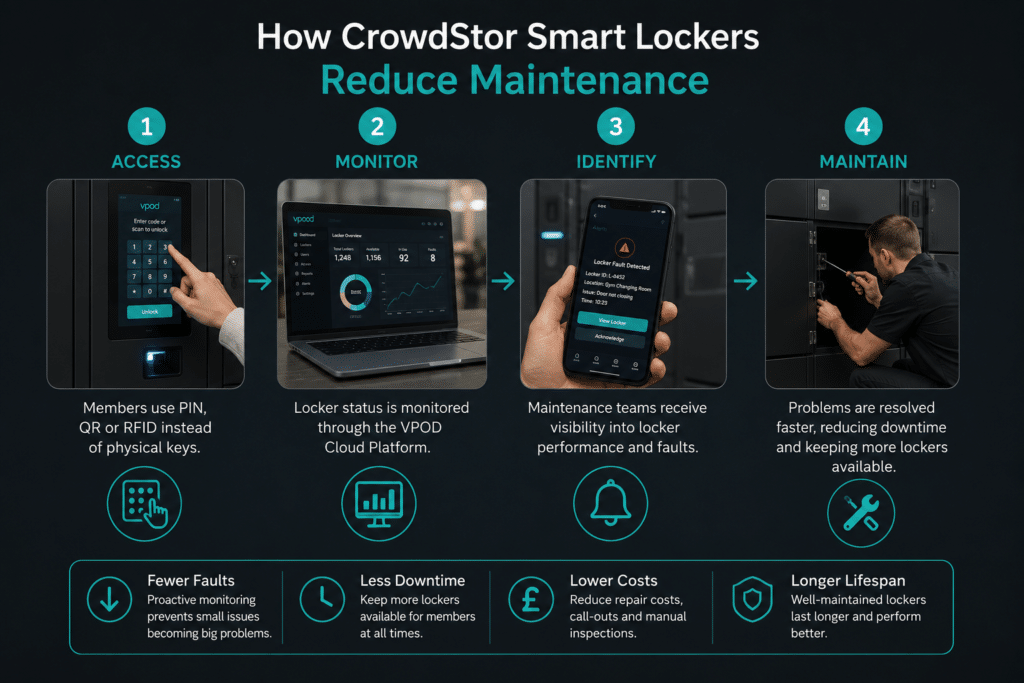
Guests select and access their own locker using a secure PIN, QR code, RFID credential or mobile access method.
They can store and retrieve belongings without waiting for an attendant to search for their bag.
This creates a faster storage experience while reducing cloakroom queues and staff involvemen
Cloud-Based Locker Management
Operators can manage every locker from a central cloud platform with live information about occupancy, availability and system status.
Whether managing one nightclub or a multi-site venue group, teams gain greater visibility and operational control.
Real-Time Operational Visibility
Managers can monitor locker usage, occupancy levels and peak demand patterns.
Live information helps venues:
- Understand storage demand
- Identify busy periods
- Improve capacity planning
- Respond to technical issues
- Compare performance between events or sites
How Smart Lockers Reduce Cloakroom Queue Pressure
Smart lockers replace a single staff-controlled service point with multiple independent storage points.
Key Benefits
- Guests store belongings without joining a manual cloakroom queue
- Multiple people can use the system simultaneously
- Digital access removes paper collection tickets
- Staff no longer need to search manually for every bag
- Live occupancy information improves capacity management
- Remote monitoring helps operators identify problems quickly
- Self-service collection supports faster venue clearance
- Staff can focus on security and guest support
The result is shorter queues, reduced staffing pressure and a more controlled storage experience.
How CrowdStor Self-Service Storage Works
Traditional Cloakrooms vs Smart Lockers





Case Study: Jassie — Centralised Nightlife Storage Hub
Jassie Centralised Coat and Bag Storage Across Breda’s Nightlife District
Jassie installed 512 smart lockers in Breda’s nightlife district, creating a central hub for coat and bag storage across multiple venues.
The self-service solution reduced congestion, removed pressure from venue cloakrooms and generated €180,000 in its first year.
Key Outcomes
✓ 512 smart lockers
✓ Reduced cloakroom congestion
✓ Centralised multi-venue storage
✓ Independent guest access
✓ €180,000 first-year revenue
Read the Full Jassie Case Study
Who Benefits from Smart Nightclub Lockers?
Operations Directors & General Managers
Operations Directors
Key Challenges
- Improving guest flow
- Managing peak attendance
- Reducing operating costs
- Standardising multi-site operations
Pain Points
- Long entry queues
- Closing-time congestion
- Labour-intensive cloakrooms
- Inconsistent processes
Security Managers
Key Challenges
- Maintaining controlled storage
- Managing crowd movement
- Reducing disputes
- Supporting safe venue clearance
Pain Points
- Lost cloakroom tickets
- Unsecured bags
- Ownership disputes
- Crowding near exits