


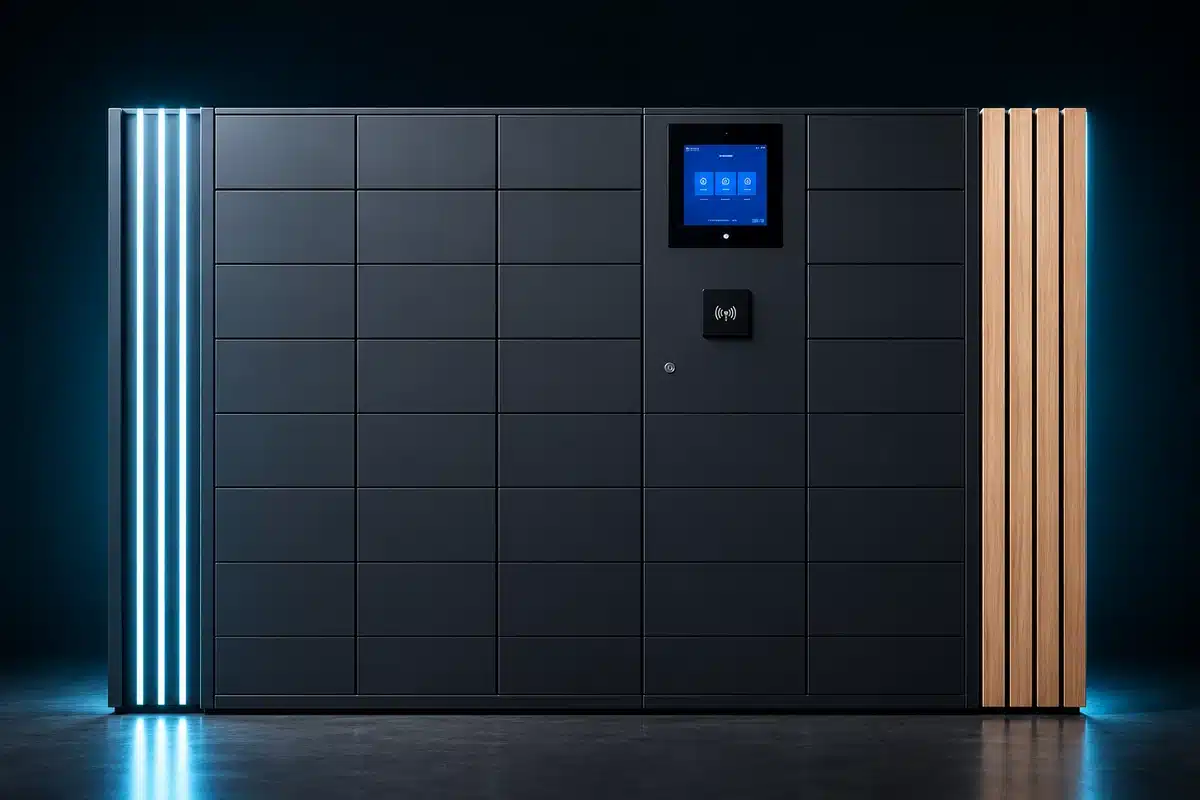





What Are Locker Shortages?
Locker shortages occur when there are insufficient lockers to meet:
- Guest demand
- Peak arrival periods
- Event-driven usage spikes
This is common in:
- Stadiums and arenas
- Festivals and events
- Theme parks
- Transport hubs
- Leisure and entertainment venues
The result:
-
- Guests unable to store items
- Increased pressure on alternative systems
- Operational inefficiency
Why Locker Shortages Happen at Scale
1. Demand Is Highly Concentrated
Locker usage is not evenly distributed.
It spikes:
- Pre-event (entry period)
- During peak hours
- At specific attraction points
This creates:
- Sudden demand surges
- Immediate capacity constraints
Locker demand behaves like ingress — it peaks, not flows.
Why Leisure Venue Queues Break Operations at Scale
2. Bag Volume Is Underestimated
Many venues underestimate:
- Percentage of guests with bags
- Size variability (small vs large items)
- Behavioural patterns
This leads to:
- Under-provisioning
- Capacity shortfalls
- Unmet demand
Why Crowd Safety Risk Breaks Leisure Venues at Scale
3. Fixed Infrastructure Meets Variable Demand
Locker systems are:
- Physically fixed
- Capacity-limited
But demand is:
- Dynamic
- Event-driven
- Unpredictable
This mismatch creates:
- Shortages during peaks
- Underutilisation during off-peak
4. Inefficient Locker Mix Reduces Capacity
Not all lockers are equal.
Poor design includes:
- Too many large lockers
- Not enough small compartments
- Inflexible configurations
This leads to:
- Wasted space
- Reduced effective capacity
Venue Lockers vs Temporary Storage Solutions
5. No Real-Time Capacity Visibility
Without data, venues cannot:
- Monitor usage
- Predict demand
- Optimise allocation
This results in:
- Reactive management
- Missed optimisation opportunities
6. Alternative Systems Collapse Under Pressure
When lockers are full:
- Guests revert to cloakrooms
- Staff must handle bags manually
- Queues increase
Locker shortages push demand back into inefficient systems.
Improve entry flow with venue lockers
Explore Martyn’s Law roles and responsibilities for event venues
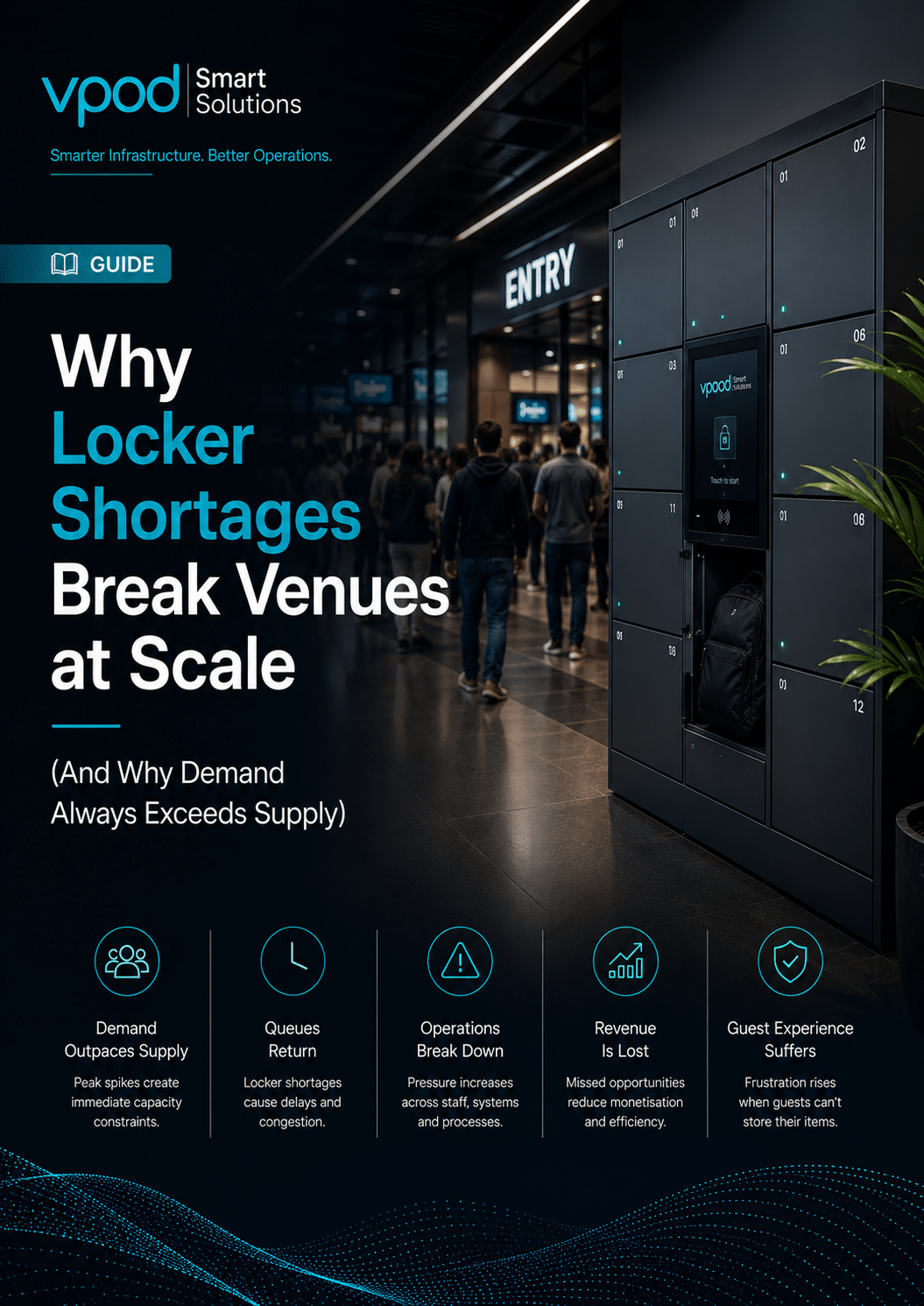
The Hidden Impact of Locker Shortages
Guest Experience Breakdown
Increased Security & Queue Congestion
Reduced Visitor Flow Efficiency
Reduced Revenue Opportunities
Why Event Entry Queues Keep Getting Longer
Why Event Entry Queues Keep Getting Longer
Event entry queues have become a growing challenge for stadiums, arenas, festivals, and entertainment venues.
As attendance increases and security requirements become more complex, many venues struggle to maintain efficient visitor flow during peak arrival periods. What appears to be a simple queue issue is often the result of multiple operational bottlenecks working together.
1. Security Screening Takes Longer Than Ever
Modern security procedures are essential, but they can significantly impact entry throughput.
Visitors now arrive with bags, personal belongings, and prohibited items that require additional checks. Every extra screening step increases processing time and reduces the number of guests that can enter the venue per hour.
Common causes include:
- Manual bag inspections
- Secondary security checks
- Prohibited item management
- High volumes of visitors arriving simultaneously
As security requirements increase, queues can grow rapidly if venues do not optimise entry operations
See how Crowd Safety, Operations, and Security teams share responsibility under Martyn’s Law
2. Bag Storage and Locker Bottlenecks Slow Visitor Flow
Many entry delays begin before visitors reach security.
When guests need to store bags, coats, or personal belongings, insufficient locker capacity and overcrowded storage areas can create significant congestion. These bottlenecks often spread into entrances and security checkpoints.
Key challenges include:
- Locker shortages during peak demand
- Long queues at bag storage areas
- Manual cloakroom processes
- Slow item retrieval and storage
Effective event bag storage plays a critical role in reducing queue formation and improving visitor throughput.
3. Peak Demand Creates Capacity Constraints
The biggest challenge for most venues is not average demand — it’s peak demand.
Thousands of visitors often arrive within a short time window before an event starts. When infrastructure is designed for average attendance rather than peak attendance, capacity is quickly exceeded.
This results in:
- Longer entry queues
- Increased crowd congestion
- Slower venue ingress
- Reduced visitor satisfaction
- Operational pressure on venue teams
The most successful venues focus on throughput optimisation, self-service storage solutions, and crowd flow management to ensure visitors can enter safely and efficiently during peak periods.
Learn why ingress is one of the highest-risk areas under Martyn’s Law
Learn how Martyn’s Law identifies queue build-up and crowd density as critical risk factors
See how Crowd Safety, Operations, and Security teams share responsibility under Martyn’s Law
Why Traditional Bag Storage Systems Cannot Scale
Capacity Limitations Create Bottlenecks
As visitor numbers increase, traditional bag storage systems become harder to manage.
Manual bag checks, cloakrooms, and staffed storage areas all depend on people rather than capacity-driven infrastructure. During peak attendance periods, this creates operational pressure, longer queues, and slower visitor processing.
Traditional bag storage systems have a fixed handling capacity. As more visitors arrive with bags, queues begin to form around security checkpoints, cloakrooms, and storage areas.
This leads to:
- Longer entry queues
- Increased congestion
- Slower security operations
- Reduced visitor throughput
The problem becomes even more visible during large events, where demand can exceed available storage capacity within a short period.
Replace cloakrooms with smart lockers
The Hidden Cost of Cloakrooms at Scale
Many venues rely on staffed cloakrooms to manage visitor belongings. While effective at lower volumes, cloakrooms become increasingly expensive and difficult to operate as attendance grows.
Challenges include:
- Higher labour costs
- Increased manual handling
- Queue formation during peak periods
- Slower bag retrieval times
- Greater operational pressure on staff
As demand increases, adding more staff often increases costs without solving the underlying capacity problem.
Why Visitor Flow Breaks Down During Peak Events
When bag storage systems cannot process visitors quickly enough, congestion spreads throughout the venue.
Queues at storage areas often impact:
- Venue entrances
- Security screening points
- Circulation routes
- Event ingress operations
This creates crowd movement challenges and reduces overall venue efficiency. Small delays at storage points can quickly develop into larger visitor flow bottlenecks.
Read how Martyn’s Law exposes operational risk at entry points
Explore how Martyn’s Law explains queue exposure, crowd density, and operational risk
How Smart Lockers Reduce Venue Queues
Modern smart venue lockers provide a scalable alternative to traditional bag check solutions.
By enabling self-service storage, visitors can securely store and retrieve items without staff intervention. This reduces queue formation, improves entry processing speeds, and supports more efficient security operations.
Benefits include:
- Faster visitor throughput
- Reduced staff dependency
- Improved queue reduction
- Better event bag storage management
- Real-time capacity visibility
- More efficient venue operations
By replacing manual processes with self-service lockers, venues can improve visitor flow, reduce congestion, and create a more scalable storage infrastructure for peak demand.
Compare manual security handling vs automated storage systems
Check-out staff cost vs locker automation ROI
Venue Smart Locker Automated Process
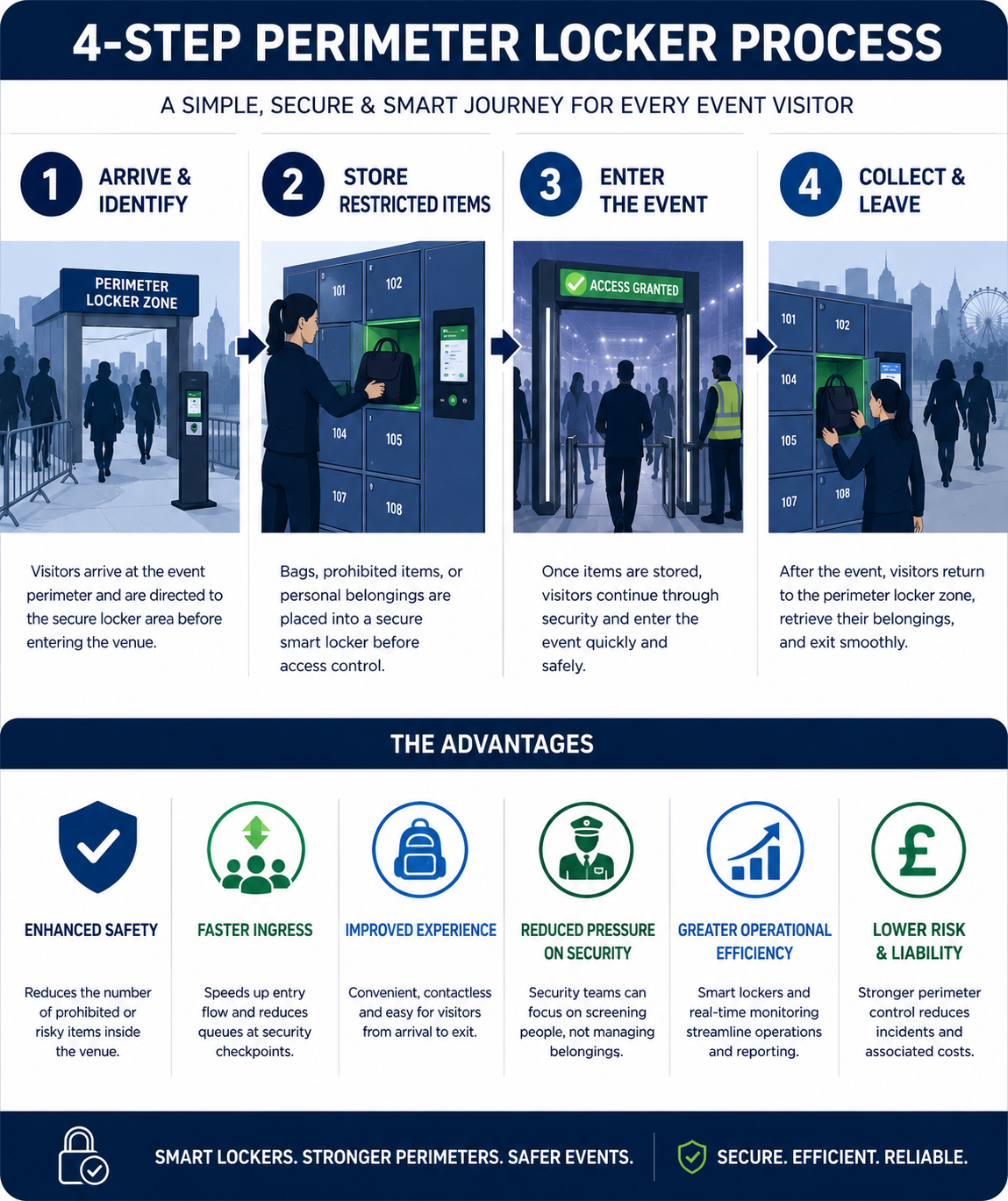
Traditional Venue Storage vs Smart Bag Locker Solutions




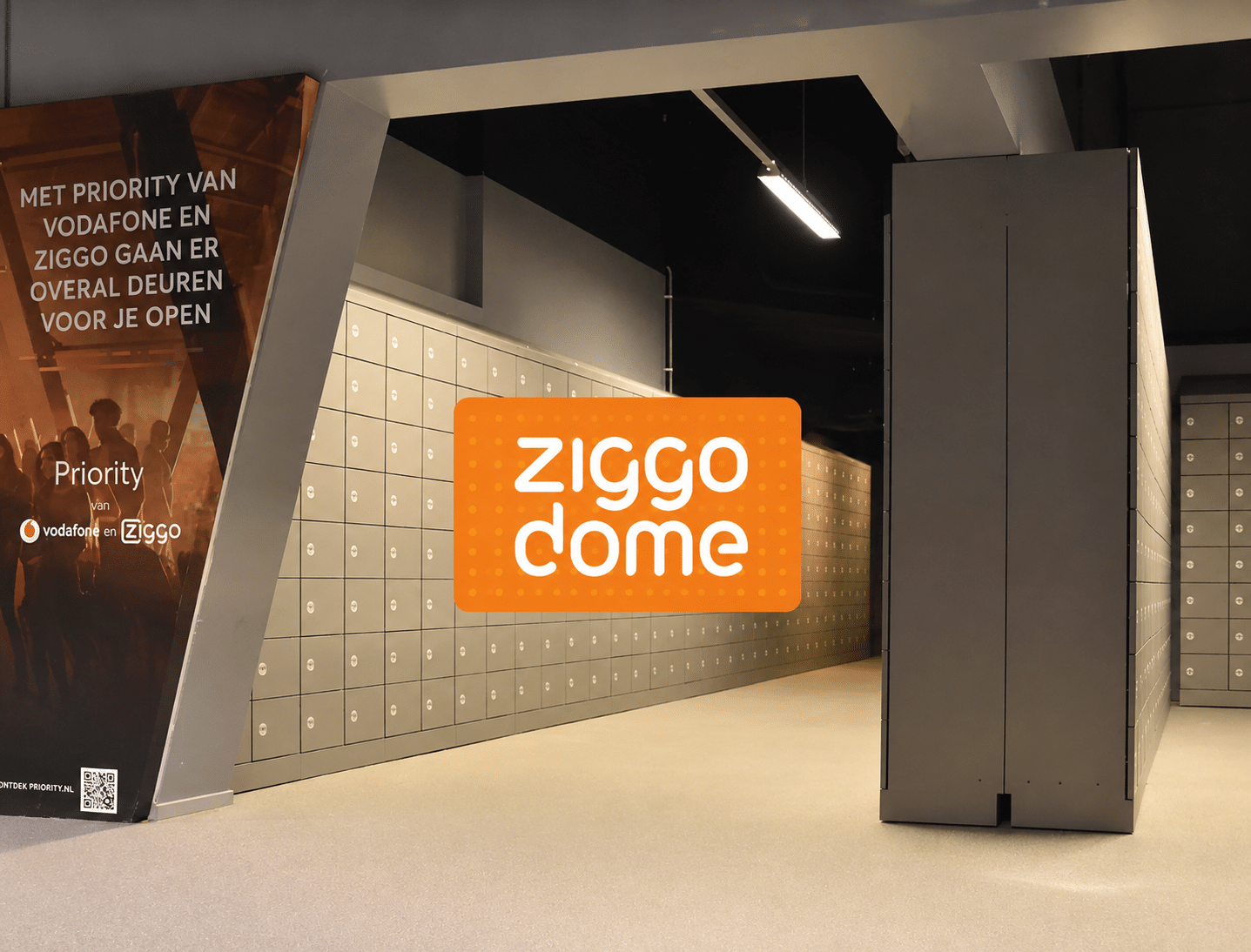
Case Study: Ziggo Dome & VPOD
Managing Hotel Storage Overflow at Scale
Who Is Affected by Locker Shortages?
Venue Operations & Front of House Teams
Venue Operations Manager
Areas of Responsibility
- Venue operational performance
- Crowd flow management
- Queue reduction and throughput
- Event-day operations
- Capacity planning
- Visitor journey optimisation
- Security coordination
- Health & safety compliance
- Operational risk management
- Asset and infrastructure utilisation
- Staffing efficiency and resource allocation
- Contractor and supplier management
- Incident response and escalation
- Operational reporting and KPI management
- Revenue-generating operational services
Key Challenges
- Locker shortages during peak attendance periods
- Queue build-up around locker and entry areas
- Limited storage capacity during high visitor demand
- Slower visitor processing and storage retrieval
- Increased operational pressure on venue teams
- Difficulty managing peak event demand efficiently
Operational Pain Points
- Staff manually managing overflow storage
- Visitors unable to find available lockers
- Delays during entry and exit periods
- Congestion spreading across operational areas
- Reduced visitor flow efficiency during busy events