






What Are Theme Park Entry Delays?
Entry delays occur when visitors must wait to:
- Enter the park
- Pass security checks
- Scan tickets or passes
This typically happens at:
- Entrance gates
- Security screening areas
- Bag check zones
The result:
- Long queues outside the park
- Delayed entry times
- Frustrated visitors
Why Entry Delays Increase at Scale
1. Demand Is Extremely Concentrated
Theme parks experience:
- Opening-time surges
- Peak arrival windows
- Group and family arrivals
This creates:
- Thousands of visitors arriving at once
- Immediate pressure on entry systems
Entry demand peaks sharply — not gradually.
See how venues are preparing for Martyn’s Law with smarter infrastructure
2. Security Screening Slows Throughput
Modern parks require:
- Bag checks
- Security screening
- Restricted item control
Each check takes time.
At scale:
- Throughput is limited
- Queues grow quickly
3. Bags Are the Biggest Bottleneck
Visitors often arrive with:
- Backpacks
- Food and drink
- Personal items
Each bag requires:
- Inspection
- Manual handling
This significantly slows:
- Security lanes
- Entry flow
The more bags, the slower the entry.
4. Manual Processes Limit Speed
Entry systems often rely on:
- Staff interaction
- Visual checks
- Sequential processing
This creates:
- Limited throughput
- Staff dependency
- Slow processing rates
5. Entry Points Have Fixed Capacity
Theme park entrances are:
- Physically constrained
- Designed for movement, not queuing
At scale:
- Capacity is exceeded
- Queues extend beyond designated areas
6. Small Delays Compound Quickly
If each visitor takes just a few seconds longer:
- Queue length increases
- Waiting time escalates
- Congestion spreads
At scale, seconds become major delays.
Compare manual security handling vs automated storage systems

The Hidden Impact of Entry Delays
Visitor Experience Declines
Revenue Opportunities Decline
Operational Pressure Increases
Safety Risks Grow
The Key Issues Behind Entry Delays
The Core Problem: Entry Systems Struggle with Peak Demand
Entry delays rarely result from a single issue.
They occur when large visitor volumes, security requirements, and limited processing capacity combine to slow entry and create queues before visitors even enter the park.
1. Arrival Surges Overwhelm Entry Points
Large numbers of visitors arrive during short time windows, creating immediate pressure on gates and screening areas.
Impact: Longer queues and slower entry times.
Compare bag searches vs pre-entry locker storage
Improve entry flow with lockers systems designed for high-throughput enviroments.
2. Security Checks Reduce Throughput
Bag inspections and screening procedures add time to every visitor entering the park.
Impact: Reduced processing speed and increased congestion.
Why Bag Checks Delay Security at Scale | Reduce Event Entry Bottlenecks
3. Entry Capacity Reaches Its Limit
Entrance areas can only process a fixed number of visitors at one time.
Impact: Queues grow rapidly during peak periods.
4. Small Delays Create Large Queues
Minor slowdowns across thousands of visitors quickly compound into significant waiting times.
Impact: Increased congestion and reduced visitor satisfaction.
Compare staff cost vs locker automation ROI
Free Storage vs Paid Locker Systems
Why Traditional Entry Systems Struggle
Opening-Time Surges Create Immediate Pressure
Theme parks experience large arrival peaks when visitors reach the entrance at the same time. Even well-managed gates can slow down when demand arrives in concentrated waves.
Common issues include:
- Long queues before entry
- Congestion around gate areas
- Delayed visitor access
- Pressure on front-of-house teams
See how event lockers outperform cloakrooms during high-volume events and peak demand periods.
Bag Checks Slow Entry Flow
Security screening and bag inspections add time to every visitor journey. The more bags entering the park, the slower each lane becomes.
Challenges include:
- Slower security processing
- Increased waiting times
- More congestion before entry
- Reduced visitor throughput
Fixed Entry Capacity Limits Performance
Entrance areas can only process a certain number of visitors at once. When demand exceeds that capacity, queues build quickly.
This results in:
- Entry bottlenecks
- Overcrowded waiting areas
- Reduced capacity efficiency
- A negative start to the visitor experience
How Pre-Entry Smart Lockers Reduce Delays
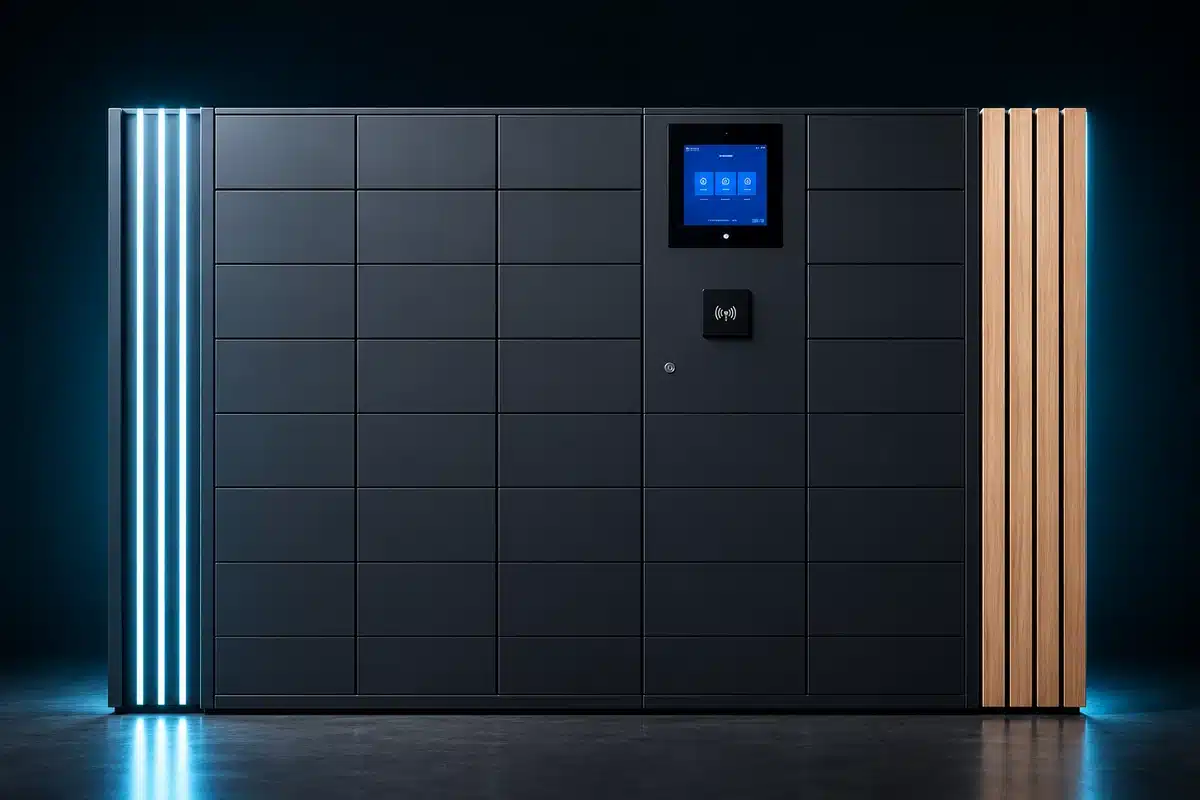
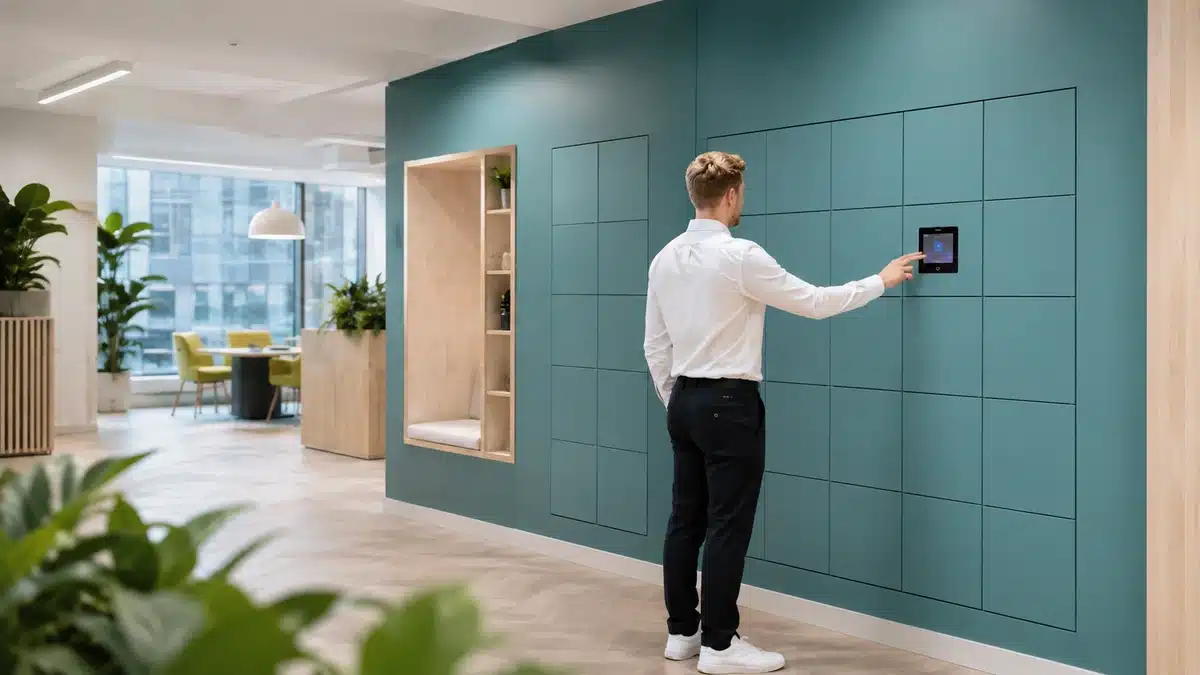
Pre-entry smart lockers help remove bags and personal items before visitors reach security.
Benefits include:
- Faster entry processing
- Fewer bags at security
- Reduced queue congestion
- Improved visitor flow
- Better crowd management
- Less pressure on entry teams
By reducing friction before the gate, theme parks can improve entry speed, reduce waiting times, and create a smoother start to the visitor experience.
Compare manual security handling vs automated storage systems
Compare capex vs opex locker model
How Leisure Venue Smart Lockers Work
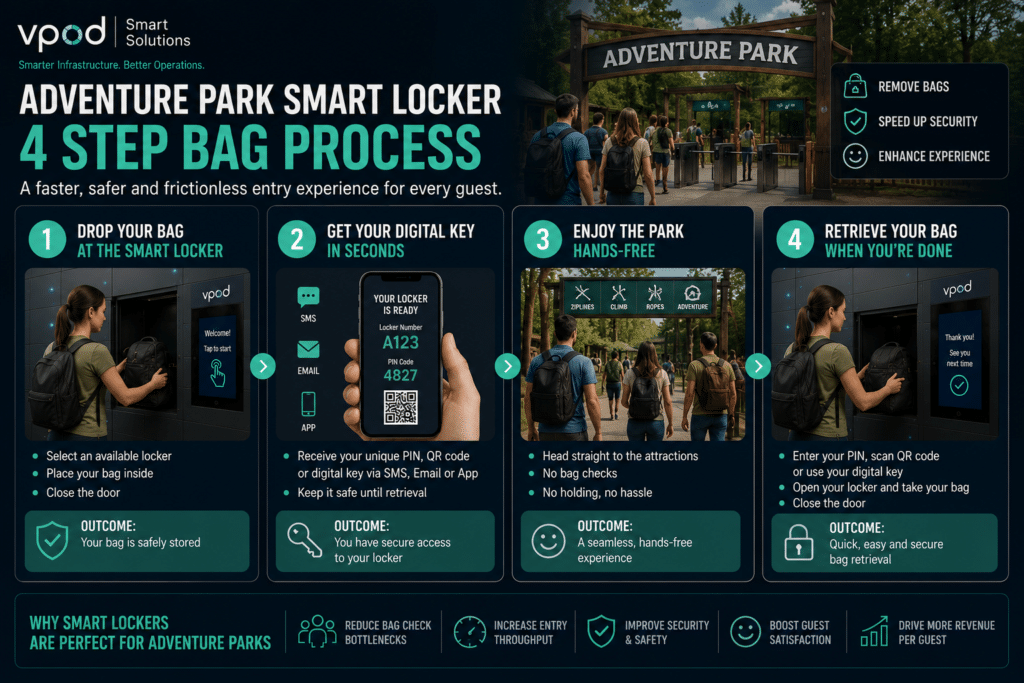
Traditional Entry Processes vs Pre-Entry Smart Locker Systems




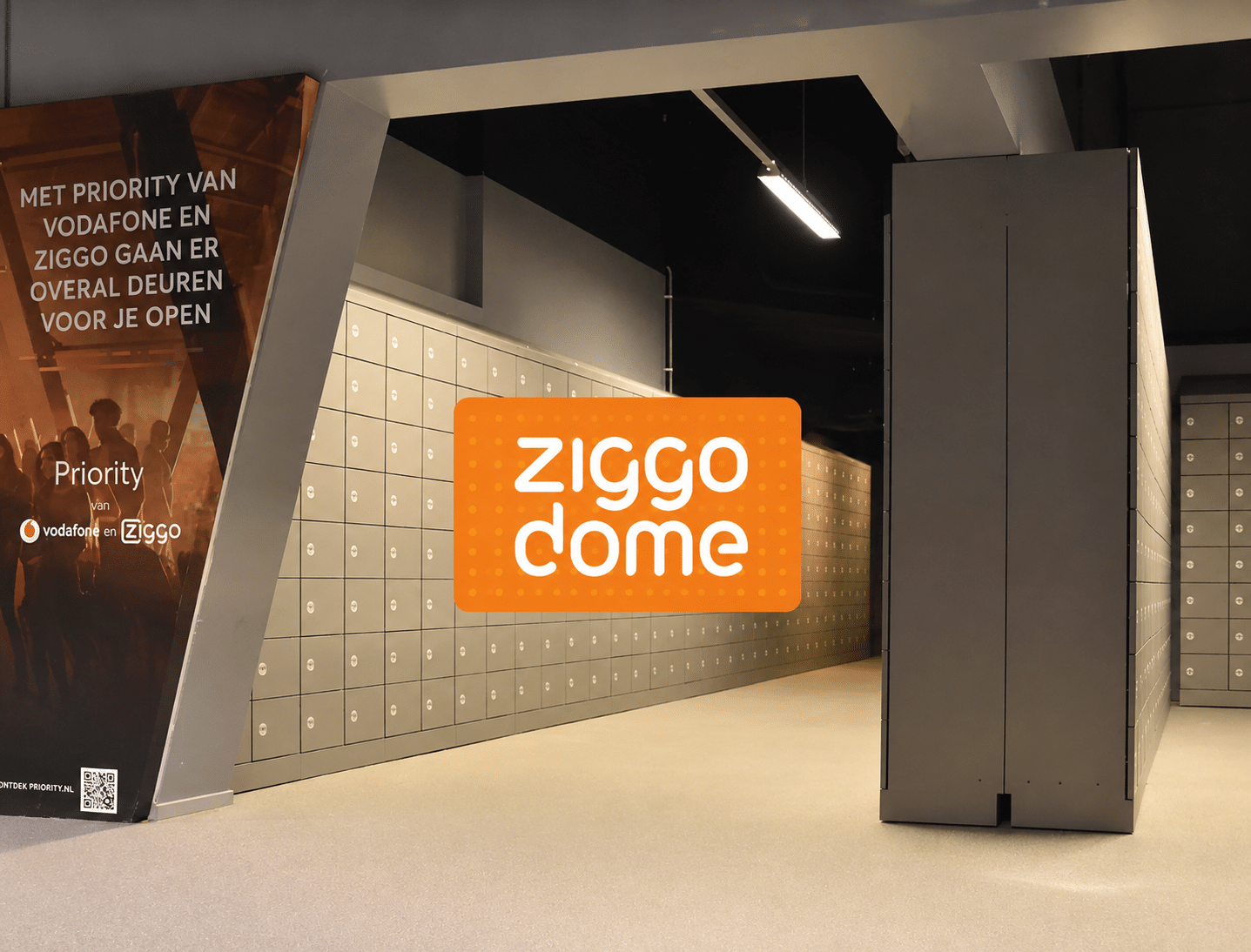
Case Study: Ziggo Dome & VPOD
How Ziggo Dome Improved Operational Efficiency
Amsterdam’s Ziggo Dome installed 4,608 smart lockers to replace traditional coin-operated storage systems and support high-volume event operations. The automated solution reduced manual intervention, improved visitor flow, and increased staff efficiency during events hosting up to 17,000 visitors.
Key Results:
- 4,608 smart lockers deployed
- Improved staff efficiency during major events
- Reduced reliance on manual storage operations
- Faster visitor entry and exit flow
- Increased operational capacity at scale
- Enhanced visitor experience through self-service storage
Who Is Affected by Theme Park Entry Delays?
Operations & Guest Services Teams / Visitors & Guests
Operations & Guest Services Teams
Key Challenges
- Managing peak visitor arrivals
- Maintaining smooth entry flow
- Reducing queue congestion
- Supporting security operations
- Improving visitor throughput
Operational Pain Points
- Long entry queues
- Congestion at entrance gates
- Increased operational pressure
- Managing visitor complaints
- Reduced entry efficiency