
Event Lockers vs Cloakrooms | Which Storage System Is Better?

Compare traditional cloakrooms vs smart event lockers to understand which solution delivers faster entry, lower costs, and better event performance.

For decades, cloakrooms have been the default solution for event storage.

But as events scale, they introduce:

  • Queues
  • Staffing costs
  • Operational inefficiencies

Modern venues are increasingly switching to smart lockers.

Because the difference is not just storage — it’s system performance.

The Science of Event Ingress: How Lockers Eliminate Queues & Increase Throughput

Event entry isn’t just about storage — it’s about throughput, flow, and system performance.

This video breaks down the science behind event ingress, showing how traditional cloakrooms create bottlenecks that slow entry and increase risk.

See how:
– Manual cloakroom processes limit throughput and create queues
– Each item handled adds friction and delays entry
– Locker systems enable parallel usage and continuous flow
– Removing storage from entry points dramatically increases capacity

Understand why leading venues are shifting from staffed cloakrooms → to high-performance locker systems designed for scale.

Compare bag check systems vs smart lockers to understand how removing bags before entry improves both security and throughput at scale.

Event Lockers vs Cloakrooms — Quick Comparison

Cloakrooms (Manual Storage)
Staff-managed process
30–60 sec per item
Queues during peak entry
High staffing required
Low throughput capacity
Ongoing labour cost
No revenue generation
Smart Event Lockers
Self-service system
5–10 sec per transaction
No queue dependency
Minimal staffing
High throughput performance
Lower cost-to-serve
Pay-per-use revenue

Event Lockers vs Cloakrooms — Full Comparison

Category
Process
Speed
Throughout
Queues
Staffing
Cost Model
Revenue
Scalability
Security Impact
User Experience
Operational Control
ROI
Cloakrooms (Manual Storage)
Staff-managed handling
30–60 sec per item
~60–100 items/hour per staff
High risk at entry & exit
20–30 staff (large events)
Ongoing labour cost
None (cost centre)
Limited by staff
Increases perimeter risk
Slow, inconsistent
Manual, error-prone
Negative (cost-heavy)
Smart Event Lockers
Self-service system
5–10 sec per transaction
~400–500 uses/hour
Eliminated through parallel usage
1–2 attendants
Lower cost-to-serve
Pay-per-use income
Highly scalable
Reduces congestion & improves flow
Fast, predictable
System-controlled
Positive (revenue-generating)
Cloakrooms (Manual Storage)
Process
Staff-managed handling
Speed
30–60 sec per item
Throughout
~60–100 items/hour per staff
Queues
High risk at entry & exit
Staffing
20–30 staff (large events)
Cost Model
Ongoing labour cost
Revenue
None (cost centre)
Scalability
Limited by staff
Security Impact
Increases perimeter risk
User Experience
Slow, inconsistent
Operational Control
Manual, error-prone
ROI
Negative (cost-heavy)
Smart Event Lockers
Process
Self-service system
Speed
5–10 sec per transaction
Throughout
~400–500 uses/hour
Queues
Eliminated through parallel usage
Staffing
1–2 attendants
Cost Model
Lower cost-to-serve
Revenue
Pay-per-use income
Scalability
Highly scalable
Security Impact
Reduces congestion & improves flow
User Experience
Fast, predictable
Operational Control
System-controlled
ROI
Positive (revenue-generating)

How Cloakrooms Work

Typical Workflow
  1. Guest hands over item
  2. Staff tag and store it
  3. Item is manually retrieved later
Limitations
  • Time per item adds up
  • Queues form quickly
  • Requires large teams
  • Prone to error and delays

How Event Lockers Work

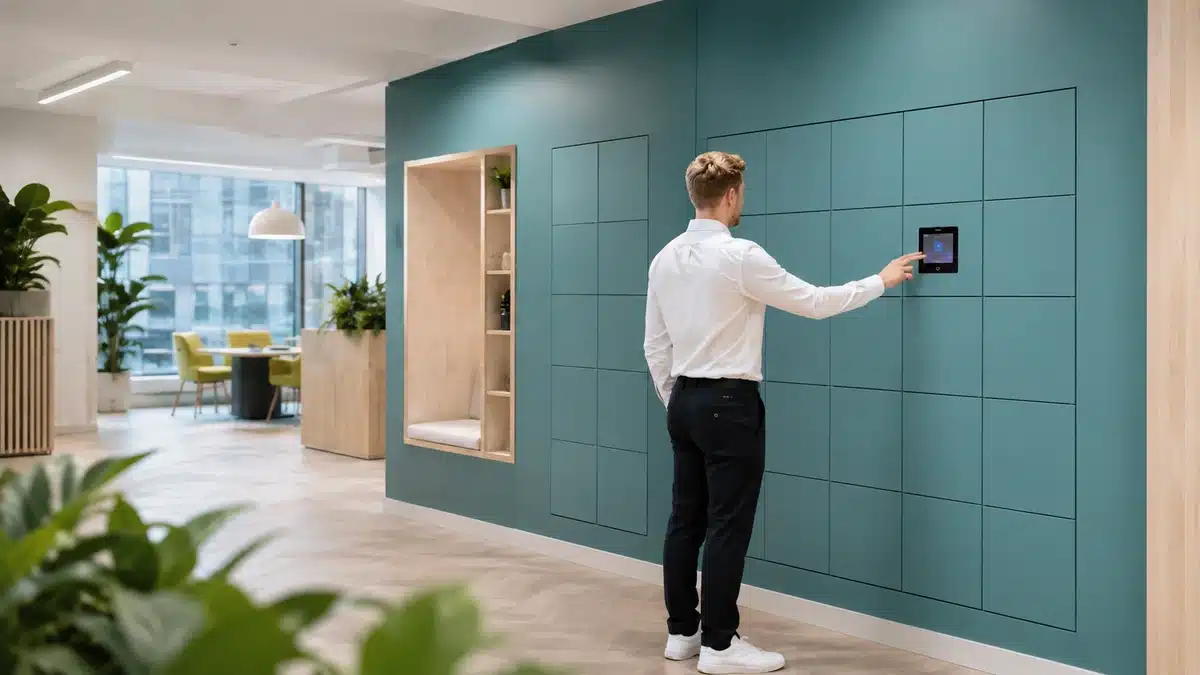
Smart lockers automate storage.
Typical Workflow
  1. Guest places item in locker
  2. System generates access code
  3. Guest retrieves item independently
Advantages
  • No staff involvement
  • Fast transactions
  • Consistent process
  • Scalable for large events

Speed & Throughput Comparison

Speed is the biggest difference.
Time Per Transaction
Process Time
Cloakroom 30–60 seconds
Locker 5–10 seconds
Throughput Impact
  • Cloakroom: ~60–100 items/hour per staff
  • Lockers: ~400–500 uses/hour

See how event locker systems increase throughput and remove entry bottlenecks during peak arrival periods.

Queue Impact

Cloakrooms
  • Queues before entry
  • Delays during peak arrival
  • Exit congestion after event
Lockers
  • No queue dependency
  • Distributed usage
  • Smooth entry and exit

See how event locker systems eliminate queues and improve ingress flow at high-volume events.

Staffing Requirements

Cloakroom Model
  • 20–30 staff for large events
  • Ongoing labour cost
  • Coordination required
Locker Model
  • 1–2 attendants
  • Minimal oversight
  • Reduced operational burden

Cost Comparison

Cloakrooms
  • £3,000–£6,000 per event
  • Recurring cost
  • Scales with attendance
Lockers
  • Lower operational cost
  • Scalable infrastructure
  • Predictable cost structure

Revenue Potential

Cloakrooms
  • No revenue generation
  • Pure cost centre
Lockers
  • pay-per-use pricing
  • £5–£10 per use

Example:

  • 3,500 users × £6

 £21,000 revenue per event

Event Locker ROI

Security & Risk Impact

Cloakrooms
  • Create queues outside venue
  • Increase perimeter risk
  • Slow security lanes
Lockers
  • Remove bags before entry
  • Improve throughput
  • Reduce congestion

Visitor Experience

Cloakrooms
  • Long waits
  • Inconsistent service
  • Frustration
Lockers
  • Fast
  • Self-service
  • Predictable

Real-World Scenario

10,000 Visitor Event
  • 35% bring bags → 3,500 bags

Cloakroom

  • 20+ staff required
  • Queues of 400–800+ people

Lockers

  • Minimal staff
  • No queue buildup
  • Faster entry

When to Use Each Option

Use Cloakrooms If:
  • Small events
  • Low bag volume
  • Limited infrastructure
Use Smart Lockers If:
  • Large events
  • High bag volume
  • Need to reduce queues
  • Want to generate revenue

Explore event locker solutions for high-volume, high-demand event environments.

Final Verdict: Cloakrooms vs Smart Lockers

Cloakrooms are simple but inefficient, while smart lockers are scalable, efficient, and revenue-generating- making them not just a better storage option for modern events, but a fundamentally better operational system.

Turn Event Storage into Revenue

Upgrade from manual cloakrooms to a high-performance locker system designed to improve throughput, reduce costs, and generate revenue.