


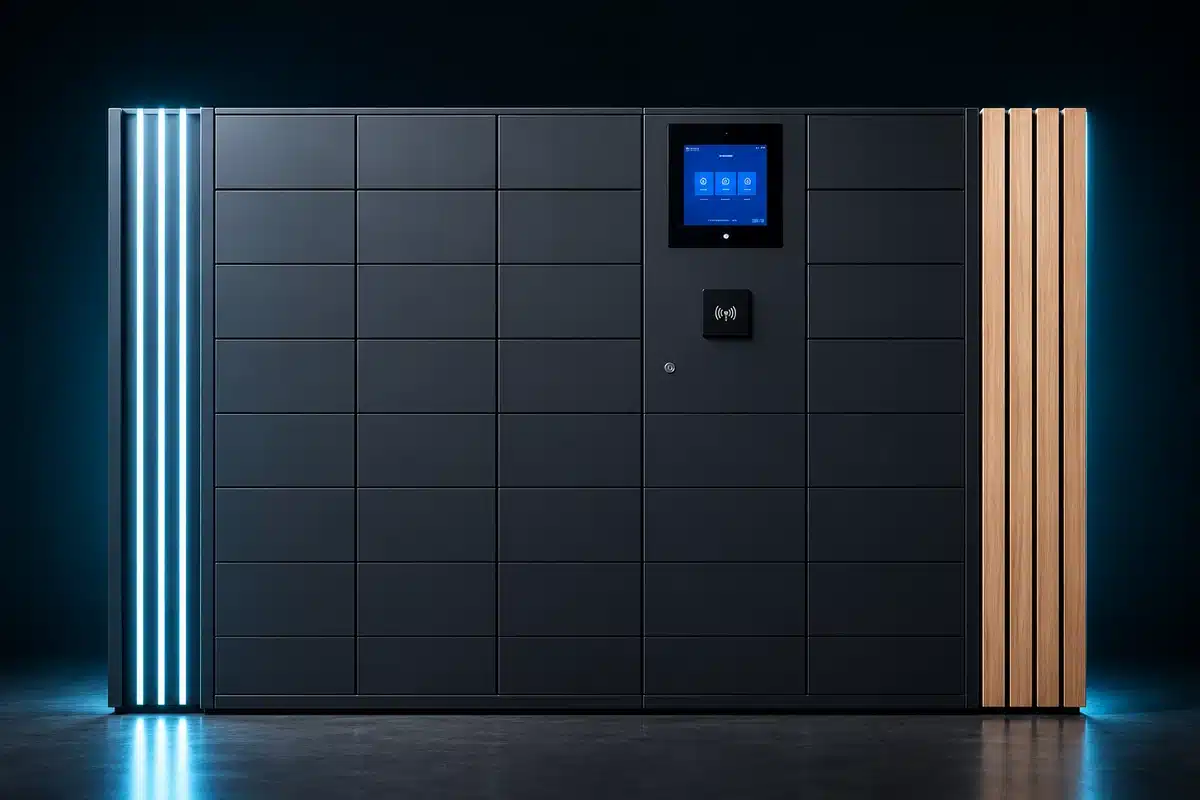





What Is Delivery Access Control?
Delivery access control refers to how buildings:
- Manage courier entry
- Control where deliveries go
- Track who accessed the building
- Secure handover of items
This typically involves:
- Reception desks
- Security checks
- Sign-in systems
- Manual verification
At scale, these systems become unreliable.
Why Delivery Access Control Breaks at Scale
1. High Volume Overwhelms Manual Control
As delivery volume increases:
- More couriers arrive simultaneously
- Security and reception teams are overloaded
- Processes slow down or are bypassed
This leads to:
- Inconsistent enforcement
- Reduced control
- Increased risk
Manual access control cannot scale with delivery demand.
2. Identity Verification Is Inconsistent
Most buildings rely on:
- Visual checks
- Sign-in sheets
- Verbal confirmation
At scale:
- Staff cannot verify every courier effectively
- Processes are rushed or skipped
- Unknown individuals gain access
Delivery Lockers Vs Failed Deliveries
3. No Clear Delivery Pathway
Couriers often:
- Do not know where to go
- Require assistance from staff
- Move through shared areas
This creates:
- Uncontrolled movement within the building
- Increased exposure to restricted areas
- Security blind spots
4. Reliance on Staff Creates Weak Points
Access control depends heavily on:
- Reception teams
- Security personnel
But:
- Staff are under pressure
- Human error increases
- Processes are not consistently followed
The more you rely on people, the less consistent control becomes.
5. No Audit Trail for Deliveries
In many buildings:
- Deliveries are logged manually
- Records are incomplete or inaccurate
- No real-time tracking exists
This means:
- No visibility of who entered
- No record of delivery handling
- Difficult incident investigation
6. Peak Times Break the System
During busy periods:
- Multiple couriers arrive together
- Queues form at entry points
- Staff prioritise speed over control
The result:
- Access checks are reduced
- Security is compromised
- Congestion increases
Why Delivery Chain of Custody Breaks at Scale
7. Shared Access Points Increase Risk
Deliveries often share:
- Entrances with visitors
- Reception areas
- Lobbies
This leads to:
- Mixed traffic
- Reduced control over who is entering
- Increased vulnerability

The Hidden Impact of Failed Access Control
Security Risks
Loss of Delivery Accountability
Increased Operational Costs
Congestion at Entry Points
Delivery Access Control: The Key Issues
The Core Problem: Access Control Depends on Consistent Enforcement
Delivery access control rarely fails because of a single security breach.
It fails when increasing delivery volumes, manual processes, and limited oversight create gaps that reduce visibility and control over who enters a building and where they can go.
1. High Delivery Volumes Overwhelm Access Control
As delivery activity increases, more couriers arrive throughout the day, placing pressure on reception and security teams.
Impact: Reduced oversight, inconsistent access checks, and increased security risk.
2. Manual Verification Processes Create Gaps
Many buildings still rely on sign-in sheets, visual checks, and manual verification processes to manage courier access.
Impact: Slower processing, human error, and reduced control over building access.
Why Last Mile Delivery Fails at Scale
3. Uncontrolled Courier Movement Increases Risk
Without dedicated delivery destinations, couriers often require access to shared or restricted areas to complete deliveries.
Impact: Increased exposure to sensitive zones, security blind spots, and unauthorised movement.
Compare parcel room vs parcel lockers
4. Peak Delivery Periods Create Pressure
Large volumes of deliveries often arrive during concentrated periods, overwhelming reception and security teams.
Impact: Longer queues, reduced compliance with access procedures, and increased congestion.
5. Limited Delivery Tracking Reduces Accountability
Many delivery processes lack real-time visibility and accurate records of delivery activity.
Impact: Poor chain of custody, delivery disputes, and difficulty investigating incidents.
Why Traditional Delivery Access Control Approaches Fail
Growing Delivery Activity Creates Visibility Gaps
As buildings become busier, increasing numbers of drivers, visitors, and service providers pass through entry points every day. Without scalable processes, facilities and security teams struggle to maintain oversight.
Common issues include:
- Unauthorised entry
- Inconsistent identity checks
- Untracked parcel movements
- Increased exposure to risk
Manual Verification Reduces Accountability
Many organisations still rely on reception staff, paper logs, and visual inspections to manage incoming deliveries.
Challenges include:
- Inconsistent validation procedures
- Human error and compliance issues
- Limited visibility of parcel activity
- Increased administrative effort
Shared Entry Points Increase Vulnerability
Entrances, reception areas, and lobbies are often used by employees, visitors, contractors, and delivery personnel.
This results in:
- Unrestricted movement
- Access to sensitive locations
- Congested arrival areas
- Reduced oversight of site activity
How Smart Lockers Strengthen Delivery Security
Smart locker systems create a secure and auditable delivery workflow by providing a dedicated handover point for incoming parcels.
Benefits Include:
- Direct-to-locker parcel drop-off
- Dedicated delivery destinations
- Reduced movement within facilities
- Complete audit history
- Improved chain of custody
- Less reliance on manual checks
By automating parcel handovers and creating controlled collection points, smart lockers help organisations improve visibility, strengthen accountability, and support growing delivery volumes without increasing operational risk.
Compare parcel room vs parcel lockers
How Smart Delivery Lockers Improve Delivery Access Control
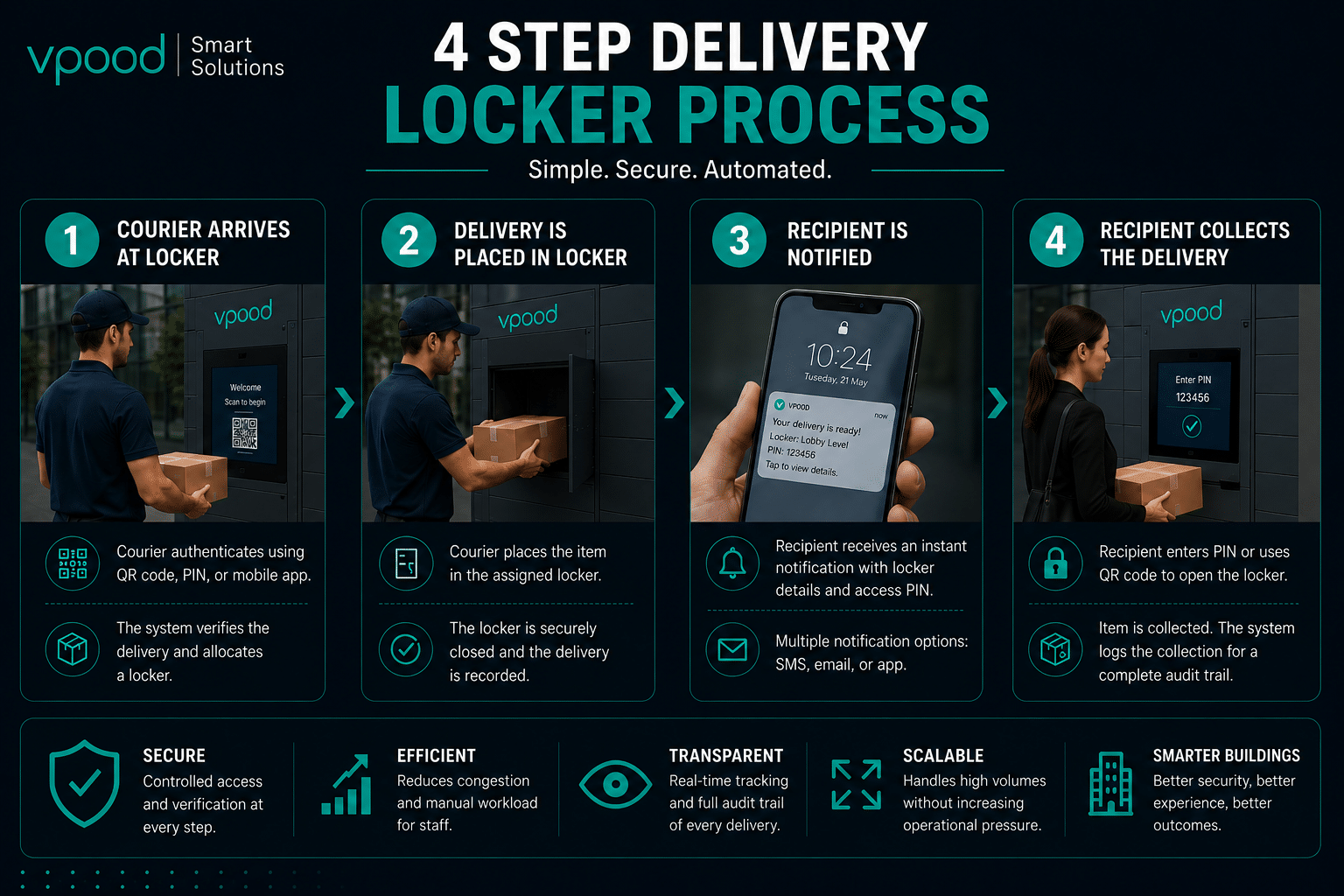
Traditional Delivery Access Control vs Smart Delivery Lockers




Case Study: Sodexo & VPOD
How Sodexo Improved Delivery Access Control and Accountability
Sodexo enhanced its delivery management process by replacing manual reception-based verification and parcel handling with automated smart locker workflows.
The result was greater control over delivery activity, improved accountability, and reduced reliance on manual access management processes.
Results Include:
- Improved delivery access control
- Reduced unauthorised access risks
- Enhanced delivery tracking and visibility
- Stronger chain of custody for deliveries
- Reduced administrative workload
- Greater accountability across delivery operations
- Improved building security and compliance
- Scalable delivery management processes
Who Is Affected by Poor Delivery Access Control?
Facilities, Security & Building Operations Teams / Tenants, Occupants & Building Users
Facilities, Security & Building Operations Teams
Key Challenges
- Managing courier access securely
- Maintaining control over building entry points
- Tracking delivery activity and accountability
- Reducing security risks and compliance issues
- Supporting secure delivery operations at scale
Operational Pain Points
- Unauthorised access incidents
- Limited visibility of delivery activity
- Increased administrative workload
- Difficulty maintaining chain of custody
- Higher operational and security costs