


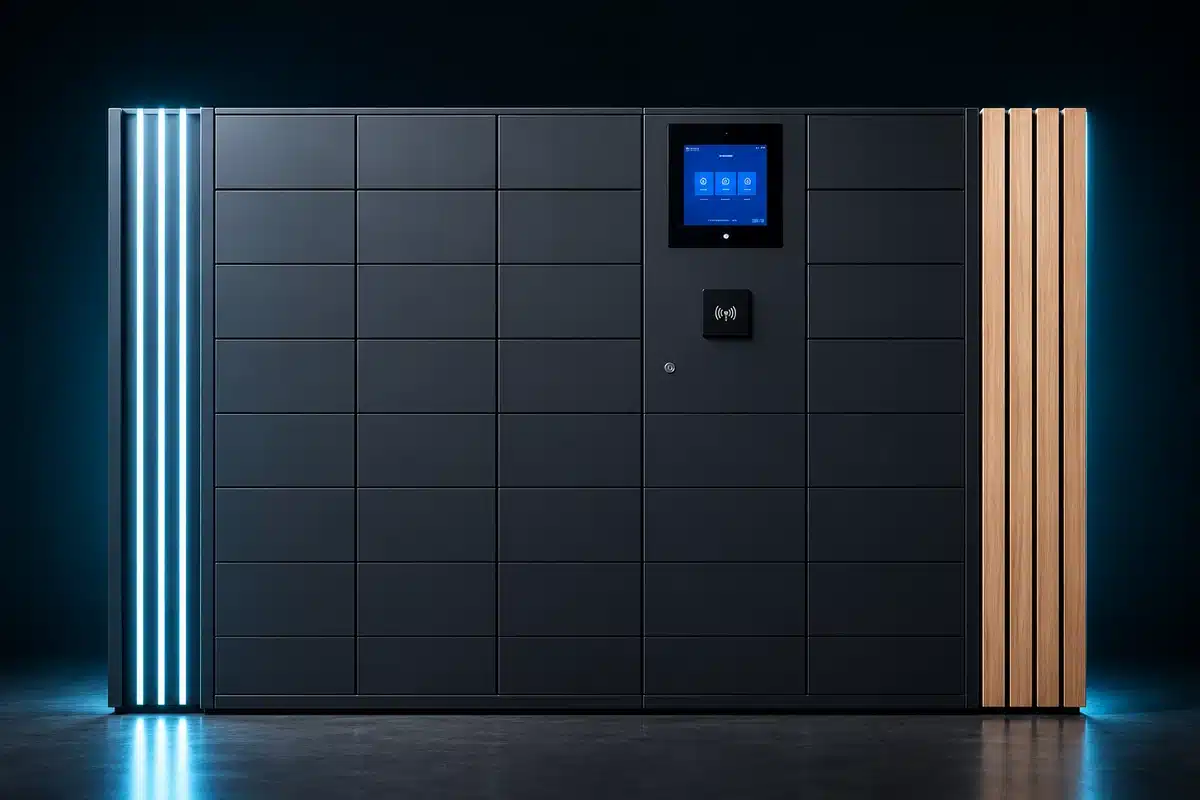





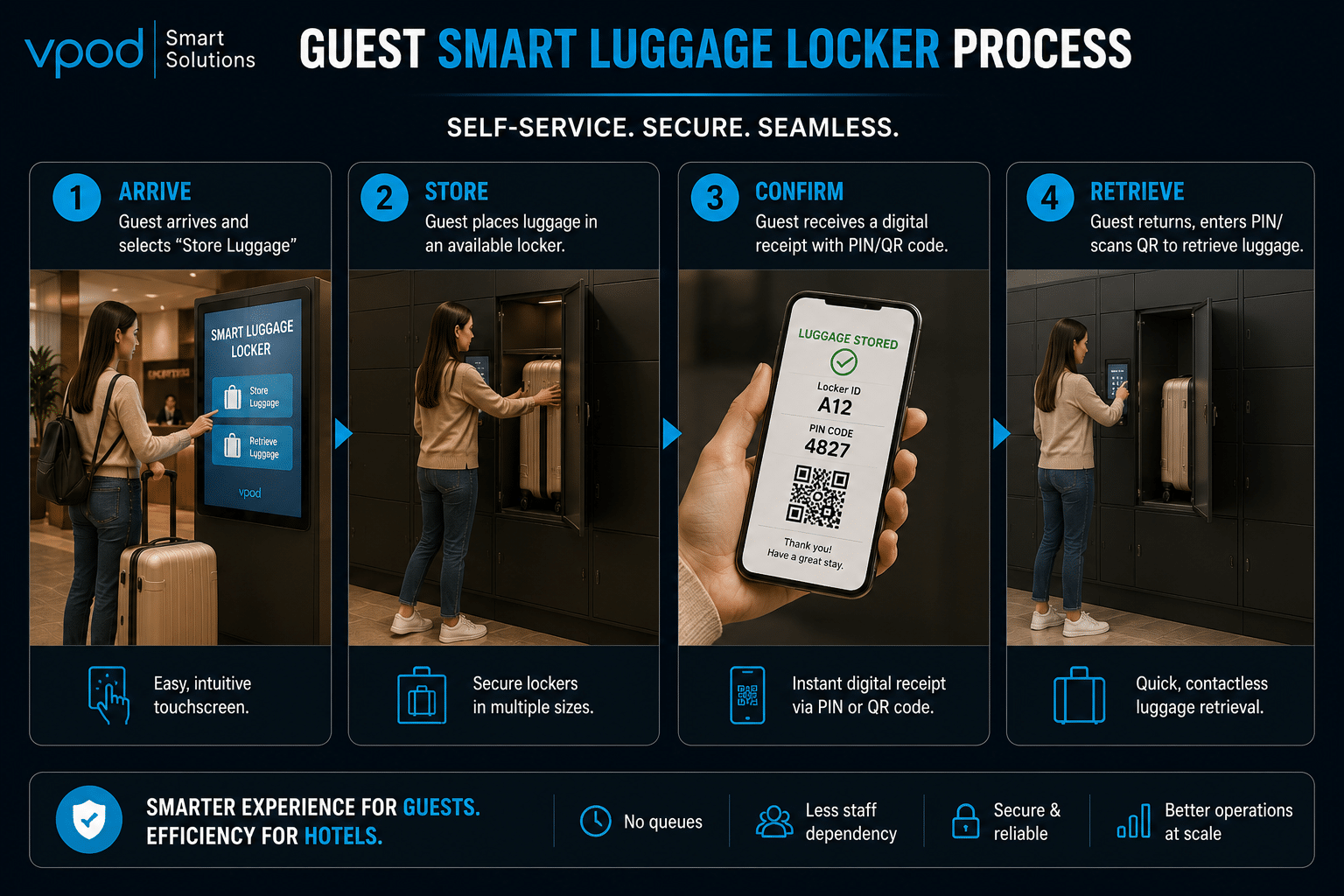
What Causes Reception Congestion From Luggage?
Reception congestion occurs when:
- Guests arrive with bags before check-in
- Guests store luggage after check-out
- Staff must manage, tag, and store items
This creates:
- Additional processing steps
- Increased interaction time per guest
- Physical crowding in reception areas
Why Luggage Creates Bottlenecks at Scale
1. Luggage Handling Is a Manual Process
Typical flow:
- Guest arrives
- Staff tag luggage
- Bags are taken to storage
- Items logged manually
At scale:
- Each step adds delay
- Staff cannot process guests quickly enough
Manual handling introduces friction into every interaction.
2. Check-In and Luggage Compete for the Same Resource
Reception staff must:
- Check guests in
- Answer questions
- Handle payments
- Manage luggage
This leads to:
- Slower service
- Longer queues
- Reduced efficiency
Manual Luggage Storage Vs Self-Service Lockers
3. Peak Times Amplify the Problem
Congestion is worst during:
- Early arrivals before check-in
- Midday luggage storage
- Late check-outs
At these times:
- High volumes of guests arrive simultaneously
- Luggage demand spikes
- Reception becomes overloaded
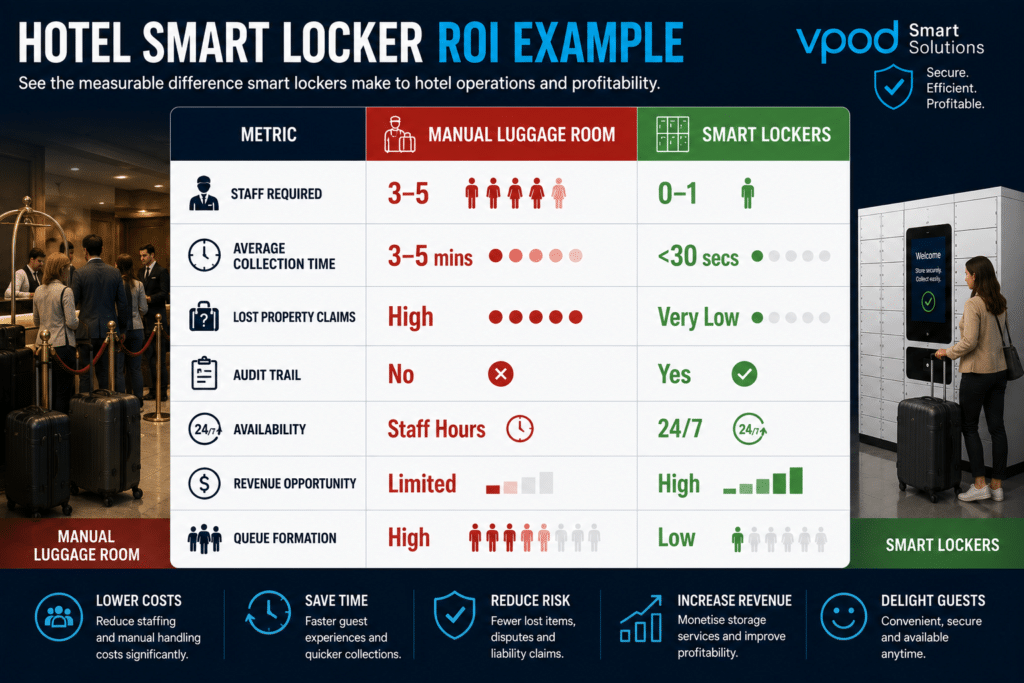
Hotel Luggage Room Vs Smart Lockers
4. Storage Areas Are Not Designed for Scale
Back-of-house luggage storage often:
- Has limited space
- Lacks organisation
- Is difficult to access quickly
This creates:
- Delays retrieving items
- Increased staff movement
- Operational inefficiency
5. Queue Growth Is Exponential
Small delays compound quickly.
As each guest interaction takes longer:
- More guests arrive
- Queue length increases
- Wait times escalate rapidly
Reception queues don’t grow linearly — they accelerate under pressure.
Why Hotel Luggage Storage Problems Break at Scale
6. Retrieval Delays Create Secondary Queues
When guests return:
- Staff must locate luggage
- Items may be hard to find
- Multiple guests wait simultaneously
This creates:
- Additional congestion
- Frustration at collection
7. Staff Movement Reduces Efficiency
Handling luggage requires:
- Moving between reception and storage
- Carrying items
- Searching for bags
This reduces:
- Time available for guest service
- Overall throughput

The Hidden Impact of Parcel Theft
Financial Loss
Security Risks Increase
Operational Disruption
Employee Trust Declines
Hotel Reception Congestion From Luggage: The Key Issues
The Core Problem: Guest Service Depends on Efficient Luggage Handling
Hotel reception congestion rarely happens because of guest volume alone.
It occurs when luggage storage, retrieval, and handling processes compete with check-in and guest service operations, creating delays throughout the reception area.
Why Luggage Storage Queues Break Hotels at Scale
1. Manual Luggage Handling Slows Check-In
Many hotels rely on reception staff to tag, store, and retrieve guest luggage.
Impact: Longer guest interactions, slower check-in times, and increased reception queues.
2. Peak Arrival and Departure Times Create Congestion
Large numbers of guests often require luggage storage before check-in or after check-out.
Impact: Reception teams become overloaded, reducing service speed and increasing wait times.
Why Luggage Storage Queues Break Hotels at Scale
3. Limited Storage Visibility Delays Retrieval
Traditional luggage rooms often lack real-time visibility into item locations and storage capacity.
Impact: Staff spend more time locating bags, creating delays and guest frustration.
Why Traditional Luggage Storage Processes Fail
Manual Luggage Handling Creates Reception Delays
Many hotels still rely on reception teams to tag, store, and retrieve guest luggage. As guest volumes increase, these manual processes place additional pressure on front desk operations.
Common issues include:
- Longer check-in and check-out times
- Increased reception queues
- Higher staff workload
- Reduced guest service efficiency
Staff-Dependent Retrieval Slows Guest Service
Traditional luggage storage requires staff involvement for both drop-off and collection.
Challenges include:
- Guests waiting for luggage retrieval
- Delays during peak periods
- Increased staff movement
- Slower guest processing
Limited Storage Visibility Reduces Efficiency
Many luggage rooms lack real-time visibility into storage capacity and item locations.
This results in:
- Delays locating luggage
- Retrieval errors
- Increased operational pressure
- Poorer guest experience
Secure luggage lockers with audit trails
Compare hotel luggage room vs smart lockers
Vpod’s smart locker systems for automated luggage storage help hotels reduce reception congestion by giving guests secure, self-service access to their belongings.
How Smart Lockers Reduce Reception Congestion
Smart luggage lockers provide self-service storage and retrieval, removing luggage handling from reception operations.
Benefits include:
- Guest self-service storage
- Faster luggage collection
- Reduced reception queues
- Secure individual compartments
- Improved guest convenience
- Lower staff workload
By replacing manual luggage handling with self-service smart lockers, hotels can reduce reception congestion, improve guest flow, and create a more efficient arrival and departure experience.
Space-efficient luggage locker systems
Preventing Hotel Reception Congestion with Smart Luggage Lockers
Hotel Smart Locker ROI
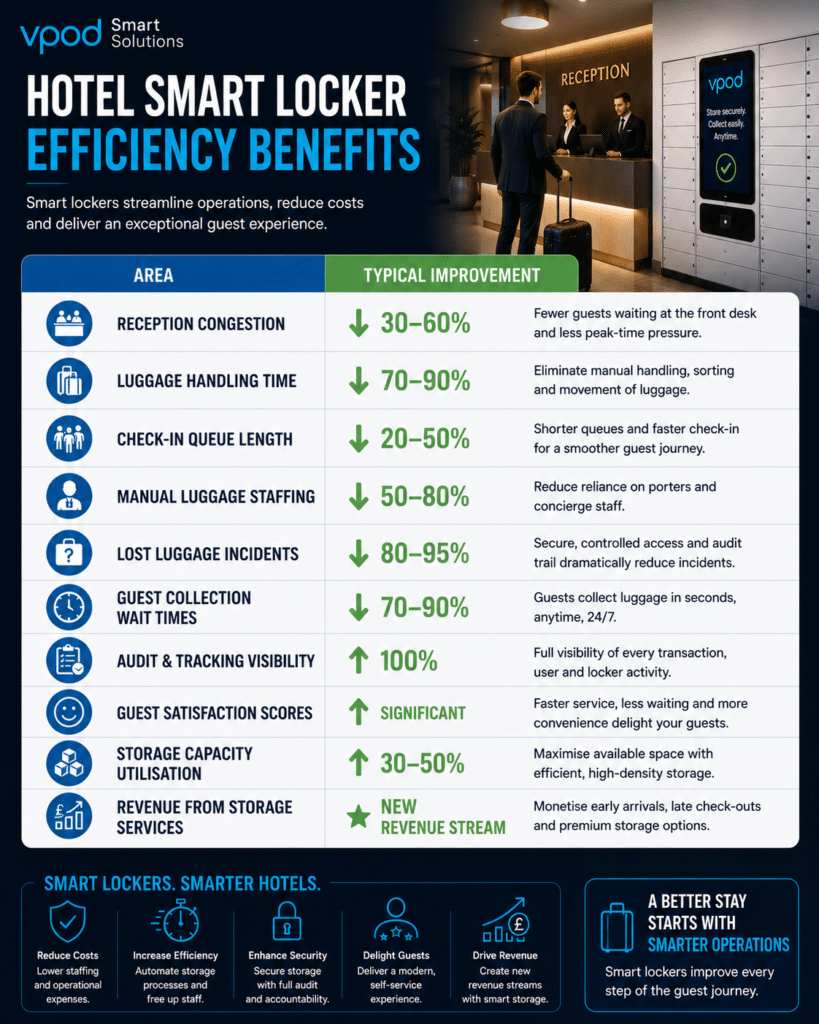
Traditional Parcel Storage vs Smart Parcel Locker Systems




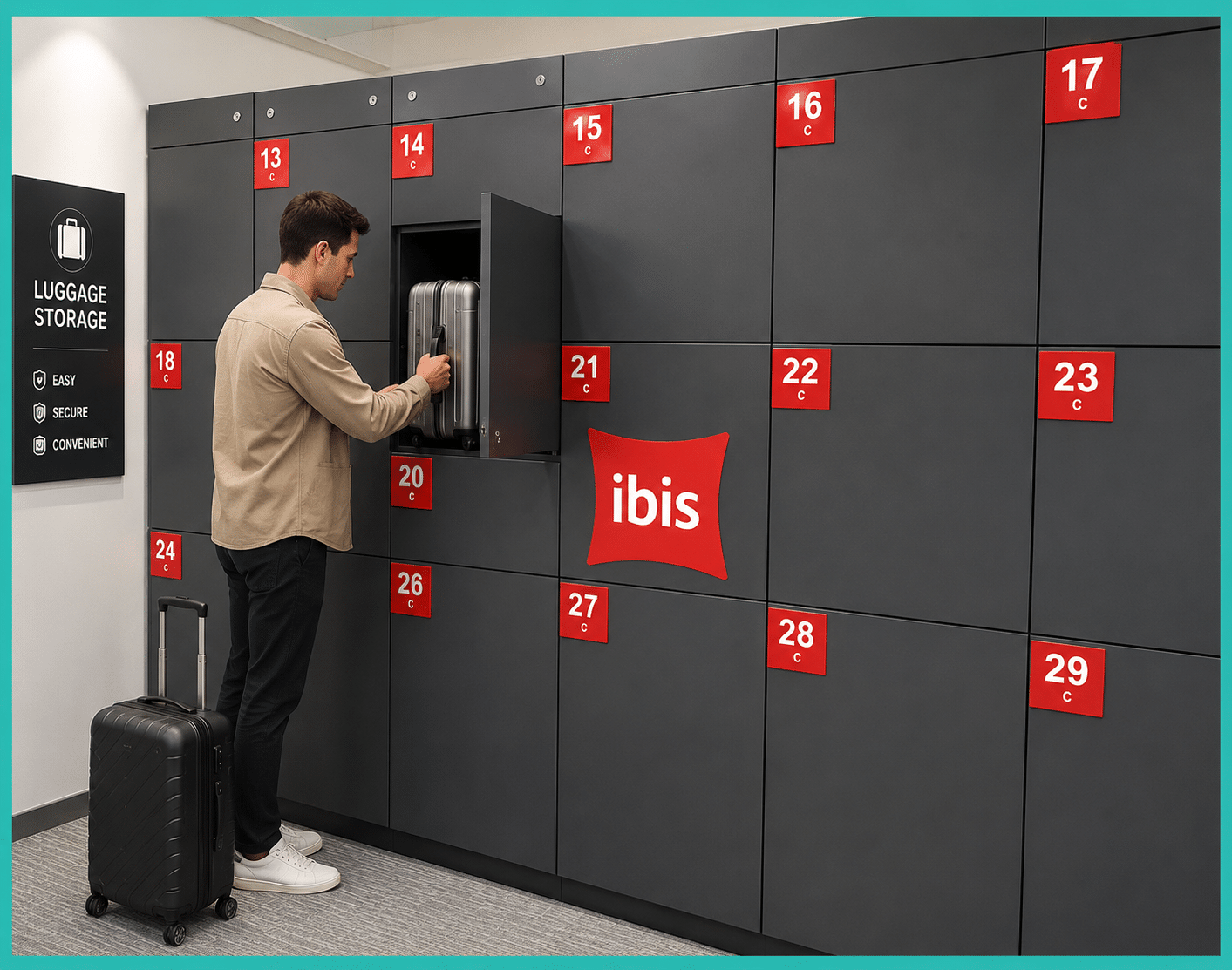
Case Study: Ibis Geneva& VPOD
Reducing Reception Congestion with Self-Service Luggage Lockers
Early arrivals and late departures were creating reception queues, increasing staff workload, and slowing guest flow during peak check-in and check-out periods.
By implementing VPOD self-service luggage lockers, Ibis Geneva removed manual luggage handling from reception, allowing guests to store and retrieve bags independently without staff involvement. This reduced front-desk congestion, improved operational efficiency, and created a smoother guest experience.
Results Include:
- Reduced reception congestion during peak periods
- Faster guest check-in and check-out experiences
- Lower front-desk workload
- Improved guest flow and convenience
- 24/7 self-service luggage storage
- 6× ROI achieved within the first year
Who Is Affected by Hotel Reception Congestion From Luggage?
Hotel Operations & Front Desk Teams / Hotel Guests
Hotel Operations & Front Desk Teams
Key Challenges
- Managing luggage during peak periods
- Maintaining fast check-in and check-out processes
- Delivering a positive guest experience
- Reducing pressure on reception staff
- Improving operational efficiency
Operational Pain Points
- Reception queues and congestion
- Staff diverted from guest service
- Delays handling luggage requests
- Increased labour requirements
- Reduced front desk throughput

Guest Services Manager
