


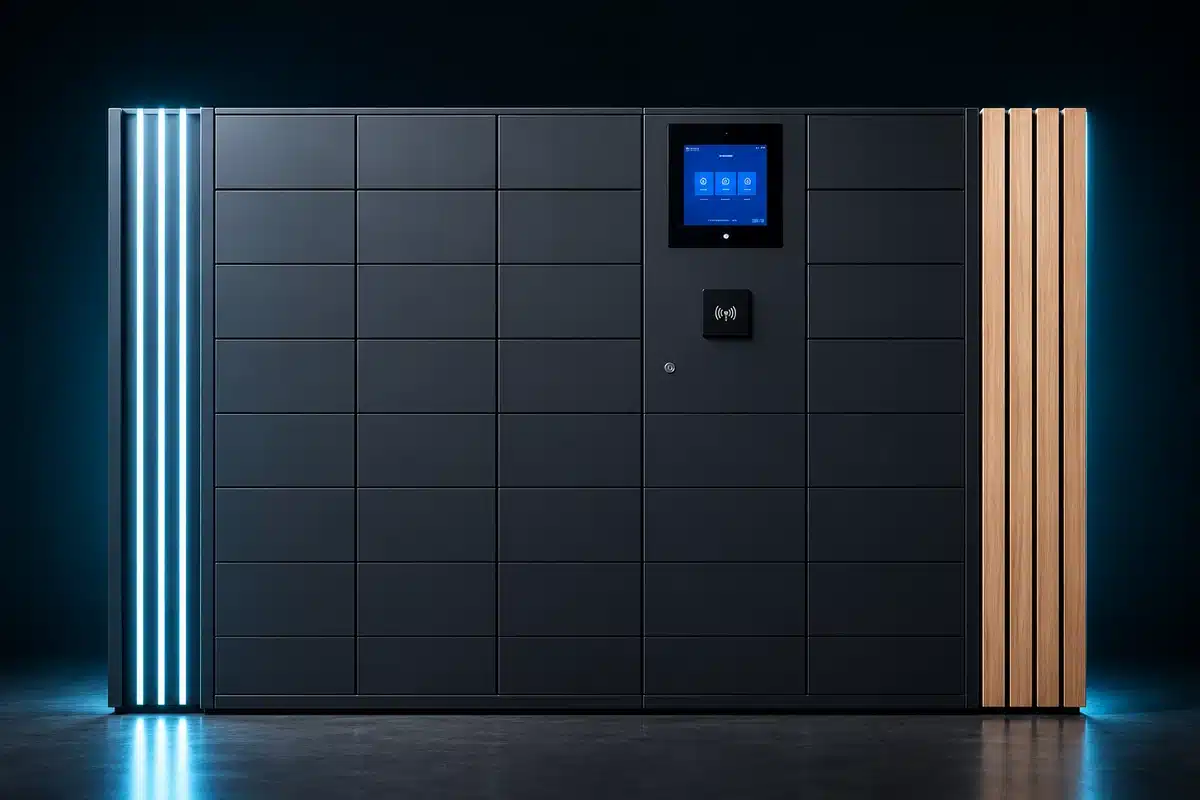





What Are Hotel Luggage Storage Problems?
Hotel luggage storage problems occur when systems cannot efficiently:
- Receive bags
- Store them securely
- Track their location
- Retrieve them quickly
This results in:
- Queues at reception
- Delays during check-in/check-out
- Lost or misplaced items
- Staff overload
- Poor guest experience
Manual Luggage Storage Vs Self-Service Lockers
Why Luggage Storage Fails at Scale
1. Peak Times Create Instant Overload
Hotels experience predictable surges:
- Morning check-out
- Early arrivals before check-in
- Group bookings and tours
During these periods:
- Dozens of bags arrive at once
- Staff must process them quickly
- Queues form almost instantly
Demand is concentrated — not evenly distributed.
3. Reception Becomes the Bottleneck
Luggage handling often happens at:
- Front desk areas
This leads to:
- Congestion
- Slower check-in/check-out
- Increased wait times
Luggage doesn’t just create its own queue — it slows every other process.
Hotel Luggage Room Vs Smart Lockers
4. Storage Areas Become Disorganised
Luggage is typically stored in:
- Back rooms
- Luggage storage areas
- Open or shared spaces
At scale, this leads to:
- Bags stacked without structure
- Difficult retrieval
- Increased search time
Hotel Operators- Luggage Lockers
Hostel Managers- Luggage Lockers
5. Retrieval Is Slower Than Storage
The biggest inefficiency often occurs at collection:
- Guests return simultaneously
- Staff must locate specific bags
- Items are buried or misplaced
This creates:
- Delays
- Frustration
- Queue buildup
6. No Real-Time Visibility
Most hotels lack:
- Tracking systems
- Inventory visibility
- Data on storage usage
This results in:
- Time spent searching
- Uncertainty for guests
- Operational inefficiency
7. Human Error Increases with Volume
As volume increases:
- Tags are lost or mismatched
- Bags are misplaced
- Wrong items are handed out
This leads to:
- Guest complaints
- Compensation claims
- Reputational damage

The Hidden Impact of Luggage Storage Problems
Increased Operational Cost
Reception Congestion
Security and Liability Risk
Limited Ability to Scale
Modern Guests Expect Faster, Self-Service Experiences
Guest expectations in hospitality continue to evolve. Modern travellers expect fast, seamless, and low-friction experiences during arrival and departure.
Traditional luggage storage processes often create delays through manual handling, reception queues, and slow bag retrieval.
Smart luggage locker systems help hotels improve guest experience through:
- Faster luggage drop-off and collection
- Reduced waiting times at reception
- Self-service guest convenience
- Improved guest flow during peak periods
- Modern contactless hotel operations
Self-Service Luggage Storage Creates Revenue Opportunities
Hotel luggage storage is no longer just an operational necessity — it can also support additional revenue generation.
Many hotels now offer paid luggage storage for early arrivals, late departures, and short-term guest baggage storage using self-service smart lockers.
This helps hotels:
- Generate ancillary revenue
- Reduce reception workload
- Improve operational efficiency
- Offer premium guest services
- Create scalable luggage operations
Scalable Luggage Storage Supports High-Occupancy Hotels
As hotel occupancy increases, luggage storage demand grows rapidly. Traditional luggage rooms often struggle to manage high luggage volumes efficiently during peak periods.
This creates:
- Reception congestion
- Retrieval delays
- Staff overload
- Disorganised storage areas
Smart luggage locker systems help hotels scale operations through:
- Structured storage workflows
- Automated guest retrieval
- Real-time operational visibility
- Reduced staff dependency
- Faster luggage processing during peak periods
The Core Problem: Linear Systems vs Peak Demand
Why Hotels Lose Control of Guest Luggage
Traditional hotel luggage storage systems are built around manual handling, sequential workflows, and staff-managed processes. While this may work during quieter periods, it becomes increasingly inefficient as guest occupancy and luggage volume grow.
Hotels operate in fast-moving, high-volume environments where guests expect quick luggage drop-off and retrieval during peak check-in and check-out periods. Manual systems struggle to keep pace with operational demand, creating reception congestion, retrieval delays, and increased pressure on front desk teams.
This leads to:
- Slower guest processing
- Increased staff workload
- Queue build-up during peak periods
- Reduced operational efficiency
- Poor guest experience during arrivals and departures
Related content:
The Scalable Solution: Self-Service Luggage Storage
To reduce hotel luggage storage problems at scale, hotels are moving from traditional luggage rooms to automated self-service luggage storage systems.
Smart luggage lockers replace manual handling with structured, guest-controlled storage workflows that improve operational efficiency and reduce dependency on reception teams.
Hotels benefit from:
- Automated luggage storage workflows
- Self-service guest access
- Faster luggage drop-off and retrieval
- Reduced reception congestion
- Improved guest flow during peak periods
This allows hotels to create more scalable luggage operations without increasing labour demands.
The Vflex smart locker platform provides hotels with a flexible way to automate luggage storage, manage digital access and improve the guest experience.
How Smart Luggage Locker Systems Improve Hotel Operations
Smart lockers transform hotel luggage storage into a scalable, organised, and efficient system designed for high-volume guest operations.
Self-Service Storage
Guests store luggage independently without relying on front desk staff.
This helps hotels:
- Reduce reception queues
- Minimise manual luggage handling
- Improve guest convenience
- Speed up luggage drop-off processes
Compare manual luggage storage vs self-service lockers
Structured Storage
Each guest bag is stored inside a secure, defined compartment.
This eliminates:
- Disorganised storage rooms
- Bags stacked without structure
- Time spent searching for luggage
Structured storage improves:
- Retrieval speed
- Storage organisation
- Operational consistency
Hostel Managers- Luggage Lockers
Instant Retrieval
Smart luggage locker systems transform hotel luggage storage into a faster, more organised, and more scalable operational process.
Self-Service Guest Storage
Guests securely store and retrieve luggage independently without relying on hotel staff.
Parallel Guest Processing
Multiple guests can use luggage lockers simultaneously, eliminating one-at-a-time processing limitations.
Structured Storage Organisation
Every bag is stored inside a dedicated compartment, improving luggage organisation and reducing retrieval delays.
Instant Guest Retrieval
Guests collect luggage directly using secure self-service access without waiting for staff assistance.
Related Links
Hotel Bag Storage Inefficiency Reduction Process
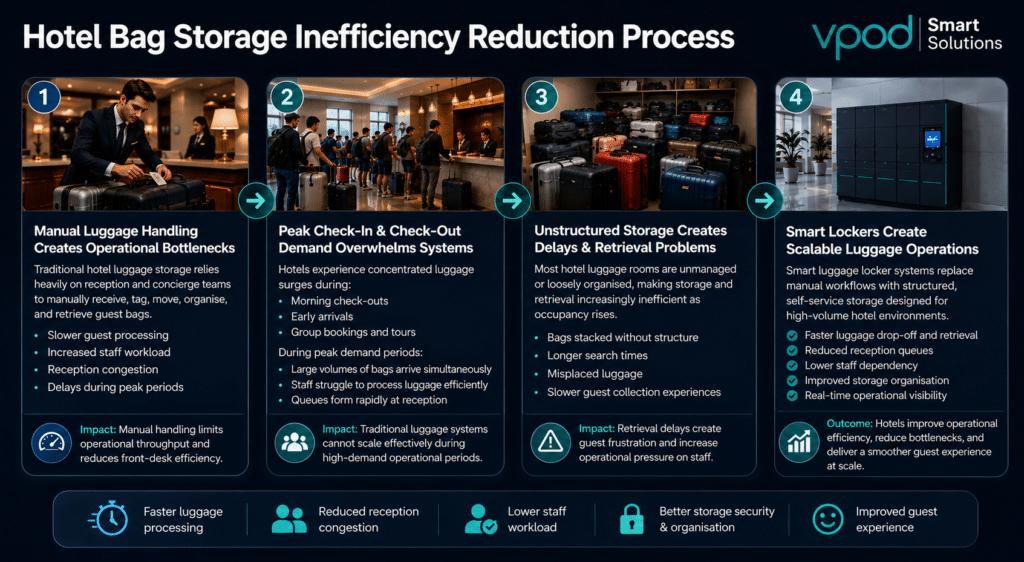
Traditional Hotel Bag Storage vs Vpod Smart Locker Solutions




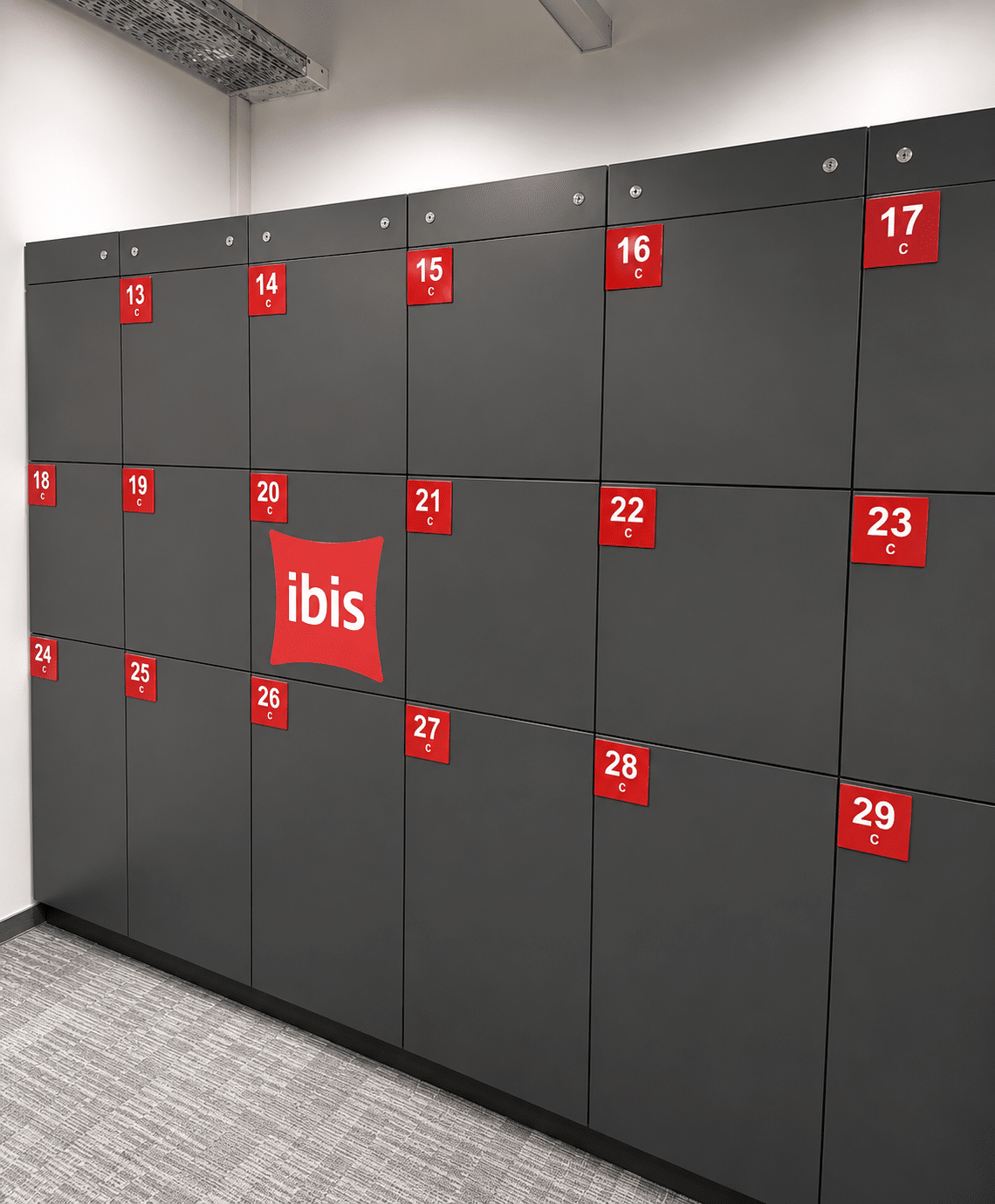
Case Study Result: Ibis Geneva
Solving Hotel Luggage Storage Problems with Smart Locker Technology
Hotel Bag Storage Inefficiency & Operational Flow Management
Hotel Operations Manager / Front Office Manager
Hotel Operations Manager
Areas of Responsibility
- Hotel luggage storage operations
- Front desk and guest flow efficiency
- Peak check-in and check-out management
- Operational workflow optimisation
- Reception congestion reduction
- Guest experience and service delivery
- Luggage storage process management
- Front-of-house operational efficiency
Areas of Concern
- Increasing reception queues
- Delays in luggage retrieval
- Staff overwhelmed during peak periods
- Disorganised luggage storage areas
- Slow guest processing times
- Limited operational visibility
- Operational bottlenecks during check-in/check-out
- Rising labour demands for luggage handling
Pain Points
- Staff spending too much time managing bags
- Queues forming at reception during busy periods
- Time wasted searching for luggage
- Manual handling slowing operations
- Poor luggage organisation under high volume
- Delayed guest collection experience
- Difficulty scaling luggage operations efficiently
- Reduced front desk productivity