Vflex Smart Rental Locker Brochure

Vflex Smart Locker Brochure

Vgreet Visitor Experience Brochure

Event Lockers for Festivals, Concerts and Temporary Venues

Events create short, intense demand for secure storage — but permanent infrastructure rarely makes sense. Manual bag storage is slow, labour-heavy, and risky. See Cloakroom Inefficiency 

Major events can see tens of thousands of attendees arriving within short time windows, making fast, self-service storage critical for safe and efficient event operations.

With Martyn’s Law increasing pressure on event organisers to manage crowd flow and entry risk, these challenges are becoming compliance-critical.
Read how Martyn’s Law impacts event operations and temporary venues

→ Read the full Martyn’s Law explained guide for event security and safer operations

See how Martyn’s Law responsibilities are shared across event teams

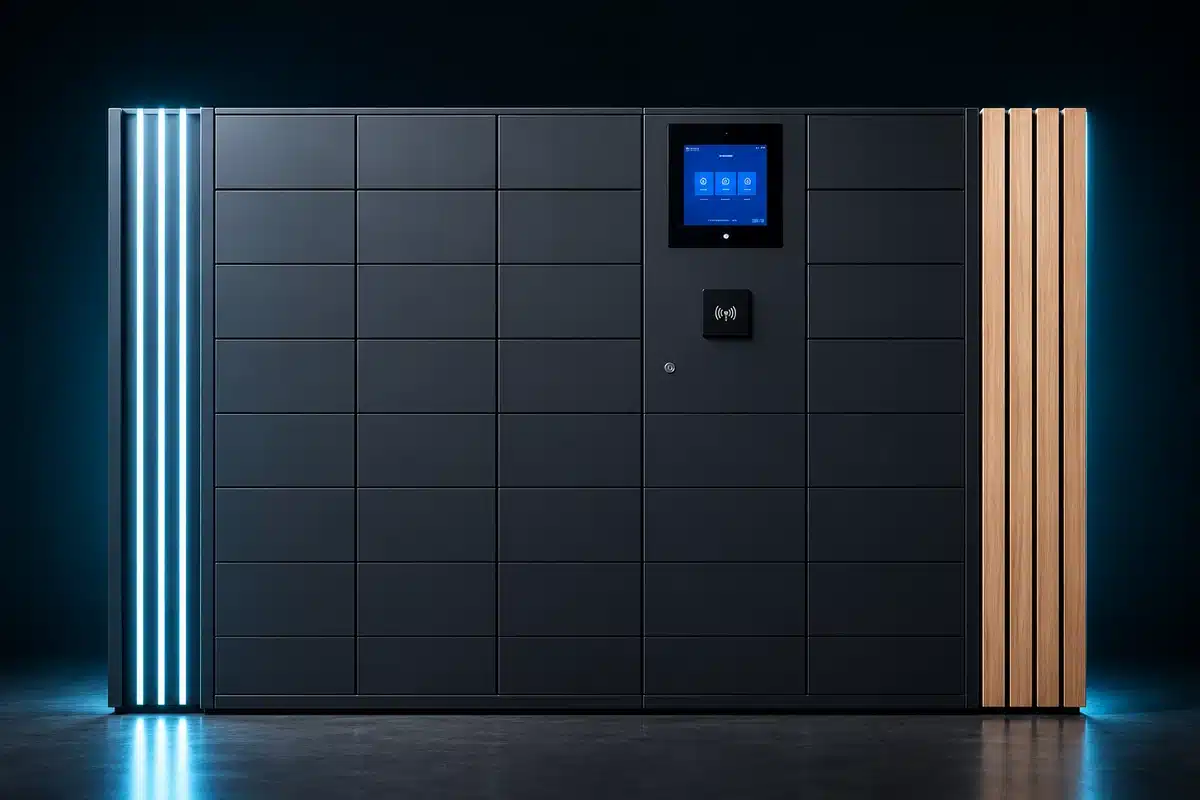
Vpod event lockers provide temporary, scalable bag storage for festivals, concerts, touring events, and temporary venues, helping organisers manage high visitor volumes without permanent infrastructure.

Without event lockers, these storage challenges create operational bottlenecks during ingress and increase staffing pressure across temporary event sites.

These are exactly the types of operational breakdowns Martyn’s Law is designed to identify and prevent.
Understand how Martyn’s Law applies to event ingress, storage, and crowd flow

Learn which roles are responsible for managing ingress risk under Martyn’s Law

Trusted by these customers

afas live logo
afas logo
colorado charlie logo
excel logo
flipout logo
  • Deployed across 400+ locations in 25+ countries
  • SOC 2 / ISO-ready infrastructure for enterprise environments
  • Full audit trails and controlled access governance

What Are Event Lockers?

What are event Lockers

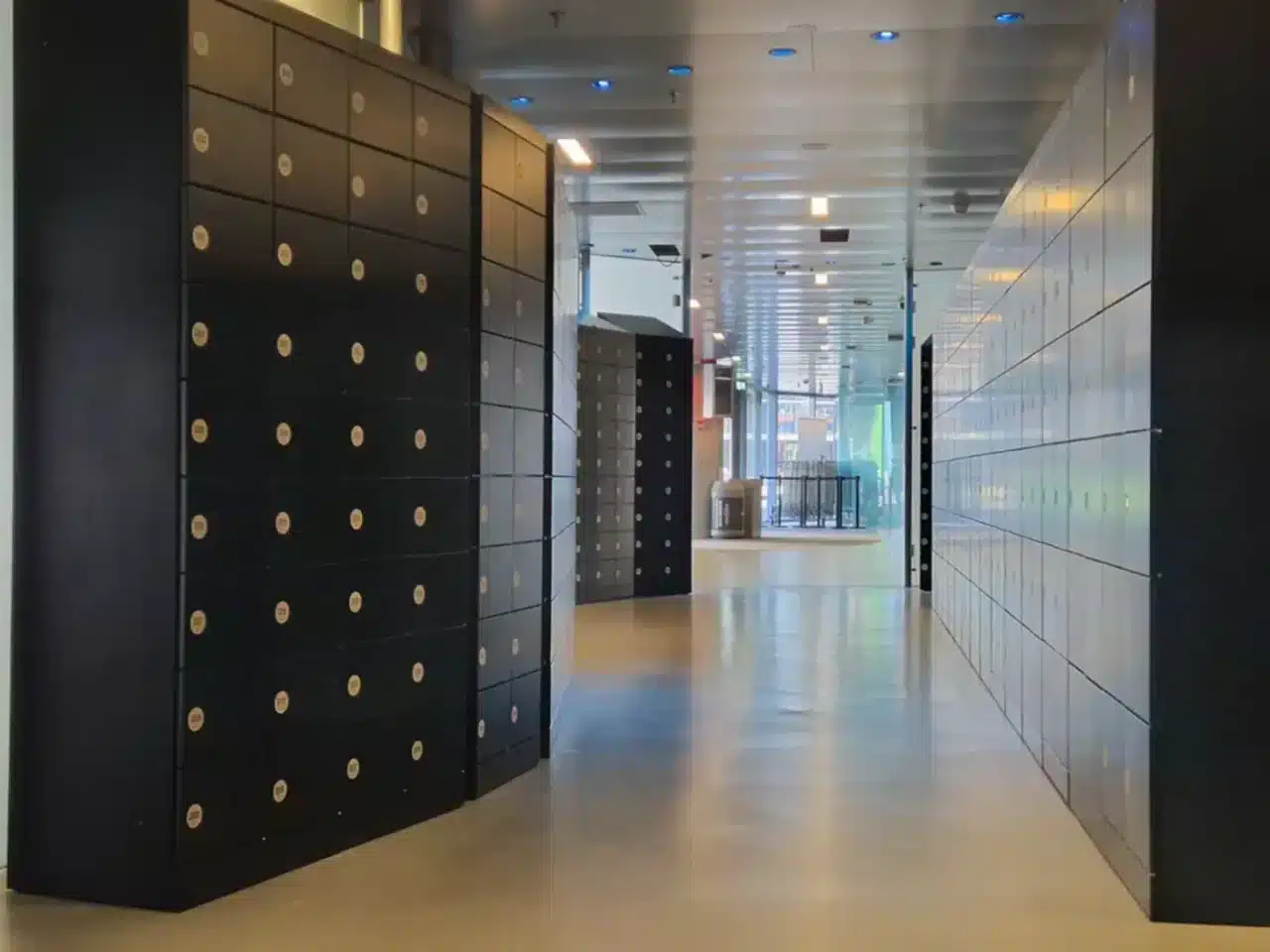
Event lockers are temporary, self-service storage systems designed for festivals, concerts, and short-duration events, allowing attendees to securely store bags and personal items using PIN, QR, or mobile-based access.

Designed for high-volume, short-duration environments, event lockers provide scalable storage infrastructure that supports ingress flow, security compliance, and attendee experience without requiring permanent installation.

These systems are increasingly used to support compliance with Martyn’s Law, particularly around accountability, control, and safe crowd movement.

Explore Martyn’s Law compliance for live events

→ Understand what Martyn’s Law requires for event operators

Explore Martyn’s Law roles and responsibilities for event organisers and venue teams

Event Smart Locker Efficiency and ROI Guide

Event smart lockers consistently deliver measurable operational and financial improvements for venues, stadiums, festivals, conferences and exhibitions.

Event Efficiency Guide

Organisations typically achieve a 50–90% reduction in manual storage administration, a 200–500% increase in storage throughput, and a 40–80% reduction in queue formation.

Guest collection times fall to under 30 seconds, while crowd congestion around storage areas is reduced by 30–70%.

Lost property incidents typically decrease by 70–95%, staffing requirements reduce by 50–90%, and event staffing costs fall by 30–70%.

At the same time, smart lockers provide 100% transaction visibility and auditability, improve security, increase venue capacity utilisation by 20–50%, and create new revenue opportunities through paid storage services.

The result is faster ingress and egress, lower operating costs, stronger security, improved attendee experiences, and a scalable storage solution that performs reliably at any event size.

Why Event Storage Is Hard

Event Challenges and Pain Points

Temporary events create storage challenges that are difficult to manage with manual or ad-hoc solutions:

These challenges align directly with the risk areas outlined in Martyn’s Law for event environments.

Learn how Martyn’s Law identifies operational risk in temporary events

→ See how Martyn’s Law explains crowd flow, queue exposure, and operational risk

See how responsibility for these risks is shared across event leadership teams

Event Storage Challenge Operational Impact
Arrival surges Storage queues and delayed ingress
Temporary sites Limited infrastructure and setup pressure
Manual bag drops Staffing burden and slow handovers
Security compliance Chain-of-custody risk
Unpredictable crowds Difficult capacity planning
Demand and Egress Spikes Events
Demand spikes sharply during ingress and egress

Large volumes of guests arrive and leave within short time windows, creating intense storage demand that manual processes cannot absorb.

→ Compare bag searches vs pre-entry locker storage

Learn how Martyn’s Law identifies ingress congestion and crowd density as critical safety risks

→ Learn why event ingress is one of the highest-risk areas under Martyn’s Law

Understand which roles must manage crowd flow and density under Martyn’s Law

Temporary Event Lack Permanent Infrastructure
Temporary sites lack permanent storage infrastructure

Many events take place in pop-up or outdoor locations without fixed storage, power, or secure facilities designed for high turnover.

Manual storage doesn't scale
Manual storage does not scale with crowd size

Staffed bag drops quickly become bottlenecks as volumes increase, leading to long queues and operational strain.

→ Compare cloakroom vs locker for event security

Remove cloakroom bottlenecks

security requires chain of custody
Security requires a clear chain of custody

Events must maintain accountability for stored items to prevent theft, disputes, and lost property issues.

→ Compare manual security handling vs automated storage systems

See how Martyn’s Law requires clear accountability, audit trails, and controlled storage processes

→ See how Martyn’s Law addresses bag handling, screening delays, and entry risk

See how Security, Risk, and Compliance teams must operate under Martyn’s Law

Resources are time bound events
Staff resources are limited and time-bound

Event teams are typically temporary and focused on core operations, leaving little capacity to manage complex storage workflows.

Unpredictable crowd behaviour
Unpredictable crowd behaviour increases risk

Varying arrival patterns, weather, and event schedules make it difficult to plan staffing and storage capacity accurately.

How Event Lockers Work

Rapid Event Deployment

Event lockers are delivered, installed, and configured on-site before the event begins, allowing organisers to introduce temporary storage infrastructure without permanent installation.

Secure Attendee Storage


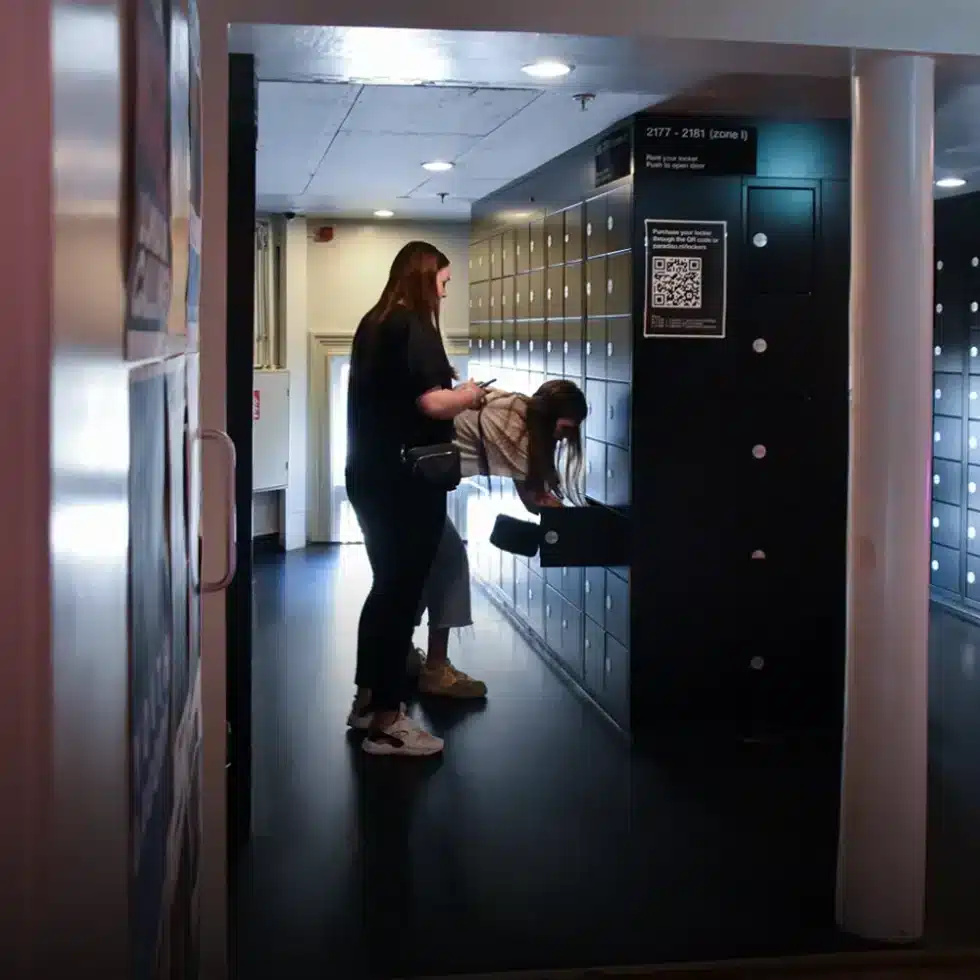
Attendees store bags or personal items using secure digital access such as QR codes, PIN codes, or mobile credentials.

Self-Service Operation


Lockers operate throughout the event without staff involvement, enabling fast, self-service storage even during peak arrival periods.

Simple Item Collection


Attendees retrieve their belongings using the same secure access method, ensuring a smooth experience during or after the event.

Temporary Infrastructure Removal


After the event or tour concludes, lockers can be removed and redeployed, allowing storage capacity to scale with different event locations.

See Event Lockers in Real Temporary Event Workflows

Watch short walkthroughs showing how event lockers support temporary deployment, attendee bag storage, and self-service access during real live events.

Operational Outcomes Delivered by Event Lockers

Operational Outcomes

These outcomes are becoming essential as events prepare to meet compliance expectations under Martyn’s Law.
Understand how Martyn’s Law is shaping event operations

→ Understand how infrastructure like smart lockers supports safer entry under Martyn’s Law

See how event leadership teams must adapt to meet Martyn’s Law requirements

Event KPI
Impact of Event Lockers
Ingress speed
Improved
Queue length
Reduced
Staffing requirement
Lower
Operational risk
Reduced
Attendee experience
Improved

Faster Ingress and Reduced Congestion

Faster ingress and reduced congestion

Self-service storage removes bag-related delays at entry points, helping attendees move through ingress smoothly during peak arrival windows.

improved egress

Improved egress flow after events

Automated locker access prevents post-event queues, reducing congestion as crowds exit and improving overall site safety.

reduced staff overhead

Reduced staff overhead and manual handling

Event lockers remove the need for staffed bag drops, allowing temporary teams to focus on security, safety, and guest services.

attendee experience

Better attendee experience

Attendees store and retrieve items quickly and independently, reducing frustration and improving overall event satisfaction.

Clearer operational control and visibility

Centralised management provides insight into locker usage, capacity, and activity without manual supervision.

performance across event sizes

Scalable performance across event sizes

Locker deployments can scale to match attendance levels, supporting consistent performance at small events and large festivals alike.

Pain Point Guide By Role

Quantified Event Locker Efficiency Outcomes

Efficiency Area Typical Improvement
Ingress Speed ↑ 30–70%
Queue Length ↓ 40–80%
Storage Throughput ↑ 200–500%
Staff Workload ↓ 50–90%
Manual Handling ↓ 70–95%
Lost Property Claims ↓ 70–95%
Storage Administration ↓ 50–90%
Operating Costs ↓ 30–70%
Collection Time <30 Seconds
Storage Capacity Scaling 5–10x Without Additional Staff
Audit Visibility 100% Transaction Tracking
Revenue Opportunity £3,000–£30,000+ Per Event

Temporary Event Infrastructure

Event lockers operate as part of temporary event infrastructure, supporting crowd flow, bag policy enforcement, and secure attendee storage during short-duration events.

Instead of relying on staffed bag drops or improvised storage, organisers can deploy lockers alongside ticket scanning, security screening, and access control processes.

This helps events:

  • Reduce ingress congestion 
  • Support smoother crowd movement 
  • Improve security compliance 
  • Provide secure bag storage without permanent infrastructure 

For a role-by-role breakdown of Martyn’s Law responsibilities across venue leadership, Read the full Martyn’s Law guide for event roles, responsibilities, and operational risk.

Explore Martyn’s Law training for event professionals and operational teams

These systems help organisers demonstrate control over entry flow, storage, and security — all key requirements under Martyn’s Law.
See how to prepare for Martyn’s Law in temporary event environments

Event lockers become part of the wider event operations system rather than a standalone storage service.

This is one of the most important additions because it positions the product as event operations infrastructure.

Use Cases

Jassie – High-Capacity Temporary Locker Model

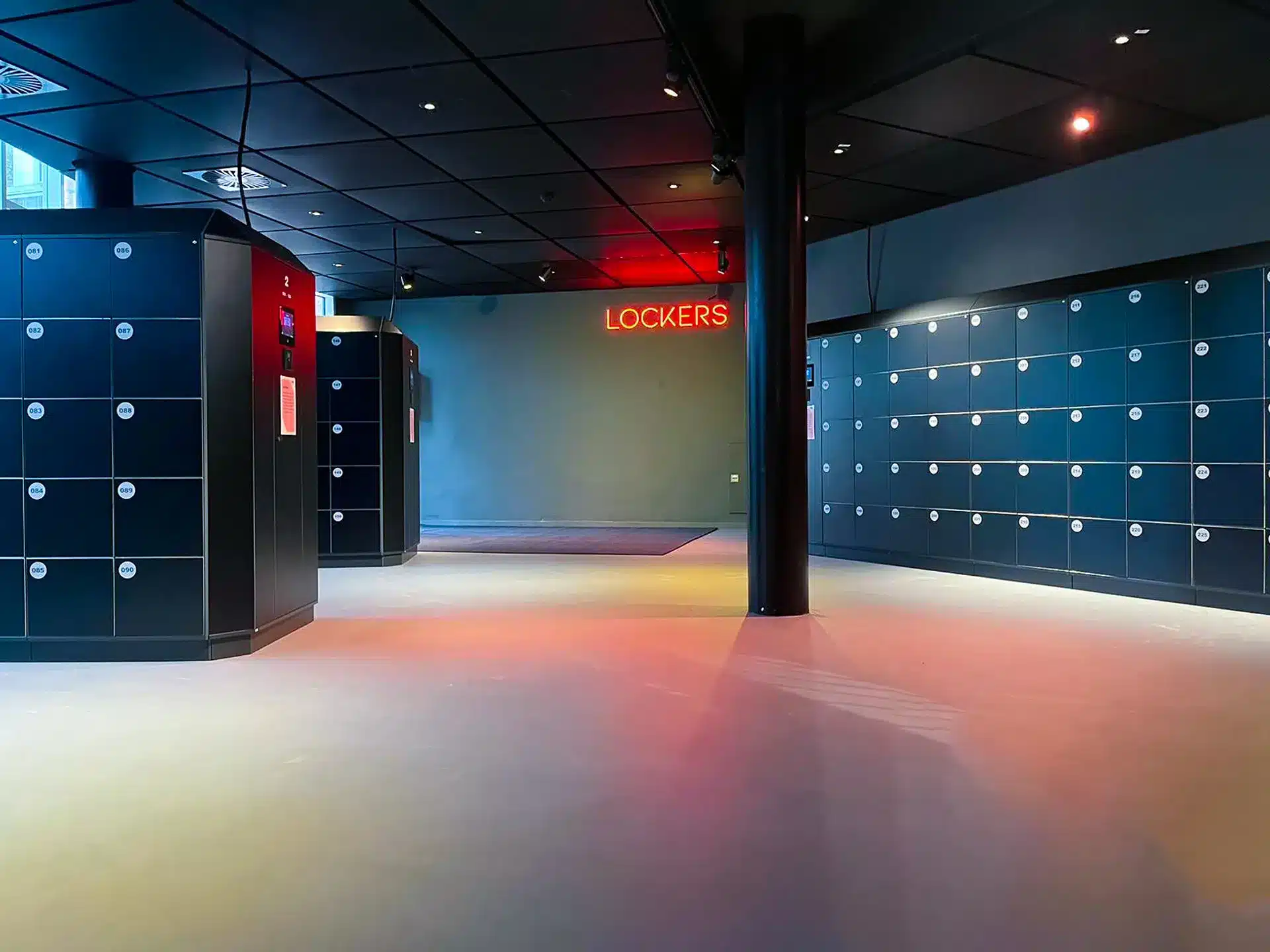
Jassie deployed 512 Elite Plus smart lockers in Breda’s city centre to create a high-capacity self-service storage system supporting nightlife events and large visitor volumes across multiple venues.

The solution adapted a proven event-style locker system for daily public use, enabling QR-code access, automated self-service rentals, and high-capacity operation within a compact footprint. All lockers were placed, configured, and tested within 48 hours, allowing immediate launch with no disruption.

Following deployment, the system delivered zero downtime and generated €180,000 in revenue within the first year, demonstrating both operational reliability and commercial impact.


Explore more real world examples of our smart lockers transforming spaces and workflows across a variety of industries

Who this is for

Event Organisers
  • Reduce ingress and egress queues
  • Improve attendee experience
  • Manage storage without staff

Explore Event Organiser Solutions

Operations Directors
  • Maintain predictable crowd flow
  • Reduce on-site staffing pressure
  • Retain visibility and control

Explore Event Operations Solutions

Smart locker ROI Guide for Events

Financial ROI

Metric Typical Improvement
Event Staffing Costs ↓ 30–70%
Temporary Labour Costs ↓ 40–80%
Lost Property Administration Costs ↓ 70–95%
Incident Investigation Time ↓ 50–90%
Operational Overhead ↓ 20–50%
Cost Per Stored Item ↓ 50–80%
Venue Space Utilisation ↑ 20–50%
Revenue Per Event £3,000–£30,000+
ROI Payback Often Within 6–24 Months

Staffed Bag Drop vs Event Lockers

Staffed Bag Drop
Event Lockers
Staff required Self-service storage
Queues during ingress Instant storage access
Manual bag tagging Automated digital access
Limited scalability High-volume locker deployment
Higher staffing overhead Lower operational cost

→ Compare event lockers vs cloakrooms

Clear, Event-Based ROI You Can Measure

Event lockers reduce on-site staffing requirements, remove manual bag handling, and speed up ingress during peak arrival windows.

For events offering paid storage, lockers also create a self-service revenue stream that operates independently of event staff.

Example potential revenue

Event Size Storage Usage Revenue Potential
10,000 attendees 5% usage £3,000 per event
20,000 attendees 7% usage £8,400 per event
50,000 attendees 10% usage £30,000 per event

For organisers offering paid storage, event lockers can convert a necessary operational service into a repeatable revenue stream while reducing staffing overhead.

Alongside revenue and efficiency, these systems help events meet increasing expectations around safety, control, and accountability.
Prepare your event for Martyn’s Law compliance

Prepare your event teams with Martyn’s Law training and role-based responsibilities

→ Compare free storage vs paid locker systems

→ Compare capex vs opex locker model

Across multi-day or touring events, this delivers repeatable per-event savings and predictable ROI from a single deployment.

Smart Event Locker Systems for Faster Ingress and Crowd Flow

Understand how event lockers streamline bag storage, reduce entry delays, and support safe, efficient crowd movement at festivals, stadiums, and large-scale events.

Smart Event Lockers for Festivals, Concerts and Temporary Venues

See how event lockers help festivals, concerts, and temporary venues deliver secure bag storage, faster ingress, and repeatable event-day operations.

24/7

Support