


What Causes Leisure Venue Queue Problems?
Leisure venue queue problems occur when visitor demand exceeds the venue’s ability to process people efficiently during peak operational periods.
This commonly affects:
- Venue entry points
- Security screening
- Ticket scanning
- Food and beverage concessions
- Merchandise collection
- Cloakrooms and bag storage
The result:
- Long queues
- Crowd congestion
- Slower venue throughput
- Reduced operational efficiency
- Poor visitor experience
Related Links:
Explore leisure locker solutions
Compare coin lockers vs smart lockers
Calculate leisure ROI
2. Limited Throughput Creates Queue Bottlenecks
Leisure venue operations rely on fixed-capacity processes such as security screening, ticket scanning, concessions, and cloakroom handling.
During peak attendance periods:
- Visitor demand exceeds processing capacity
- Waiting times increase rapidly
- Queue build-up spreads across venue areas
Leisure Lockers Vs Coin Lockers
3. Small Delays Compound Quickly
If each person takes just a few extra seconds:
- Queue length increases
- Waiting time escalates
- Congestion spreads
At scale, seconds become minutes — and minutes become major delays.
4. Bottlenecks Create System-Wide Impact
When one area slows:
- Queues build
- Flow backs up
- Adjacent areas become congested
This affects:
- Entry points
- Internal movement
- Overall venue experience
Padel Club Operators- Leisure Lockers
5. Manual Processes Limit Speed
Many venue operations rely on:
- Staff interaction
- Physical handling
- Sequential processing
This creates:
- Limited throughput
- Staff dependency
- Slow service rates
Related Links:
The Hidden Impact of Leisure Venue Queue Problems
Visitor Experience Breakdown
Revenue Loss
Operational Inefficiency
Crowd Congestion Creates Safety Risk
Why Guest Experience Is Changing Hotel Luggage Storage
The Scalable Solution: Design for Flow, Not Waiting
The most efficient leisure venues do not simply manage queues. They design operations to reduce the need for queues in the first place.
Faster Visitor Movement
Large leisure venues depend on continuous visitor movement across entry points, walkways, concessions, cloakrooms, and seating areas. When movement slows, congestion quickly spreads across the wider venue environment. Designing for flow helps visitors move more efficiently between operational areas during peak attendance periods.
Related Links:
Smart Rental Lockers for Venues | Reduce Queues & Improve Crowd Flow
Reduced Operational Friction
Manual handling, sequential processing, and staff-dependent workflows often slow visitor throughput and increase waiting times. Reducing operational friction through self-service systems and automated processes helps minimise delays while improving overall crowd flow across high-footfall leisure environments.
Related Links:
Designed for High-Footfall Leisure Environments
High-throughput visitor flow is important across stadiums, arenas, gyms, sports centres, cinemas, and leisure centres. As visitor volumes grow, these environments require operational systems that support faster movement, reduced congestion, and more efficient visitor processing during peak attendance periods.
Designing for flow helps leisure venues improve crowd circulation, reduce operational bottlenecks, and create smoother visitor experiences across high-footfall environments.
Related Links:
For facilities managers in gyms and fitness centres
Smart Locker Systems Reduce Queue Bottlenecks
Faster Bag Storage & Retrieval
Visitors can store and retrieve belongings independently without relying on staff-managed cloakrooms or manual handling processes. This reduces waiting times around storage areas and improves operational efficiency during busy attendance periods.
Improved Entry & Security Throughput
When bags are stored before entry or away from congested areas, security screening and entry processing become faster and more efficient. Reduced bag handling helps improve throughput while minimising queue build-up around entry points.
Reduced Congestion Across Venue Areas
Smart lockers help reduce crowd pressure around cloakrooms, reception spaces, walkways, and internal circulation areas. This supports smoother visitor movement and improves overall crowd flow throughout the leisure environment.
Parallel Processing Improves Scalability
Unlike traditional cloakrooms that rely on sequential processing, smart locker systems allow multiple visitors to use storage simultaneously. This increases throughput, reduces bottlenecks, and creates more scalable operations during peak attendance periods.
Cloakroom vs Smart Lockers | Which Is Better for Event Storage, Security & Crowd Flow
Real Operational Impact
With improved visitor flow systems and self-service storage infrastructure, leisure venues can operate more efficiently during high-footfall periods.
Reduced Queue Times
Faster visitor processing and reduced manual handling help minimise waiting times across entry points, cloakrooms, and storage areas.
Faster Entry Speeds
Improved throughput allows visitors to move through security checks, ticket scanning, and venue access points more efficiently during busy periods.
Improved Crowd Flow & Safety
Reduced congestion across walkways and operational areas helps support safer crowd movement and improves overall venue circulation.
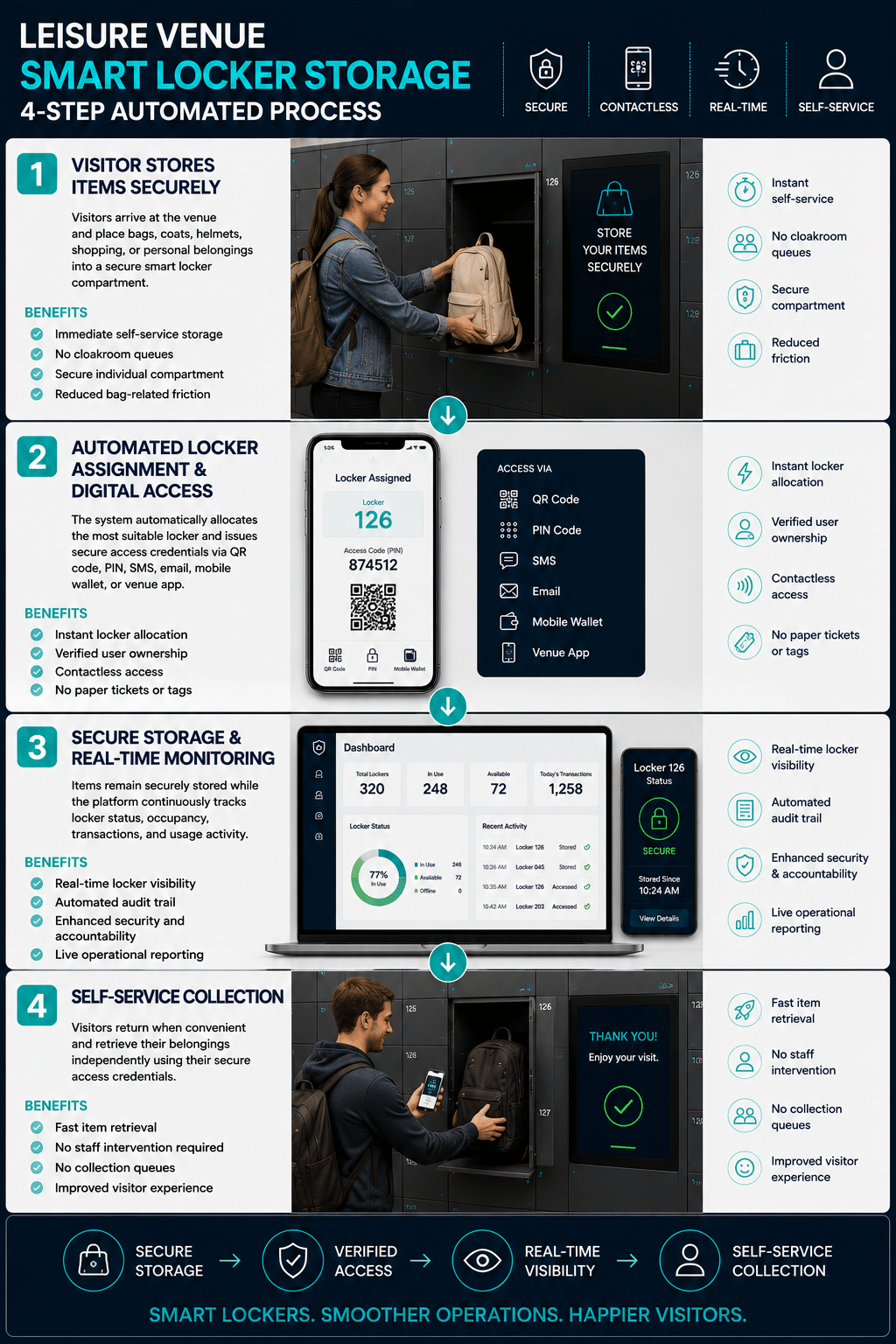
Leisure Venue Smart Locker Process
Traditional Queue Management vs Smart Locker Solutions




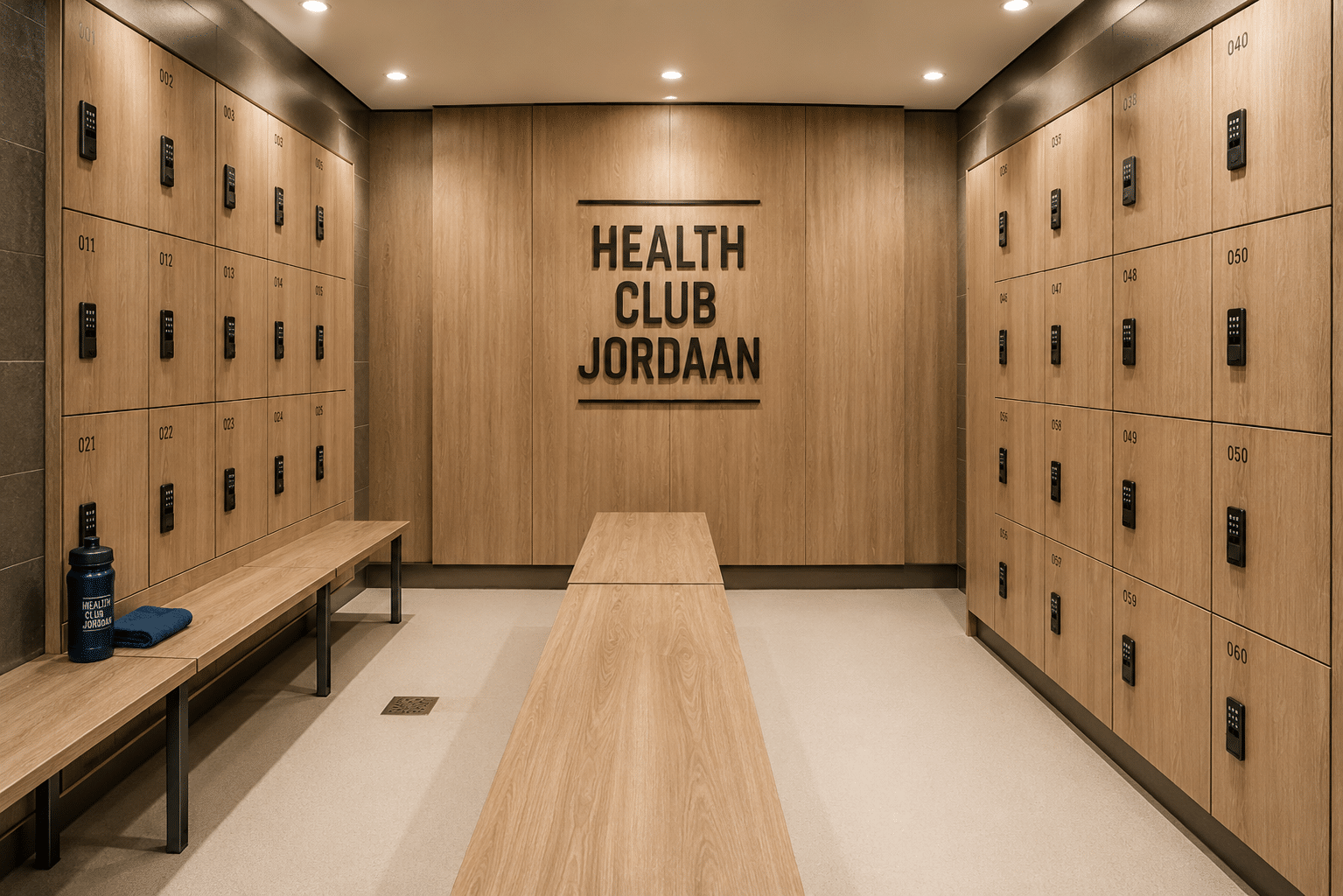
Case Study: Healthclub Jordaan & VPOD
Improving Leisure Venue Flow with Smart Locker Systems
Who Is Affected by Leisure Venue Queue Problems?
Venue Operations & Facilities Managers
Operations Director
Area of Responsibility
- Overall venue operations and performance
- Visitor flow and crowd management
- Guest experience and satisfaction
- Bag storage, cloakroom, and locker operations
- Event-day operational planning
- Staffing, scheduling, and productivity
- Queue management and throughput
- Security coordination and compliance
- Revenue generation from guest services
- Risk management and incident response
- Technology and operational systems
- Operational cost control
Key Challenges
- Leisure venue queue problems during peak attendance
- Crowd congestion across entry and internal venue areas
- Slow visitor throughput during busy operational periods
- Manual cloakroom and storage processes creating bottlenecks
- Difficulty maintaining efficient crowd flow at scale
- Rising operational pressure across high-footfall environments
Operational Pain Points
- Long visitor queues during peak periods
- Staff managing congestion instead of operations
- Delays across entry and visitor processing workflows
- Queue build-up impacting overall visitor experience
- Operational inefficiency caused by manual processes
- Difficulty scaling venue operations efficiently