

Trusted by these customers







- Deployed across 400+ locations in 25+ countries
- Faster Guest Collections Typical Improvement: ↓ 70–95% Collection Time
- Reduced Front Desk Workload Typical Improvement: ↓ 50–80% Staff Handling Time
- Higher Storage Throughput Typical Improvement: ↑ 100–400% More Bags Processed Per Hour
What Are Smart Luggage Lockers?
Smart luggage lockers are secure, self-service storage systems that allow guests to store and retrieve bags without staff involvement, using PIN or QR-based access with full audit tracking and optional payment integration.
The Problem with Traditional Luggage Storage:
Hotels, venues and visitor destinations traditionally manage luggage through staffed storage rooms or cloakrooms.
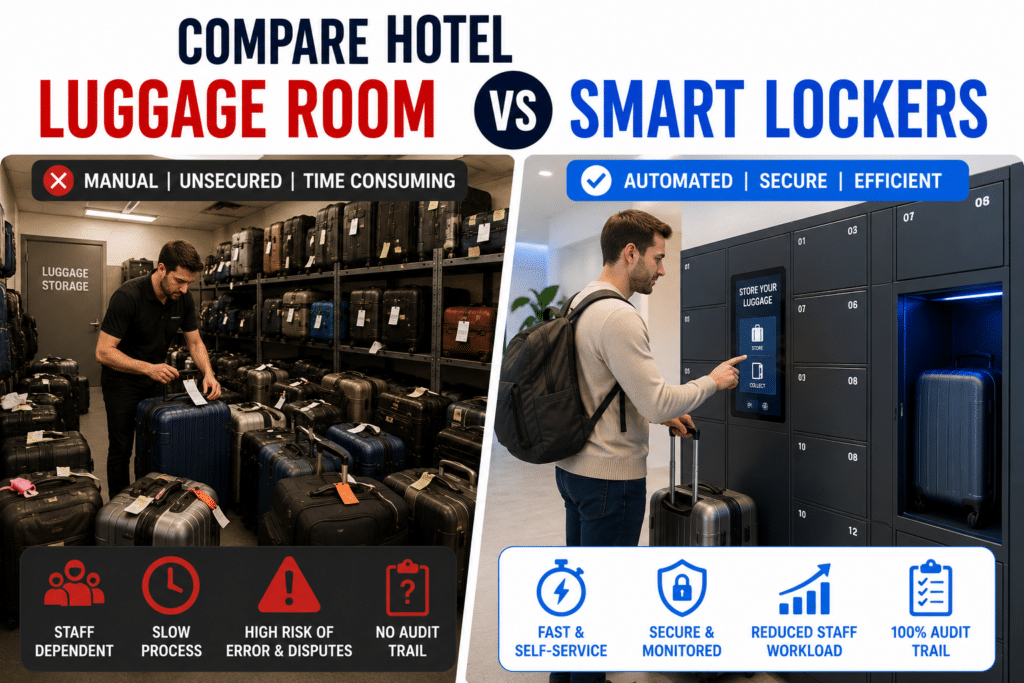
→ Compare hotel luggage room vs smart lockers
During peak arrival and departure periods this creates queues, operational delays, and additional workload for front-of-house teams.
Manual luggage handling also introduces security risks, limited accountability and inconsistent guest experiences.

→ Compare hotel concierge storage vs lockers
Smart luggage lockers replace manual bag handling with secure self-service storage that allows guests to store and retrieve luggage independently.
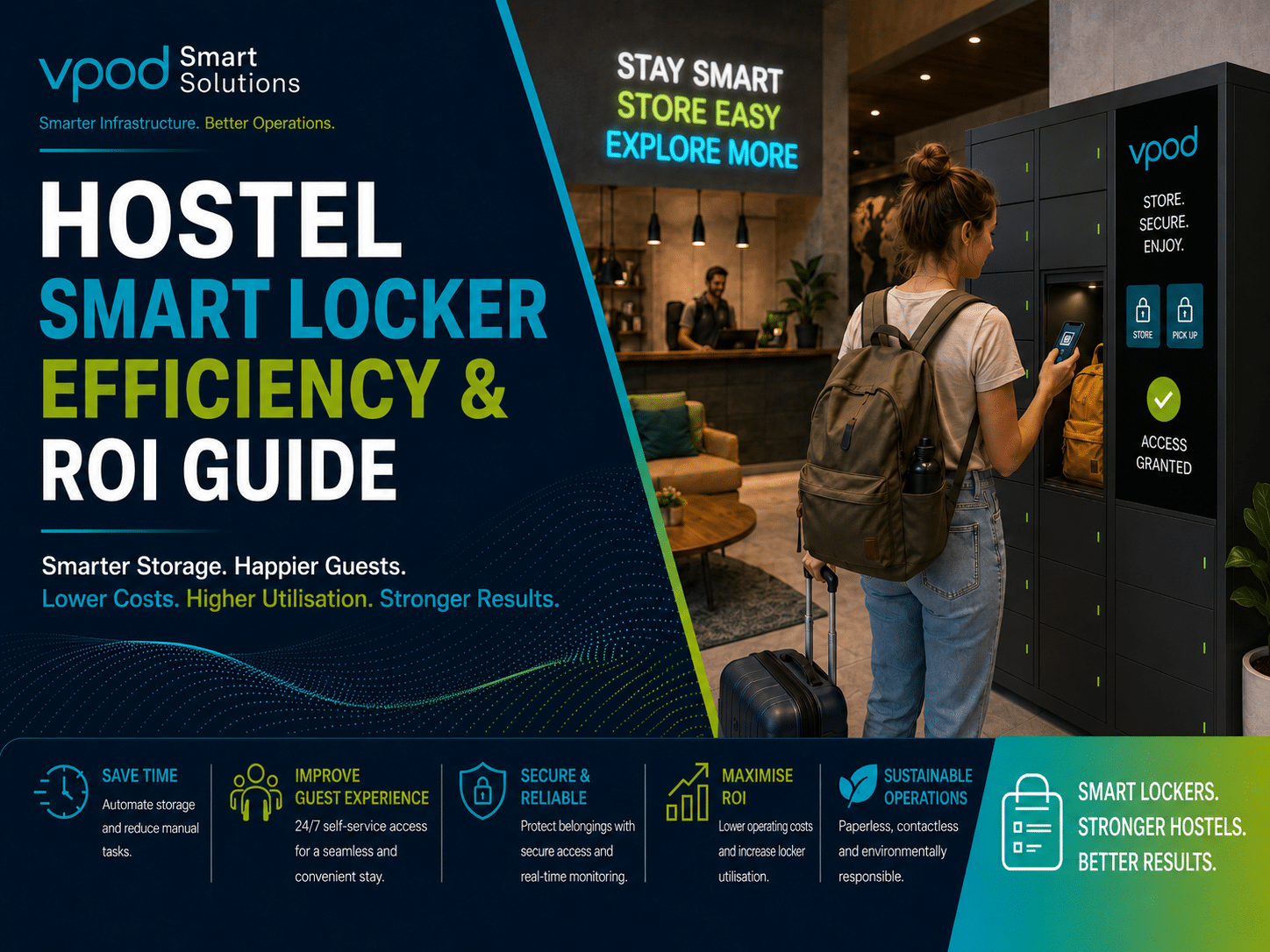
Hostel ROI & Efficiency Guide
Hostel Smart Locker Efficiency Numbers
Hostels experience many of the same luggage management challenges as hotels, but often with fewer staff, higher guest turnover, shared facilities, and greater pressure on reception teams. Smart lockers help automate storage, reduce manual handling, and improve guest convenience.
| KPI | Typical Improvement |
|---|---|
| Luggage Collection Time | ↓ 70–95% |
| Guest Wait Time | ↓ 70–95% |
| Reception Congestion | ↓ 40–80% |
| Luggage Handling Labour | ↓ 50–90% |
| Staff Time Managing Bags | ↓ 60–90% |
| Check-In / Check-Out Delays | ↓ 50–80% |
| Bags Processed Per Hour | ↑ 100–500% |
| Storage Throughput Capacity | ↑ 100–300% |
| Lost Luggage Claims | ↓ 70–95% |
| Storage Disputes | ↓ 70–95% |
| Audit Visibility | 100% Tracking |
| Storage Availability | Up to 24/7 |
| Guest Satisfaction | ↑ 15–40% |
| Front Desk Interruptions | ↓ 50–85% |
| Storage Area Utilisation | ↑ 20–50% |
Why Traditional Luggage Storage Breaks at Scale
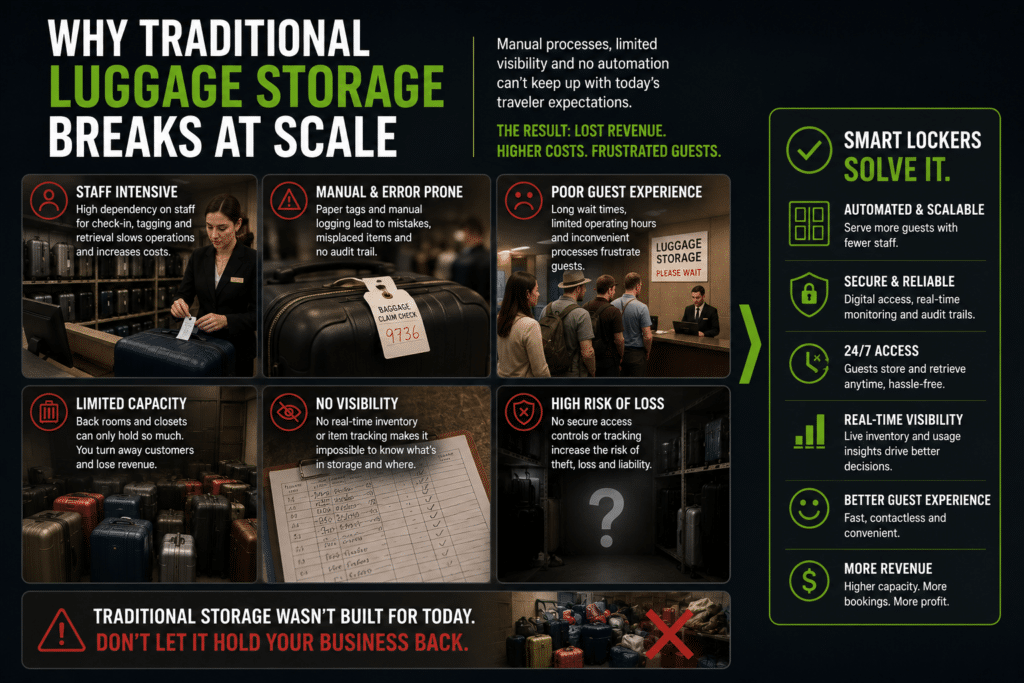
Manual processes fail when:

Arrival and departure peaks create queues
Front desks and storage rooms become bottlenecks during check-in and check-out windows.
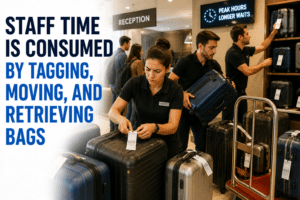
Staff time is consumed by tagging, moving, and retrieving bags
Manual handling pulls teams away from guest service and core operational tasks.

Storage rooms introduce risk, disputes, and inconsistent handling
Unsecured or shared storage areas increase liability and the likelihood of lost or damaged items.

Demand is high but unmanaged
Free or informal storage becomes a cost centre with no visibility, limits, or accountability.
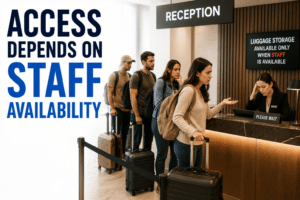
Access depends on staff availability
Guests must wait for staff to retrieve bags, creating delays outside normal operating hours.
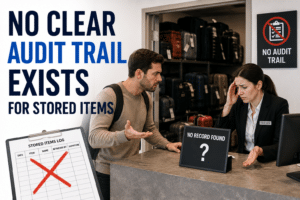
No clear audit trail exists for stored items
When issues arise, there is no reliable record of who handled what and when.


How Luggage Lockers Resolve Storage Bottlenecks:
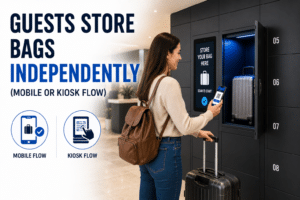
Guests store bags independently (mobile or kiosk flow)
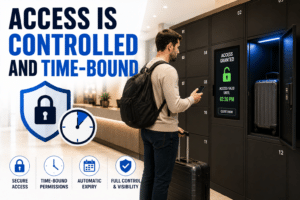
Access is controlled and time-bound

Every interaction is logged (audit trail)
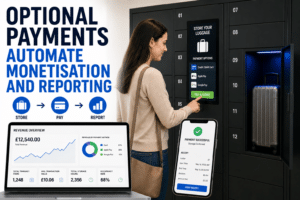
Optional payments automate monetisation and reporting
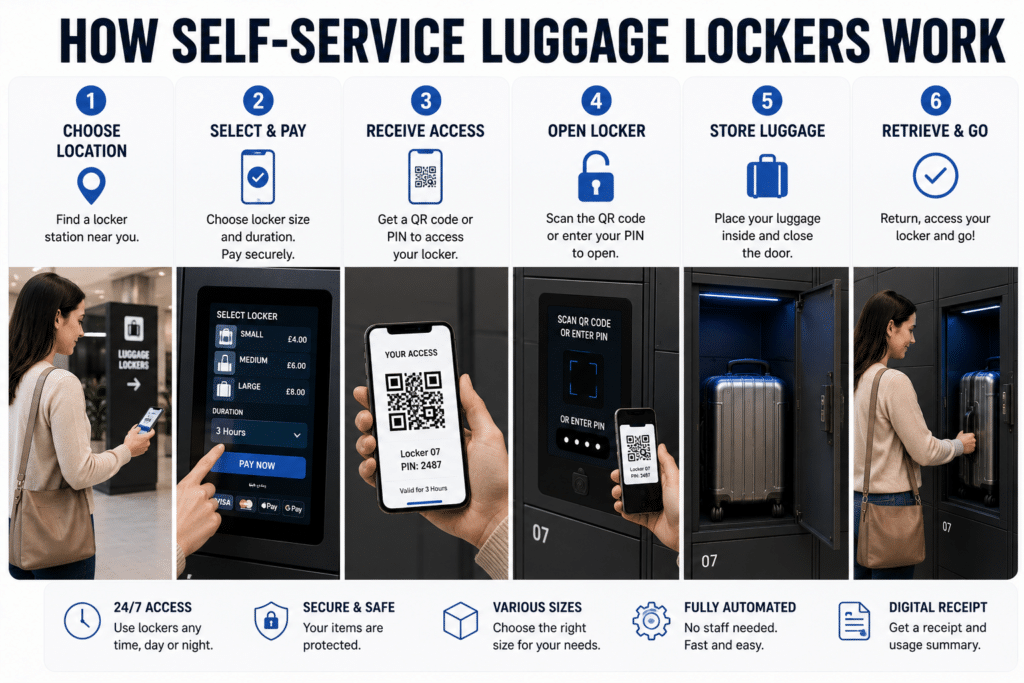
How Self-Service Luggage Lockers Work
- Guest selects a locker using the touchscreen or mobile interface
- A secure PIN or QR code is generated for access
- The guest stores luggage inside the locker
- The locker records the transaction and locks securely
- The guest returns later and retrieves their belongings
This automated process removes manual handling while maintaining full audit records.
Featured Luggage Locker Case Study
The Luggage Locker Case Study shows the Commercial and Operational impact smart luggage lockers can make on hostel or hotel operations enabling:
- Self Service Access – No Staff Involvement
- Keyless, Coinless Operation – 12 months of access including payment
- The incremental revenue opportunity dependant on the purchased or Capex Free commercial model
- The increase in customer service delivered through early check-in, late check-out 24/7
- The Full chain of custody through time stamped activities and unique event access credentials
Ostello Bello Case Study
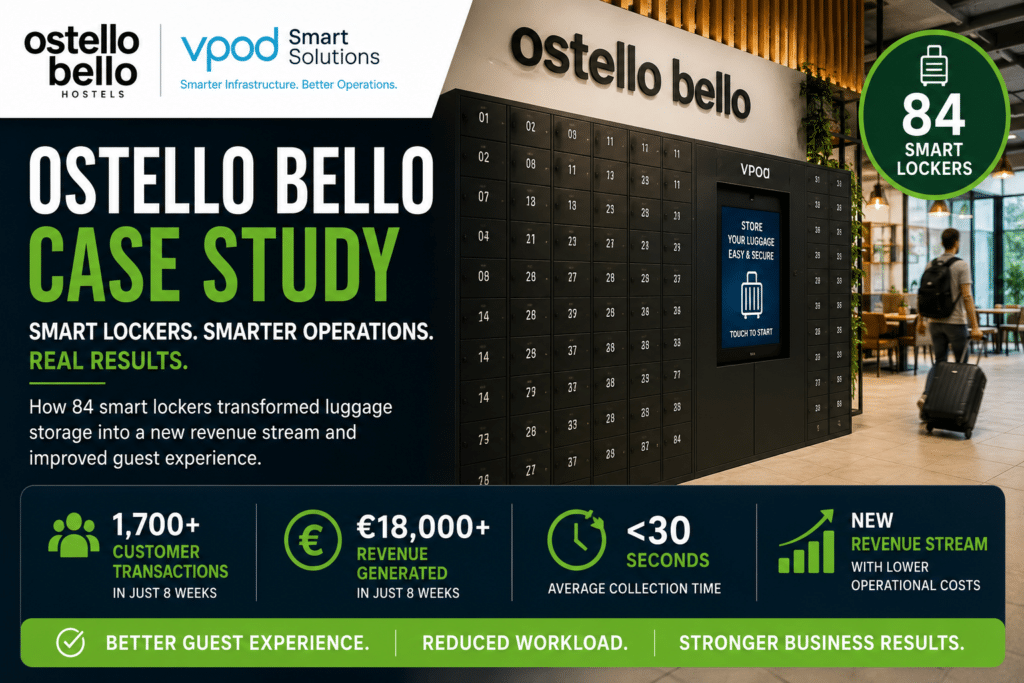
The Ostello Bello smart locker case study highlights how a deployment of 84 Vpod smart luggage lockers transformed guest luggage storage into a new commercial service.
The visual shows a large bank of black electronic lockers installed inside a modern Ostello Bello hostel. A central touchscreen allows guests to store and collect luggage through a fast, secure and intuitive self-service process. A traveller pulling a suitcase through the hostel reinforces the lockers’ role in supporting early arrivals, late departures and guests who need temporary baggage storage.
Key performance results featured in the image include more than 1,700 customer transactions in just eight weeks, over €18,000 in revenue generated and an average luggage collection time of less than 30 seconds. The installation created a valuable new revenue stream while lowering the operational burden associated with manually managed luggage rooms.
By automating luggage storage, Ostello Bello improved guest convenience, reduced staff workload and introduced a more scalable way to manage high volumes of bags. The Vpod smart locker solution provides secure individual compartments, digital access, automated payments and rapid guest collection.
The case study demonstrates how smart luggage lockers can help hostels and hotels deliver a better guest experience, improve operational efficiency and generate additional ancillary revenue from previously manual luggage storage services.
Executive Summary
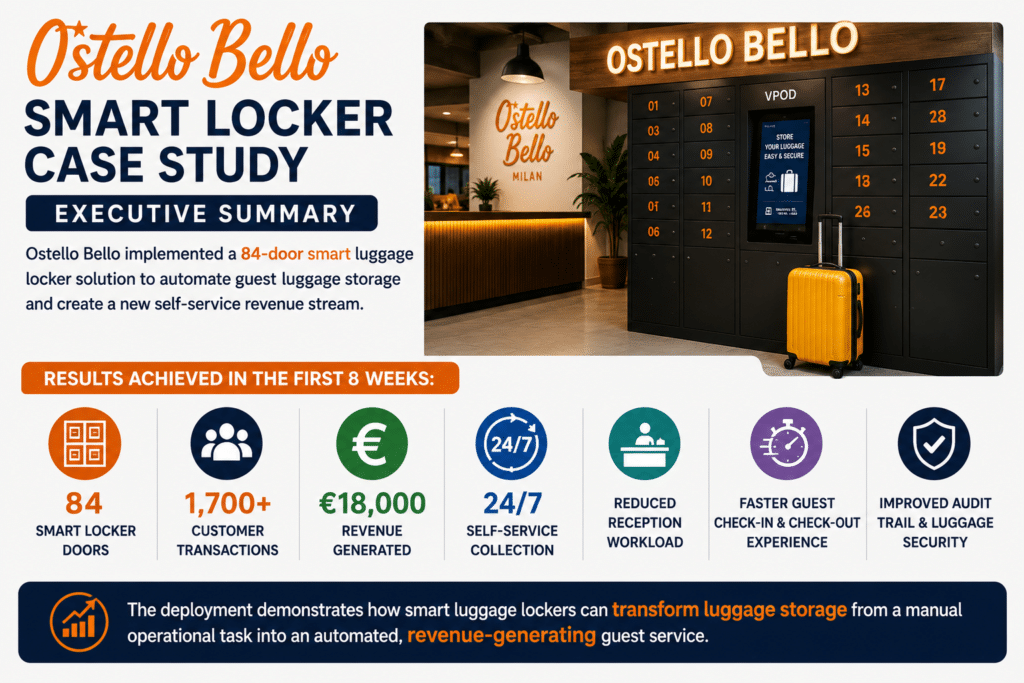
This executive summary covers the main results of the Ostello Bello smart locker case study, demonstrating how automated luggage storage can improve hostel operations, guest convenience and commercial performance.
Ostello Bello implemented an 84-door smart luggage locker solution at its Milan hostel location to replace a traditional, staff-managed baggage storage process. The installation enables guests to store and collect luggage independently through a secure digital self-service system.
The image shows a black Vpod smart locker wall positioned close to the Ostello Bello reception area. The installation includes multiple secure locker compartments, a central touchscreen interface and digital instructions that guide guests through the luggage storage process. A suitcase placed beside the lockers reinforces the system’s use for early arrivals, late departures and temporary guest baggage storage.
During the first eight weeks of operation, the locker system completed more than 1,700 customer transactions and generated approximately €18,000 in revenue. These results demonstrate how luggage storage can be transformed from a manual operational responsibility into a measurable, revenue-generating guest service.
The infographic also highlights the wider benefits achieved by the deployment. Guests can access the luggage storage service through 24/7 self-service collection, reducing their dependence on reception opening hours or staff availability. The system helps reduce reception workload by removing many of the manual steps associated with receiving, tagging, moving, storing and retrieving luggage.
Faster access to stored belongings contributes to a smoother check-in and check-out experience, particularly during busy arrival and departure periods. Secure individual compartments, controlled digital access and recorded transactions also strengthen luggage security and provide an improved digital audit trail.
The Ostello Bello case study demonstrates how smart luggage lockers can support both operational efficiency and ancillary revenue growth. For hostels, hotels and other accommodation providers, the technology offers a scalable way to improve baggage storage while delivering a faster, more secure and convenient guest experience.
Commercial Performance
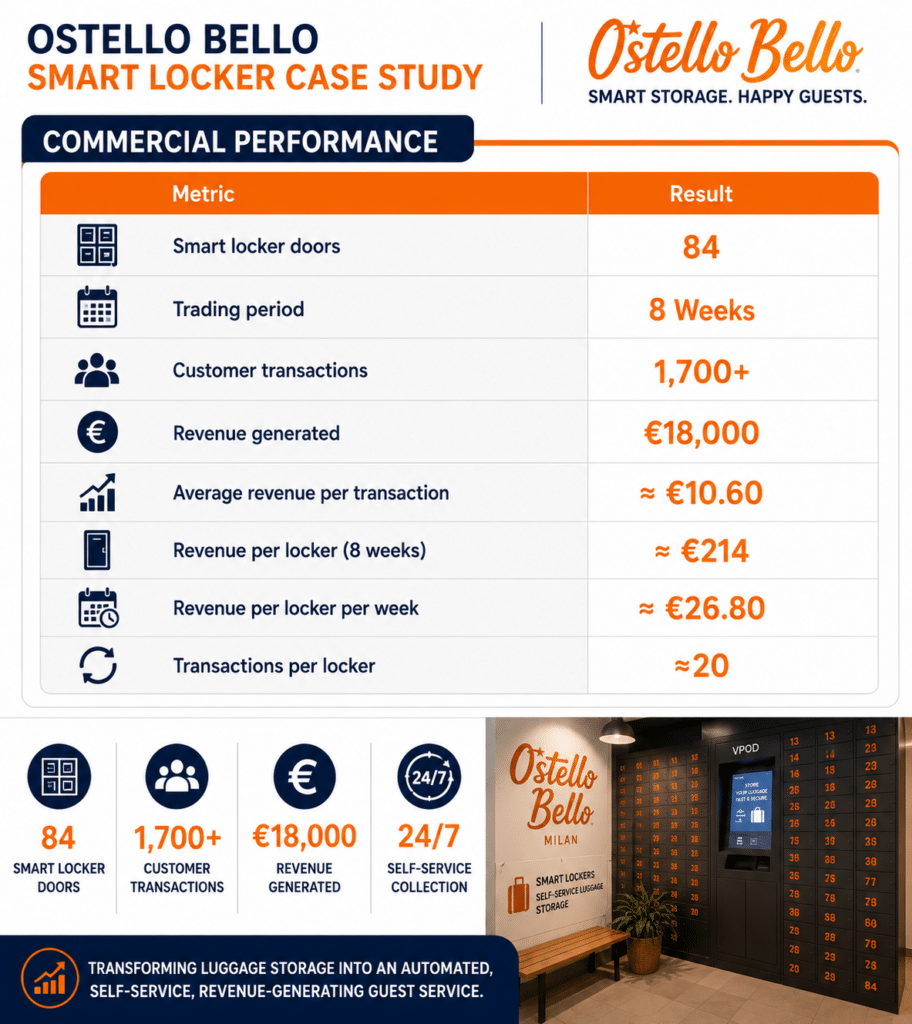
The commercial performance of the Ostello Bello smart locker case study, demonstrating how automated luggage storage can improve guest service while creating a new revenue stream for hostels and hospitality operators.
The image highlights a deployment of 84 smart locker doors at Ostello Bello Milan. Over an initial trading period of eight weeks, the self-service luggage locker system processed more than 1,700 customer transactions and generated approximately €18,000 in revenue.
Based on these results, the smart locker installation achieved an average revenue of approximately €10.60 per customer transaction. Each locker generated around €214 during the eight-week period, equivalent to approximately €26.80 per locker per week. The deployment also recorded roughly 20 transactions per locker across the measured trading period.
The lower section of the image shows the installed black Vpod locker wall, including multiple secure storage compartments and a central digital touchscreen. Guests can use the interface to store and retrieve luggage independently, supporting a convenient 24/7 self-service collection process.
The Ostello Bello installation transformed traditional luggage storage into an automated, scalable and revenue-generating guest service. Instead of relying on reception teams to manually receive, label, store and return bags, guests can complete the process directly through the smart locker system.
For hostel operators, hotels and other hospitality businesses, this approach can reduce front-desk workload, improve luggage security, shorten collection times and increase guest convenience. It also allows otherwise manual baggage storage activity to become a measurable ancillary revenue opportunity.
The case study demonstrates the commercial potential of smart luggage lockers for hostels, particularly in busy city-centre accommodation where guests frequently need secure storage before check-in or after check-out. By combining automated access, secure individual compartments and digital self-service, Ostello Bello created a more efficient luggage storage experience with clear operational and financial results.
Operational Efficiency Improvements
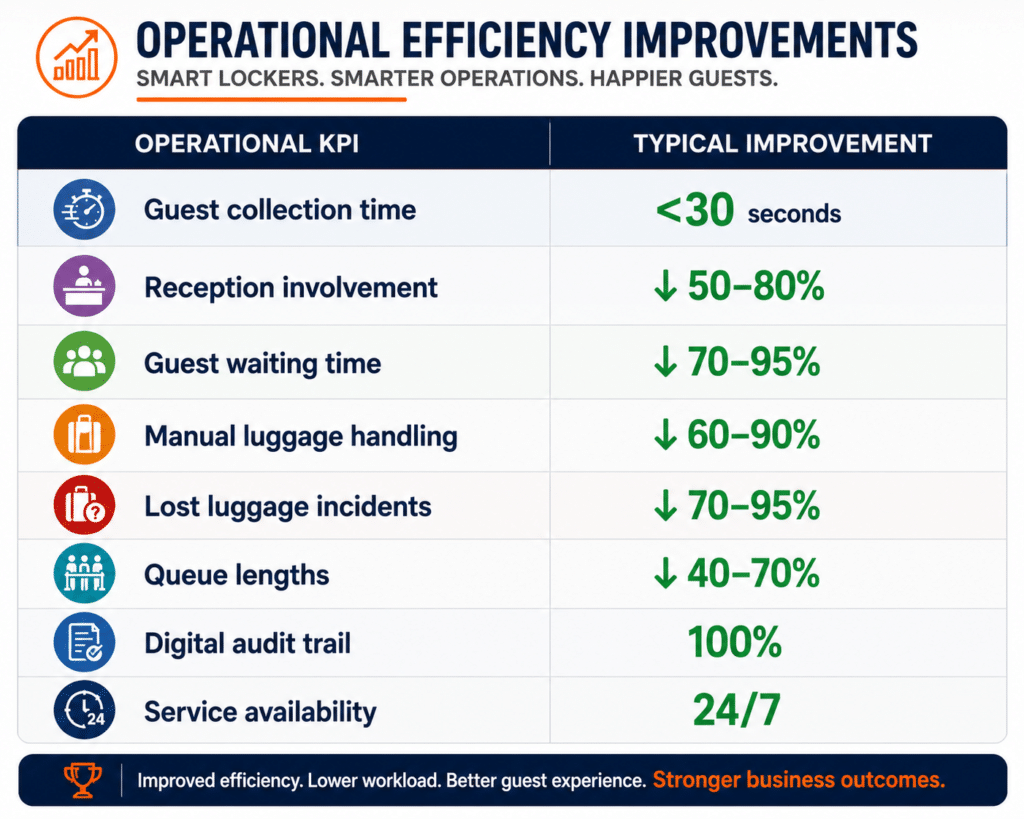
This illustrates the potential operational efficiency improvements delivered by smart luggage lockers in hostels, hotels and other hospitality environments. It compares key operational performance indicators with the typical improvements that can be achieved by replacing manually managed luggage rooms with a secure, automated self-service locker system.
Guest luggage collection can be completed in less than 30 seconds, helping travellers retrieve their belongings quickly before continuing their journey. By allowing guests to store and collect bags independently, smart lockers can reduce reception involvement by approximately 50% to 80%, freeing front-desk teams to focus on check-ins, guest enquiries and higher-value hospitality services.
The image indicates that guest waiting times may be reduced by 70% to 95%, particularly during busy check-in and check-out periods when traditional luggage storage processes can create queues. Manual luggage handling may fall by around 60% to 90%, reducing the need for staff to receive, label, move, store and retrieve individual bags.
Secure individual locker compartments and digital access controls can also help reduce lost luggage incidents by 70% to 95%. Each storage and collection event can be recorded through a 100% digital audit trail, improving accountability, visibility and security compared with handwritten labels, paper tickets or unsecured communal luggage rooms.
Queue lengths may be reduced by approximately 40% to 70%, helping hospitality venues maintain a smoother guest journey during peak arrival and departure periods. Because smart lockers remain available 24 hours a day, seven days a week, guests can access luggage storage outside standard reception hours without requiring continuous staff support.
The overall outcome is a more efficient hospitality operation with lower staff workload, faster luggage collection, improved baggage security and a more convenient guest experience. Smart luggage lockers provide a scalable way for hostels and hotels to automate luggage storage while strengthening service quality and operational performance.
Why It Works – Smart Luggage Lockers
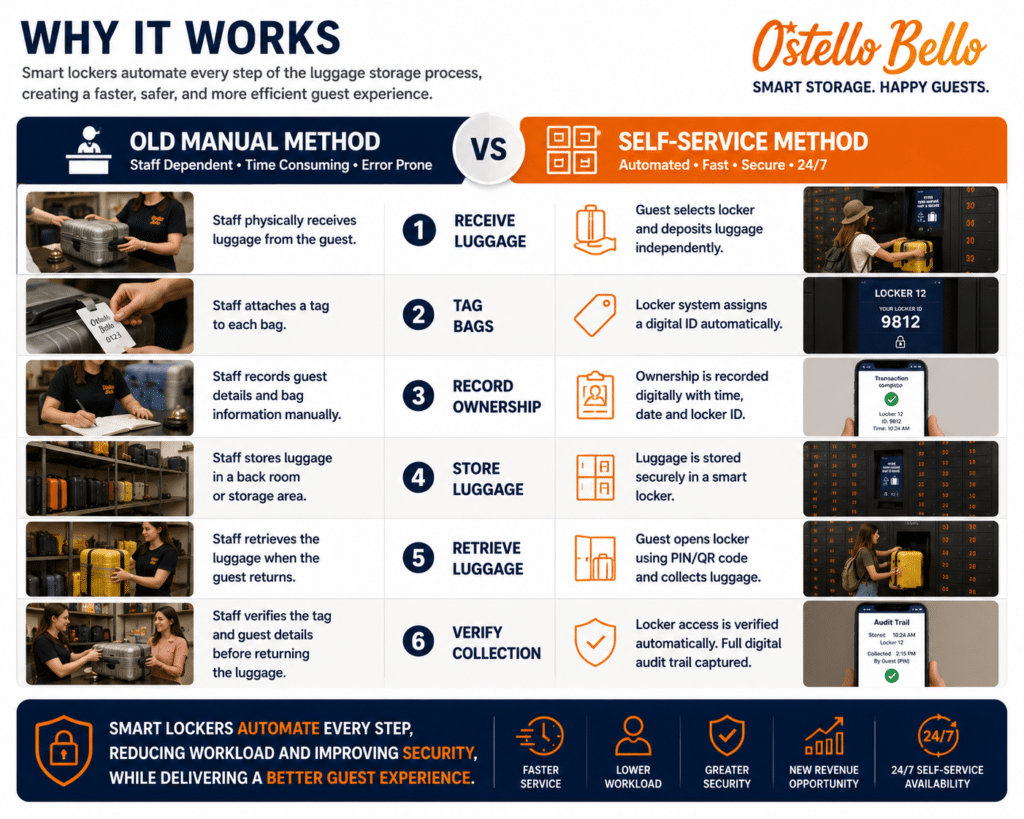
This infographic explains how Ostello Bello smart luggage lockers automate the complete guest baggage storage process, replacing a manual, staff-dependent workflow with a faster, more secure and efficient self-service experience.
The visual compares the old manual luggage storage method with the smart locker self-service method across six operational stages: receiving luggage, tagging bags, recording ownership, storing luggage, retrieving luggage and verifying collection.
Under the traditional process, reception or hostel staff must physically receive each suitcase from the guest. A paper tag is attached to the bag, and guest details are recorded manually. Staff then move the luggage into a back room or shared storage area. When the guest returns, an employee must locate and retrieve the correct bag before checking the luggage tag and confirming the guest’s identity.
This manual approach can be time-consuming, dependent on staff availability and vulnerable to human error. It can also create queues at reception during busy arrival and departure periods while increasing the amount of physical luggage handling required from employees.
The automated smart luggage locker process allows guests to complete each stage independently. The guest selects an available locker and deposits their luggage directly into a secure individual compartment. The locker management system automatically assigns a digital identification number and records the transaction, including the time, date and locker used.
When the guest returns, the locker can be opened using a secure PIN, QR code or other authorised digital credential. Access is verified automatically, and the system captures a complete digital audit trail showing when the luggage was stored and collected.
By automating these steps, Ostello Bello can reduce reception workload while providing guests with faster and more flexible luggage storage. The smart lockers remain available 24 hours a day, seven days a week, enabling early-arriving and late-departing guests to store or retrieve belongings without relying on staff to access a luggage room.
The infographic highlights five primary benefits of the self-service model: faster service, lower staff workload, greater luggage security, a new revenue opportunity and 24/7 availability.
For hostels, hotels and other hospitality operators, smart lockers provide a scalable alternative to manually managed luggage rooms. The system can improve operational efficiency, reduce errors, strengthen accountability and deliver a more convenient guest experience while turning luggage storage into a measurable digital service.
Key Take Away
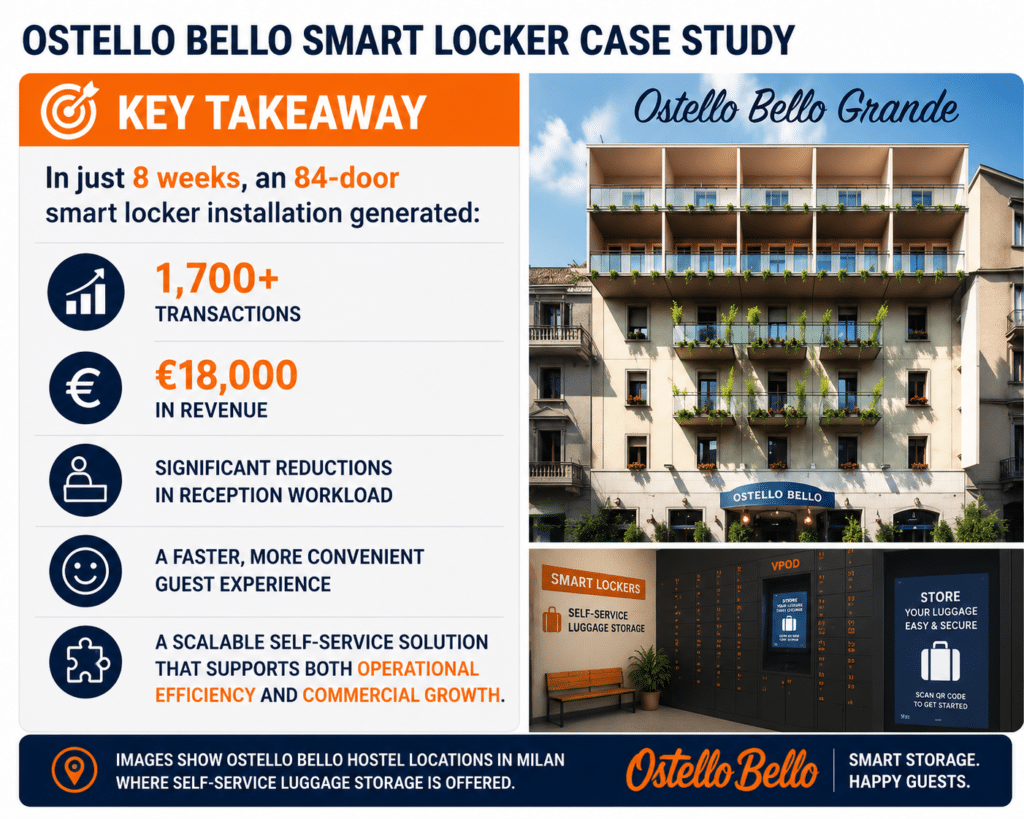
This image summarises the key results from the Ostello Bello smart locker case study, showing how self-service luggage storage can deliver measurable commercial and operational benefits for hostels.
The infographic highlights an 84-door smart locker installation deployed across Ostello Bello hostel locations in Milan. In only eight weeks, the system completed more than 1,700 customer transactions and generated approximately €18,000 in revenue.
The visual also emphasises the wider operational benefits of automated luggage storage. By allowing guests to store and retrieve their bags independently, the smart locker system reduced the amount of reception staff involvement required. This helped lower front-desk workload and reduced the need for employees to manually receive, label, move, secure and return guest luggage.
Guests benefited from a faster and more convenient luggage storage experience. Secure digital access allowed customers to use the lockers independently, supporting early arrivals, late departures and travellers who needed temporary baggage storage before or after their stay.
The right side of the image shows the Ostello Bello Grande hostel building in Milan alongside the installed black Vpod smart locker wall. The locker installation includes multiple secure compartments and digital touchscreen interfaces that guide guests through the luggage storage process. Guests can begin the transaction using a QR code and retrieve their belongings through a secure digital credential.
The case study demonstrates that smart luggage lockers can provide more than a simple storage solution. They create a scalable self-service guest amenity that supports both operational efficiency and commercial growth.
For hostel and hotel operators, automated luggage lockers can help reduce reception pressure, improve baggage security, provide 24/7 service availability and create a new source of ancillary revenue. The Ostello Bello results show how a well-positioned smart locker deployment can improve the guest journey while generating a strong commercial return from luggage storage.
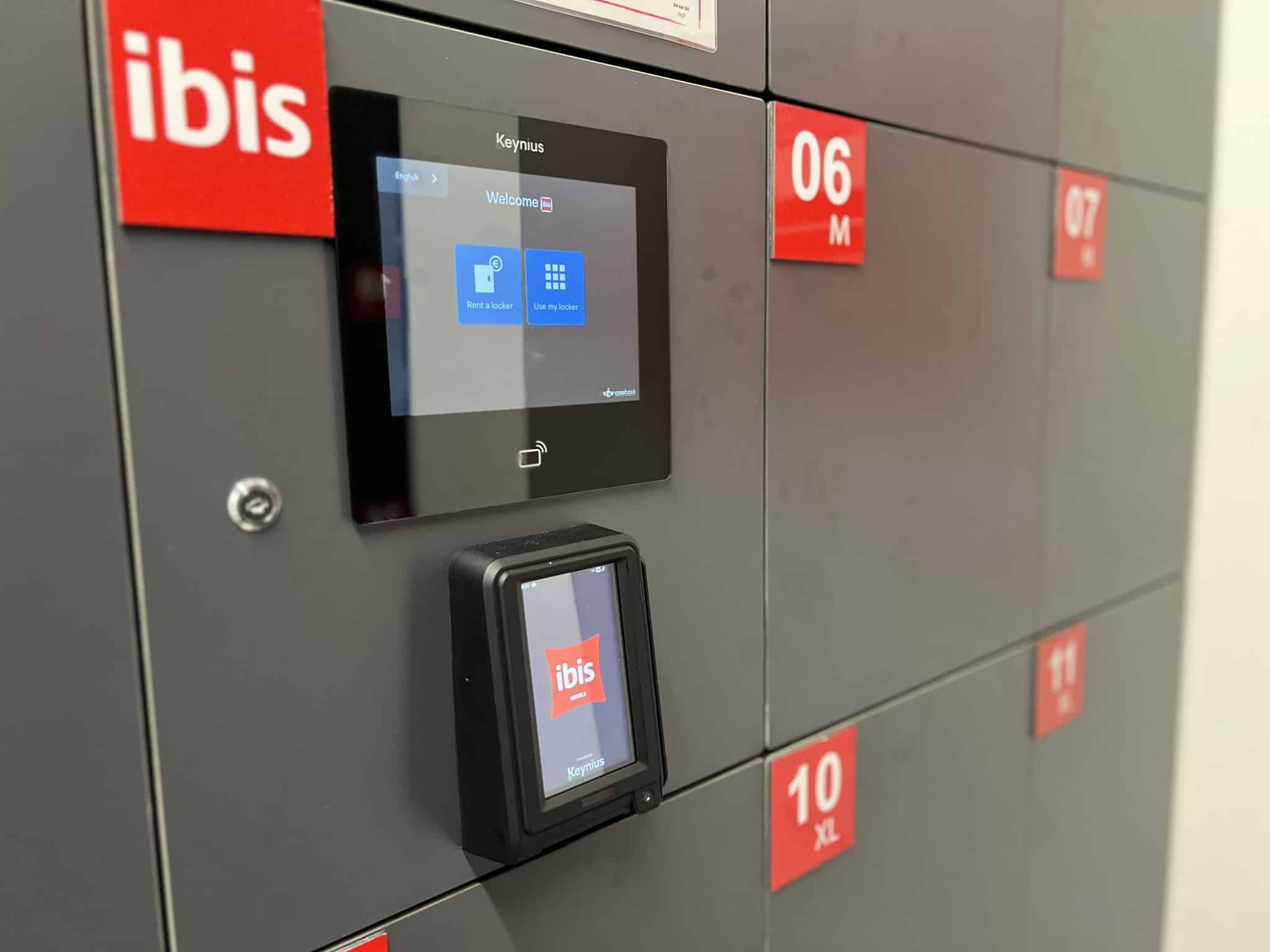
See How This Locker Solution Works in Practice
Benefits of Luggage Lockers for Hotels and Venues
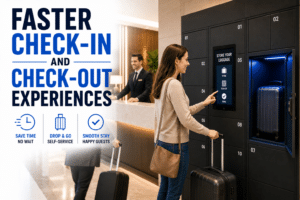
Faster check-in and check-out experiences
Guests store and retrieve luggage without waiting for staff assistance.
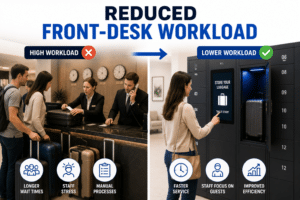
Reduced front-desk workload
Teams spend less time managing bags and more time on guest service.
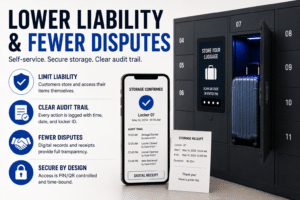
Lower liability and fewer disputes
Clear handling processes reduce lost-item claims and disagreements.
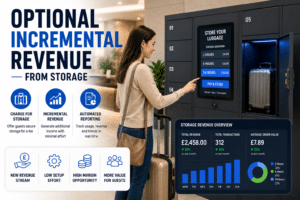
Optional incremental revenue from storage
Paid usage models can turn storage from a cost centre into a controlled service.
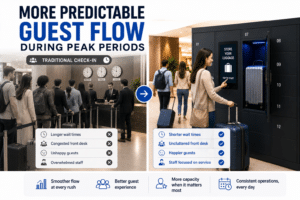
More predictable guest flow during peak periods
Storage no longer creates bottlenecks at reception or entry points.
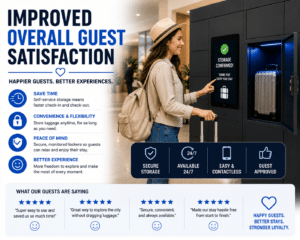
Improved overall guest satisfaction
A smoother arrival and departure experience leaves a positive final impression.

Guide : Hotel ROI & Efficiency Guide
Hotel Smart Locker Efficiency Numbers
The largest efficiency gains from hotel smart lockers typically come from reducing luggage handling labour, improving guest flow, eliminating storage bottlenecks, and increasing self-service access.
| KPI | Typical Improvement |
|---|---|
| Luggage Collection Time | ↓ 70–95% |
| Guest Wait Time | ↓ 70–95% |
| Reception Congestion | ↓ 30–60% |
| Luggage Handling Labour | ↓ 50–80% |
| Staff Time Managing Bags | ↓ 50–90% |
| Check-In / Check-Out Delays | ↓ 40–80% |
| Bags Processed Per Hour | ↑ 100–400% |
| Storage Throughput Capacity | ↑ 100–300% |
| Lost Luggage Claims | ↓ 70–95% |
| Storage Disputes | ↓ 70–95% |
| Audit Visibility | 100% Tracking |
| Storage Availability | Up to 24/7 |
| Guest Satisfaction | ↑ 10–30% |
| Front Desk Interruptions | ↓ 40–80% |
| Storage Area Utilisation | ↑ 20–50% |
Luggage Lockers for Hotels, Venues and Tourist Locations
Luggage Lockers for Hotels
Hotels deploy luggage lockers to manage guest flow during peak check-in and check-out periods, reducing congestion at reception desks and improving operational efficiency.
Self-service luggage lockers allow guests to store bags securely while maintaining digital access control and full audit trails.
Typical hotel deployments support:
- Early arrival luggage storage
- Late departure bag storage
- Guest parcel deliveries
- Secure unattended luggage storage
Luggage Lockers for Venues
Live venues often deploy luggage lockers for venues to manage visitor belongings during concerts, exhibitions and large events where bag policies require secure storage.
Luggage lockers allow venues to provide self-service bag storage without relying on staffed cloakrooms.
Benefits include:
- Reduced cloakroom queues
- Improved ingress flow
- Secure visitor bag storage
- Optional paid storage services
Luggage Lockers for Tourist Locations
Tourist attractions, museums and city centres use luggage lockers for visitor locations that often need short-term luggage storage for visitors exploring the area.
Self-service luggage lockers provide secure temporary storage while allowing organisations to manage usage and access digitally.
Typical deployments support:
• Short-term luggage storage for visitors
• Secure bag storage during sightseeing
• Reduced queues at visitor desks
• Optional paid storage services
Use Cases
Ibis Geneva – Self-Service Luggage Locker Deployment
Ibis Hotel Geneva deployed 29 Vpod smart locker walls to replace manual luggage room handling and introduce secure, self-service storage for guests. Early arrivals and late departures were creating front-desk congestion and excessive staff involvement in luggage management.
The implementation introduced 24/7 self-service luggage lockers in multiple sizes, integrated payment processing, QR code access, and remote administrative oversight. Guests were able to store and retrieve belongings independently without staff handling.
Following deployment, Ibis achieved a 58% average locker occupancy rate and delivered a 6× ROI within the first year, with lockers used over 380,000 times.
Deployment Results:
• 29 smart luggage locker units deployed
• Automated early arrival and late departure storage
• Reduced reception congestion during peak check-in periods
• Improved operational efficiency at the front desk
Premier Inn Cologne – 24/7 Self-Service Luggage Storage Deployment
Premier Inn Cologne implemented 54 Vpod smart lockers to replace traditional luggage room handling and introduce secure, self-service storage for hotel guests. Limited access hours, reception queues, and manual baggage oversight were creating operational friction in a high-traffic city location.
The deployment introduced 24/7 self-service luggage lockers in three sizes, multilingual touchscreen access, integrated payment processing, and remote administrative management via the Vflex platform. Guests select a locker, set a secure PIN, and store belongings for up to 10 hours without staff involvement.
Following implementation, the hotel achieved a 6× ROI within the first year, reduced reception workload, improved guest flow during peak arrival and departure periods, and transformed luggage storage into a monetised, data-driven guest amenity.
Deployment Results:
• 54 luggage lockers installed
• 24/7 guest self-service access
• 6× ROI achieved within the first year
• Significant reduction in reception workload
Who Uses Luggage Lockers in Hospitality and Venues

Hotel Operators
- Reduce front-desk congestion during peak arrivals and departures
- Improve guest experience without adding staff or space
- Maintain control over luggage handling and liability

Hostel Managers
- Manage high guest turnover with minimal staff intervention
- Improve security in shared accommodation environments
- Keep luggage storage predictable during peak check-in and check-out

Operations Directors
- Standardise luggage storage processes across sites
- Reduce manual handling and operational risk
- Enable scalable, low-intervention guest storage
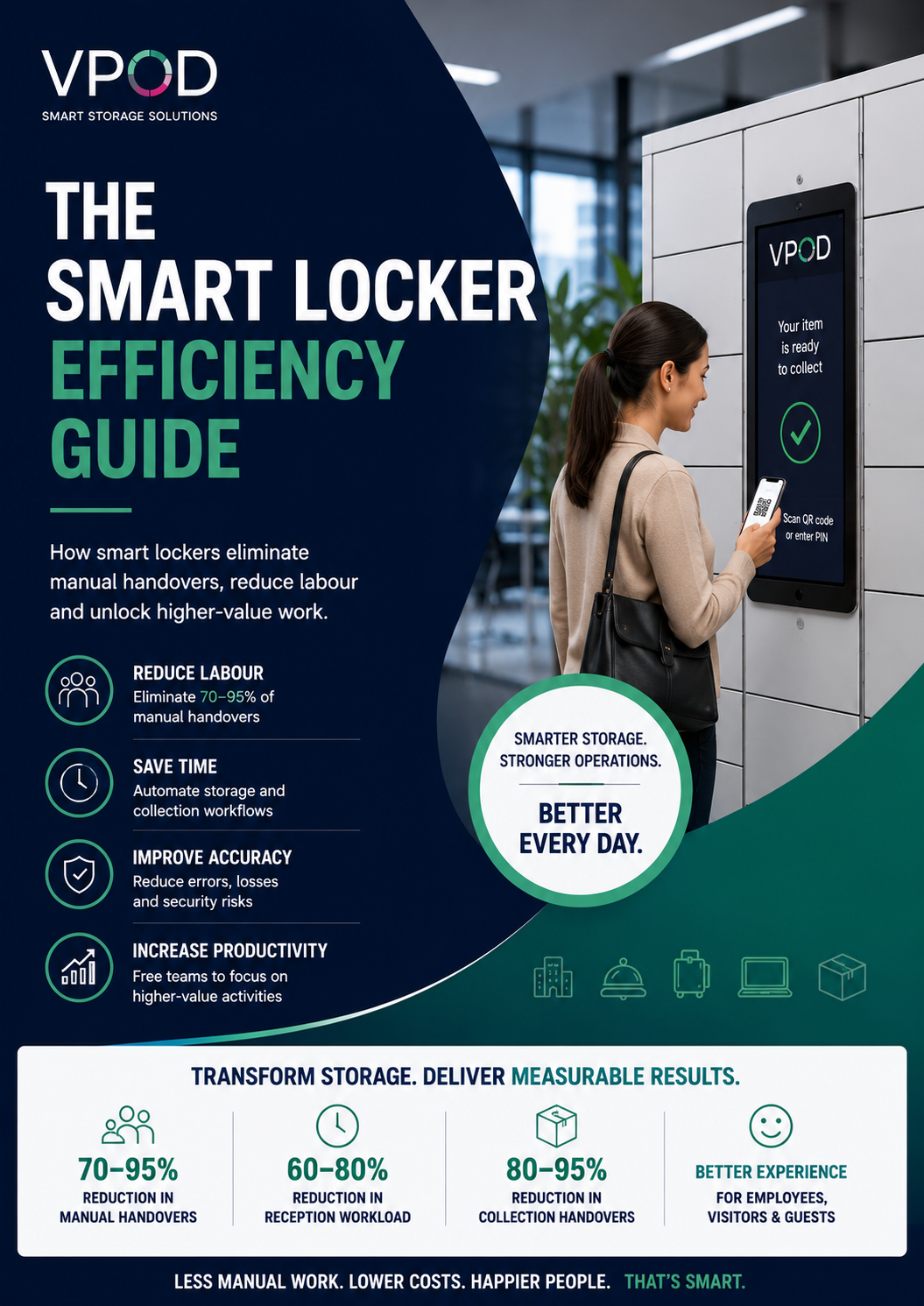
Guide Smart Locker Efficiency Guide
Luggage Smart Locker ROI Numbers
The strongest ROI from luggage smart lockers typically comes from reducing labour costs, accelerating guest journeys, increasing storage throughput, reducing disputes, and creating optional revenue opportunities without increasing staffing.
Typical Luggage Locker ROI Improvements
| KPI | Typical Improvement |
|---|---|
| Guest Wait Time | ↓ 70–95% |
| Luggage Collection Time | < 30 Seconds |
| Reception Congestion | ↓ 30–80% |
| Staff Time Handling Bags | ↓ 50–90% |
| Luggage Handling Labour Cost | ↓ 30–70% |
| Check-In / Check-Out Delays | ↓ 40–80% |
| Storage Throughput Capacity | ↑ 100–400% |
| Bags Processed Per Hour | ↑ 100–500% |
| Lost Luggage Claims | ↓ 70–95% |
| Storage Disputes | ↓ 70–95% |
| Storage Availability | Up to 24/7 |
| Audit Visibility | 100% Tracking |
| Guest Satisfaction | ↑ 10–40% |
| Storage Space Utilisation | ↑ 20–50% |
Where Luggage Lockers Are Used
Monetised Luggage Storage
Smart luggage lockers allow organisations to offer paid luggage storage services without additional staffing.
Automated payment systems allow guests to store bags securely while organisations generate incremental revenue from short-term storage usage.
→ Compare free storage vs paid locker systems
Benefits include:
• Optional pay-per-use storage
• Automated payments and reporting
• Reduced staff involvement
• Controlled access and usage limits

Luggage Lockers Powered by the VPOD Platform
Vpod luggage lockers operate on the Vflex locker management platform, allowing organisations to manage storage infrastructure across locations.
Features include:
• cloud locker management
• integrated payment processing
• real-time locker usage monitoring
• remote administrative control
• integration with access control systems