






Trusted by these customers











- Deployed across 25+ countries
- Thousands of lockers installed
- Supporting high-traffic venues and workplaces
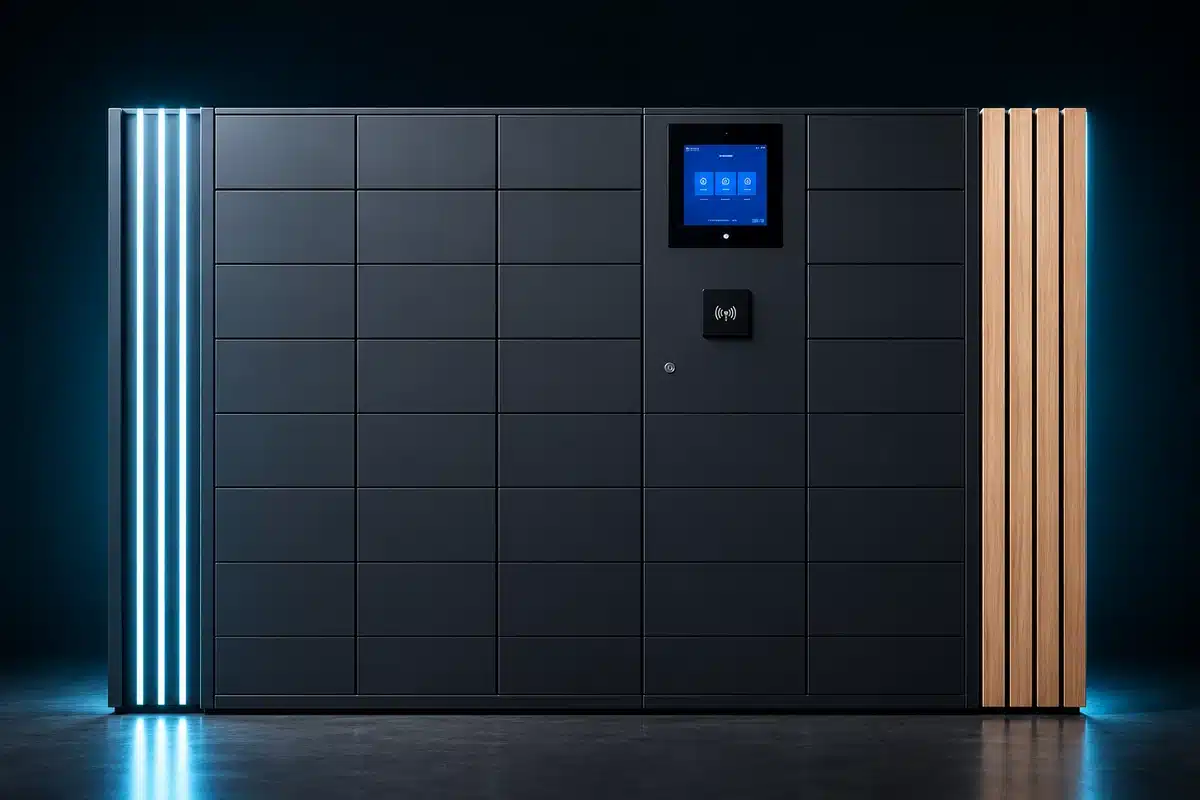
Vflex Smart Lockers

Crowdstor Smart Rental Lockers

Vgreet Visitor Management

The Biggest Risk in Event Compliance: Queues
Most event security planning focuses on:
Screening
Detection
Response
But the highest-risk environment is before security begins.
Why queues create risk:
High-density crowd build-up
Static, predictable targets
Increased dwell time
Limited control and visibility
Queues are not just operational issues — they are security vulnerabilities
Where Events Fail to Meet Martyn’s Law
Many events rely on:
Manual bag checks
Cloakrooms or temporary storage
Staff-led queue management
These approaches:
Slow down entry processing
Create bottlenecks under peak demand
Increase crowd density outside venues
Depend on inconsistent human execution
Provide no audit trail or accountability
Result: compliance gaps between policy and real-world execution
Event Locker Visitor Process
A visitor deposits an item into an available locker
↓
The locker system generates a secure access code
↓
The recipient receives a notification with collection instructions
↓
The item is collected using a PIN code, mobile credential or access card
↓
The locker automatically becomes available again
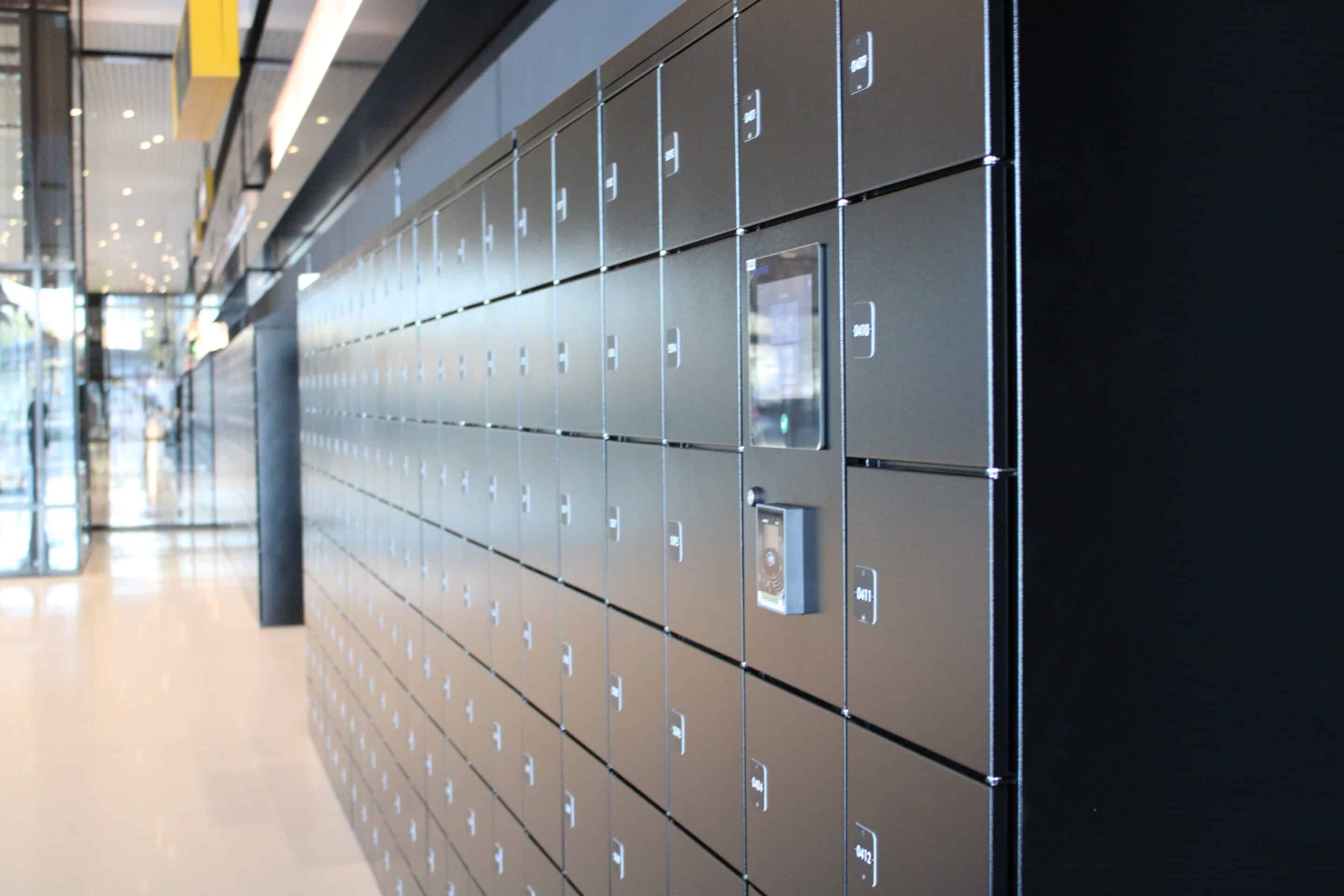
Enterprise Smart Locker Systems Platform Overview
What is Martyn’s Law for Events?
Martyn’s Law applies to publicly accessible events and venues across the UK, requiring organisers to:
- Improve preparedness against terrorist threats
- Reduce vulnerability at key risk points
- Implement proportionate security measures
- Ensure staff are trained and procedures are in place
Two Compliance Tiers
Standard Tier (lower capacity events <800 people):
- Basic awareness training
- Simple security procedures
Enhanced Tier (larger events +800 people):
- Detailed risk assessments
- Formal security planning
- Measures to reduce crowd vulnerability
- Demonstrable implementation of controls
How to Achieve Martyn’s Law Compliance in Events
Key Areas to Focus on:
To meet the requirements of the Act, events must focus on:
1. Reducing Exposure to Risk
- Minimise queue length and density
- Reduce time spent in vulnerable areas
2. Controlling Entry Conditions
- Standardise what enters the venue
- Create predictable, structured processes
3. Improving Throughput
- Increase the speed of entry processing
- Prevent bottlenecks during peak arrival windows
4. Managing Crowd Flow
- Avoid static congestion zones
- Keep people moving safely
5. Demonstrating Compliance
- Implement repeatable processes
- Maintain auditability and records

Challenge Card Title
Lorem ipsum dolor sit amet, consectetur adipiscing elit, sed do eiusmod tempor incididunt ut labore et magna aliqua.
The Role of Smart Lockers in Martyn’s Law Compliance
Smart lockers provide a pre-security infrastructure layer that directly supports compliance.
Reduce Vulnerability
- Remove bags before security
- Shorten queues and dwell time
- Lower exposure at entry points
Improve Entry Control
- Standardise pre-entry conditions
- Reduce unpredictability at screening
Increase Throughput
- Fewer bags = faster screening
- Higher processing capacity
Improve Crowd Flow
- Eliminate cloakroom queues
- Reduce congestion hotspots
Enable Auditability
- Digital usage tracking
- Time-stamped interactions
- Repeatable, consistent processes
Instead of managing queues, you remove the cause of queues
Secure smart locker systems can support controlled storage and digital access in event environments where security, accountability and efficient visitor flow are important.
Challenge Card Title
Lorem ipsum dolor sit amet, consectetur adipiscing elit, sed do eiusmod tempor incididunt ut labore et magna aliqua.
From Manual Security to Infrastructure-Led Compliance
Martyn’s Law is driving a shift:
|
Traditional Approach |
Modern Compliance Approach |
|
Staff-led processes |
System-led execution |
|
Reactive management |
Proactive risk reduction |
|
Manual storage |
Automated infrastructure |
|
Inconsistent outcomes |
Standardised performance |
Compliance is no longer just about people
It’s about systems that perform under pressure
Challenge Card Title
Lorem ipsum dolor sit amet, consectetur adipiscing elit, sed do eiusmod tempor incididunt ut labore et magna aliqua.
The Business Impact of Compliance
Meeting Martyn’s Law requirements delivers:
Risk Reduction
- Lower exposure to threats
- Safer entry environments
Operational Efficiency
- Faster ingress
- Reduced staffing pressure
Improved Experience
- Shorter queues
- Better visitor satisfaction
Revenue Opportunity
- Monetised storage (£5–£10 per use)
• Scalable per-event income
Challenge Card Title
Lorem ipsum dolor sit amet, consectetur adipiscing elit, sed do eiusmod tempor incididunt ut labore et magna aliqua.
Why Early Adoption Matters
Events that act early will:
- Reduce compliance risk
- Improve operational performance
- Enhance visitor experience
- Gain competitive advantage
Martyn’s Law is not just regulation
It’s an opportunity to redesign event operations
Challenge Card Title
Lorem ipsum dolor sit amet, consectetur adipiscing elit, sed do eiusmod tempor incididunt ut labore et magna aliqua.
The Biggest Risk in Event Compliance: Queues
Most event security planning focuses on:
Screening
Detection
Response
But the highest-risk environment is before security begins.
Why queues create risk:
High-density crowd build-up
Static, predictable targets
Increased dwell time
Limited control and visibility
Queues are not just operational issues — they are security vulnerabilities
Where Events Fail to Meet Martyn’s Law
Many events rely on:
Manual bag checks
Cloakrooms or temporary storage
Staff-led queue management
These approaches:
Slow down entry processing
Create bottlenecks under peak demand
Increase crowd density outside venues
Depend on inconsistent human execution
Provide no audit trail or accountability
Result: compliance gaps between policy and real-world execution
Event Locker Visitor Process
A visitor deposits an item into an available locker
↓
The locker system generates a secure access code
↓
The recipient receives a notification with collection instructions
↓
The item is collected using a PIN code, mobile credential or access card
↓
The locker automatically becomes available again
Enterprise Locker Management Software Platform
Cloud Locker Management Software
Monitor locker availability, usage, and activity in real time across locations. The platform provides central oversight of locker systems without requiring on-site supervision.
Secure Digital Access
Locker access can be controlled through PIN codes, mobile credentials, cards, or integrated access systems. This eliminates keys while ensuring only authorised users can access stored items.
Centralised Management
Locker policies, permissions, and operational rules can be managed from a single platform, enabling consistent storage workflows across multiple sites.
Usage Analytics and Reporting
Detailed usage data and access logs provide visibility into locker activity, utilisation, and operational performance.
Enterprise Reliability
Locker systems are designed for high-usage environments where downtime disrupts operations. The platform supports continuous operation in workplaces, venues, hospitality environments, and logistics settings.
System Integrations
The platform integrates with access control systems, building management platforms, and operational workflows, allowing lockers to operate as part of existing infrastructure.
Trusted in Real-World Operations
Skyscanner — Global Workplace Deployment
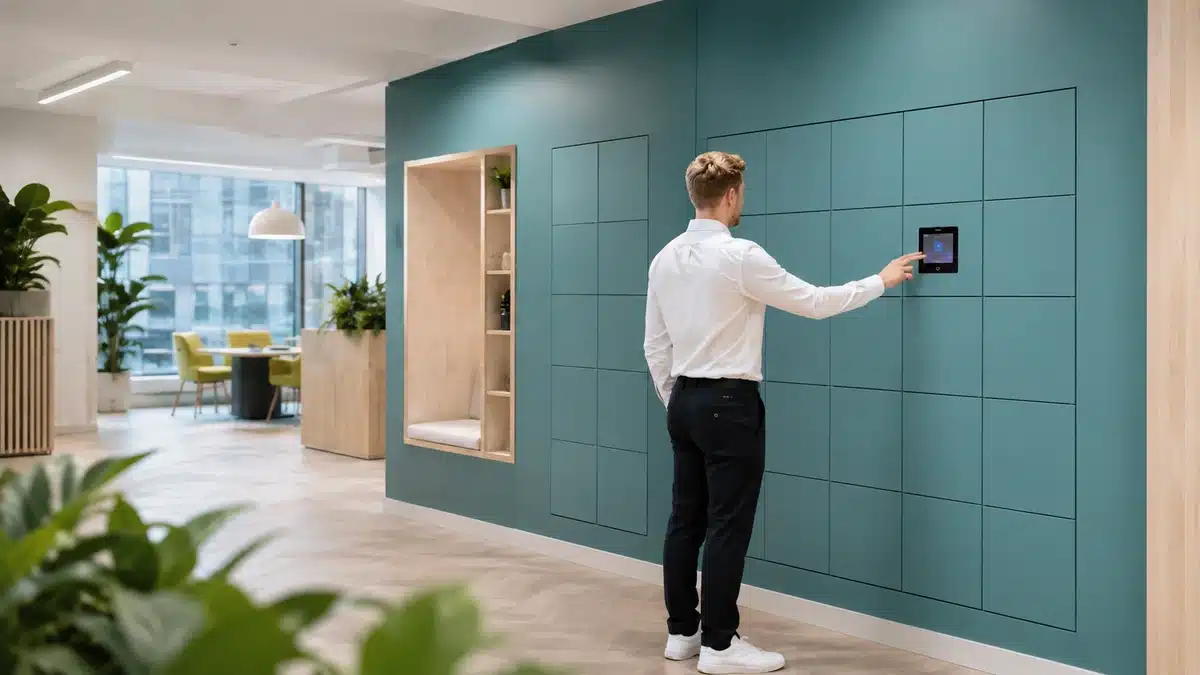
Skyscanner deployed Vpod Vflex smart lockers across its offices to support hybrid workplace operations and flexible employee storage.
As a result, the deployment spans 200+ lockers across multiple floors and locations, enabling day-use storage, IT asset returns, and visitor storage within a single centrally managed system.
The smart locker platform enables remote locker management across multiple offices, reducing administrative workload for workplace teams while supporting mobile employees and visitors with consistent storage access.

Paradiso — High-Volume Live Venue Deployment – Event Storage Solutions
Paradiso, a leading live music venue in the Netherlands, deployed 993 CrowdStor smart lockers to replace traditional cloakroom services and manage guest belongings during concerts and events.
The system has been used over 380,000 times and reduced post-event exit times from 60 minutes to just 15 minutes, dramatically improving guest flow and venue efficiency. The deployment also delivered 18× return on investment while creating new revenue opportunities from self-service locker usage.
Ziggo Dome — Large-Scale Arena Deployment – Event Storage Solutions
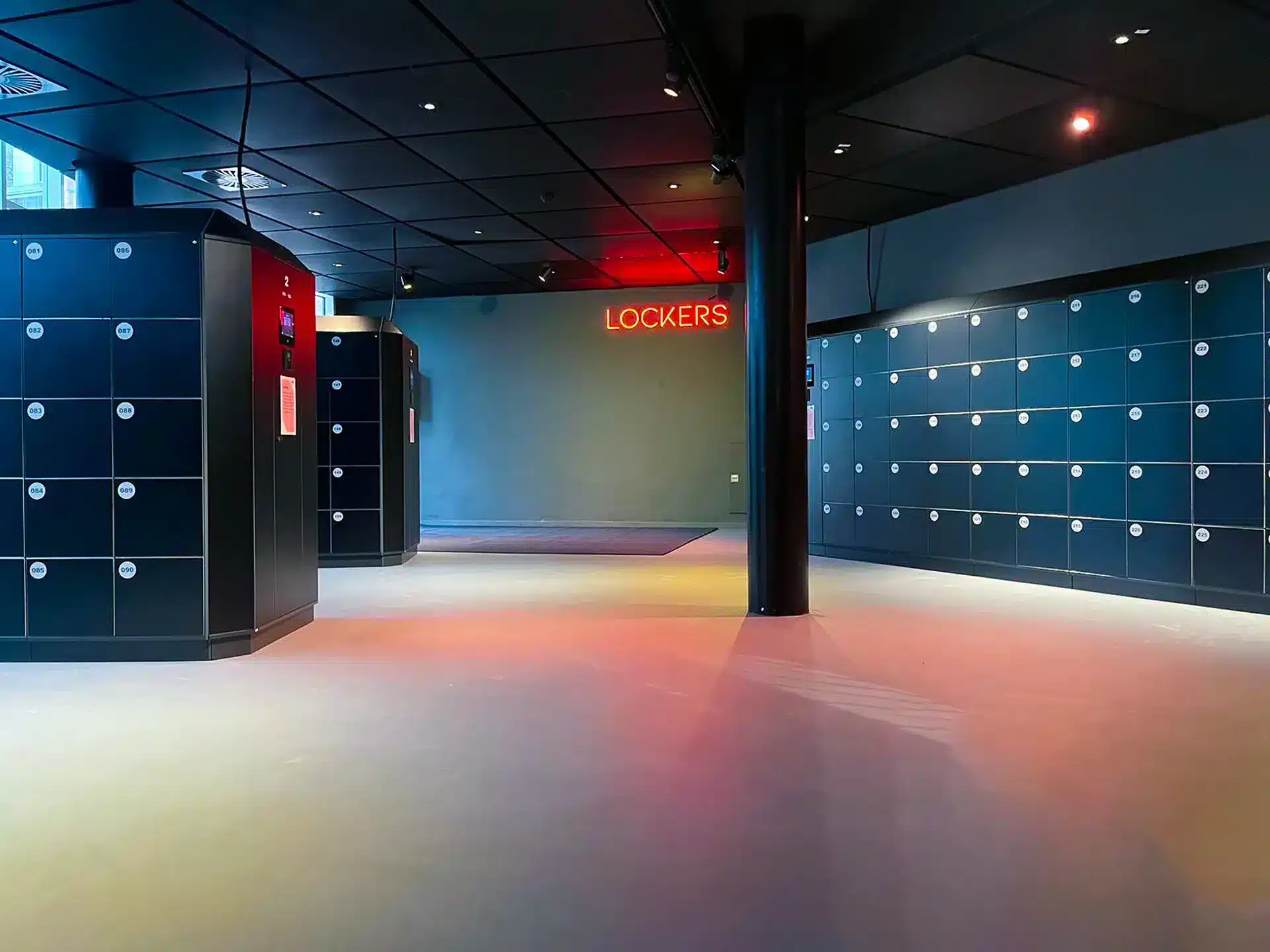
Ziggo Dome, one of Europe’s largest live music arenas, deployed 4,608 CrowdStor smart lockers to modernise visitor storage and remove manual cloakroom operations.
The venue welcomes 1.2 million visitors annually and hosts events with up to 17,000 attendees. Following the deployment, post-concert exit times were reduced by 75%, improving crowd movement and guest experience during large-scale events.
Smart Locker Solutions for Key Roles
