


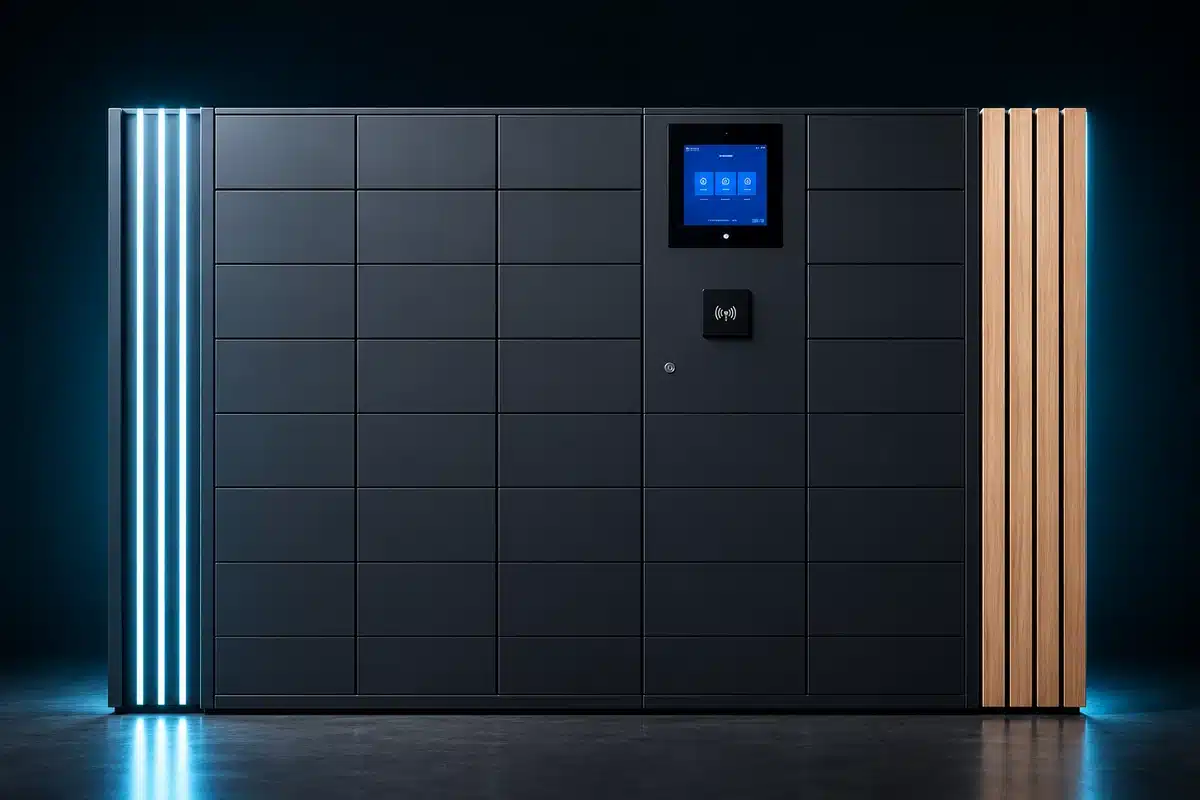





What Are Collection Staffing Costs?
Collection staffing costs include all labour required to:
- Locate items
- Verify orders or ownership
- Retrieve and hand over items
- Manage queues and customer interactions
This applies across:
- Click & collect retail
- Parcel collection points
- Event merchandise pickup
- Workplace and office storage
- Transport hubs
Why Staffing Costs Increase at Scale
1. Labour Scales Directly With Demand
Manual collection systems require:
- One staff member per interaction
- Sequential handling of customers
As demand increases:
- More staff are required
- More shifts are added
- Costs increase linearly
More collections = more people = higher cost
2. Peak Demand Forces Overstaffing
Collection demand is highly concentrated:
- Pre-event surges
- Peak retail hours
- End-of-day collection spikes
To manage this, organisations must:
- Staff for peak demand
- Maintain excess capacity
This leads to:
- Idle staff during off-peak times
- Inefficient labour utilisation
3. Queues Increase Labour Pressure
As queues grow:
- Staff work faster under pressure
- Errors increase
- Additional staff are deployed to manage flow
This creates a cycle:
More demand → more queues → more staff → higher cost
4. Retrieval Time Drives Cost Per Transaction
Each collection requires:
- Searching for items
- Verifying details
- Completing handover
If retrieval takes longer:
- Fewer transactions per hour
- Higher cost per item
Staff Become the Bottleneck
In manual systems:
- Throughput is limited by staff capacity
- Speed depends on individual performance
This creates:
- Inconsistent service levels
- Limited scalability
- Operational fragility
6. Error Handling Adds Hidden Costs
Manual collection leads to:
- Misplaced items
- Incorrect handovers
- Customer disputes
This requires:
- Investigation time
- Additional staff involvement
- Compensation handling

The Hidden Cost Multipliers
Cost Per Collection Increases
Management Overhead Expands
Time Becomes a Cost Driver
Revenue Opportunity Loss
Why Traditional Cost Reduction Strategies Fail
Hire More Staff
- Directly increases cost
- Does not improve efficiency
Improve Training
- Marginal gains
- Does not reduce labour dependency
Optimise Processes
- Small improvements
- Does not change cost structure
Expand Collection Areas
- Increases space cost
- Does not improve throughput
The Core Problem: Labour-Dependent Systems Don’t Scale
The Scalable Alternative: Automated Self-Service Collection
Collection systems are built on:
- Sequential processing
- Human interaction
- Fixed capacity per staff member
At scale:
Labour becomes both the biggest cost and the biggest constraint.
To control costs, collection must move from:
- Staff-led → system-led
- Sequential → parallel
- Labour-dependent → automated
Smart lockers transform the cost model entirely.
Eliminate staff from the transaction
- No handover required
- No queue management
click & collect lockers
Enable parallel collection
- Multiple users collect simultaneously
- No throughput bottleneck
Reduce cost per transaction
- More volume handled without more staff
- Lower operational cost
Improve efficiency at peak demand
- No need to over-staff
- System scales automatically
Provide full tracking and control
- Automated audit trail
- Reduced error and loss
automated self-service collection
smart locker collection systems
Real Financial Impact
With automated collection systems:
- Labour costs reduce significantly
- Cost per collection decreases
- Throughput increases
- Staffing requirements stabilise
- ROI becomes predictable
See: /solutions/parcel-lockers/
Compare: /manual-security-handling-vs-automated-storage-systems/
Calculate ROI: /roi-calculator/
The Bottom Line
Collection staffing costs don’t rise because of poor management.
They rise because:
The system depends on labour to scale.
At scale:
- Costs increase
- Efficiency decreases
- Complexity grows
The solution is not to reduce staff.
It’s to remove labour from the transaction entirely.
Automated Click n Collect Parcel Lockers
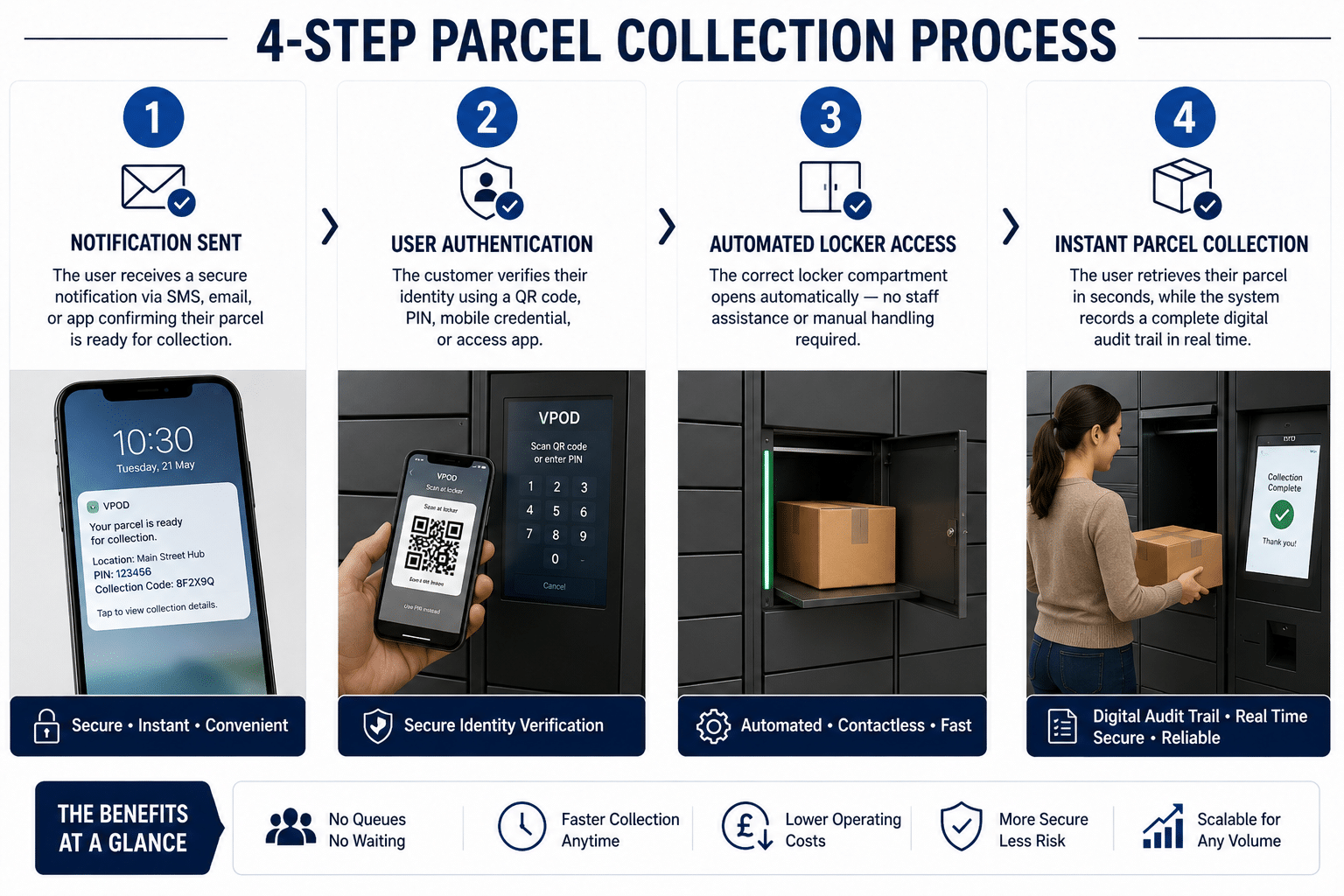
Automated Retail "Click n Collect" Lockers
Faster Customer Collection
Customers can collect orders in seconds without waiting in queues or relying on staff assistance. Self-service lockers provide a fast, frictionless pickup experience — especially during peak retail periods.
Reduced Staffing Costs
Automated lockers remove manual handovers and reduce the need for staff-led collection processes. Retailers can handle higher order volumes without increasing labour costs or expanding collection counters.
Improved Operational Efficiency
Click & collect lockers streamline order management, reduce congestion in-store, and increase throughput. Orders are securely stored, automatically tracked, and available for collection 24/7.
Compare Staffed Retail Collection Services V Smart Click N Collect Lockers




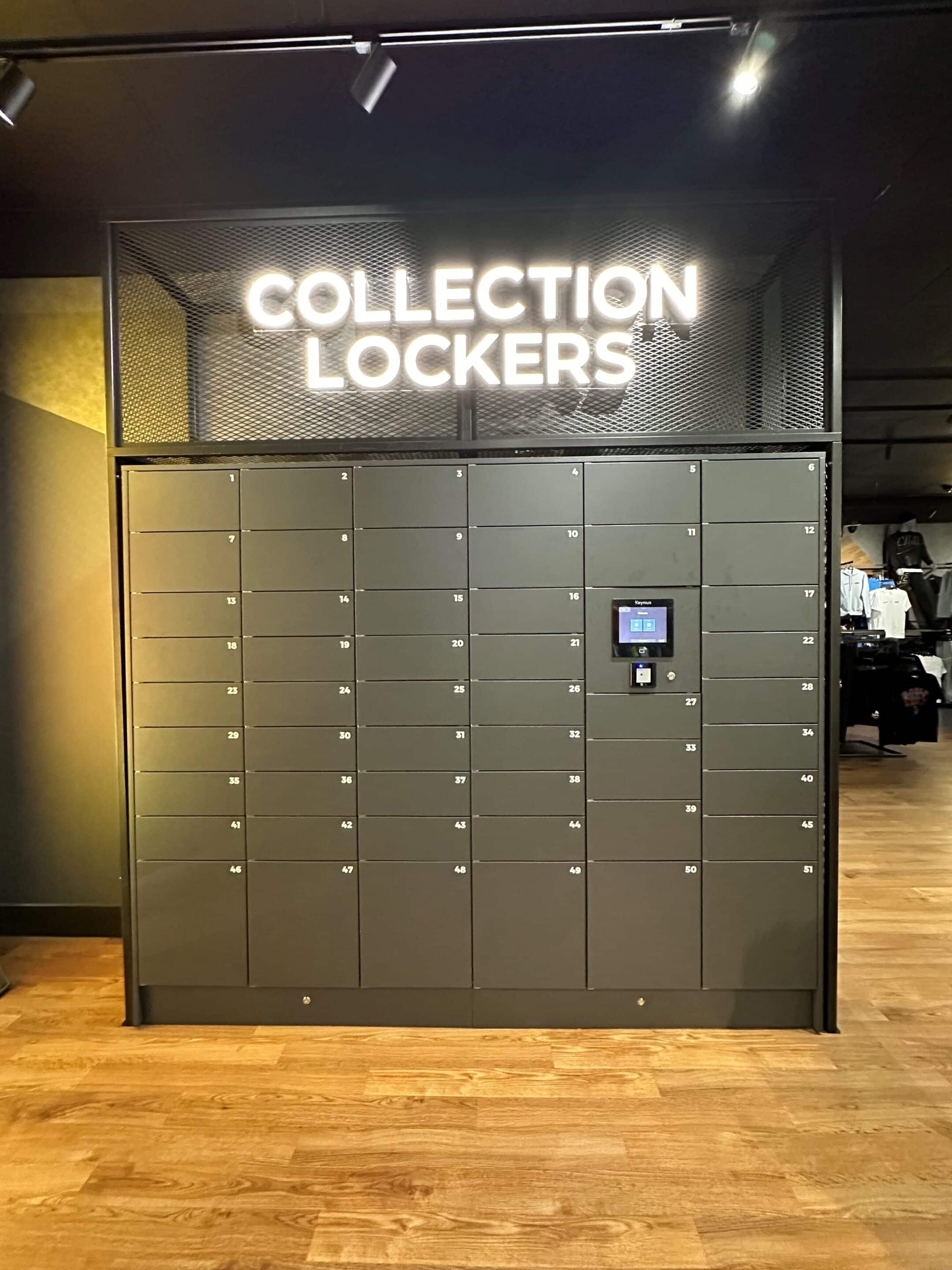
Proven in High-Turnover Event Environments
Leading Footwear Retailer
- Increased Revenue from Lockers
- Reduced Queuing and Increased Customer Experience
- Reduce staff Pressure and costs
- Reduced Risk
Who This Is For
Event Operations Director / Finance Director
Operations Director
Why They’re Most Impacted
They own:
- Throughput
- Staffing efficiency
- Queue performance
- Operational cost
Collection systems directly affect whether operations run smoothly or break under peak demand.
Core Pain Points
- Labour costs escalating during peak periods
- Queue congestion damaging flow
- Overstaffing to manage spikes
- Inconsistent collection speed
- Operational fragility during high-volume periods
Why we think it will help you
- Cost per transaction
- Throughput per hour
- Queue reduction
- Staff utilisation
- Scalability without adding labour
Why This Problem Matters to Them
Manual collection systems force operations teams into a constant trade-off:
- More demand = more staff = higher cost
- At scale, labour becomes the operational bottleneck.
Finance Director / Commercial Director
Why They’re Most Impacted
Impact Areas:
- Labour spend
- Operational efficiency
- Margin protection
- ROI predictability
Collection staffing costs directly erode profitability as volume increases.
Core Pain Points
- Rising labour costs with growth
- Inefficient staffing utilisation
- High cost per collection
- Increasing management overhead
- Unpredictable peak-demand staffing costs
Why we think you’ll be interested
- Reducing operating costs
- Improving labour efficiency
- Predictable scaling
- Lower cost per transaction
- ROI from automation
What you will achieve
Manual collection systems scale linearly:
More transactions require proportionally more labour
That creates a cost model that becomes less efficient as volume grows.
For finance leaders, the issue is not just staffing.
It’s that:
Labour-dependent systems fundamentally limit scalability and profitability.