








What Is Manual Asset Logging?
Manual asset logging refers to tracking assets using:
- Paper logs
- Spreadsheets
- Manual data entry systems
- Basic check-in/check-out processes
It is used to record:
- Who has an asset
- Where it is stored
- When it was accessed
- When it is returned
Common environments include:
- Workplaces and offices
- IT asset management
- Equipment and tool tracking
- Parcel and delivery handling
- Facilities and operations
Why Manual Logging Fails at Scale
1. Logging Relies on Human Behaviour
Manual systems depend on:
- Staff remembering to log activity
- Accurate data entry
- Consistent process adherence
At scale:
- Steps are skipped
- Entries are delayed
- Data is incomplete
If logging is optional, it will not happen consistently.
Compare staff cost vs locker automation ROI
Why Asset Audit Trails Break at Scale (And Why Manual Tracking Fails)
2. Volume overwhelms accuracy
As asset volume increases:
- More transactions occur
- More entries are required
- More updates are needed
This leads to:
- Increased error rates
- Missing records
- Data inconsistencies
Why Asset Management Costs Spiral at Scale
3. No Real-Time Updates
Manual systems are rarely updated instantly.
This creates:
- Time gaps between action and record
- Outdated information
- Lack of real-time visibility
Explore Asset Lockers Solutions
Compare equipment rental desk vs locker-based systems
Compare capex vs opex locker model
4. Data Becomes Unreliable Over Time
As errors accumulate:
- Records no longer reflect reality
- Asset location becomes uncertain
- Trust in the system declines
When data is unreliable, the system is effectively broken.
Guide: Why Asset Audit Trails Break at Scale and how to fix it
5. No Enforced Accountability
Manual logging does not enforce:
- Who must log activity
- When it must be recorded
- Whether it is accurate
This leads to:
- Untracked asset movement
- No clear ownership
- Difficulty assigning responsibility
Automated asset lockers
can help create controlled, traceable issue and return workflows without relying on manual logging.
Why Equipment Loss Breaks Workplaces at Scale
6. Auditing Becomes Difficult and Time-Consuming
Without accurate logs:
- Audits require manual verification
- Discrepancies are common
- Time is spent reconciling data

The Hidden Impact of Manual Logging Failure
Asset Tracking Errors Increase
Operational Efficiency Reduces
Visibility and Control Decline
Data Quality Becomes Unreliable
Manual Asset Logging: The Key Issues
The Core Problem: Lack of Accurate Asset Records
Manual asset logging rarely fails because of a single mistake. It happens when organisations rely on spreadsheets, paper logs, and manual data entry processes that become difficult to maintain as asset volumes increase.
1. Asset Tracking Becomes More Difficult
As asset activity increases, maintaining accurate asset records becomes more challenging. Missing updates and delayed entries reduce asset visibility and make asset location tracking less reliable.
Explore:
2. Asset Accountability Becomes Unclear
Without enforced asset logging, it becomes difficult to verify who accessed, moved, or returned an asset. This reduces accountability and creates gaps in asset tracking records.
Impact: Increased risk of untracked asset movement and reduced operational control.
Automated Asset Logging Improves Control
Automated asset management systems provide real-time asset tracking, digital audit trails, and controlled access. This improves asset visibility, strengthens compliance, and delivers more accurate asset records across operations.
Optimise space with smart lockers
Why Traditional Asset Tracking Systems Fail
Human-Dependent Processes Create Errors
Manual asset logging relies on staff remembering to record activity, update asset records, and follow tracking procedures consistently. As asset volumes increase, errors become more common and asset data becomes less reliable.
Common issues include:
- Missing asset records
- Delayed data entry
- Inaccurate asset tracking
- Reduced accountability
Limited Visibility Reduces Control
Without real-time asset tracking, organisations can struggle to maintain visibility over asset locations, usage, and availability. As records become outdated, asset management becomes more difficult.
Challenges include:
- Uncertain asset locations
- Outdated asset records
- Reduced asset visibility
- Increased risk of misplacement
Automate asset handling with lockers
Growing Asset Volumes Increase Operational Pressure
As more assets are tracked across teams and locations, maintaining accurate records requires additional time and administrative effort. Manual processes become harder to manage at scale.
This results in:
- Increased administrative workload
- More tracking inconsistencies
- Slower asset management processes
- Reduced operational efficiency
Optimise space with smart lockers
Compare reception parcel handling vs lockers
How Automated Asset Management Systems Improve Control
Smart locker asset management systems provide automated logging, real-time asset tracking, and controlled access to improve accuracy and accountability.
Benefits include:
- Automated asset logging
- Real-time asset visibility
- Digital audit trails
- Controlled asset access
- Improved compliance
- Greater operational control
By replacing manual asset logging with automated asset management systems, organisations can improve tracking accuracy, strengthen accountability, and maintain reliable asset records at scale.
Smart workplace lockers for hot-desking environments
Compare staff cost vs locker automation ROI
Automated asset lockers for employee onboarding
Explore workplace locker solutions
Smart Asset Tracking Process
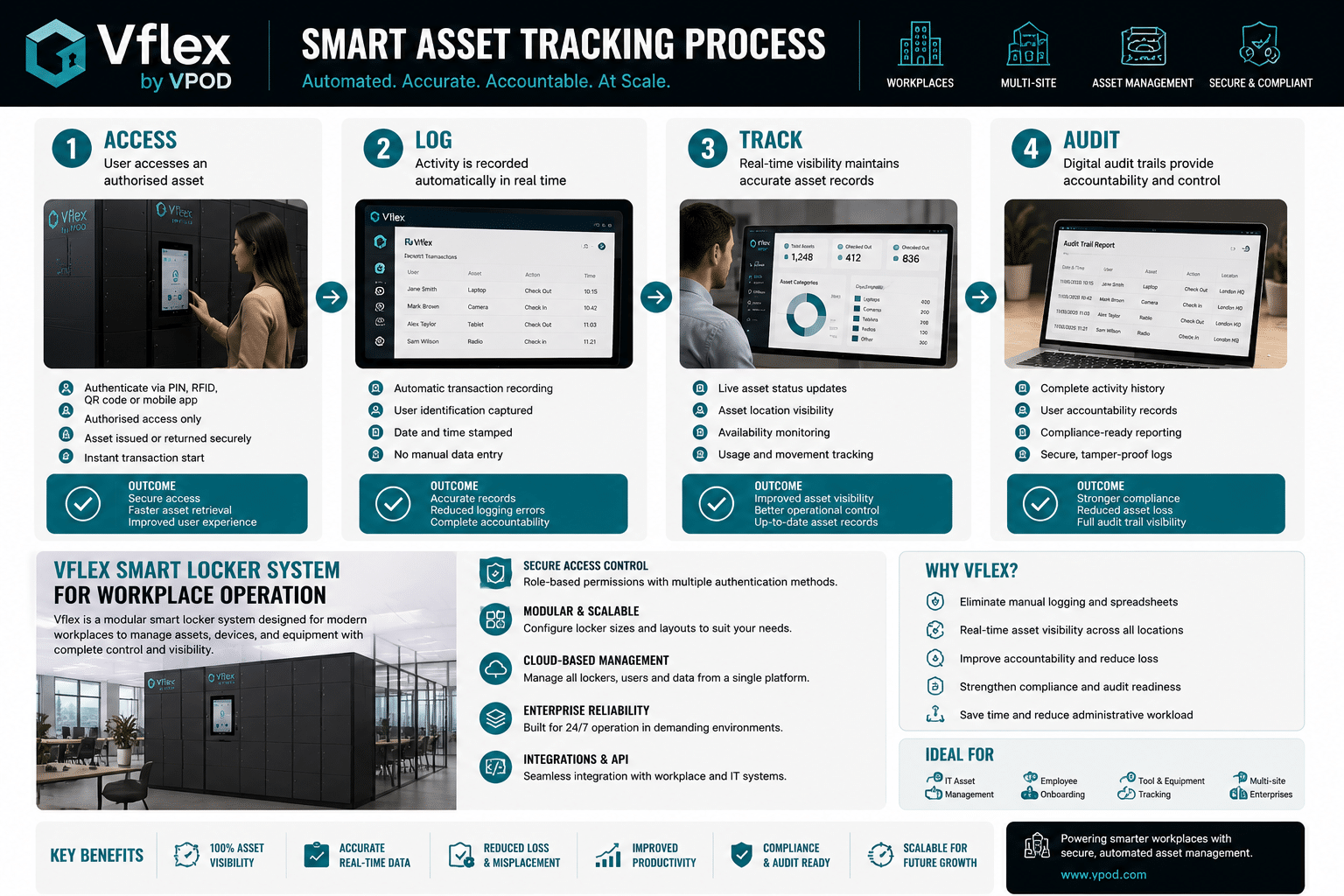
Traditional Asset Logging vs Automated Asset Management





Case Study: Mars & VPOD
Mars - Improving Asset Visibility Across Multiple Sites
Mars modernised workplace operations across four UK locations using smart locker technology and automated access management systems.
By replacing manual processes with controlled, system-enforced workflows, Mars improved operational visibility, strengthened compliance, and created a more scalable approach to managing assets and workplace storage.
Results Included:
- Reduced reliance on manual logging processes
- Improved asset visibility and operational control
- Stronger compliance and accountability
- Centralised management across multiple locations
- Scalable infrastructure for future growth
- More reliable workplace operations
Who Is Affected by Manual Asset Logging?
Facilities & Operations Manager & Employees & Asset Users
Facilities & Operations Managers
Key Challenges
- Limited visibility across asset locations
- Inaccurate or incomplete asset records
- Difficulty maintaining asset accountability
- Managing audits and compliance requirements
- Tracking assets across multiple locations
Operational Pain Points
- Time spent locating assets
- Missing or outdated records
- Reduced operational visibility
- Increased risk of asset loss
- Difficulty verifying asset activity