


What Is Hotel Bag Storage Inefficiency?
Hotel bag storage inefficiency occurs when luggage handling systems cannot process, store, track, and retrieve guest bags quickly and reliably.
As guest volume increases, manual luggage storage processes become harder to manage efficiently, especially during peak check-in and check-out periods.
This typically results in:
- Queues at reception
- Delays in storing or retrieving luggage
- Disorganised luggage storage areas
- Increased staff workload
- Slower check-in and check-out operations
- Lost or misplaced luggage risks
- Poor guest experience and frustration
- Operational bottlenecks during peak demand
- Reduced front-desk efficiency
- Difficulty scaling luggage operations efficiently
Traditional hotel luggage rooms often rely on manual handling and unstructured storage, making it difficult for hotels to maintain fast, secure, and efficient luggage management at scale.
Related Links
Why Bag Storage Fails at Scale
1. Manual Handling Limits Throughput
Most hotels rely on:
- Staff receiving bags
- Tagging items
- Moving luggage to storage
- Retrieving items on request
This creates a linear system:
One staff member = one bag at a time
At scale, this becomes a constraint.
Manual Luggage Storage Vs Self-Service Lockers
2. Peak Check-In and Check-Out Create Surges
Hotels experience intense peaks:
- Morning check-outs
- Afternoon check-ins
- Group arrivals
During these periods:
- Dozens of bags arrive simultaneously
- Staff are overwhelmed
- Queues form quickly
Why Luggage Storage Problems Break at Peak Demand in Hotels
3. Double Handling Creates Delays
Each bag requires:
- Drop-off handling
- Storage placement
- Retrieval handling
This creates multiple friction points:
- At reception
- In storage areas
- During collection
4. Storage Areas Become Disorganised
Luggage is often stored in:
- Back rooms
- Luggage storage areas
- Unstructured spaces
At scale, this leads to:
- Bags stacked without order
- Difficult retrieval
- Increased search time
The fuller the room, the slower the operation.
Operations Directors- Luggage Lockers
5. Staff Become the Bottleneck
As volume increases:
- Staff must process more bags
- Retrieval times increase
- Errors become more likely
This creates a cycle:
More guests → more bags → slower service → longer queues
Compare staff cost vs locker automation ROI
Manual Luggage Storage Vs Self-Service Lockers
6. No Real-Time Visibility
Most systems lack:
- Tracking of bag location
- Visibility of storage capacity
- Data on usage
This results in:
-
- Time spent searching
- Uncertainty for guests
- Operational inefficiency

The Hidden Impact of Bag Storage Inefficiency
Guest Experience Breakdown
Increased Operational Costs
Reception Congestion and Delays
Lost Time and Reduced Productivity
Why Traditional Hotel Luggage Rooms Fail
Traditional luggage rooms were not designed for high-volume hotel operations.
As guest numbers increase, hotels struggle with:
- overcrowded storage areas
- slow luggage retrieval
- limited accountability
- staff dependency
- poor operational visibility
- increasing guest delays
Without structured storage and tracking, luggage handling becomes difficult to scale efficiently.
Why Hotels Are Moving to Self-Service Luggage Storage
Hotels are adopting self-service luggage storage to reduce reception pressure, improve guest flow, and scale operations more efficiently.
Self-service systems help hotels:
- reduce manual luggage handling
- improve operational efficiency
- minimise queues
- improve guest convenience
- reduce staffing pressure
Excellent for:
- self-service luggage storage hotels
- automated luggage storage
- hotel luggage lockers
Smart Luggage Locker Solutions for:
-
- Hotels
- Aparthotels
- Resorts
- Serviced apartments
- Hostels
- Student accommodation
- Event venues
- Transport hubs
Explore
The Scalable Solution: Self-Service, Structured Storage
Why Hotels Lose Control of Guest Luggage
Hotel bag storage is still built around manual, staff-dependent workflows that struggle to handle high luggage volumes efficiently.
Most hotels rely on reception teams to receive bags, organise storage, retrieve luggage manually, and manage guest collections during busy operational periods.
At small scale, this works.
At large scale, it creates operational bottlenecks.
Hotel luggage storage is often built around:
- Sequential luggage processing
- Staff dependency
- Unstructured storage areas
- Manual retrieval workflows
- Limited operational visibility
At scale:
- Queues increase rapidly
- Retrieval processes slow down
- Storage areas become disorganised
- Staff become overwhelmed
- Guest friction increases
- Operational efficiency declines
The Scalable Solution: Self-Service, Structured Storage
To eliminate operational bottlenecks and improve guest flow, hotels must move from manual luggage handling to automated, self-service storage systems.
This means moving from:
- Manual workflows → Automated systems
- Staff-managed handling → Guest self-service access
- Unstructured storage → Defined luggage compartments
- Sequential processing → Parallel guest processing
- Limited visibility → Real-time operational tracking
Smart luggage locker systems help hotels create faster, more scalable luggage operations while reducing pressure on reception and concierge teams.
Related Links
Smart Locker Systems for Hotels Improve Bag Storage Efficiency
Smart lockers transform hotel luggage storage into a scalable, organised, and efficient system designed for high-volume guest operations.
Self-Service Storage
Guests store luggage independently without relying on front desk staff.
This helps hotels:
- Reduce reception queues
- Minimise manual luggage handling
- Improve guest convenience
- Speed up luggage drop-off processes
Compare manual luggage storage vs self-service lockers
Parallel Guest Processing
Multiple guests can store and retrieve luggage simultaneously.
Unlike traditional luggage rooms, operations are no longer limited by staff availability or one-at-a-time processing.
This reduces:
- Queue dependency
- Reception congestion
- Delays during peak check-in/check-out periods
Structured Storage
Each guest bag is stored inside a secure, defined compartment.
This eliminates:
- Disorganised storage rooms
- Bags stacked without structure
- Time spent searching for luggage
Structured storage improves:
- Retrieval speed
- Storage organisation
- Operational consistency
Instant Retrieval
Guests retrieve luggage directly using secure self-service access.
There is:
- No waiting for staff
- No searching through luggage rooms
- No manual collection process
This creates a faster and smoother guest experience.
Real-Time Tracking
Hotels gain live visibility across luggage storage activity, locker usage, and collection status.
Operational teams benefit from:
- Better storage oversight
- Improved operational visibility
- Reduced uncertainty during peak periods
- Better management of luggage capacity and usage
Automated Workflow Management
Luggage handling becomes system-controlled instead of manually coordinated by reception teams.
This improves:
- Workflow consistency
- Operational scalability
- Process efficiency
- Front desk productivity
Automated luggage locker systems
Real Operational Impact
With smart luggage locker systems:
- Queue times are reduced or eliminated
- Reception congestion decreases
- Staff workload is reduced
- Retrieval delays are minimised
- Guest experience improves
- Storage becomes organised and efficient
- Operations scale more effectively during peak occupancy periods
- Hotels reduce reliance on labour-intensive luggage handling processes
Related Links
Hotel Bag Storage Inefficiency Reduction Process
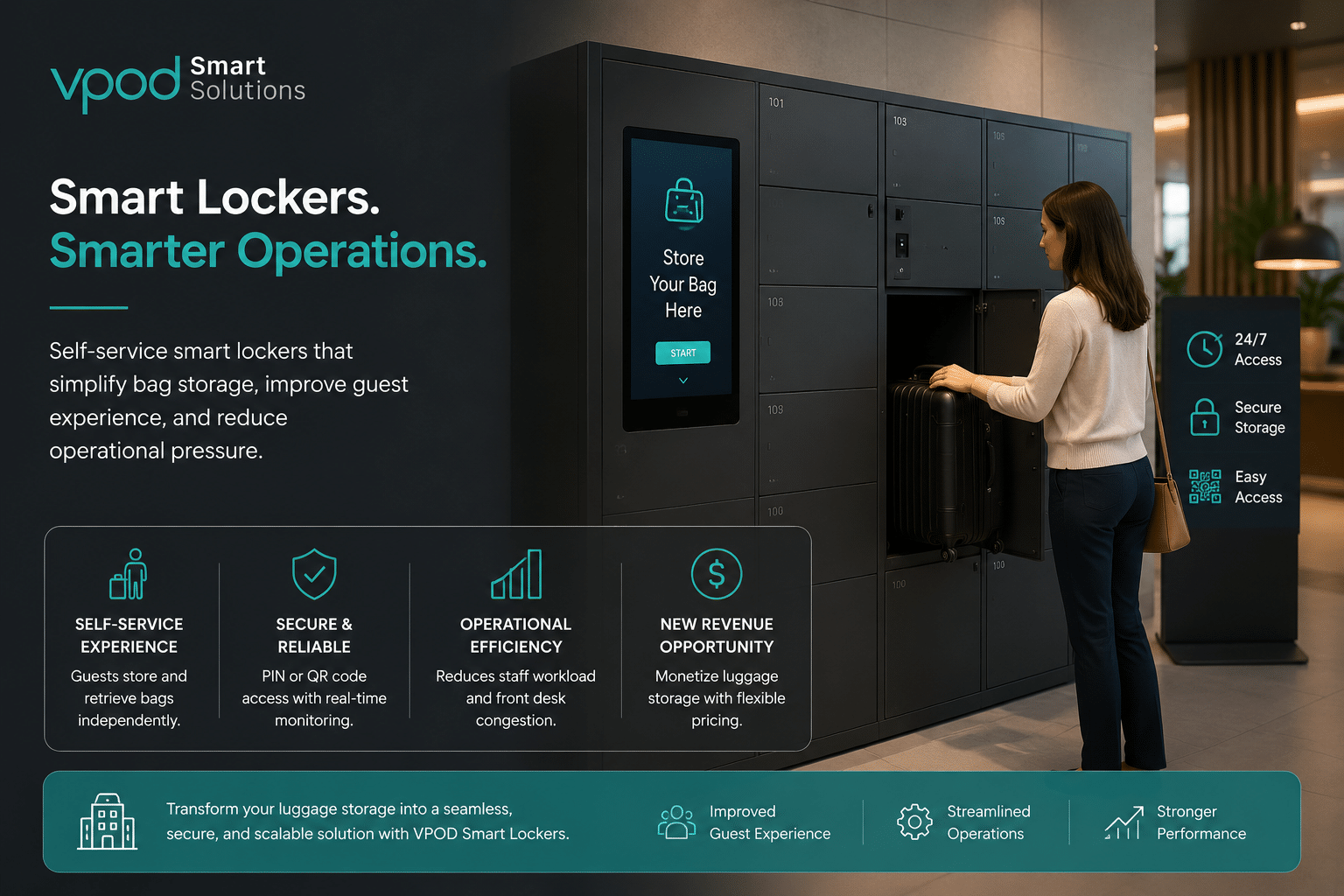
Traditional Hotel Bag Storage vs Vpod Smart Locker Solutions




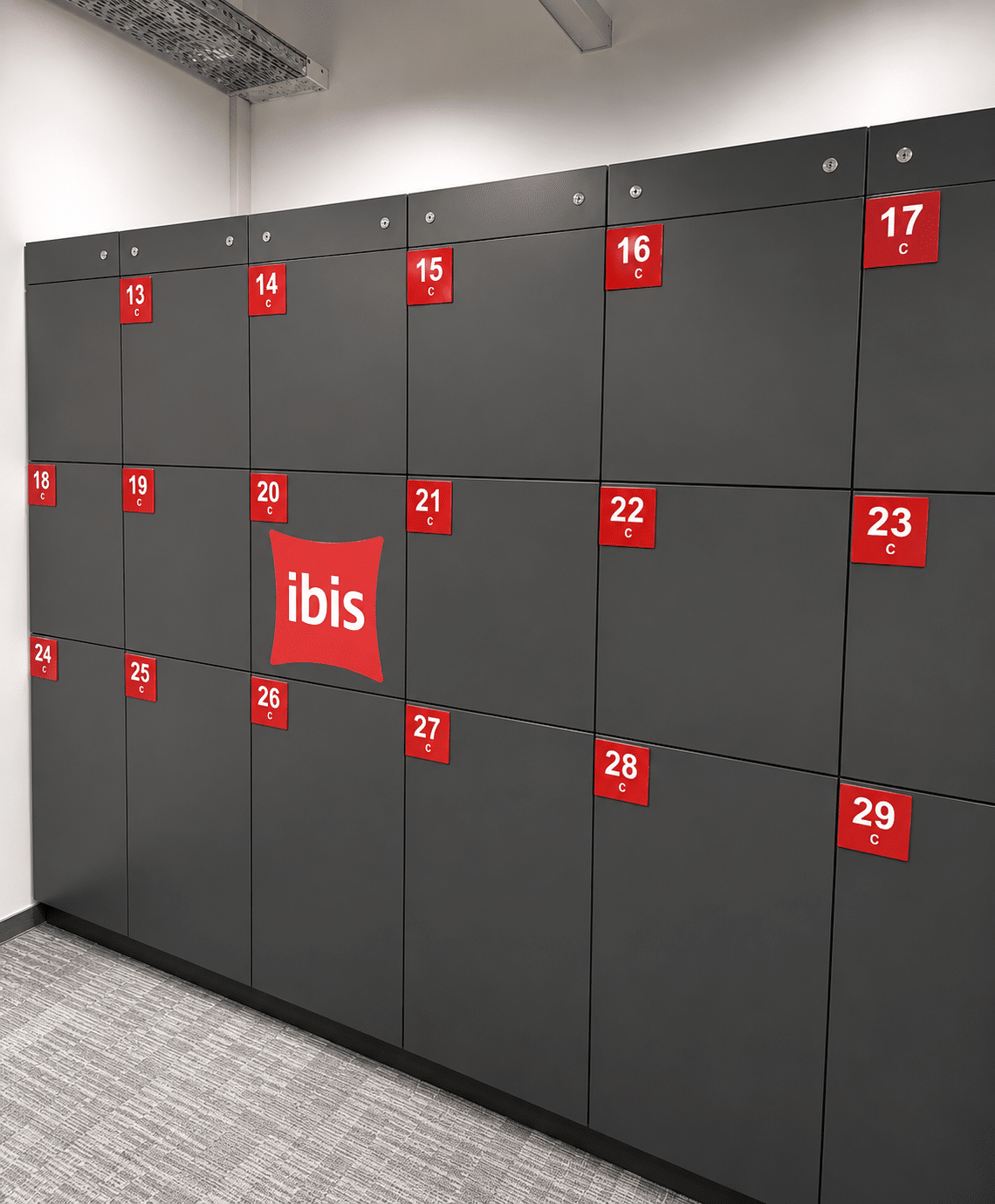
Case Study Result: Ibis Geneva
Eliminating Hotel Bag Storage Bottlenecks with Smart Lockers
Ibis Geneva implemented VPOD self-service smart luggage lockers to reduce reception congestion, improve guest flow, and eliminate the operational pressure caused by manual luggage handling.
As a high-footfall urban hotel, the property faced ongoing challenges managing early arrivals and late departures. Traditional luggage storage created queues, increased staff workload, and slowed front-desk operations during peak check-in and check-out periods.
By replacing manual luggage rooms with automated self-service lockers, guests could securely store and retrieve luggage independently without staff involvement.
Operational Results
- Reduced reception queues during peak periods
- Lower staff involvement in luggage handling
- Improved guest flow and front-desk efficiency
- Secure self-service luggage storage for early arrivals and late departures
- 380,000+ guest uses annually
- New revenue stream through paid luggage storage
- Reported 6× ROI within 12 months following implementation
Hotel Bag Storage Inefficiency & Operational Flow Management
Hotel Operations Manager / Front Office Manager
Hotel Operations Manager
Areas of Responsibility
- Hotel luggage storage operations
- Front desk and guest flow efficiency
- Peak check-in and check-out management
- Operational workflow optimisation
- Reception congestion reduction
- Guest experience and service delivery
- Luggage storage process management
- Front-of-house operational efficiency
Areas of Concern
- Increasing reception queues
- Delays in luggage retrieval
- Staff overwhelmed during peak periods
- Disorganised luggage storage areas
- Slow guest processing times
- Limited operational visibility
- Operational bottlenecks during check-in/check-out
- Rising labour demands for luggage handling
Pain Points
- Staff spending too much time managing bags
- Queues forming at reception during busy periods
- Time wasted searching for luggage
- Manual handling slowing operations
- Poor luggage organisation under high volume
- Delayed guest collection experience
- Difficulty scaling luggage operations efficiently
- Reduced front desk productivity