







Why Asset Retrieval Delays Break at Scale
Asset storage is only valuable if assets can be retrieved quickly.
At small scale, that seems easy.
A user needs an item. Someone finds it. The item is handed over.
At large scale, that process breaks down.
Because retrieval speed depends on control, visibility, and system design.
And when those are missing:
- Staff waste time searching
- Users wait longer
- Operations slow down
- Productivity drops
At scale, retrieval delays are not a minor inconvenience. They are a structural efficiency problem.
1. Assets Are Not Stored in Defined Locations
In many organisations, assets are placed in:
- Cupboards
- Back rooms
- Shared storage areas
- Shelves without clear structure
At scale, this leads to:
- Inconsistent storage habits
- Items being moved without record
- Time wasted locating assets
If an asset does not have a fixed location, retrieval will always slow down.
2. Manual Systems Depend on Staff Knowledge
Retrieval often relies on:
- Staff memory
- Informal team knowledge
- Manual sign-out systems
This works poorly when:
- Teams grow
- Shifts change
- Multiple users handle assets
The result is predictable:
- “It should be here”
- “Someone moved it”
- “We need to check another room”
3. Volume Increases Search Time
As the number of stored items rises:
- Storage areas become denser
- Similar items are harder to distinguish
- Retrieval becomes slower
What takes seconds at low volume can take minutes at scale.
The more assets you store without structure, the longer every retrieval takes.
4. Shared Equipment Creates Ambiguity
Where assets are shared across teams:
- No one is fully accountable
- Items are returned inconsistently
- Availability becomes unclear
This leads to:
- Users waiting for assets that are “somewhere”
- Duplicate searches
- Repeated delays throughout the day
5. Manual Logging Does Not Reflect Reality
Many organisations use:
- Spreadsheets
- Paper logs
- Check-in/check-out forms
At scale, these fail because:
- Logs are not updated in real time
- Returns are not recorded accurately
- Items are moved without logging
This means the system says one thing, while reality says another.
6. Peak Demand Exposes Weaknesses
Retrieval delays become most visible during:
- Shift changes
- Busy operational windows
- Team handovers
- High-demand equipment periods
At these moments:
- Multiple users need assets at once
- Search delays compound
- Work is held up waiting for access

The Hidden Impact of Asset Retrieval Delays
Productivity Loss
Higher Labour Costs
Operational Friction
User Frustration
Why Traditional Fixes Don’t Work
Reorganise the Storage Room
- Helps briefly
- Breaks down quickly under real use
Improve Labelling
- Supports identification
- Does not enforce correct return or real-time visibility
Add More Staff
- Increases cost
- Does not solve lack of control
Use Better Spreadsheets
- Improves record format
- Does not fix human inconsistency
The Core Problem: Retrieval Depends on Search, Not System
Asset retrieval delays happen because:
The process depends on people finding items, instead of the system controlling where they are.
At scale:
- Search replaces certainty
- Delay replaces access
- Work slows down
To eliminate retrieval delays, organisations need:
- Defined storage locations
- Real-time tracking
- Controlled access
- Automated logging
Smart lockers transform retrieval into a system-controlled process.
Fixed location per asset
- Every item has a defined compartment
- No ambiguity
Real-time visibility
- Know exactly where the asset is
- Know whether it is available
Controlled access
- Only authorised users retrieve items
- Every transaction is recorded
Instant retrieval
- No searching through cupboards or shelves
- No dependency on staff memory
Automated audit trail
- Full record of access and return
- Improved accountability and planning
Real Operational Impact
With automated asset locker systems:
- Retrieval times reduce significantly
- Staff productivity increases
- Asset availability improves
- Labour spent searching is eliminated
- Asset utilisation becomes measurable
See: /solutions/workplace-smart-lockers/
Compare: /manual-security-handling-vs-automated-storage-systems/
Explore: /integrations/
The Bottom Line
Asset retrieval delays are not caused by careless teams.
They are caused by:
Storage systems that do not provide structure, visibility, or control.
At scale:
- More assets
- More users
- More movement
Without system control, delays are inevitable.
The solution is not faster searching. It is removing the need to search at all.
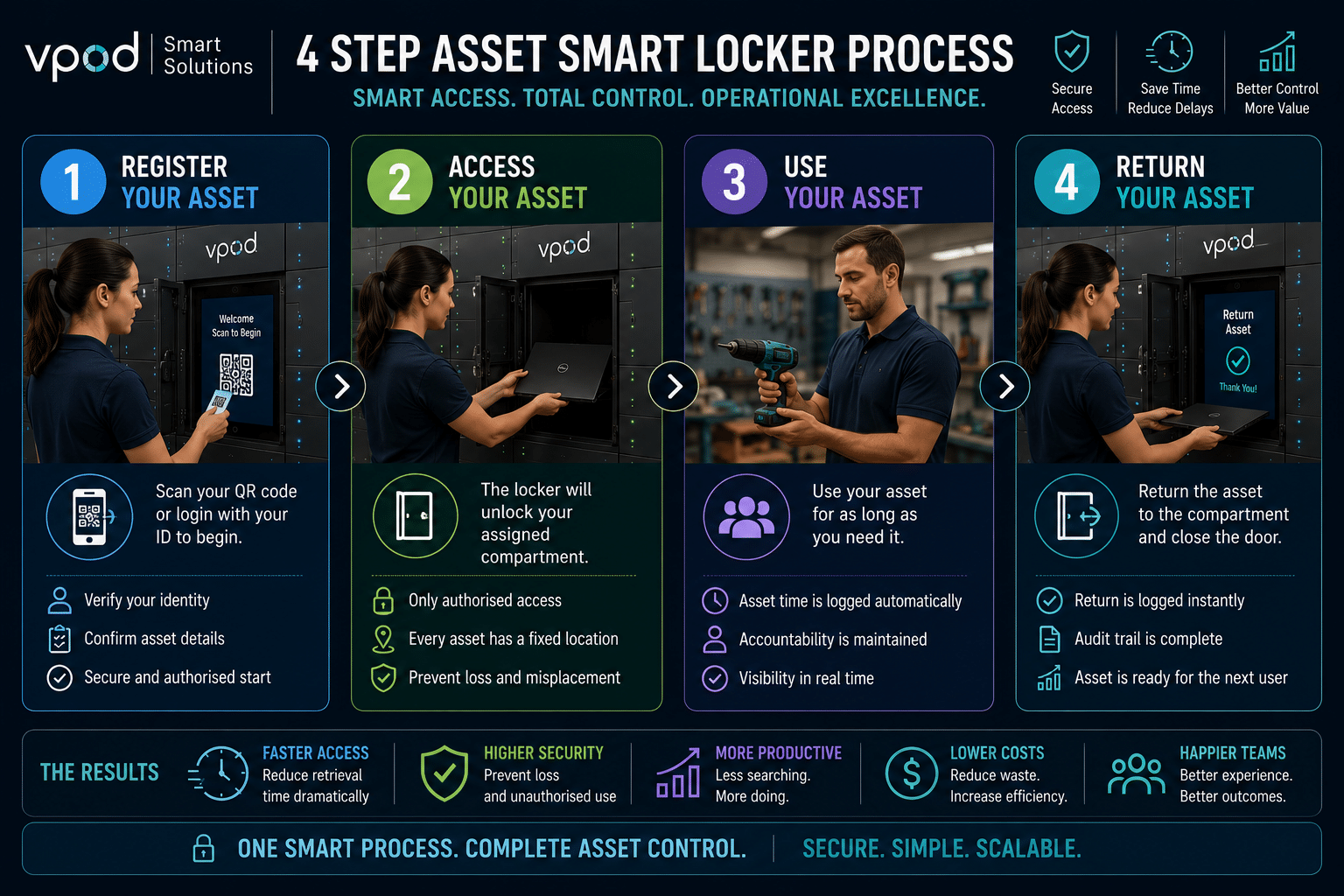
How Smart Locker Asset Management Works
Asset Storage Room vs Smart Asset Locker Systems




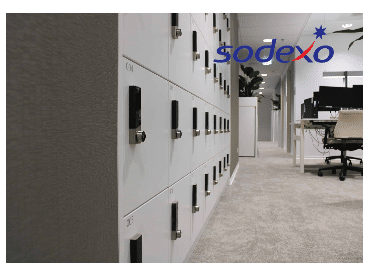
Case Study: Sodexo & VPOD
Sodexo - Streamlining Workplace Deliveries and Reception Operations
Sodexo implemented Vpod smart locker solutions to reduce pressure on reception teams and improve the flow of deliveries across workplace environments. By automating parcel handovers and reducing reliance on manual reception processes, the organisation created a more efficient delivery experience for couriers, visitors, and building occupants.
Results Include:
-
- Reduced reception workload during peak delivery periods
- Faster parcel processing and collection
- Less reliance on manual handovers
- Improved building operational efficiency
- Enhanced occupant experience
- Scalable delivery management infrastructure
Whose Impacted by poor asset retrieval times?
1: Operations Director / Head of Operations / 2: Facilities Manager / Workplace Manager
1: Operations Director / Head of Operations
Key Responsibilities
- Operational efficiency across sites and departments
- Asset availability and utilisation
- Cost control and budget management
- Process standardisation and scalability
- Service performance and productivity improvement
Primary Goals
- Ensure assets are available when needed
- Reduce operational delays and downtime
- Improve workforce productivity
- Eliminate unnecessary asset purchases
- Scale operations without increasing headcount
Key Challenges
- Managing large volumes of shared equipment
- Maintaining visibility across multiple locations
- Preventing equipment shortages
- Balancing cost control with operational demand
- Supporting growth without increasing complexity
Pain Points
- Employees wasting time searching for assets
- Equipment unavailable when required
- Rising costs from loss, duplication, and poor utilisation
- Operational delays caused by missing equipment
- Lack of real-time visibility into asset status
- Difficulty enforcing accountability
2: Facilities Manager / Workplace Manager
Key Responsibilities
- Day-to-day management of workplace assets
- Storage and equipment allocation
- Workplace experience and service delivery
- Asset tracking and compliance
- Managing shared resources and facilities operations
Primary Goals
- Ensure equipment is easy to locate and access
- Reduce administrative workload
- Improve asset accountability
- Maintain organised storage environments
- Deliver a frictionless employee experience
Key Challenges
- Tracking who has what equipment
- Managing asset returns
- Handling growing numbers of shared devices
- Preventing loss and misuse
- Maintaining accurate records and audit trails
Pain Points
- Constant enquiries about missing equipment
- Time spent manually logging and tracking assets
- Lack of visibility over asset locations
- Difficulty proving accountability
- Equipment left in the wrong locations
- Increased workload as asset volumes grow