






What Are Bag Check Delays?
Bag check delays occur when manual inspection of attendee belongings slows down the overall security process.
This typically happens at:
- Stadium security lanes
- Festival entry points
- Arena access gates
- Exhibition and conference entrances
The result:
- Slower screening times
- Long entry queues
- Backlogs outside venues
- Increased pressure on security staff
Why Bag Checks Become a Bottleneck at Scale
1. Manual Inspection Is Time-Intensive
Every bag requires:
- Visual inspection
- Physical search
- Potential secondary checks
Even a quick check adds 10–20 seconds per person.
At scale, that becomes critical:
- 1,000 bags = 3–5+ hours of cumulative processing time
2. Throughput Drops Significantly
Compare typical security lane performance:
| Scenario | Throughput per Lane |
|---|---|
| No bags | 400–600 people/hour |
| With bags | 150–250 people/hour |
Bag checks can reduce security throughput by more than 50%.
3. Small Delays Compound Rapidly
At peak arrival:
- Even slight slowdowns create queues
- Queues increase pressure on staff
- Staff speed decreases under pressure
- Delays accelerate
This creates a compounding effect where queues grow faster than they can be cleared.
4. Variability Slows Everything Down
Not all bags are equal:
- Small handbags vs large backpacks
- Quick checks vs complex inspections
This inconsistency creates:
- Uneven processing times
- Stop-start flow
- Lane inefficiency
5. Secondary Handling Creates More Queues
Bag checks often trigger:
- Additional screening
- Confiscation processes
- Redirection to cloakrooms
This introduces new queues within the system, further slowing throughput.

The Hidden Risk: Bag Checks Create Security Vulnerability
Security Risk - Failure to Protect People
The Real-World Impact of Bag Check Delays - Revenue Loss
Poor Visitor Experience
Increased Operational Costs
Why Traditional Fixes Don’t Work
-
Add More Security Staff
- Limited impact on inspection speed
- High cost
- Difficult to scale
Increase Number of Lanes
- Space constraints
- Still slowed by bag checks
Tighten Bag Policies
- Hard to enforce
- Poor customer experience
Improve Training
-
- Marginal gains
- Does not solve throughput limits
The Core Problem: Bags Reduce Throughput
Ingress delays are not a staffing problem.
Bag checks don’t fail because of poor execution.
They fail because:
They fundamentally reduce the number of people that can be processed per hour.
And at scale, throughput is everything.
The Scalable Solution: Remove Bags from the Security Process
The most effective way to improve security flow is not to speed up bag checks.
It’s to eliminate them from the critical path.
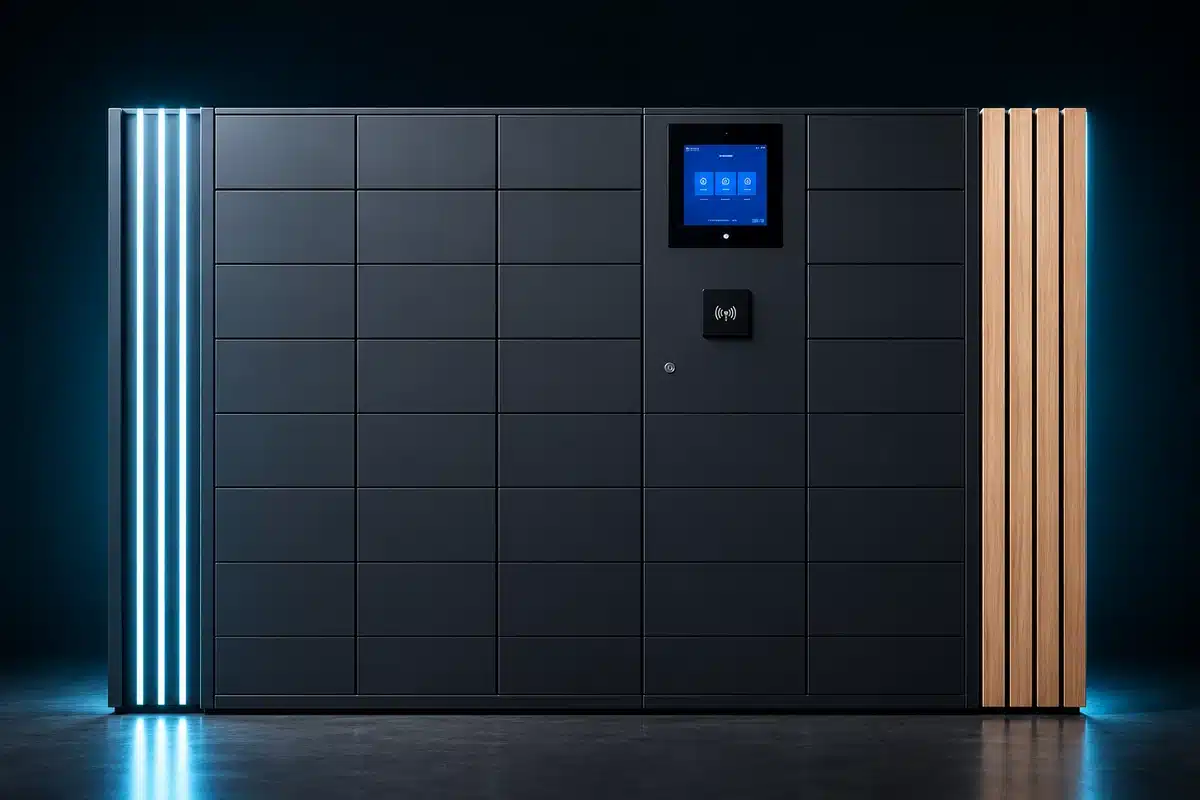
Pre Entry Smart Storage Lockers
Pre-Entry Smart Locker Systems
Smart lockers allow attendees to:
Store bags before reaching security
Enter with minimal or no belongings
This transforms the entire process.
________________________________________
Faster Security Throughput
With fewer bags:
Screening becomes faster
More people processed per lane
Reduced queue buildup
Reduced External Congestion
- Fewer delays outside venues
- Lower crowd density
- Improved safety
Elimination of Cloakroom Queues
- No manual handling
- No tagging systems
- No secondary storage delays
See: /solutions/event-smart-lockers/
Compare: /cloakrooms-vs-lockers-event-security/
Calculate ROI: /roi-calculator/
Operational Impact
When bag checks are reduced or removed:
- Security throughput increases by up to 2–3x
- Queue times drop significantly
- Staff requirements decrease
- Compliance improves
- Visitor experience improves
See: /solutions/event-smart-lockers/
Compare: /bag-searches-vs-pre-entry-locker-storage/
Calculate ROI: /roi-calculator/
The Bottom Line
Bag checks are essential for safety.
But at scale, they:
- Slow down entry
- Create bottlenecks
- Increase external risk
The solution is not to make bag checks faster.
It’s to reduce reliance on them altogether.
Perimeter Smart Bag Lockers
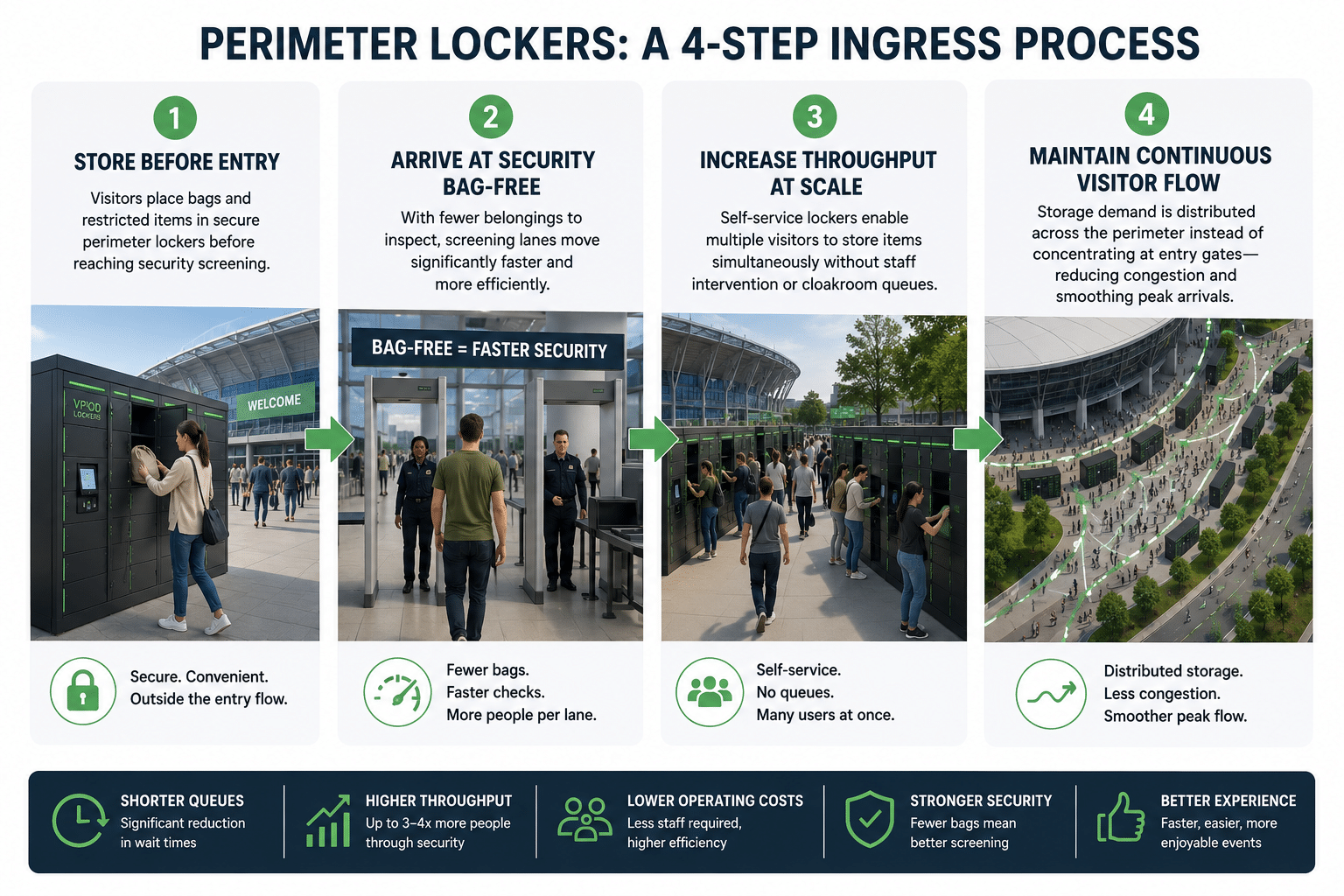
Perimeter Smart Bag Lockers
Remove friction before security
by moving bag storage outside the entry flow and eliminating cloakroom queues.
Increase throughput and efficiency
with faster security checks, parallel self-service storage, and reduced staffing pressure.
Design out congestion at scale
by smoothing peak demand and maintaining continuous visitor flow through the perimeter.
Perimeter Smart Bag Lockers V Manual Storage




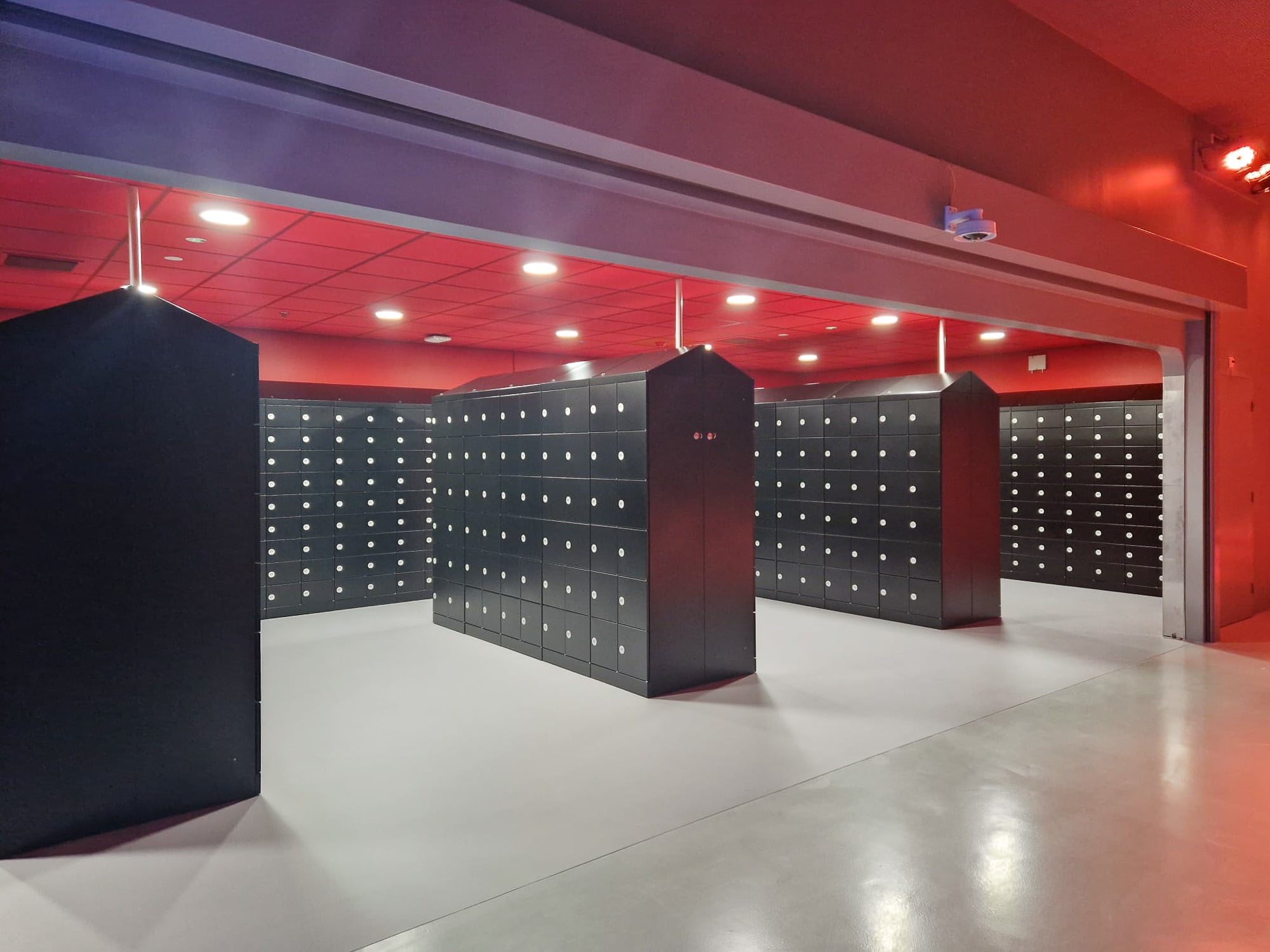
Proven in High-Turnover Event Environments
AFAS
AFAS Live — Scalable Event Locker Deployment
AFAS Live deployed CrowdStor lockers to manage high visitor volumes efficiently during concerts and large-scale events. The system improved entry and exit flow, reduced staff intervention, and delivered a seamless, cashless storage experience for guests.
Related Solutions
Who This Is For
Venue & Stadium Operations Directors / Event Security & Crowd Management Teams
Operations Manager
Responsible for managing ingress flow, security efficiency, staffing costs, and visitor experience at large-scale venues, stadiums, arenas, and live events.
Primary Goals:
- Reduce queue times
- Improve crowd flow
- Increase security throughput
- Lower operational pressure during peak arrivals