


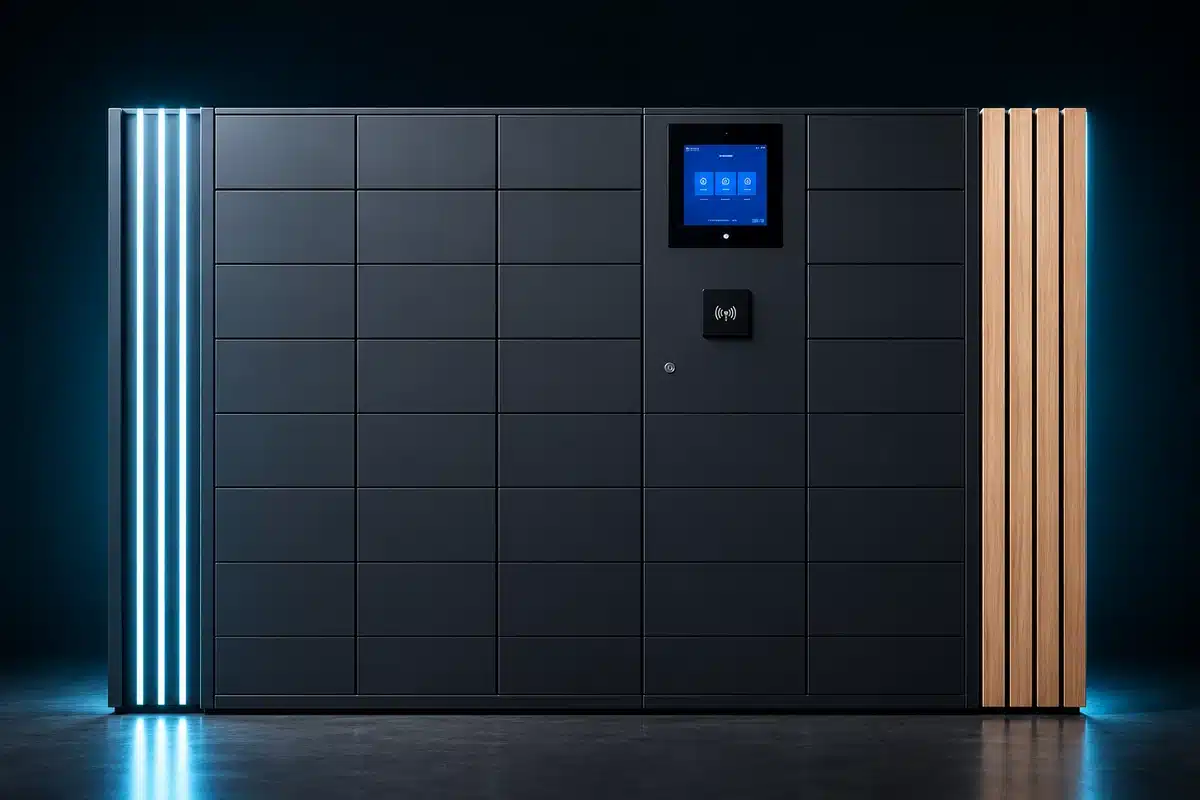





What Are Bag Policy Delays?
Bag policy delays occur when rules around bags disrupt the flow of people entering a venue.
These delays are typically caused by:
- Bag size restrictions
- Prohibited item checks
- Inconsistent enforcement
- Last-minute compliance issues
They affect:
- Stadiums and arenas
- Festivals and concerts
- Conferences and exhibitions
- Large public venues
The result is predictable:
- Slower processing
- Longer queues
- Increased congestion at entry
Why Bag Checks Delay Security at Scale | Reduce Event Entry Bottlenecks
Bag Searches vs Pre-Entry Locker Storage
Event Lockers vs Bag Check Systems
Event Storage Solutions | Cloakrooms vs Lockers vs Bag Policies
Why Bag Policies Fail at Scale
1. Policies Introduce Decision-Making at the Worst Point
Every attendee with a bag creates a checkpoint:
- Is the bag allowed?
- Does it meet size limits?
- Does it require inspection?
This introduces:
- Delays per person
- Inconsistent processing times
- Queue interruptions
Throughput systems fail when decisions replace flow.
2. Enforcement Is Inherently Inconsistent
In real-world operations:
- Staff interpret rules differently
- Enforcement varies between lanes
- Attendees question decisions
This leads to:
- Disputes
- Delays
- Uneven throughput
3. Rejected Bags Create Secondary Queues
When a bag is not compliant:
- The attendee leaves the queue
- Searches for a solution
- Returns to the queue
This creates:
- Secondary congestion
- Entry disruption
- Frustration and confusion
4. Policies Don’t Reduce Demand
Venues assume:
- Restrictions = fewer bags
In reality:
- Attendees still bring bags
- Many are unaware of rules
- Problems are resolved at the gate
Bag policies don’t eliminate volume — they delay it.
5. Interaction Time Increases
Compared to a no-bag system:
- More conversations are required
- More checks are performed
- More exceptions are handled
This reduces:
- Processing speed
- Lane efficiency
- Overall throughput
6. Peak Demand Amplifies Every Delay
At scale:
- Thousands arrive within a short window
- Even small delays per person compound
This leads to:
- Rapid queue growth
- Entry system overload
- Loss of control at the perimeter

The Hidden Risks of Bag Policy Delays
External Crowd Risk
Visitor Experience Breakdown
Revenue Loss
Increased Operational Cost
Why Traditional Fixes Don’t Work
Tighten Restrictions
- Increases friction
- Does not reduce demand
Improve Communication
- Helps awareness
- Does not eliminate enforcement delays
Add More Staff
- Expensive
- Limited impact on throughput
Increase Security Checks
- Slows entry further
- Worsens queue growth
The Core Problem: Policies Add Friction to a Throughput System
Venue entry is a flow system.
It depends on:
- Speed
- Consistency
- Predictability
Bag policies introduce:
- Decision-making
- Variability
- Exceptions
At scale:Friction reduces throughput. Reduced throughput creates queues.
The Real Issue: Bags Still Enter the System
Even with strict policies:
- Bags still arrive
- Bags still require handling
- Bags still slow processing
Policies don’t solve the problem.
They shift it into the most critical part of the operation.
The Scalable Solution: Remove the Problem Before Entry
The most effective venues don’t rely on enforcement.
They remove friction before it reaches the gate.
Pre-Entry Smart Locker Systems
Smart lockers allow attendees to:
- Store bags before security
- Comply with policies effortlessly
- Avoid rejection and delays
Eliminate Decision-Making at Entry
- No size checks
- No disputes
- No exceptions
Increase Throughput
- Fewer bags = faster screening
- More people processed per lane
- Reduced queue buildup
Improve Experience and Compliance
- Clear process for attendees
- Consistent enforcement
- Faster entry
Real Operational Impact
With pre-entry storage systems:
- Entry speeds increase significantly
- Queue times reduce
- Policy compliance improves
- Staff requirements decrease
- External risk is reduced
See: /solutions/event-smart-lockers/
Compare: /bag-searches-vs-pre-entry-locker-storage/
Calculate ROI: /roi-calculator/
The Bottom Line
Bag policies are necessary for security.
But at scale, they:
- Add friction
- Reduce throughput
- Create delays
The solution is not stricter rules.
4-Step Perimeter Event Locker Process
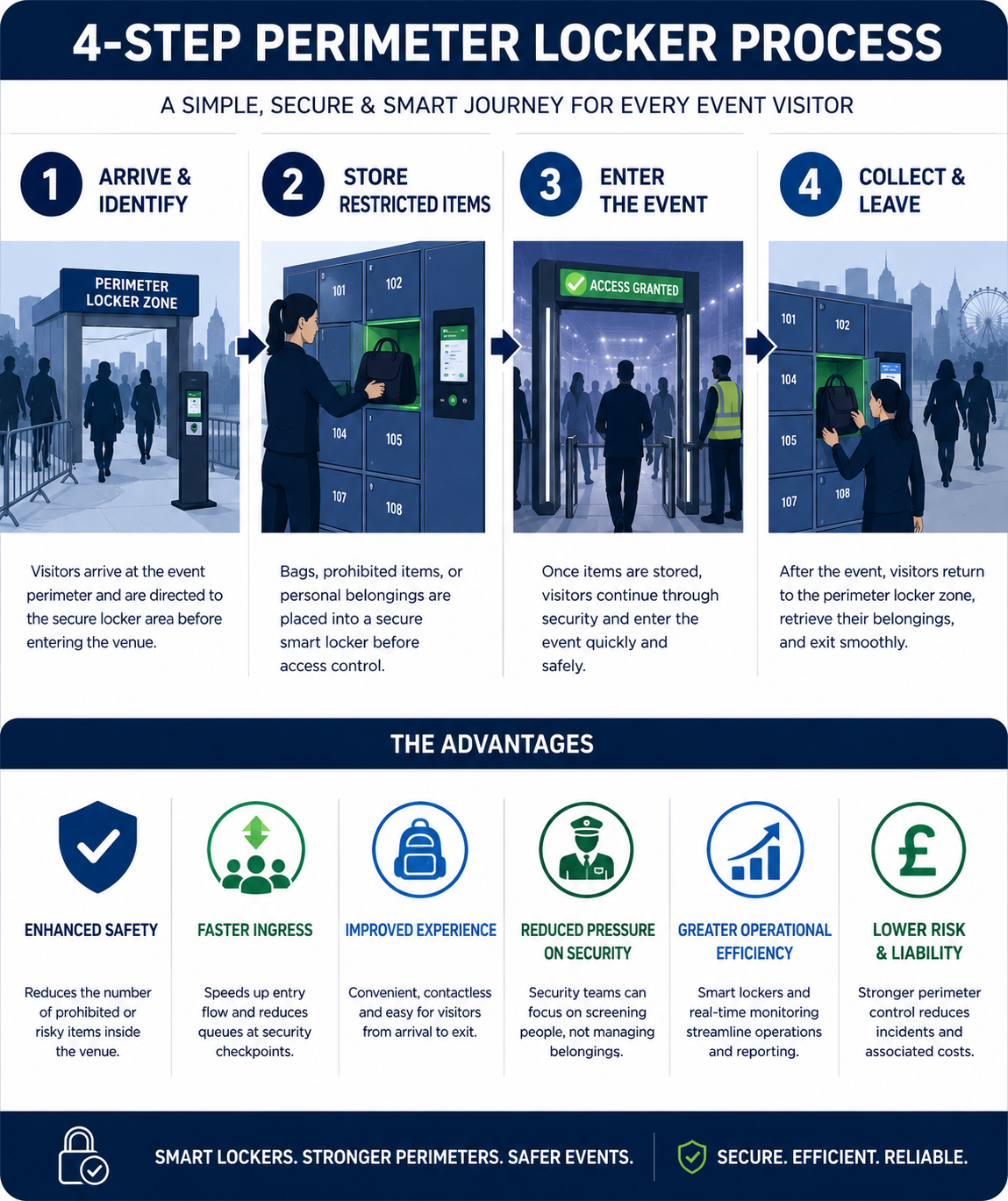
Remove Friction Before Entry
Faster Entry & Reduced Queue Congestion
Attendees securely store bags before reaching security, removing inspection delays and dramatically increasing entry throughput during peak demand periods.
Improved Security, Safety & Compliance
Reduce high-density external queues, minimise operational friction, and support safer venue ingress aligned with Martyn’s Law and crowd management requirements.
Better Visitor Experience With Lower Operational Cost
Self-service locker systems reduce staff dependency, eliminate disputes at entry, and create a smoother, faster, less stressful arrival experience for attendees.
Traditional Bag Policy v Perimeter Smart Bag Lockers





Proven in High-Turnover Event Environments
Paradiso
Paradiso — Digital Venue Storage
Paradiso implemented CrowdStor smart lockers to modernise event storage and remove cash handling. The solution reduced queues, improved guest flow during busy events, and introduced real-time locker management for better operational visibility.
Related Solutions
Who This Is For
Venue Operations Director / Head of Operations - Security & Compliance Manager
Venue Operations Director / Head of Operations
Area of Responsibility
- Overall venue flow,
- ingress performance,
- operational efficiency,
- visitor experience,
- staffing and throughput management
Key Concerns
- Entry speed,
- queue reduction,
- crowd flow,
- operational scalability,
- reducing friction at peak demand
Pain Points
- Long entry queues,
- congestion outside venues,
- rising staffing costs,
- delayed ingress,
- operational bottlenecks,
- poor attendee experience
Security & Compliance Manager
Areas of Responsibility
- Venue security operations,
- perimeter control,
- policy enforcement,
- safety compliance,
- risk mitigation
Areas of Concern
- Martyn’s Law readiness,
- crowd safety,
- external queue risk,
- consistent enforcement,
- reducing security exposure
Pain Points
- High-density crowds outside venues,
- inconsistent bag policy enforcement,
- disputes at entry,
- unmanaged rejected bags,
- compliance risk,
- pressure on security teams