





What Are Click & Collect Queue Problems?
Click & collect queue problems occur when customers must wait to collect pre-ordered items due to operational bottlenecks.
These typically appear in:
- Retail stores
- Stadium concessions
- Event merchandise areas
- Transport hubs
- Parcel collection points
The result:
- Long waiting times
- Congestion in-store or on-site
- Reduced efficiency
- Poor customer experience
Integrated solutions
Why Click & Collect Breaks at Scale
Demand Is Synchronised, Not Distributed
Customers often collect orders:
- Before events
- During peak retail hours
- At lunch breaks or after work
This creates demand spikes, not steady flow.
Collection Is Still a Manual Process
Even with digital ordering, collection requires:
- Staff locating items
- Verifying orders
- Handing over goods
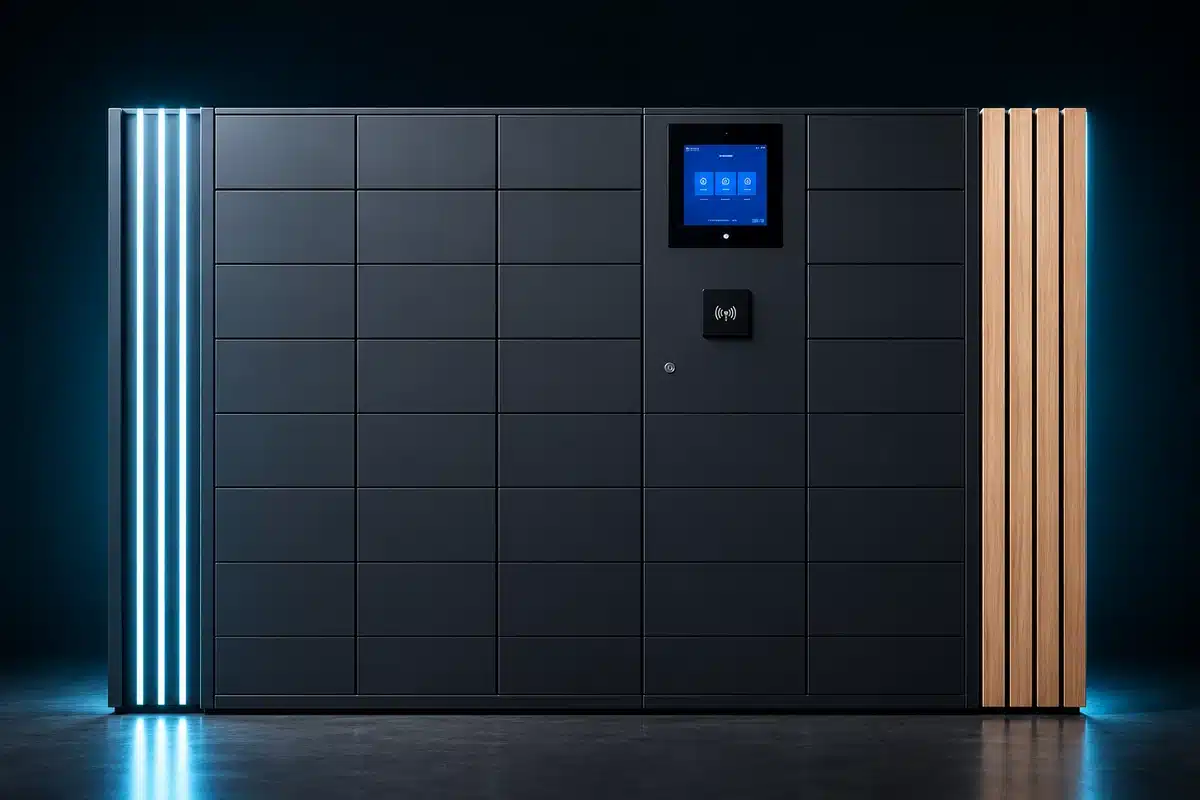
CrowdStor Smart Locker
Retrieval Time Slows Everything Down
Orders are often:
- Stored in backrooms
- Organised inefficiently
- Difficult to locate quickly
This leads to:
- Delays per customer
- Queue buildup
- Reduced throughput
Queue Growth Is Exponential
When arrival rate exceeds service rate:
- Queues grow rapidly
- Wait times increase disproportionately
Space Is Not Designed for Collection Flow
Most environments:
- Lack dedicated collection zones
- Share space with retail or entry areas
- Cannot handle large volumes of waiting customers
This leads to:
- Congestion
- Poor layout flow
- Operational disruption
Staff Become the Bottleneck
As queues grow:
- Staff are overwhelmed
- Retrieval speed decreases
- Errors increase
This creates a negative feedback loop:
More demand → slower service → longer queues

The Business Cost of Click & Collect Queues
Customer Experience Breakdown
Revenue Loss
Operational Inefficiency
Safety & Congestion Risk
Why Traditional Fixes Don’t Work
Add More Staff
- Increases cost
- Limited improvement in throughput
Create Bigger Collection Areas
- Space constraints
- Does not speed up service
Improve Backroom Organisation
- Marginal gains
- Still manual
Stagger Collection Times
- Difficult to enforce
- Limited behavioural impact
The Scalable Solution: Self-Service Collection Systems
Real Operational Impact
With automated collection systems:
Queue times are eliminated
Collection speed increases dramatically
Staff requirements decrease
Customer satisfaction improves
Throughput scales without added cost
See: /solutions/parcel-lockers/
Compare: /manual-security-handling-vs-automated-storage-systems/
Explore: /integrations/
The Bottom Line
Click & collect doesn’t fail because of demand.
It fails because of how collection is handled.
At scale:
- Demand spikes
- Manual processes slow down
- Queues grow exponentially
- The solution is not to manage queues better.
It’s to remove them entirely.
Smart Click & Collect Parcel Lockers
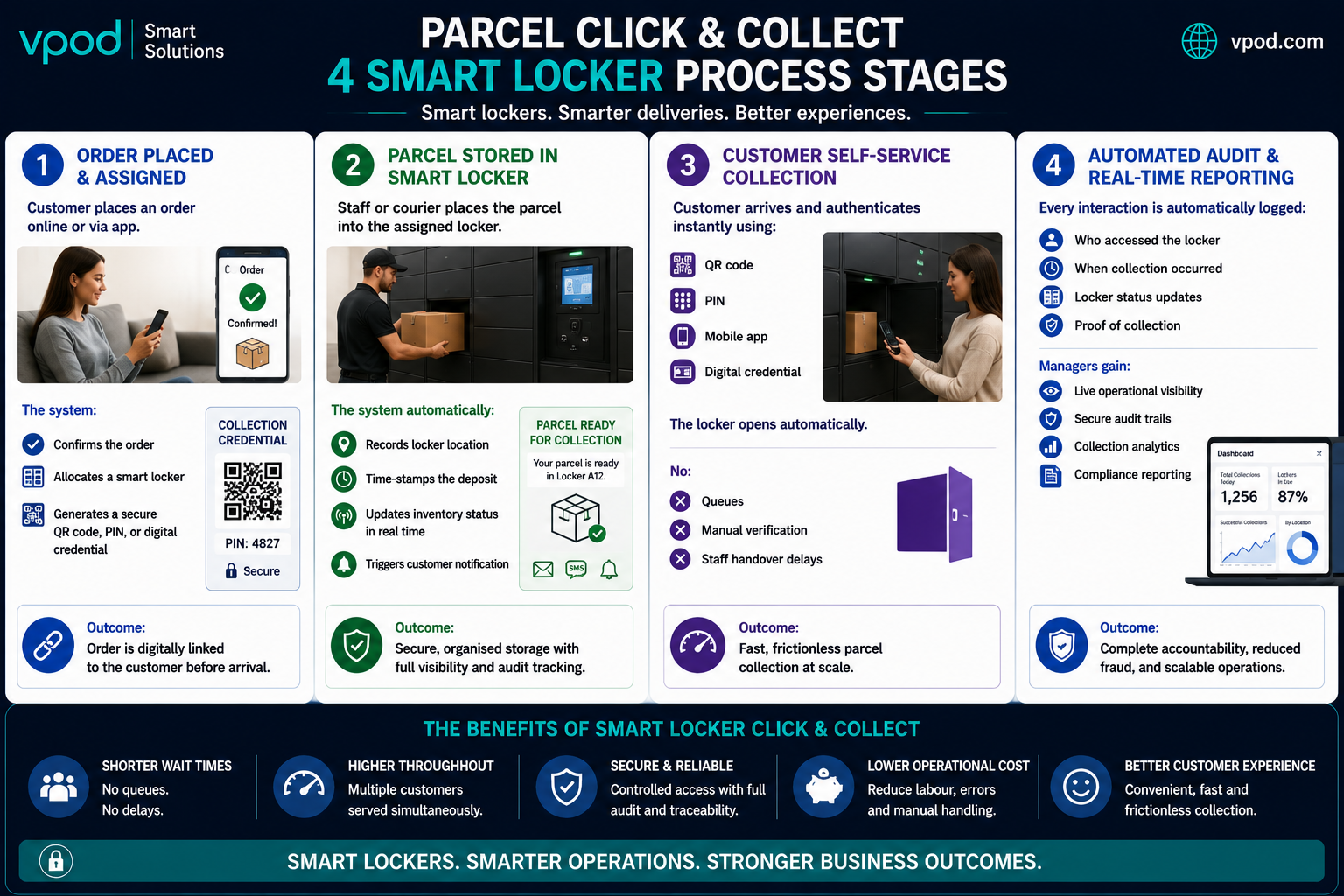
Explore Smart Locker Click & Collect Solutions
1. Faster Self-Service Collection
Customers collect parcels instantly using QR codes, PINs, or mobile authentication — eliminating queues, reducing wait times, and improving collection flow during peak demand.
2. Reduced Labour & Operational Costs
Automated locker workflows reduce manual handling, staffing requirements, and time spent searching for parcels — allowing operations to scale without increasing labour overhead.
VpodSmart Locker Systems Eliminate Click & Collect Queues




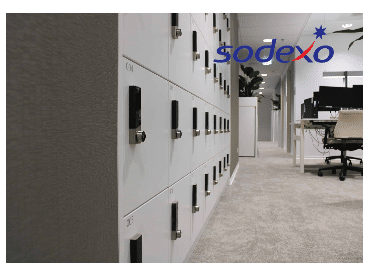
Sodexo - Enterprise Workplace Transformation
Smarter Workplace Operations
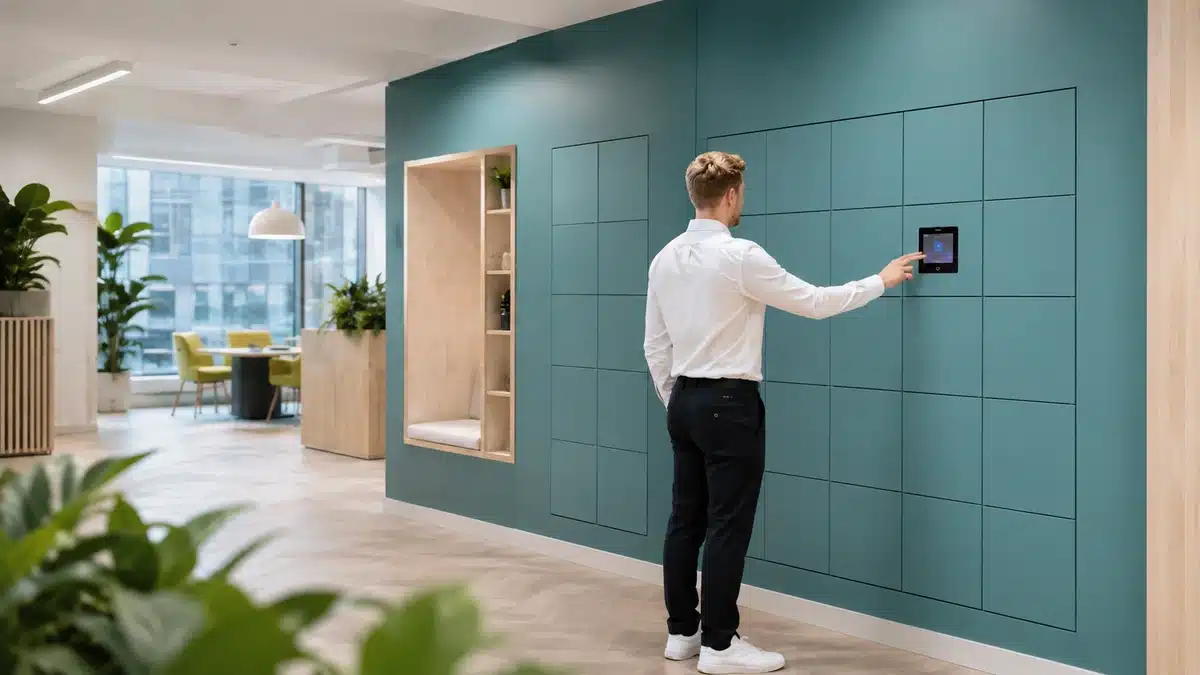
Sodexo partnered with Vpod to modernise workplace operations and Vflex smart locker systems.
The goal was simple:
Reduce manual front-of-house processes, improve visitor experiences, and create a more efficient workplace environment.
See the Full Case Study
Who This Is For
Operations Manager / Security / Loss Prevention Manager
Operations Manager / Retail Operations Director
Areas of Responsibility
- Click & collect operations
- Customer flow and queue management
- Parcel collection efficiency
- Staffing and throughput performance
- Store or venue operational performance
- Order fulfilment and collection processes
Areas of Concern
- Peak-time congestion
- Long collection queues
- Collection speed and throughput
- Labour efficiency and staffing costs
- Customer satisfaction and retention
- Operational scalability across locations
Pain Points
- Staff overwhelmed during peak demand
- Slow manual parcel handovers
- Rising labour and operational costs
- Delays caused by searching for parcels
- Poor visibility across collection workflows
- Congestion impacting customer experience
- Inconsistent service levels between sites
Security / Loss Prevention Manager
Areas of Responsibility
- Secure parcel handoff
- Fraud prevention and access control
- Customer verification processes
- Asset and inventory protection
- Compliance and audit accountability
- Operational risk reduction
Areas of Concern
- Preventing fraudulent collections
- Unauthorized access to parcels
- Missing or stolen items
- Lack of auditability
- Secure chain of custody
- Maintaining control at scale
Pain Points
- Weak or inconsistent verification processes
- No real-time tracking visibility
- Missing audit trails during disputes
- Difficulty proving collection history
- High-pressure environments increasing risk
- Manual handovers creating errors and loss
- Limited accountability across teams and locations