Trusted by these customers
- Reduce ingress delays by up to 70%
- Cut cloakroom staffing by 70–90%
- Enable paid storage revenue per event
Managing Crowd Flow & Compliance with Smart Lockers
Common Event Storage & Cloakroom Challenges
Live events operate with extreme peaks, short ingress windows, and high-density crowd movement — making storage a critical pressure point across entry, security, and visitor flow.
When cloakrooms are manual, slow, or unstructured, they create friction across queues, staffing, and overall event operations.
These challenges are no longer just operational inefficiencies — they represent key compliance risks under Martyn’s Law.
Responsibility for managing these risks sits across operations, security, compliance, and event leadership.
→ See how Martyn’s Law responsibilities are shared across event teams
Learn how Martyn’s Law identifies risk in event entry and crowd flow
→ See how Martyn’s Law explains crowd flow, queue exposure, and operational risk
Event Cloakroom Bottlenecks
Traditional cloakrooms rely on sequential, staff-managed processes such as tagging, payment, and retrieval. During high-volume ingress periods, these processes cannot scale — causing queues to form before entry even begins and slowing overall event access.
→ Compare cloakroom vs locker for event security
→ Cloakroom inefficiency at events
→ Replace cloakrooms with smart lockers
Ingress Queue & Entry Congestion
Events experience intense arrival spikes, with large volumes of attendees arriving within short timeframes. When storage is not integrated into entry flow, delays quickly compound into long external queues and increased crowd management risk.
See how Martyn’s Law highlights queue build-up and ingress delays as critical safety risks
→ Learn why event ingress is a security risk under Martyn’s Law
→ Learn which venue roles are responsible for reducing ingress risk under Martyn’s Law
→ Compare bag searches vs pre-entry locker storage
Improve entry flow with lockers systems designed for high-throughput enviroments.
Staffing Pressure & Operational Cost
Manual cloakrooms require large teams to manage tagging, handling, payments, and retrieval — particularly during peak periods. As demand increases, staffing costs rise while operational efficiency declines.
→ Compare staff cost vs locker automation ROI
Egress Bottlenecks After Events
When events end, large numbers of attendees attempt to retrieve belongings simultaneously. Cloakrooms struggle to match this demand, creating congestion at exits, delays in crowd dispersal, and increased safety risks.
Event exit congestion problems
Enable fast retrieval with lockers
Cloakrooms as a Cost Centre
Traditional cloakrooms are typically treated as a necessary service rather than a commercial opportunity. Manual processes limit scalability, reduce efficiency, and provide little visibility into usage or revenue.
Free Storage vs Paid Locker Systems
Event storage revenue opportunities
Smart Lockers vs Cloakrooms at Events
Where Storage Intersects with Event Operations
Storage challenges appear at critical points across live event environments, particularly where crowd flow, security, and time constraints collide. While each event format presents different pressures, the underlying issue is consistent: unmanaged belongings create delays, increase risk, and disrupt operations at scale.
Festival Storage Challenges
High-volume outdoor events create unpredictable and fluctuating storage demand throughout the day. Attendees arrive in waves, often carrying bags, food, merchandise, or restricted items that must be managed without slowing entry or disrupting open-site layouts.
Without structured storage, queues build at entry points, security teams face inconsistent decision-making, and congestion spreads across access routes and open areas.
This creates significant pressure for Event organisers managing large crowds, where even small delays can quickly escalate into wider operational issues.
Event locker systems provide a scalable solution for festivals, including event lockers for festivals designed to handle high-volume demand, reduce queue build-up, and maintain consistent entry flow throughout the day.
Concerned about event security compliance?
Explore Martyn’s Law roles, responsibilities, and risk management for event organisers
Exhibition & Trade Show Storage
Exhibitions and trade shows create continuous storage demand throughout the day rather than short peak windows. Attendees carry bags, marketing materials, merchandise, laptops, and professional equipment, increasing pressure across entry points and show floors.
Without structured storage, congestion increases in high-traffic areas, exhibitor interactions are disrupted, and operational flow becomes inconsistent.
This creates ongoing pressure for Operations directors managing event flow, where delays at entry and congestion across the venue can impact both attendee experience and exhibitor performance.
Event locker systems provide a structured approach to managing belongings, reducing congestion across exhibition spaces and maintaining consistent movement throughout the event.
Conferences & Professional Events
Professional events require predictable, low-friction storage that supports structured schedules and smooth movement between sessions. Delegates often carry laptops, documents, and personal belongings that must be managed without disrupting event flow.
Without efficient storage, attendees bring items into sessions, room capacity is reduced, and movement between sessions slows.
This creates operational challenges for Operations directors managing structured events, where maintaining timing, flow, and attendee experience is critical.
Event locker systems enable secure, self-service storage that reduces disruption, supports smooth transitions between sessions, and maintains consistent event flow.
Touring & Pop-Up Event Storage
Touring and temporary events operate under tight setup and breakdown timelines, often in locations without permanent infrastructure. Storage must be rapidly deployable, scalable to attendance, and easy to remove post-event.
Without this, ad-hoc storage solutions emerge, staff manage belongings manually, and inconsistency increases across locations.
This creates significant pressure for Event organisers managing temporary sites, where each deployment must operate reliably under different conditions.
Event locker systems provide a portable, scalable solution that can be deployed quickly, reduce manual handling, and maintain consistent operations across multiple locations.
→ Compare capex vs opex locker model
High-Security & Controlled Access Events
Events with strict security requirements require predictable handling of restricted items and consistent enforcement of entry policies. When visitors arrive with prohibited belongings, security teams must make rapid decisions under pressure.
Understand how Martyn’s Law applies to bag handling, screening delays, and policy enforcement
→ See how Martyn’s Law addresses bag handling, screening delays, and entry risk
See how Security Managers and Compliance teams must respond under Martyn’s Law
→ Compare manual security handling vs automated storage systems
Without a clear storage solution, bag check delays increase, enforcement becomes inconsistent, and queues build quickly at entry points.
This creates critical challenges for Security managers enforcing event policies, where maintaining safety while preserving flow is essential.
Event locker systems provide a controlled, consistent solution for handling restricted items, reducing delays at security points and improving overall entry efficiency.
How Event Locker Systems Improve Ingress Performance
Increase Entry Throughput
Throughput increases from approximately 250 to 500 people per hour per lane by removing bag checks and manual storage from entry processes.
Reduce Queue Length
Queue lengths can be reduced by 50–70% during peak ingress by eliminating bottlenecks and increasing processing speed.
Remove Manual Handling
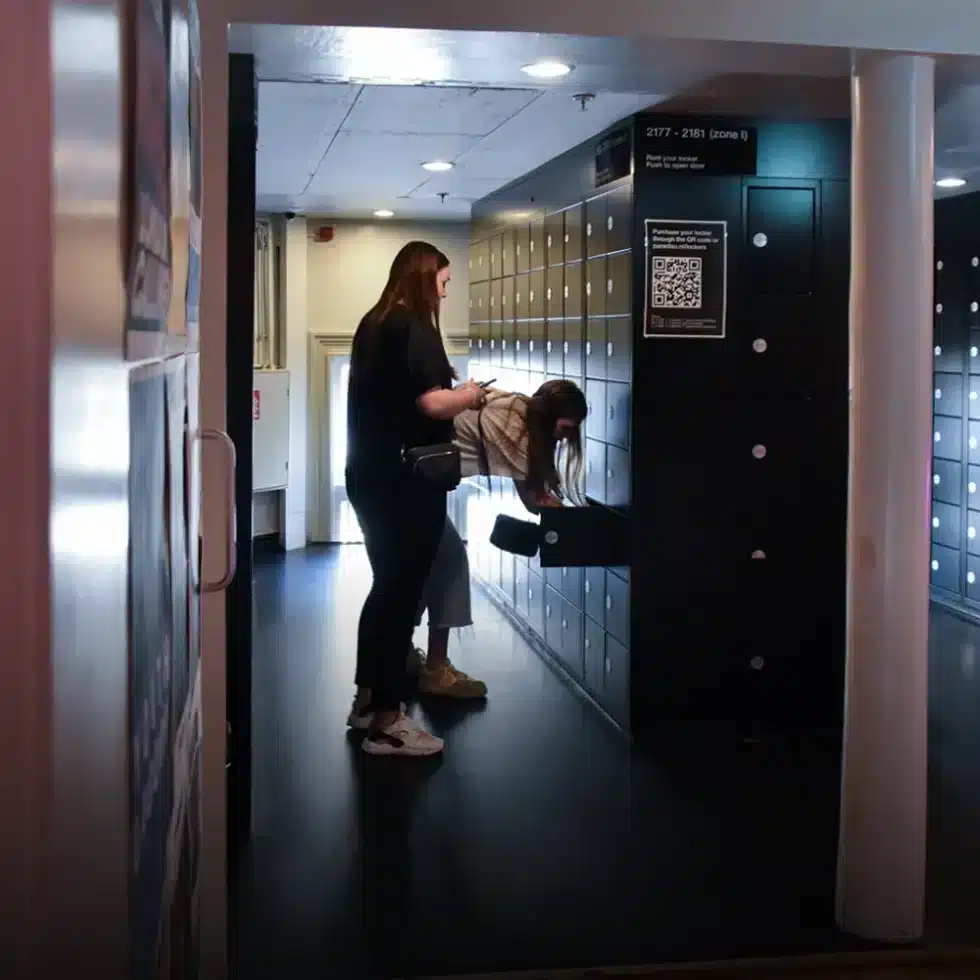
Self-service storage removes the need for tagging, handling, and retrieval, eliminating delays caused by manual cloakroom processes.
Reduce Staffing Requirements
Staffing requirements can be reduced by 70–90% compared to traditional cloakrooms by automating storage and removing staff dependency.
Improve Operational Control
Standardised, self-service storage creates predictable entry flow, reduces decision-making at entry points, and improves consistency across events.
Many organisers are adopting these systems to meet emerging compliance requirements under Martyn’s Law.
See how venues are preparing for Martyn’s Law with smarter infrastructure
Understand how smart lockers support safer entry under Martyn’s Law
Understand how event leadership teams must adapt under Martyn’s Law
Event Storage Workflow: Cloakroom vs Smart Lockers
This comparison shows how event storage shifts from slow, staff-dependent cloakroom processes to fast, self-service locker systems that support high-volume ingress and egress.
→ See how Martyn’s Law identifies manual storage as an operational bottleneck
Traditional Cloakroom Workflow
Attendee arrives at event
Joins cloakroom queue
Waits for staff availability
Items are tagged and stored manually
Attendee proceeds to entry
On exit:
Attendee joins retrieval queue
Staff locate and return items
Delays increase as volume peaks
Operational Challenges
Queues form before entry begins
Staff become bottlenecks during peak periods
Manual handling slows ingress and egress
Risk of lost or misplaced belongings
Limited ability to scale during high attendance
Smart Locker Workflow
Attendee arrives at event
Stores belongings in a self-service locker
System generates secure access code
Attendee proceeds directly to entry
On exit:
Attendee retrieves items instantly
No queue or staff involvement required
Operational Advantages
Removes storage queues from entry flow
Enables parallel, high-speed usage
Supports 24/7 access without staff dependency
Improves security with digital access and audit trails
Scales efficiently for high-volume events
Explore:
→ See the full comparison between event lockers and cloakrooms
→ Improve event ingress speed
→ Reduce cloakroom queues
→ Deploy event locker systems
Event Locker Case Studies & Measurable Results
Reduced Exit Times by 56% at AFAS Live
Challenge
AFAS Live operates high-volume events with fixed start times and intense arrival and departure surges. Traditional cloakrooms and manual storage processes were creating long queues, high staffing requirements, and operational risk during peak ingress and egress periods. Delays at entry points and slow post-event exits were impacting crowd flow, safety, and overall visitor experience.
Solution
Self-service event locker systems were introduced to remove manual cloakroom handling and enable attendees to store belongings before and after events. This reduced pressure on staff, improved entry decision-making, and created a more structured, predictable flow across both ingress and egress.
Measurable Outcomes
Post-event exit times reduced by 56%
Significant reduction in staffing requirements and operational pressure
Introduction of a new, trackable event-day revenue stream
Full ROI achieved within 8 months
Relevant For
Operations Directors
€180,000 Revenue Generated at Jassie
Challenge
Nightlife venues across Breda were experiencing overcrowded cloakrooms, limited space, and inconsistent handling of visitor belongings. This led to congestion, misplaced items, and staff being diverted away from core hospitality tasks. During peak events, queues and inefficiencies compounded across multiple venues.
Solution
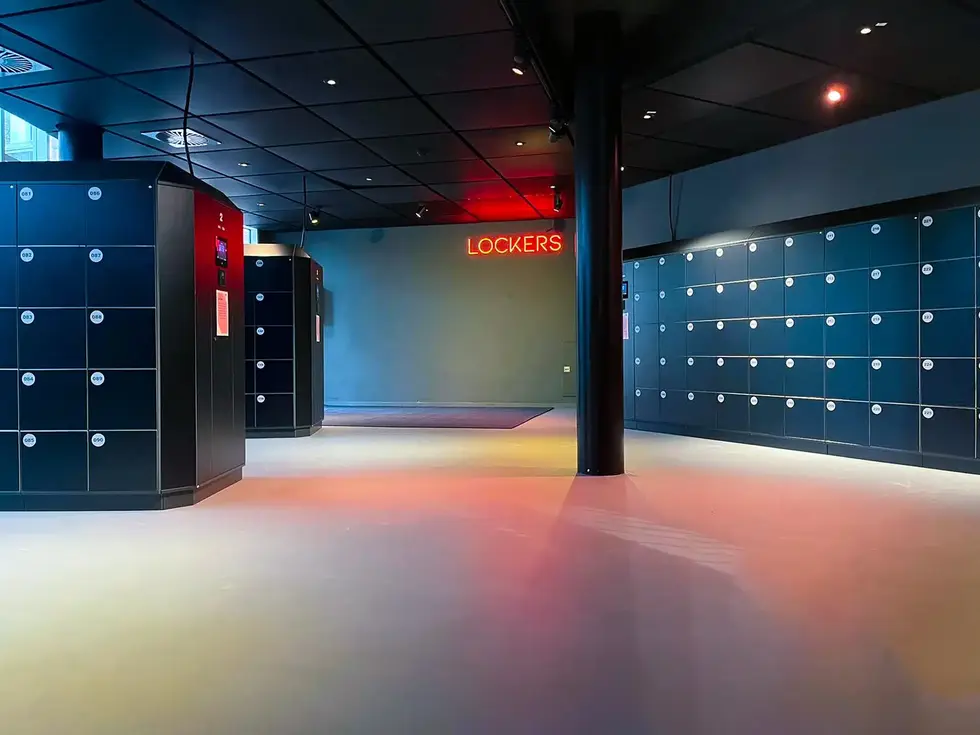
A centralised, self-service locker hub was deployed outside venues to remove in-venue storage constraints and provide a scalable, city-wide storage solution. This eliminated reliance on manual cloakrooms and enabled consistent handling of belongings across high-density nightlife environments.
Measurable Outcomes
€180,000 revenue generated within the first year
Zero downtime across high-volume usage
Elimination of in-venue congestion caused by storage
Scalable model supporting multiple venues and peak demand
Relevant For
Event Organisers
Operations Directors
Event Locker Solutions for High-Volume Venues
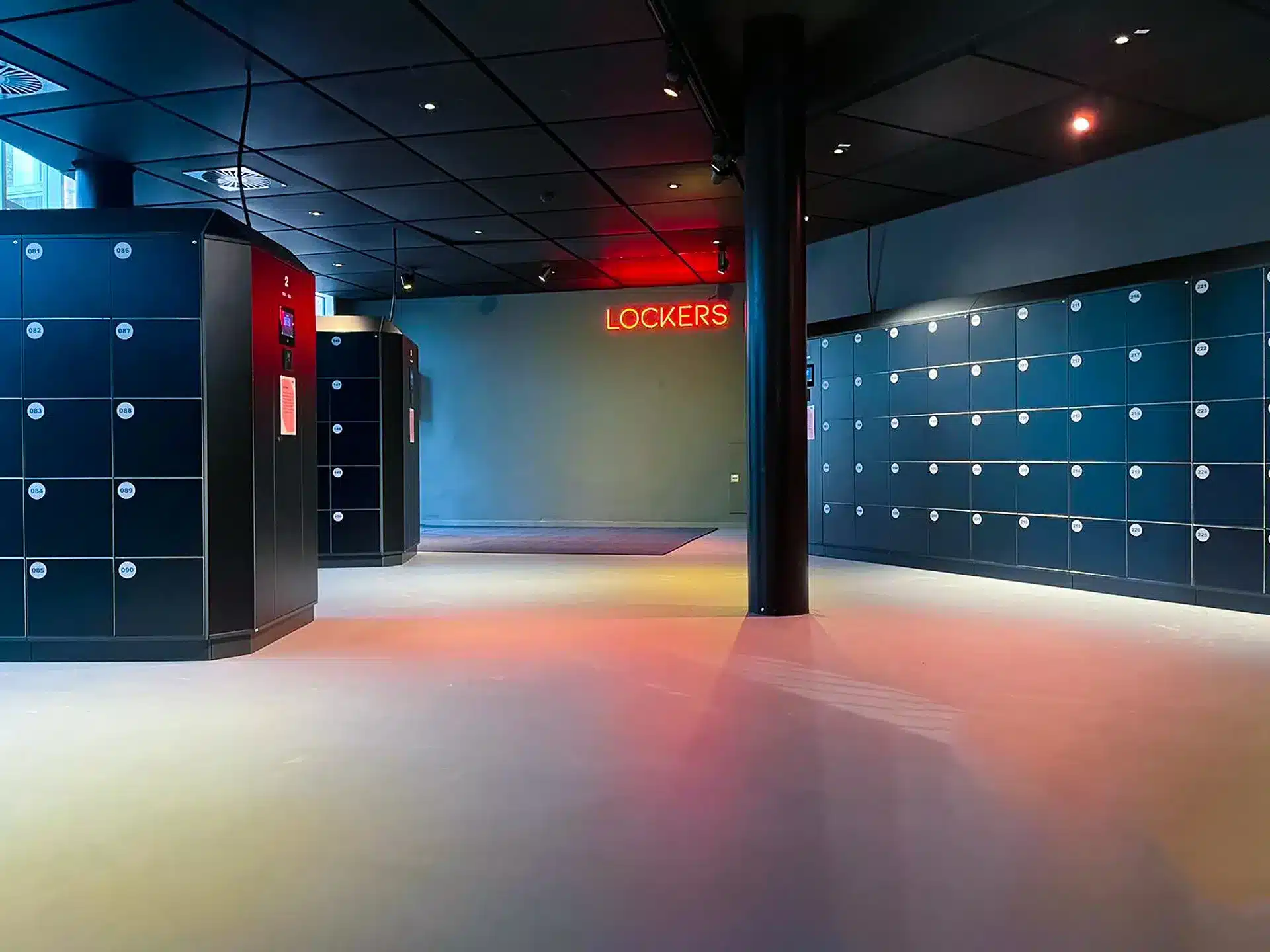
Live events require storage systems that can handle high-volume demand, short arrival windows, and minimal infrastructure without slowing entry or increasing staffing. Smart locker systems provide scalable, self-service solutions designed to support different event formats and operational requirements.
Event Lockers
Outcome
Handle high-volume attendee demand without queues, even during short, high-intensity arrival windows.
Benefits
- Eliminate cloakroom queues and manual handling
- Improve ingress speed by removing bags before security
- Reduce staffing requirements during peak periods
- Deploy quickly for temporary, touring, or pop-up events → Compare capex vs opex locker model
- Generate event-day revenue through paid storage
Explore event locker solutions
Calculate event locker ROI
Venue Lockers (for Recurring / Hybrid Events)
Outcome
Provide permanent, high-throughput storage infrastructure that supports predictable, repeatable event operations.
Benefits
- Remove reliance on temporary cloakroom setups
- Support consistent ingress and egress across events
- Reduce long-term staffing requirements
- Improve security policy enforcement at entry points
- Enable ongoing revenue from storage services
Explore venue locker systems for recurring events
Calculate long-term storage ROI for venues
Who Is Typically Involved
Event Organisers
Pain:
Managing high-volume crowds within fixed timelines while balancing attendee experience, operational control, and event delivery. When entry systems slow down, queues build quickly and disrupt the overall event schedule.
Outcome:
Predictable ingress, smoother event flow, and controlled operations without increasing staffing or complexity.
Operations Directors
Pain:
Ensuring smooth ingress and egress across high-volume events while managing staffing, infrastructure, and operational risk. Manual storage processes create delays, increase staffing pressure, and reduce overall throughput.
Outcome:
Efficient, predictable event operations with improved throughput, reduced staffing pressure, and scalable systems that perform under peak demand.