GainShare
Capex-Free Lockers
ICONICS × Vpod

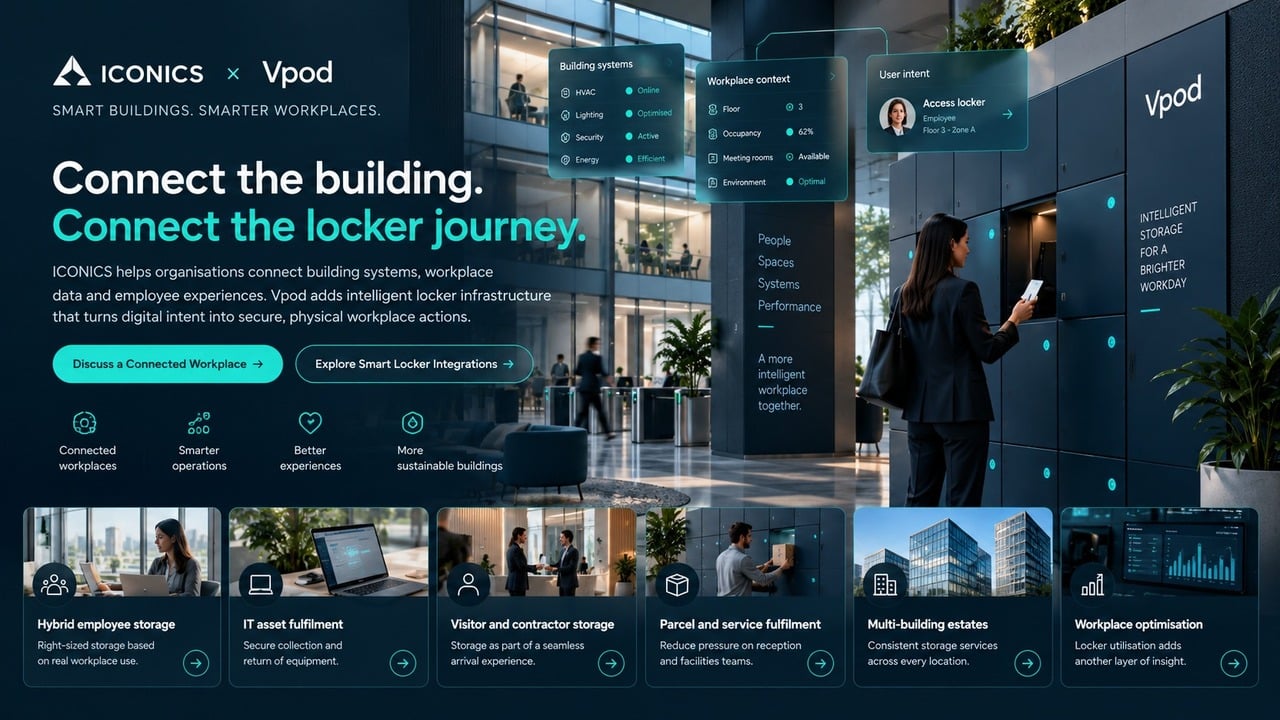
Connect the building. Connect the locker journey.

Mitsubishi Electric Iconics Digital Solutions connects building systems, workplace data and employee experiences. Vpod adds intelligent locker infrastructure that can turn digital intent into secure, physical workplace actions.

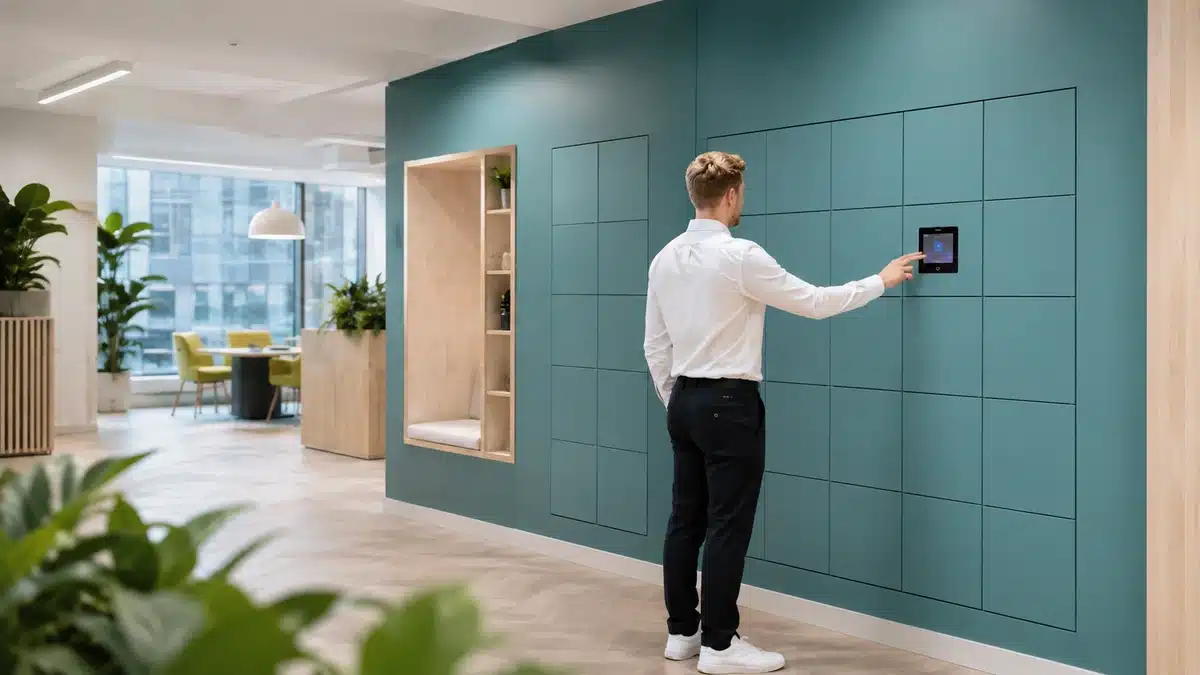
Premium connected workplace with smart lockers, building context and a digital user journey
ICONICS digital workplace contextIBSS (Intelligent Building Software Stack) connects people, spaces and systems, with workplace services and real-time building data.
Vpod physical workflow layerVflex can form the secure handover layer within wider identity, workplace, facilities and service workflows.
Partnership scopeICONICS and Vpod are presented here as complementary capabilities. This page does not describe a live integration between them.
The problem

Smart buildings still contain disconnected physical journeys.

A workplace can connect desks, rooms, access, lighting, environmental controls and visitor services while storage, parcel collection or asset handover remains a separate manual experience.

01Separate locker credentials and administration create another employee journey.
02Storage demand can remain disconnected from occupancy, booking and workplace context.
03Asset and parcel handovers often require staff intervention even in highly automated buildings.
Complementary capabilities

Understand the building. Turn intent into physical action.

ICONICS

Understand and orchestrate the building

Relevant capabilities include building automation, digital workplace services, workplace insights, space utilisation, real-time building data and interoperability across building systems.

  • Digital workplace services
  • Space control and utilisation insight
  • Building automation and real-time data
  • Portfolio-level operational visibility
Vpod

Turn workplace intent into locker actions

Vpod provides configurable smart locker infrastructure for employee storage, IT assets, parcels and other secure handovers.

  • Shared or assigned allocation
  • Digital credentials and locker workflows
  • Cloud locker administration
  • Multi-site deployment and integrations
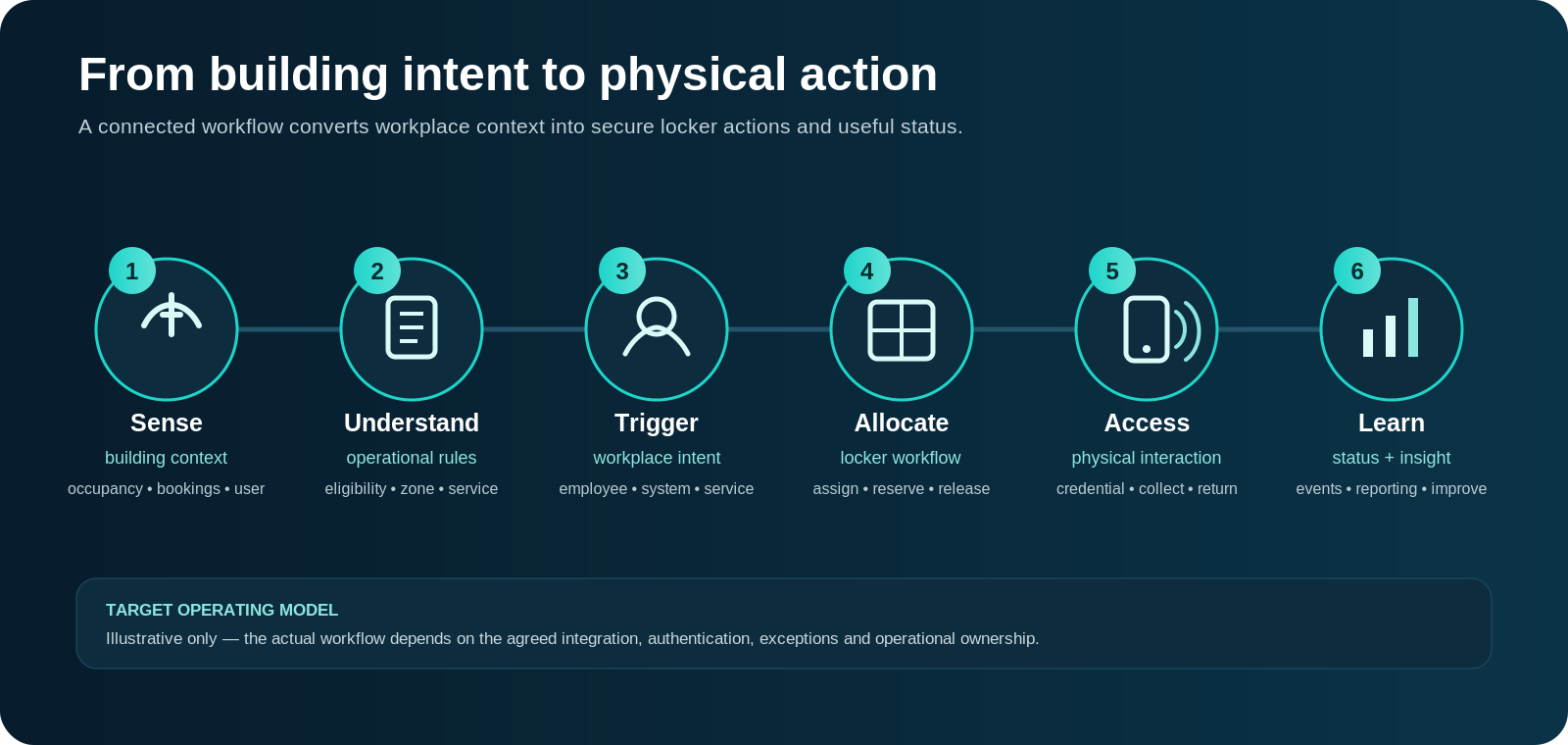
Target operating model

From building intent to physical action.

This six-stage model shows how a connected workflow could operate where an integration has been designed to support it.

Six stage workflow from building context to locker insight
Use cases

Where the connected-building proposition is strongest.

Employee using a smart locker in a connected workplace
Workplace

Hybrid employee storage

Use workplace context to support flexible storage rather than automatically assigning permanent lockers.

Laptop asset collection from a smart locker
IT / ITAM

IT asset fulfilment

Connect equipment collection, replacement and return to the wider employee or service journey.

Visitor or contractor storage journey in a workplace
Arrival

Visitor / contractor storage

Make temporary storage part of a broader arrival and workplace experience where appropriate.

Parcel and service fulfilment through smart lockers
Operations

Parcel and service fulfilment

Reduce front-desk handling by moving defined handovers into secure self-service workflows.

Multi-building office estate
Portfolio

Multi-building estates

Standardise smart locker infrastructure while preserving local building and operational requirements.

Workplace utilisation dashboard and smart-building insight
Insight

Workplace optimisation

Use locker utilisation as another operational signal when the project architecture makes that valuable.

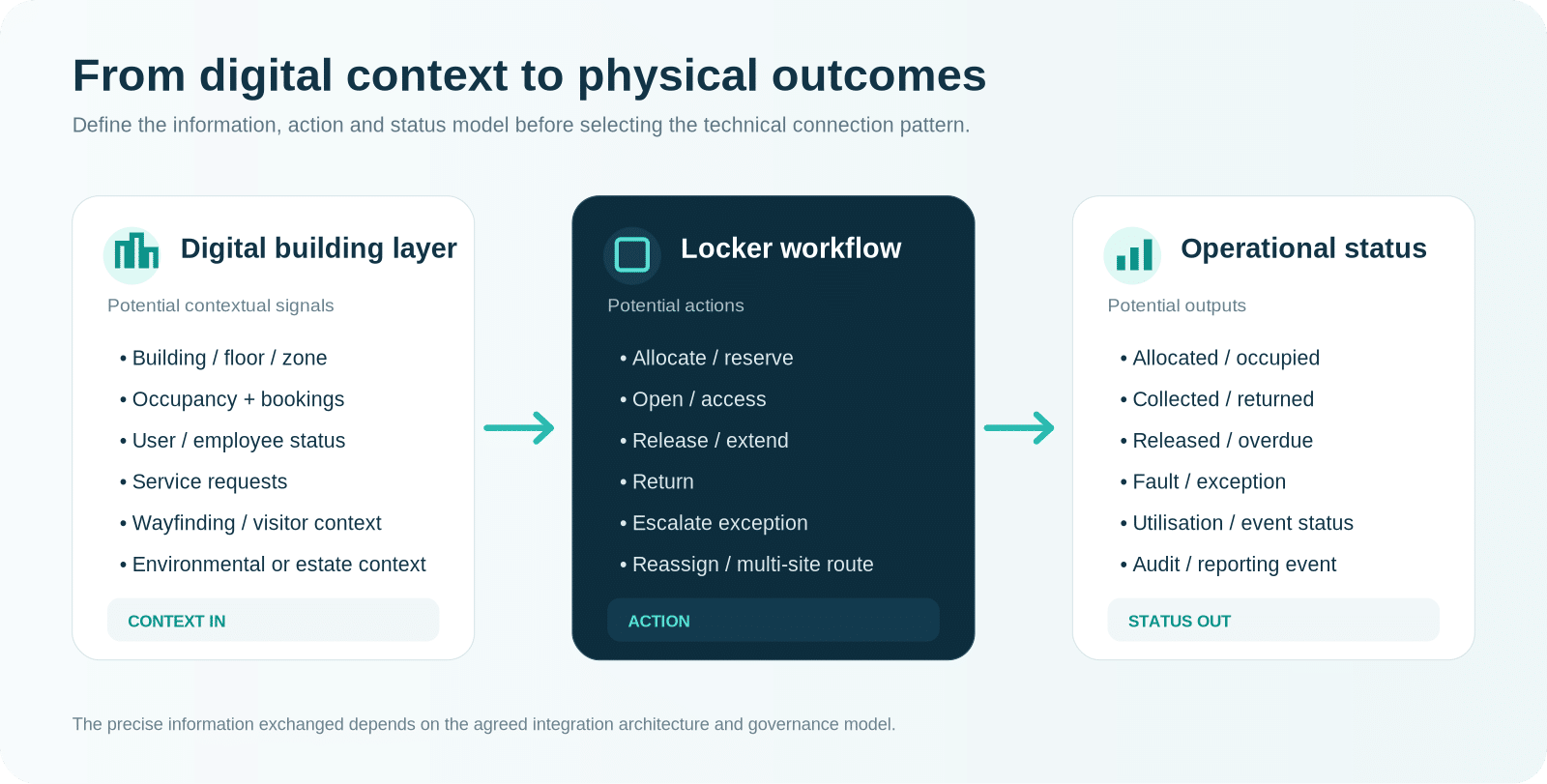
Building data → locker action

Define the signals, actions and statuses before defining the technology.

Building data to locker action model
Smart-building value

Four reasons to design the locker journey as part of the workplace ecosystem.

1

One employee experience

Reduce the number of disconnected workplace processes employees need to learn.

2

Better operational context

Relate storage to the wider purpose of the building rather than operating it in isolation.

3

Less manual handling

Use self-service and automated allocation where the workflow justifies it.

4

Portfolio-level thinking

Create a repeatable service model across buildings rather than separate local locker projects.

Digital workplace

Extend the digital workplace into secure physical storage.

ICONICS positions digital workplaces around connected people, spaces and systems, including space control, wayfinding, visitor management and workplace insight. Vpod can add a secure physical-service layer for storage and handovers.

Find a spaceBooking, navigation and workplace context establish where and why the user is there.
Enter the workplaceIdentity, access and service eligibility shape the available journey.
Use a workplace serviceStorage, equipment or handover becomes one connected service rather than another app or key.
In short

ICONICS can provide the digital and building context. Vpod can provide the secure physical storage action.

The two capabilities are complementary; any live interface between them is designed per project.

Building operations

From individual lockers to building operations.

For facilities and building leaders, the most useful view is the relationship between portfolio operations and the physical services running inside each workplace.

ICONICS contextVpod context
Building operationsLocker operations
Space utilisationLocker utilisation
Building systemsLocker hardware
Workplace servicesStorage workflows
Operational analyticsLocker events / status
Portfolio managementMulti-site locker estate

Shown side by side for comparison — these datasets are not presented as a single combined dashboard.

Integration architecture

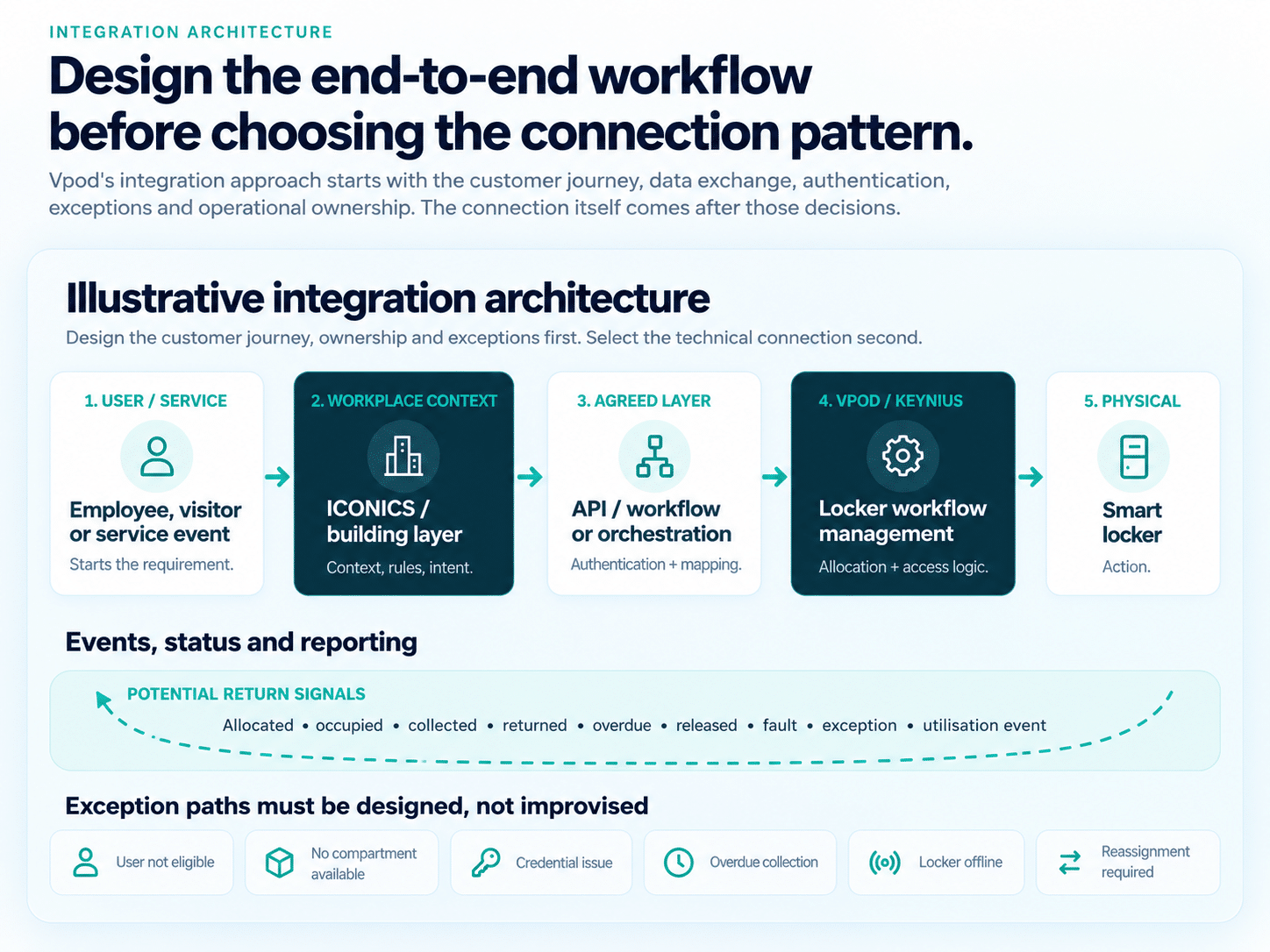
Design the end-to-end workflow before choosing the connection pattern.

Vpod's integration approach starts with the customer journey, data exchange, authentication, exceptions and operational ownership. The connection itself comes after those decisions.

Illustrative integration architecture showing the end-to-end workflow from user or service event to smart locker action, including events, status reporting and exception paths
Governance

Enterprise workflows need enterprise controls.

Connected physical services need the same discipline as other enterprise systems: clear ownership, trusted identity, secure interfaces and defined exception handling.

IdentityWho is the user and what can they do?
PermissionsWhich locations, compartments or workflows are available?
AuthenticationHow is the user or device trusted?
APIsWhat data crosses the boundary and when?
AuditabilityWhat events must be recorded and retained?
Operational ownershipWho handles support, exceptions and service recovery?
Why Vpod

Connected workplace infrastructure needs more than locker hardware.

Innovation

Integrated systems and practical workplace workflows rather than isolated hardware.

Collaboration

A partner ecosystem and API-led approach for fitting lockers into existing environments.

Enterprise delivery

Smart locker, visitor-management and workplace solutions designed for scale.

Security + sustainability

Information security and responsible deployment embedded in the wider Vpod proposition.

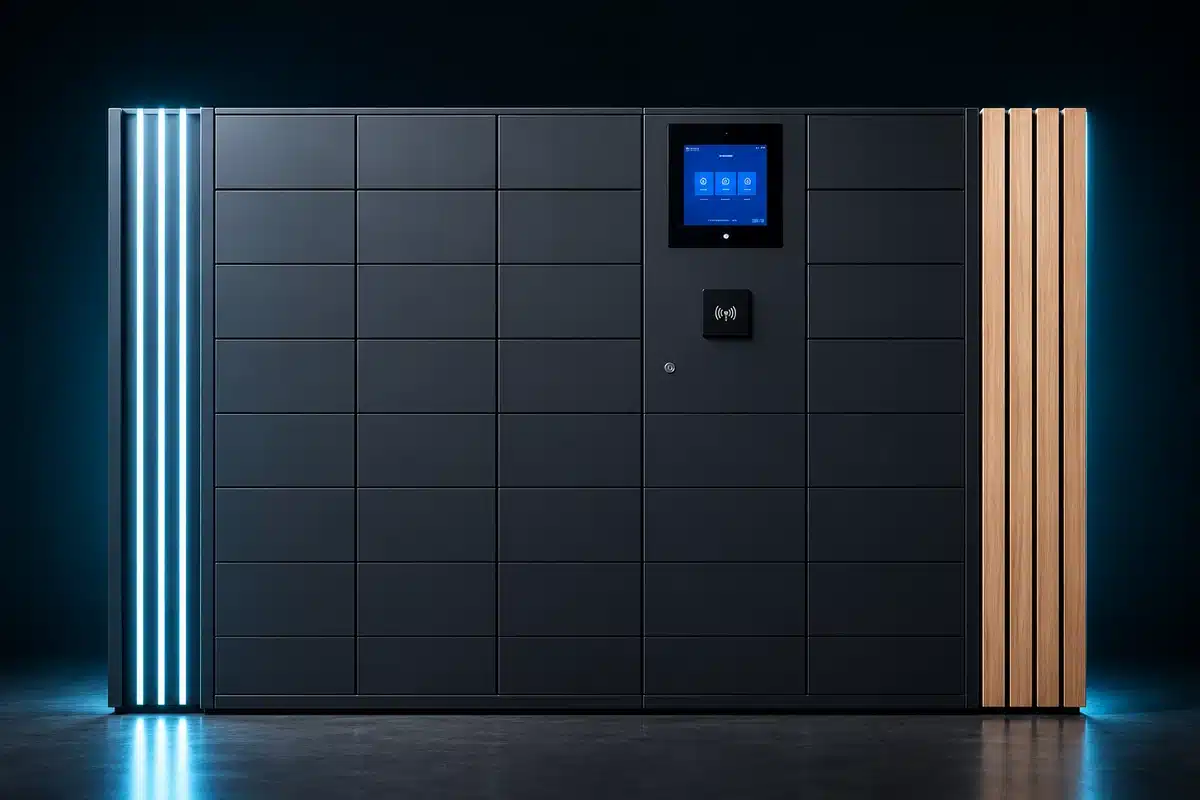
Vpod connected workplace and smart locker technology visualWatch Vpod smart workplace videos
Video

See connected workplace technology in action.

Explore Vpod workplace, smart-locker and software videos to see how connected locker workflows operate in real environments.

ICONICS × Vpod

Make intelligent storage part of the intelligent building.

Talk to Vpod about how locker workflows can fit into a connected workplace, smart-building or facilities-management strategy.