


What Is Parcel Room Overflow?
Parcel room overflow occurs when delivery volume exceeds a building’s ability to:
- Store parcels
- Organise items
- Maintain access and control
- Retrieve items efficiently
This typically results in:
- Parcels stored in corridors or reception
- Disorganised storage areas
- Delays in retrieval
- Increased operational pressure
Common in:
- Offices and workplaces
- Residential developments
- Mixed-use buildings
- Universities and campuses
Why Parcel Rooms Overflow at Scale
1. Delivery Volume Has Rapidly Increased
Modern buildings now experience:
- Daily high-frequency deliveries
- Multiple parcels per occupant
- Growth driven by e-commerce
This leads to:
- Hundreds of parcels per day
- Continuous storage pressure
Parcel volume has outgrown the infrastructure designed to handle it.
2. Deliveries Arrive in Peaks
Couriers deliver in batches:
- Morning delivery windows
- Afternoon drop-offs
This creates:
- Sudden surges in parcels
- Immediate capacity overload
Why Manual Parcel Handling Breaks at Scale
3. Storage Space Is Fixed
Parcel rooms have:
- Limited physical space
- Fixed shelving or floor capacity
As volume increases:
- Space fills quickly
- Overflow spreads beyond designated areas
4. Unstructured Storage Reduces Capacity
Most parcel rooms lack:
- Defined storage locations
- Structured organisation
- Efficient layout
This leads to:
- Inefficient use of space
- Parcels stacked or misplaced
- Reduced effective capacity
A full parcel room is rarely an efficient one.
Smart Parcel Lockers (Solution)
5. Slow Collection Increases Backlog
When parcels are not collected quickly:
- Items accumulate
- Storage capacity is reduced
- Overflow worsens
This is common when:
- Recipients are not on-site
- Collection is restricted to certain hours
6. Manual Handling Slows Turnover
Manual systems require:
- Logging parcels
- Sorting items
- Retrieving on request
This creates:
- Delays in processing
- Reduced turnover
- Growing backlog

The Hidden Impact of Parcel Room Overflow
Lost Productivity
Operational Delays
Increased Costs
Security & Compliance Risks
Parcel Room Overflow at Scale: The Key Issues
The Core Problem: Parcel Storage Depends on Space and Organisation
Parcel room overflow rarely occurs because of a single delivery.
It happens when increasing delivery volumes exceed a building’s ability to store, organise, and manage parcels efficiently.
1. Delivery Volumes Exceed Storage Capacity
As parcel deliveries increase, available storage space becomes increasingly limited.
Impact: Congestion, overflow, and reduced storage capacity.
2. Storage Areas Become Difficult to Organise
Without defined storage locations and structured processes, parcel rooms quickly become disorganised.
Impact: Misplaced parcels, longer retrieval times, and operational inefficiencies.
3. Manual Handling Slows Operations
Reception and facilities teams must manually sort, store, and retrieve parcels throughout the day.
Impact: Increased workload, processing delays, and reduced operational efficiency.
4. Control and Visibility Are Lost
As storage areas become overcrowded, it becomes more difficult to track parcel locations and maintain accountability.
Impact: Lost parcels, security risks, poor occupant experience, and operational disruption.
Why Traditional Parcel Storage Fails at Scale
Limited Space Creates Overflow
Most parcel rooms were designed for lower delivery volumes. As parcel numbers increase, available storage space quickly becomes exhausted.
Common issues include:
- Overflowing storage areas
- Parcels stored in corridors or reception
- Reduced accessibility
- Growing operational pressure
Manual Handling Creates Delays
Many buildings still rely on staff to receive, sort, store, and retrieve parcels.
Challenges include:
- Time spent managing deliveries
- Delayed parcel processing
- Retrieval bottlenecks
- Reduced operational efficiency
Unstructured Storage Reduces Control
Without defined storage locations, parcels are often stacked, moved, or misplaced.
This results in:
- Difficulty locating parcels
- Increased retrieval times
- Reduced storage capacity
- Poor user experience
Compare parcel room vs parcel lockers
How Smart Lockers Eliminate Parcel Room Overflow
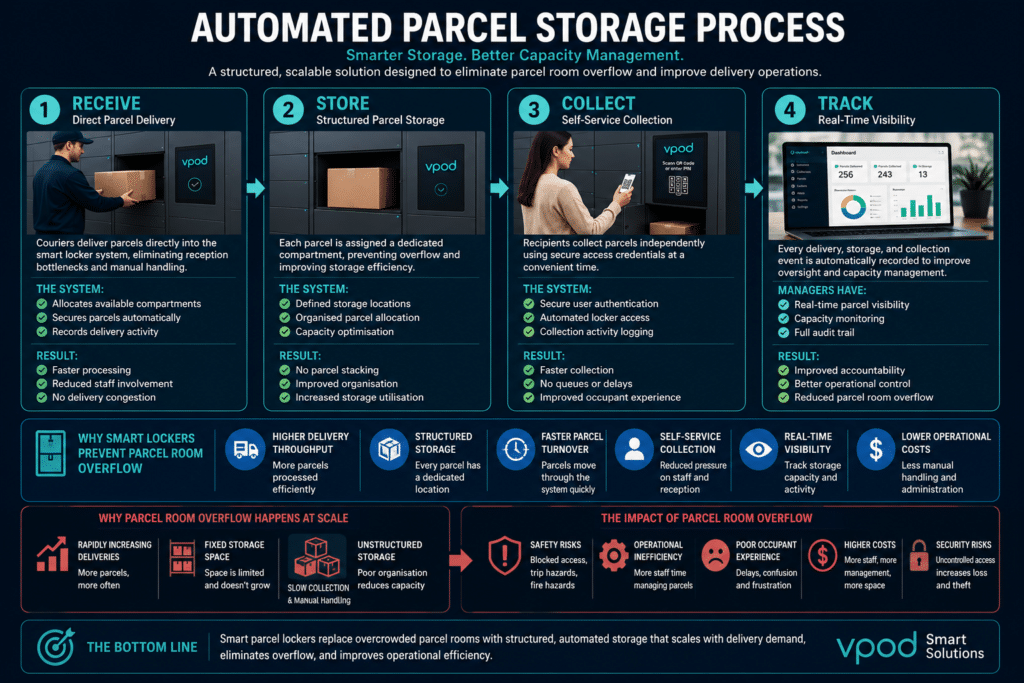
Smart parcel lockers provide a structured, automated solution for managing growing delivery volumes.
Benefits include:
- Dedicated storage for every parcel
- Direct courier-to-locker delivery
- Automated recipient notifications
- Self-service parcel collection
- Real-time tracking and visibility
- Reduced pressure on staff and reception teams
By replacing unstructured parcel rooms with smart lockers, buildings can eliminate overflow, improve storage efficiency, reduce operational workload, and create a scalable parcel management operation.
Automated Parcel Storage Process
Traditional Parcel Rooms vs Smart Parcel Locker Systems




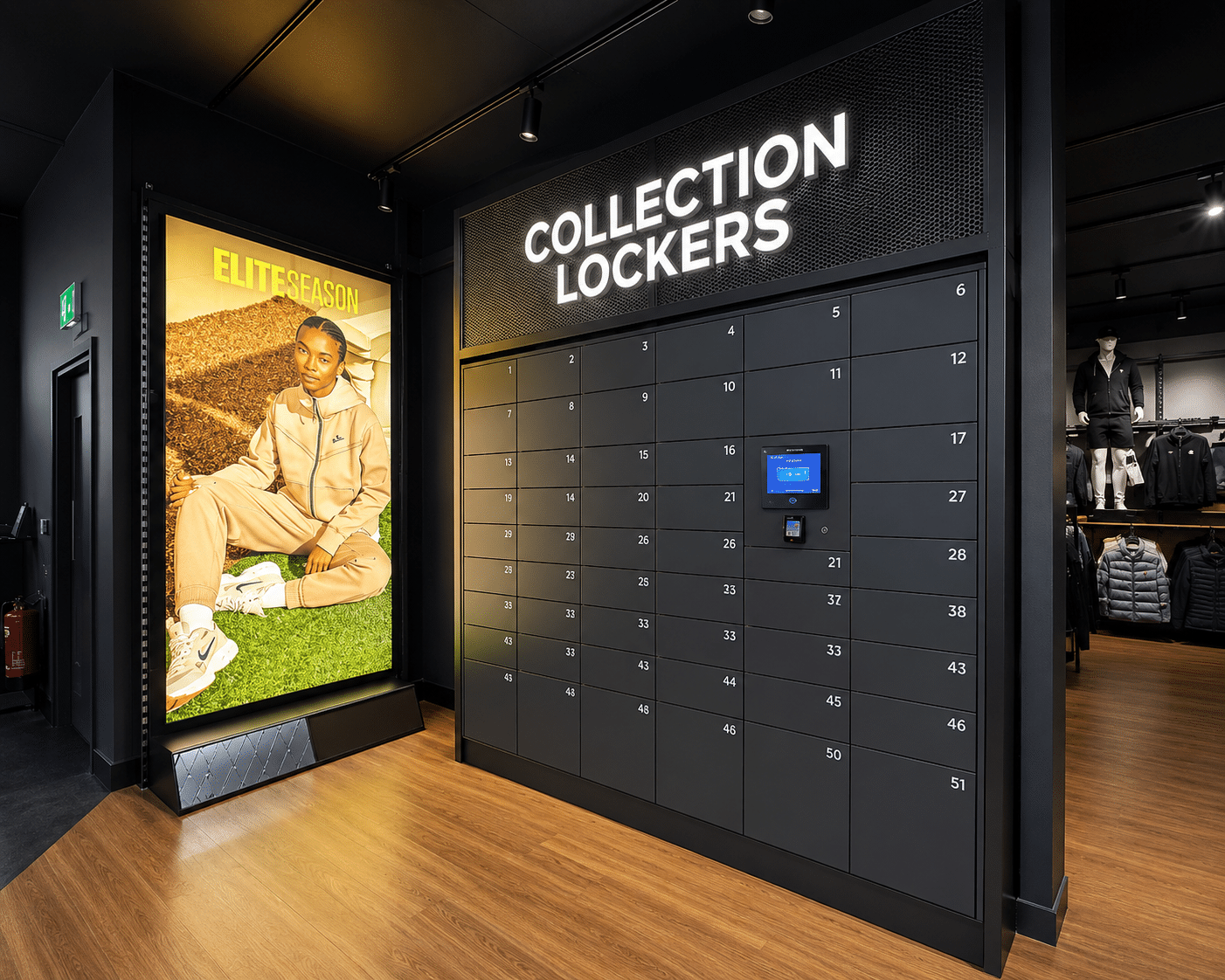
Case Study: Leading Footwear Retailer & VPOD
How Smart Lockers Reduced Collection Congestion and Improved Parcel Flow
A leading UK footwear retailer implemented 51 smart locker compartments to streamline click-and-collect and returns. The solution processed over 5,500 orders annually, reduced staff time spent on collections by 78%, and improved customer flow by moving parcel handovers to a self-service model.
Key Results:
- 5,500+ orders processed annually
- 78% reduction in collection handling time
- Reduced collection-area congestion
- Improved parcel turnover and customer experience
- Enhanced visibility through real-time usage data
Who Is Affected by Parcel Room Overflow?
Facilities & Building Operations Teams / Reception & Workplace Teams
Facilities & Building Operations Teams
Key Challenges
- Managing increasing parcel volumes
- Maintaining safe and organised storage areas
- Preventing parcel room congestion
- Improving operational efficiency
- Supporting building occupants
Operational Pain Points
- Overflowing parcel rooms
- Limited storage capacity
- Increased staff workload
- Space management challenges
- Growing operational costs