Why Ingress Delays Events at Scale

Small delays at entry create major operational, security, and revenue problems inside the venue.

Ingress delays are one of the most underestimated risks in event operations.

At small events, delays are manageable.

At scale, they become operationally critical failures that impact:

  • Security compliance
  • Revenue performance
  • Visitor experience
  • Event start times

And the reality is this:

Most ingress systems are not designed for peak demand — they are designed for average flow.

That mismatch is what causes delays.

Event smart lockers

What Are Ingress Delays?

Ingress delays occur when attendees cannot enter a venue quickly enough due to bottlenecks in the entry process.

This typically happens at:

  • Security screening
  • Ticket scanning
  • Bag checks
  • Cloakrooms / bag drop areas

The result:

  • Long queues outside venues
  • Delayed entry times
  • Missed opening moments
  • Crowd congestion at access points

Why Ingress Delays Get Worse at Scale

1. Demand Spikes, Not Flows

Event arrivals are not evenly distributed.

Instead:

  • 60–80% of attendees arrive in a short window before start time

This creates a surge load that overwhelms entry systems.

smart locker systems

2. Entry Systems Have Fixed Throughput

Each ingress component can only process a set number of people per hour:

Process

Throughput Capacity

Ticket scanning

High

Security checks

Medium

Bag searches

Low

Cloakroom storage

Very low

This creates a simple rule:

Your entire ingress speed is dictated by the slowest process.

3. Bottlenecks Cascade Across the System

When one stage slows down:

  1. Queues form
  2. Pressure builds upstream
  3. Staff are overwhelmed
  4. Delays compound

This is why ingress delays often appear suddenly — and then escalate rapidly.

perimeter smart lockers

4. Bags Are the Primary Constraint

Attendees with bags:

  • Take longer at security
  • Require manual inspection
  • Often need secondary storage

This introduces multiple friction points in a single journey.

Bags multiply processing time across every stage of ingress.

5. Manual Operations Cannot Scale

Traditional ingress relies on:

  • Staff-heavy cloakrooms
  • Manual bag handling
  • Temporary infrastructure

These systems:

  • Have capacity limits
  • Increase costs rapidly
  • Introduce human error

Adding more staff does not solve exponential demand.

automated bag storage solution

event queue problems

The Real Impact of Ingress Delays

Security Risk

Queues outside venues create: * High-density crowd pressure/pinch points * Unscreened gathering areas * Increased exposure to threats This directly challenges compliance with Martyn’s Law and modern event security expectations.

Revenue Loss

Every minute spent queuing is a minute not spent: * Buying food & drink * Visiting retail areas * Engaging with the event Ingress delays reduce total spend per visitor.

Poor Visitor Experience

Attendees now expect: * Fast, frictionless entry * Minimal waiting Delays lead to: * Frustration * Negative reviews * Reduced repeat attendance

Event Disruption

Ingress delays can cause: * Late starts * Staggered audience arrival * Poor atmosphere at opening For live events, timing is everything.

The Real Impact of Ingress Delays

Add More Staff

  • Expensive
  • Hard to scale
  • Limited impact on peak congestion

Cloakroom v Event Lockers 

Increase Entry Lanes

  • Space constraints
  • Still bottlenecked by bag processing


Open Gates Earlier

  • Does not change arrival behaviour
  • Only slightly spreads demand

Restrict Bags

  • Impacts visitor experience
  • Not always enforceable

Event lockers v Bag Systems

The Core Problem: Throughput Failure

Ingress delays are not a staffing problem.

They are a throughput problem.

And more specifically:

A system design problem where friction exceeds capacity.

The biggest source of that friction?

Bag handling.

The Scalable Solution: Remove Friction Before Entry

To fix ingress delays, you must:

  • Reduce processing time per visitor
  • Remove bottlenecks
  • Increase parallel processing

Smart locker systems achieve this by:

Moving Storage Outside the Entry Flow

Perimeter Smart Storage Lockers

Moving Storage Outside the Entry Flow

  • Visitors store bags before security
  • No need for cloakrooms
  • No secondary queues

Increasing Security Throughput

  • Fewer bags = faster checks
  • More people processed per lane
Scale Ingress

Remove bag screening from security

Enabling Self-Service at Scale

  • No staff dependency
  • Multiple users served simultaneously

Smoothing Demand Peaks

  • Storage happens continuously, not at a single point
  • Reduces pressure on entry gates

Operational Impact

With optimised ingress systems:

  • Queue times reduce significantly
  • Throughput increases by up to 3–4x
  • Staff requirements decrease
  • Security improves
  • Visitor experience improves

See: /solutions/event-smart-lockers/
Compare: /cloakrooms-vs-lockers-event-security/
Calculate ROI: /roi-calculator/

Eliminate Entry Delays Before They Start

The Bottom Line

Ingress delays are not caused by poor planning.

They are caused by systems that cannot handle peak demand.

At scale:

  • Demand spikes
  • Bottlenecks form
  • Delays compound

The solution is not to manage queues better.


It’s to design them out of the system entirely.

Perimeter Smart Bag Lockers
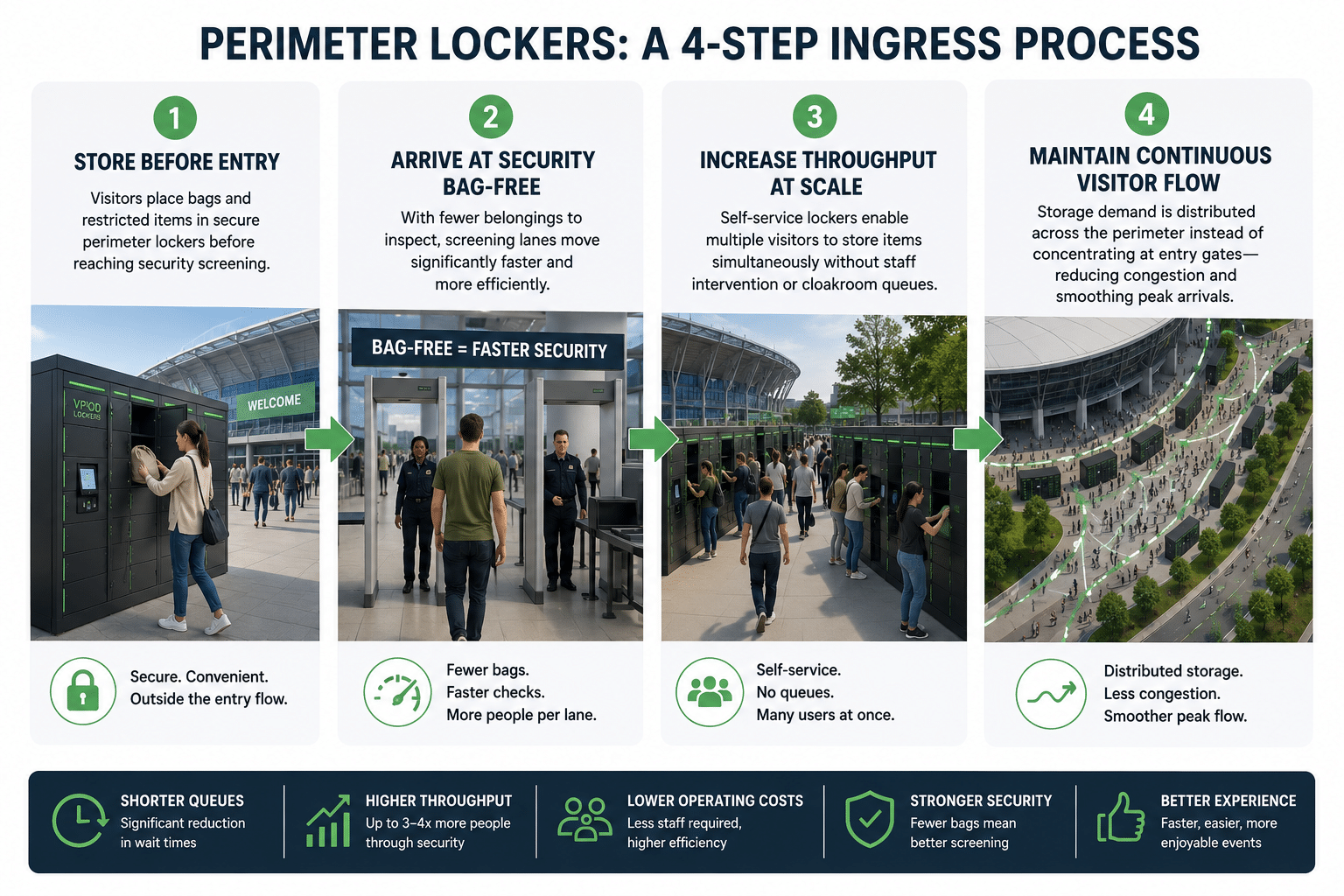
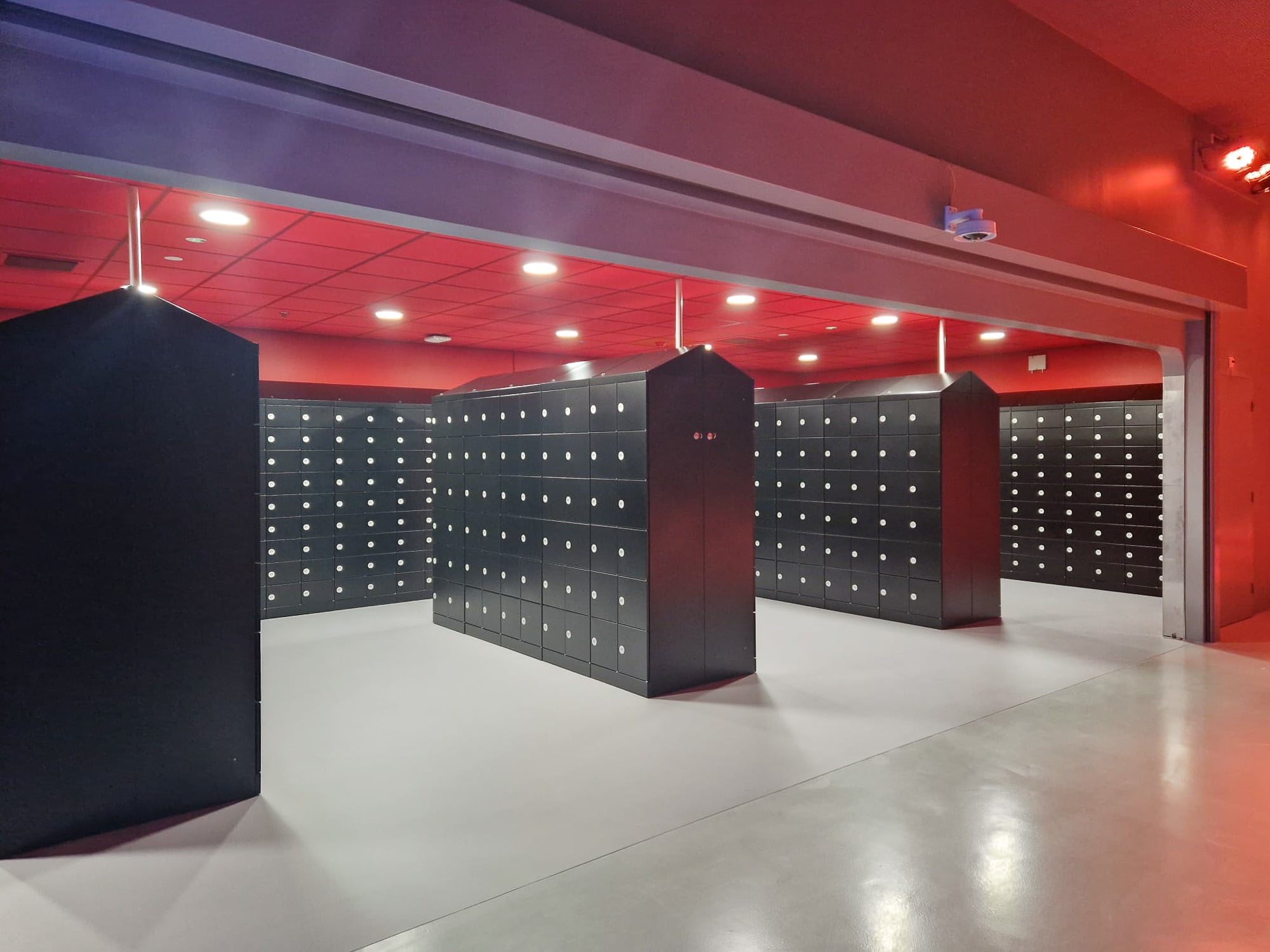
Store Before Entry : Visitors place bags and restricted items in secure perimeter lockers before reaching security screening.
Arrive at Security Bag-Free : With fewer belongings to inspect, screening lanes move significantly faster and more efficiently.
Increase Throughput at Scale : Self-service lockers enable multiple visitors to store items simultaneously without staff intervention or cloakroom queues.
Maintain Continuous Visitor Flow : Storage demand is distributed across the perimeter instead of concentrating at entry gates — reducing congestion and smoothing peak arrivals.

Perimeter Smart Bag Lockers


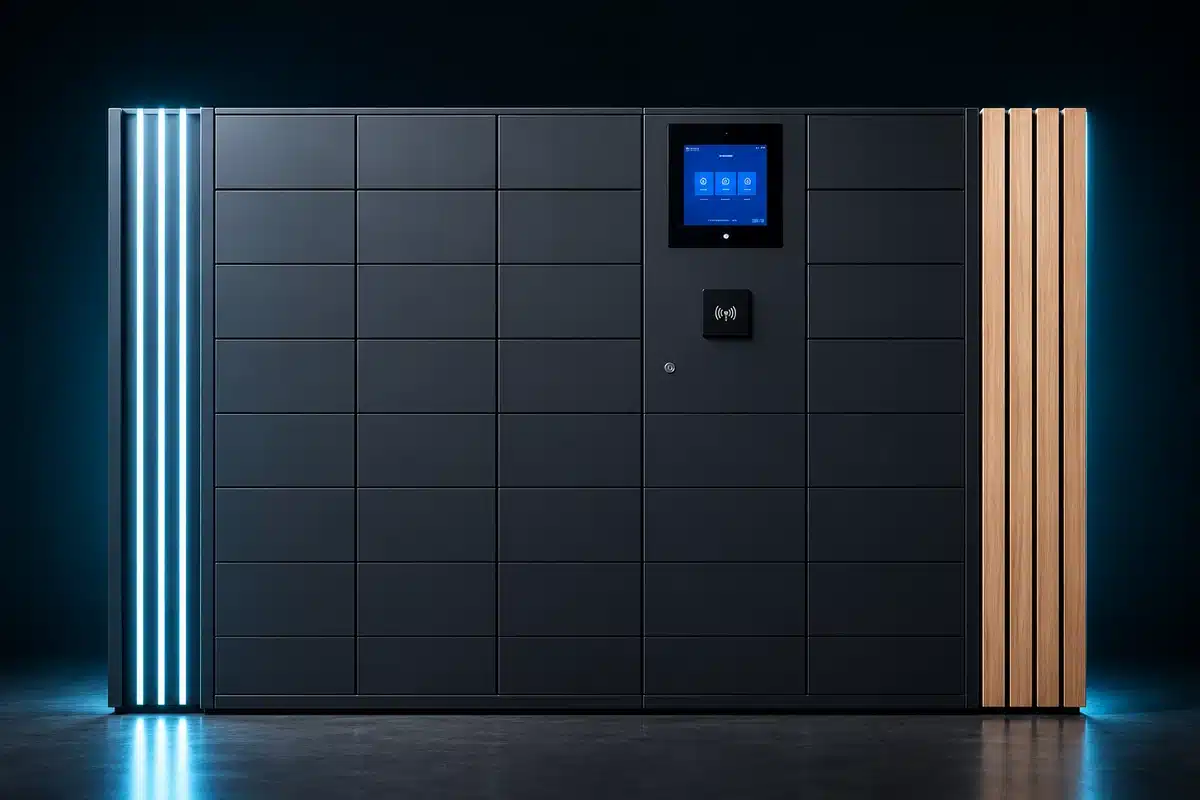
  • Users access lockers via QR code, PIN, or mobile app — no staff required.
  • How Lockers Work

Perimeter Smart Bag Lockers

Remove friction before security

by moving bag storage outside the entry flow and eliminating cloakroom queues.


Increase throughput and efficiency

with faster security checks, parallel self-service storage, and reduced staffing pressure.


Design out congestion at scale

by smoothing peak demand and maintaining continuous visitor flow through the perimeter.

Perimeter Smart Bag Lockers V Manual Storage

Perimeter Smart Bag Lockers
Visitors store items before security, reducing queues and increasing processing speed
Self-service system handles multiple users simultaneously
Lower staffing requirements and continuous automated operation
Fewer bags at checkpoints improves security and creates smoother entry
Manual Cloakroom
Bags stay in the entry flow, creating bottlenecks and slower screening
Limited by staff capacity and manual processing speed
High staffing dependency with manual ticketing and handling
Congestion, secondary queues, and bag handling delays reduce experience
ROI & Operational Impact
Increase Throughput: by 3–4× Faster bag-free screening enables more visitors through each security lane.
Reduce Staffing Costs: Self-service lockers remove the need for large cloakroom teams and manual handling.
Improve Security Efficiency: Fewer bags at checkpoints mean quicker, more effective screening procedures.
Enhance Visitor Experience: Shorter queues, smoother entry, and reduced congestion improve overall satisfaction.

Proven in High-Turnover Event Environments

AFAS

AFAS Live — Scalable Event Locker Deployment

AFAS Live deployed CrowdStor lockers to manage high visitor volumes efficiently during concerts and large-scale events. The system improved entry and exit flow, reduced staff intervention, and delivered a seamless, cashless storage experience for guests.


Related Solutions

Who This Is For

Venue & Stadium Operations Directors / Event Security & Crowd Management Teams

Operations Manager

Responsible for managing ingress flow, security efficiency, staffing costs, and visitor experience at large-scale venues, stadiums, arenas, and live events.

Primary Goals:

  • Reduce queue times
  • Improve crowd flow
  • Increase security throughput
  • Lower operational pressure during peak arrivals

Operations Director Events

Operations Director Venues 

Head of Security

Focused on maintaining safe, compliant, and efficient entry processes while handling high visitor volumes and restricted item policies.

Primary Goals:

  • Minimise bag-related screening delays
  • Reduce congestion at checkpoints
  • Improve perimeter security control
  • Eliminate cloakroom bottlenecks and secondary queues

Security Director 

Eliminate Entry Bottlenecks at Scale

3–4× Faster Entry Throughput

Reduce screening delays by removing bags from the security process before visitors reach the gate.

Up to 50% Lower Operational Pressure

Minimise cloakroom staffing, secondary queues, and congestion during peak arrival periods.

100% Self-Service Perimeter Storage

Enable continuous, scalable visitor processing with automated smart locker systems operating in parallel.

Frequently Asked Questions

What causes ingress delays at events?

Ingress delays occur when entry processes (security, bag checks, scanning) cannot handle peak arrival demand.

Why do delays get worse at larger events?

Because demand spikes sharply before start time, overwhelming systems with fixed throughput capacity.

What is the biggest cause of ingress delays?

Bag handling and security screening involving bags are the primary bottlenecks.

Can more staff fix ingress delays?

Only marginally. The root issue is system throughput, not staffing levels.

How can events reduce ingress delays?

By removing friction from entry processes — particularly through pre-entry storage and automated systems like smart lockers.

Design Out Queueing Before It Starts