




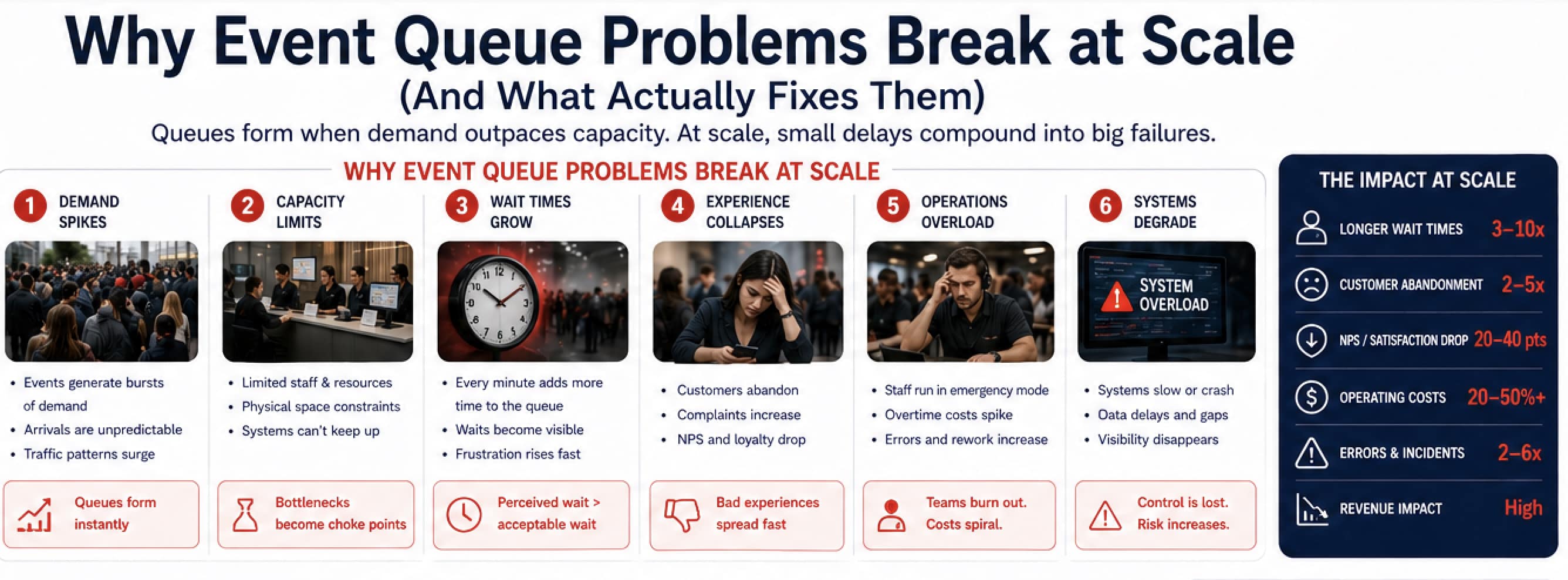
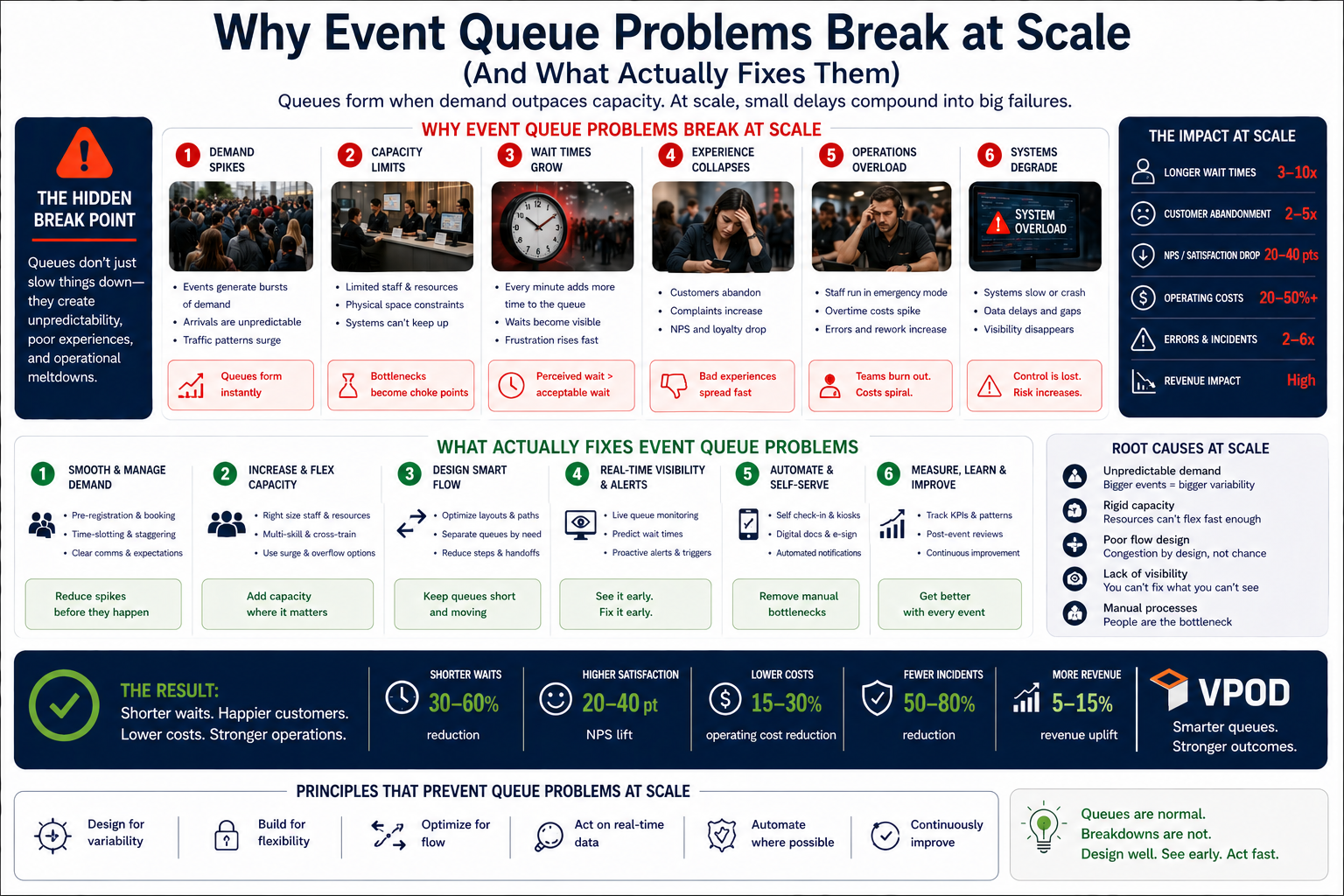
Event Queue Problems Are a Throughput Failure — Not a Planning Issue
Pain Point: Teams think queues = poor planning, but it’s actually system capacity breaking under pressure
Peak Arrival Overwhelms Event Entry Systems
Pain Point: 60–80% of attendees arrive at once, instantly exceeding capacity
Fixed Throughput Creates Inevitable Bottlenecks
Pain Point: Entry systems (security, ticketing, cloakrooms) have hard limits that can’t flex
Bag Handling Slows Down Every Part of Entry
Pain Point: Bags reduce throughput, increase inspection time, and create secondary queues
Manual Event Operations Don’t Scale
Pain Point: Staff-led processes (cloakrooms, bag checks) break under volume and demand
Queue Growth Becomes Exponential Under Pressure
Event Queues Create Security Risks at Entry Points
High-density queues create uncontrolled crowd build-up at entry points, increasing vulnerability and directly conflicting with Martyn’s Law security requirements.
Long Queues Reduce Event Revenue
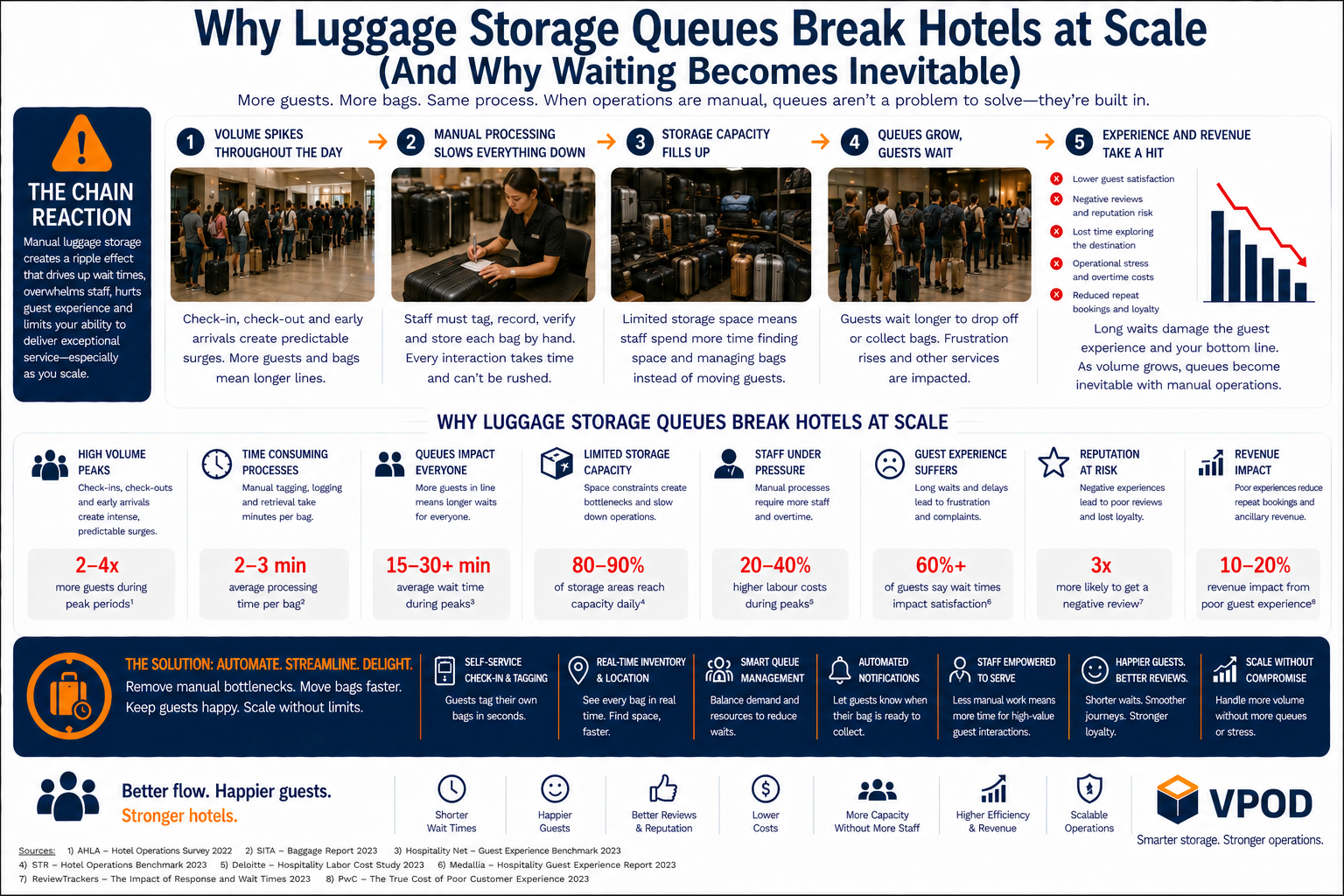
Poor Entry Experience Damages Event Reputation
Rising Operational Costs Without Solving the Problem
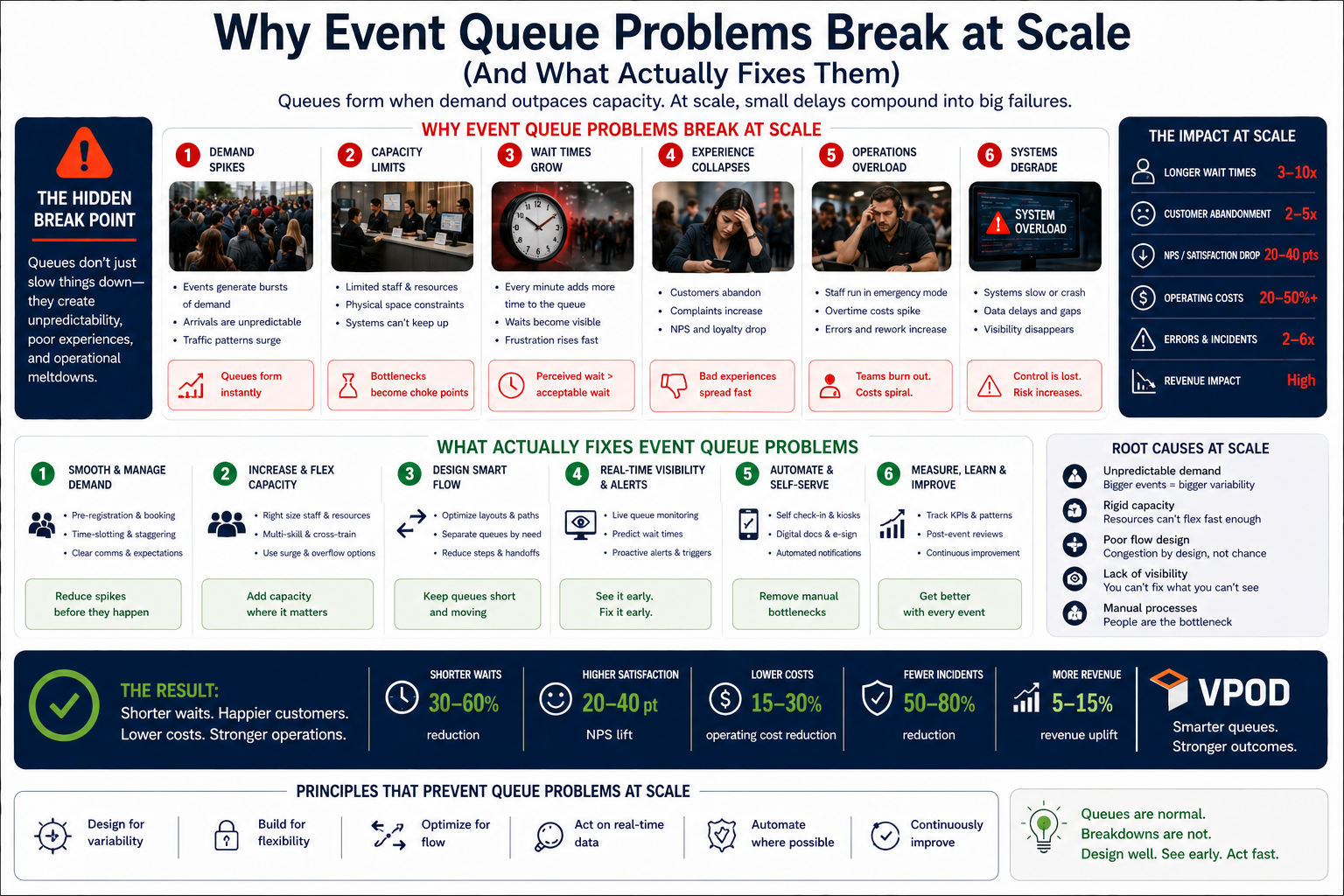
What Are Event Queue Problems?
Event queue problems occur when arrival demand exceeds processing capacity at key entry points, such as:
- Security screening
- Bag checks
- Ticket validation
- Cloakrooms / bag drop areas
This results in:
- Long wait times
- Congestion at entry points
- Delayed event start times
- Poor visitor experience
But the real issue isn’t queues themselves.
It’s throughput failure.
Why Queues Break at Scale
1. Peak Arrival Is Compressed
At most events:
- 60–80% of attendees arrive within a 30–60 minute window
This creates a sudden surge that overwhelms systems designed for average flow — not peak demand.
2. Throughput Is Fixed (But Demand Isn’t)
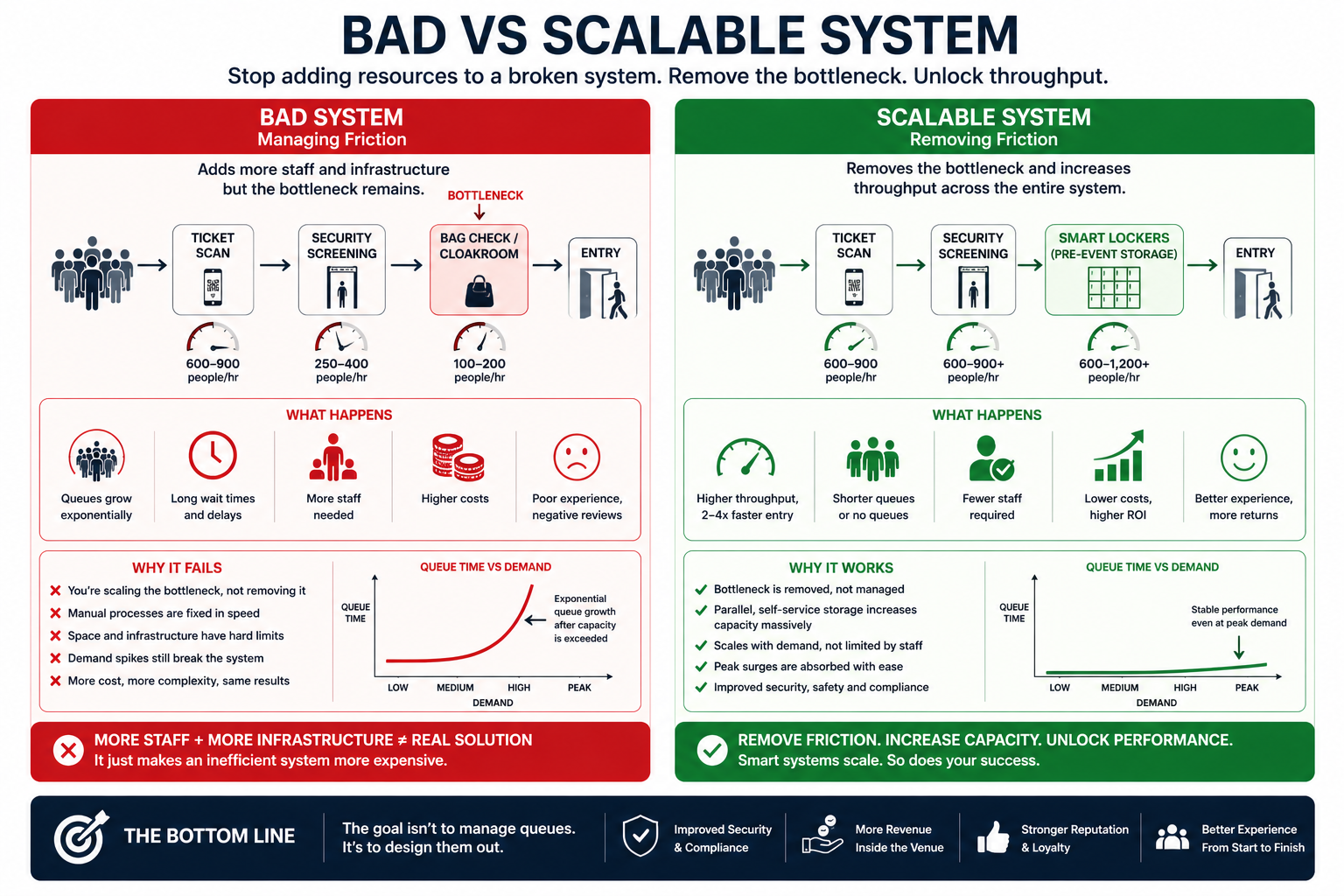
Each part of your entry system has a maximum capacity:
| Entry Component | Typical Throughput |
|---|---|
| Ticket scan | 600–900 people/hour |
| Security lane | 250–400 people/hour |
| Bag search | 100–200 people/hour |
| Cloakroom | 60–120 bags/hour |
The slowest element becomes the bottleneck.
And at events, that is almost always: Bag handling
3. Bags Destroy Flow Efficiency
Visitors with bags:
- Take longer at security
- Require manual inspection
- Often need secondary handling (cloakroom)
This creates a cascade effect:
- Slower security checks
- Increased queue buildup
- Overloaded staff
- System-wide congestion
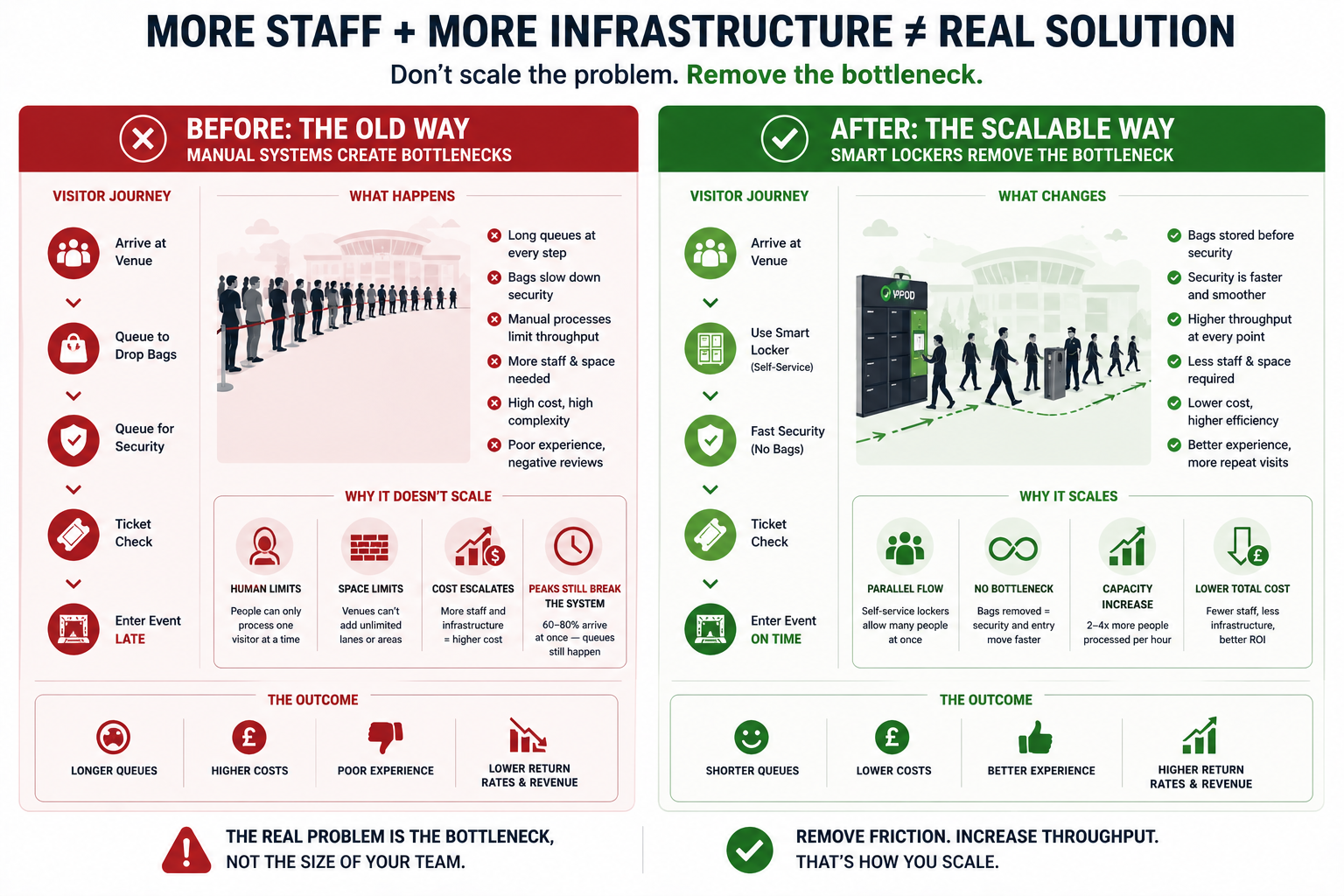
4. Manual Systems Don’t Scale
Traditional event operations rely on:
- Staff handling bags
- Temporary cloakrooms
- Manual tagging systems
These systems have hard limits:
- Labour constraints
- Space limitations
- Human error rates
You cannot simply “add more staff” to solve exponential demand.
5. Queue Growth Is Exponential
Once capacity is exceeded, queues escalate rapidly:
- +10% demand over capacity
→ results in 100%+ increase in queue time
This is why events appear “fine” — until they suddenly aren’t.
The Scalable Solution: Pre-Entry Smart Locker Systems
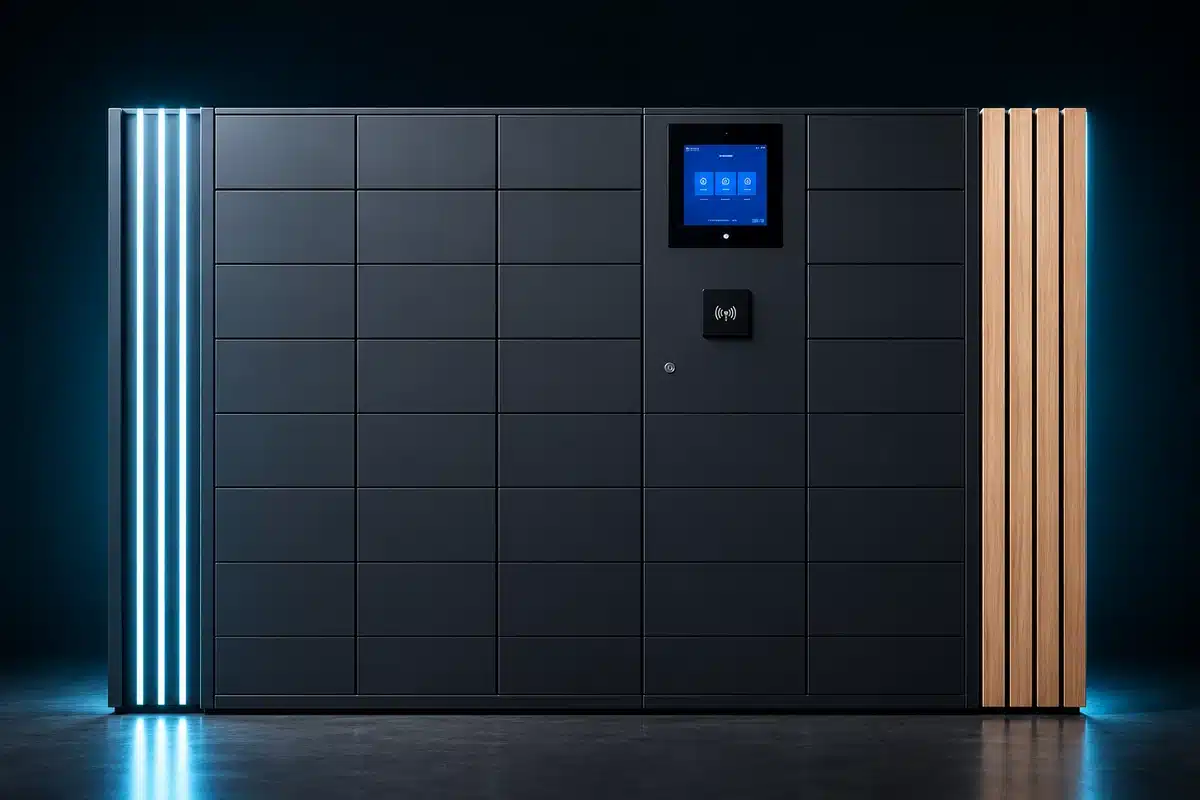
Smart rental lockers fundamentally change event ingress by:
Removing bags before security
- Faster screening
- Higher throughput per lane
Eliminating cloakroom queues
- No manual handling
- No tagging systems
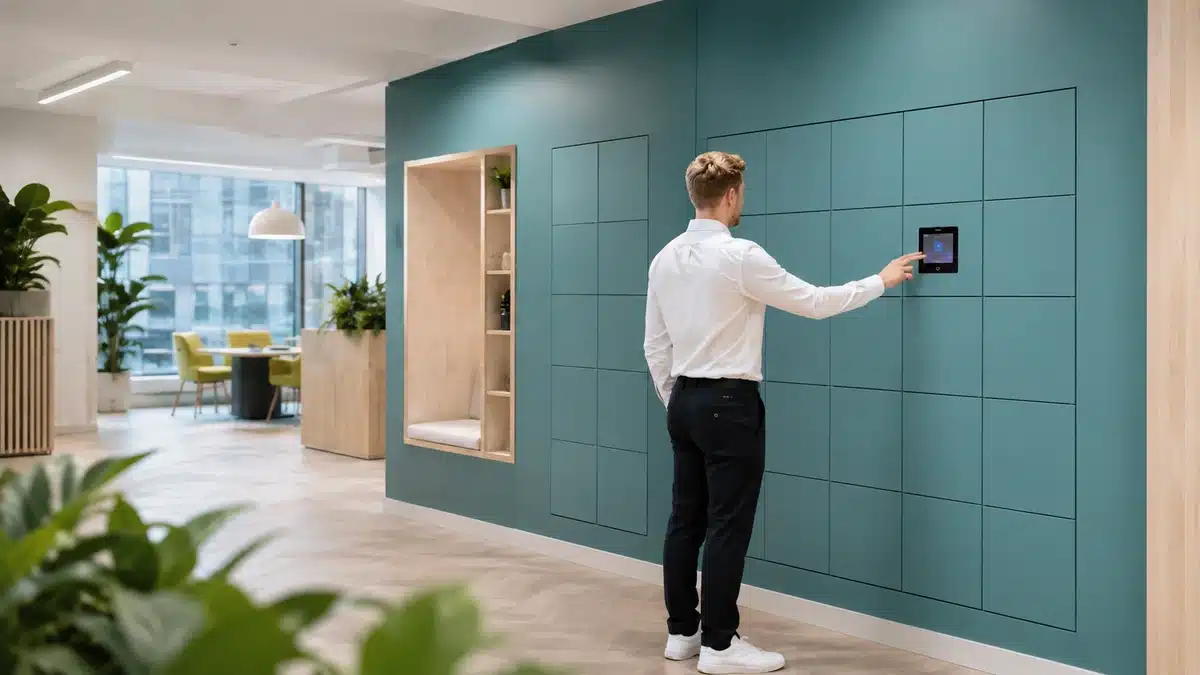
Enabling self-service storage
- Parallel processing (not linear)
- No dependency on staff
Increasing throughput capacity
- More people processed per hour
- Reduced congestion risk
With smart lockers:
- Entry throughput increases by 2–4x
- Queue times drop significantly
- Staff requirements decrease
- Security compliance improves
See: /solutions/event-smart-lockers/
Compare: /cloakrooms-vs-lockers-event-security/
Calculate ROI: /roi-calculator/
Event queue problems are not caused by poor planning.
They are caused by systems that don’t scale.
And at scale:
- Queues grow exponentially
- Manual processes fail
- Security risk increases
The only way to fix it is to: Remove friction from the system — not manage it.
1. Faster Entry & Higher Throughput
- Remove bags before security to accelerate screening
- Process 2–4x more visitors per hour
- Eliminate the primary bottleneck in event ingress
2. Dramatically Reduced Queue Times
- No cloakroom queues or secondary handling Cloakroom v Smart Lockers
- Parallel, self-service usage (not one-by-one processing) Bag Check v Smart Lockers
- Smoother, more predictable entry flow
3. Reduced Staffing & Operational Load
- No manual bag handling or tagging
- Fewer staff required at peak times
- Lower operational complexity and coordination
4. Improved Security & Compliance
- Removes pinch points (dense queues) outside venues
- Faster screening with fewer bag checks
- Aligns with Martyn’s Law and modern security expectations
5. Increased Revenue Opportunity
- More time inside = more spend on F&B, retail, experiences
- Reduced congestion improves in-venue flow
- Higher dwell time per visitor
6. Better Visitor Experience
- Faster, frictionless entry
- No stress from long queues or lost time
- Stronger first impression → better reviews & return rates
7. Scalable for Large Events
- Handles peak demand without breaking
- No dependency on linear, manual processes
- Works consistently across events, venues, and volumes
- Event Lockers Solutions
- Venue Locker Solutions
- Martyn’s Law Event security requirements
Perimeter Smart Event Lockers
- Digital Access via QR code
- SmartPhone / WiFi payment systems
- How Lockers Work
Event Perimeter Smart Lockers
Manual Storage V Smart Lockers (Bags)




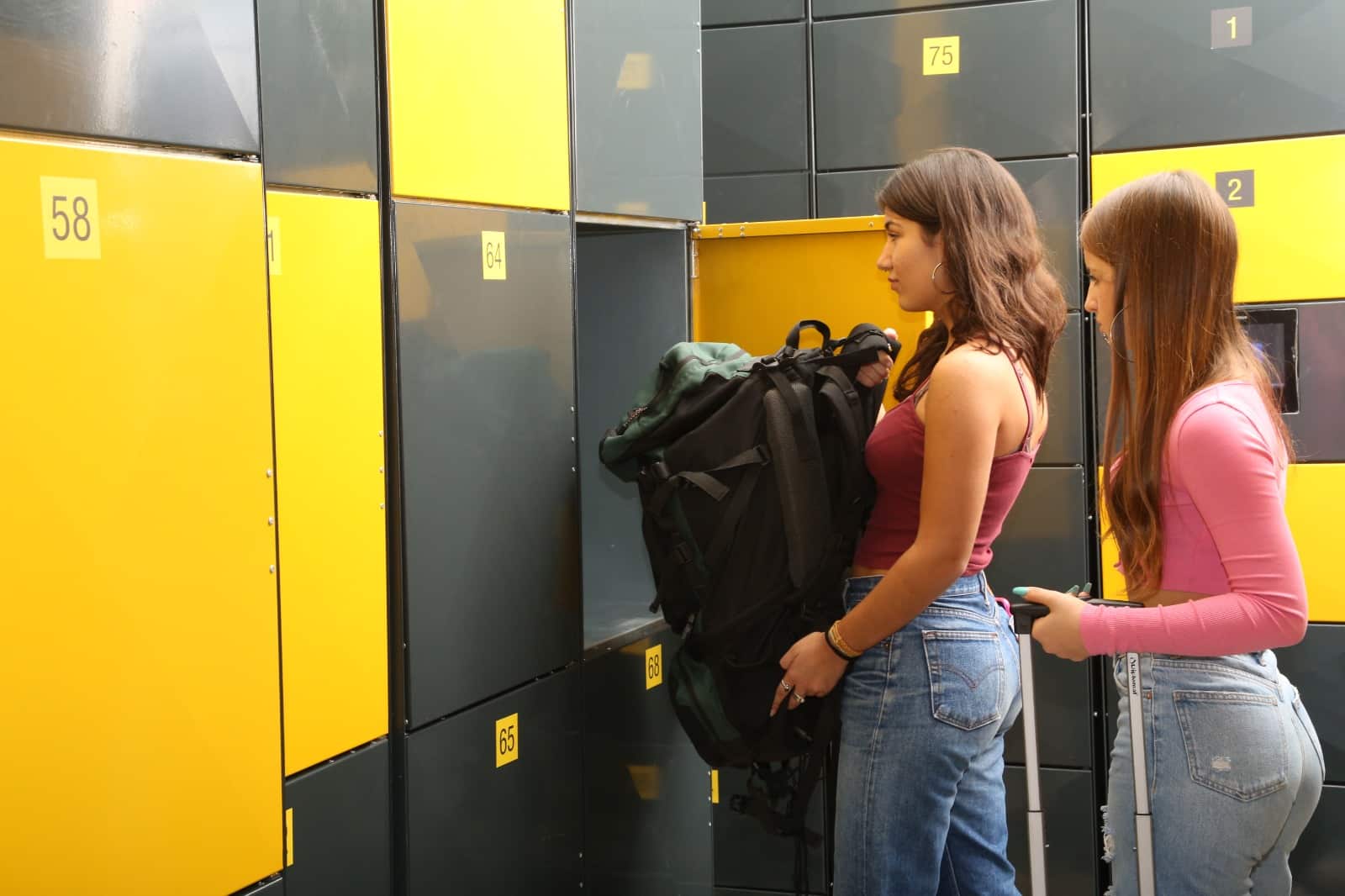
Proven in High-Turnover Event Environments
AFAS Live
- Increased Revenue from Lockers
- Reduced Queuing and Increased Customer Experience
- Reduce staff Pressure and costs
- Reduced Risk
Who This Is For
Event Operations Director / Head of Security / Crowd Safety Manager
Event Operations Director
Why we think this may be of interest:
You own throughput, staffing, visitor flow, and event-day performance.
Concerns:
- Entry systems collapse during compressed arrival windows
- Staff-heavy bag handling creates bottlenecks
- Queues delay event start times and damage guest experience
- More staff increases cost without fixing throughput
- Poor flow reduces dwell time and venue spend
What you care about:
- Faster ingress
- Lower operational complexity
- Reduced staffing pressure
- Higher visitor satisfaction
- More predictable event delivery
“Stop managing queues. Remove the bottleneck before it reaches security.”
Head of Security / Crowd Safety Manager
-
Why you could be impacted:
They own crowd density, perimeter risk, entry-point control, and Martyn’s Law preparedness.Concern areas:
- Dense queues create uncontrolled crowd build-up outside venues
- Bag checks slow screening and increase exposure
- Unscreened visitor clusters increase vulnerability
- Poor visibility makes incidents harder to detect and respond to
- Queue build-up creates Martyn’s Law compliance risk
What you may care about:
- Reducing crowd density
- Improving perimeter control
- Removing bags before screening
- Faster security throughput
- Demonstrable risk reduction
Suggestion:
“Queues outside the venue are not just an inconvenience — they are your highest-risk zone.” - Event Queue Guide
- Event Security Bag Storage v Bag Smart Lockers
- Scalable V Non Scalable Systems
- More Staff & Infrastructure Old and New Way Guide