






Where Click & Collect Risk Actually Comes From
1. Identity Verification Gaps
- Weak or inconsistent ID checks
- Use of screenshots or shared QR codes
- Easy impersonation at pickup
Result: Wrong person collects the order
This is why secure customer authentication and controlled locker access are critical in high-volume collection environments.
Recommended links:
- customer authentication → Access Control Lockers
- controlled locker access → Smart Retail Locker Solutions
2. Unsecure Handoff Processes
- No secondary verification
- Rushed, high-pressure interactions
- No audit trail
Result: Orders stolen or fraudulently collected
Manual handoffs create risk because they depend on staff consistency rather than automated verification and audit trails.
Recommended links:
- manual handoffs → Why Click & Collect staff costs spiral at scale
- audit trails → Asset Tracking Lockers
3. Disorganized Storage
- Poorly organized inventory
- Unattended pickup areas
- Lack of segregation
Result: Wrong items handed out or items go missing
Secure smart locker storage gives every order a controlled location, reducing missing items, incorrect handovers, and operational confusion.
Recommended links:
- smart locker storage → Smart Retail Locker Solutions
- missing items → Asset Tracking Lockers
4. System & Data Vulnerabilities
- Risk of account takeover
- Exposed customer data
- Weak integrations between systems
Result: Fraud and potential data breaches
Integrated locker workflows reduce operational risk by connecting access, order status, and collection confirmation in one controlled process.
Recommended links:
- integrated locker workflows → Smart Locker Solutions
- collection confirmation → Smart Locker Video Guides
5. Excessive Volume & Complexity
- Peak-time pressure
- Increasing number of exceptions
- Harder to supervise operations
Result: Errors multiply and control breaks down
6. Poor Communication & Expectations
- No real-time updates
- Lack of visibility on wait times
- Customers left uncertain
Result: Frustration, churn, and complaints

Where Click & Collect Risk Actually Comes From
Identity Verification Gaps
Disorganized Storage
System & Data Vulnerabilities
Poor Customer Communication
Why Systems Fail at Scale
- Siloed systems → Data inconsistency
- Batch updates → Outdated order status
- Limited scalability → Performance drops under load
- Complex customization → Slow to adapt
- Weak mobile tools → Staff inefficiency
- Lack of insights → Poor decision-making
- Data exposure risks → Compliance issues
The Impact at Scale
Secure Every Handoff. Protect Every Order.
As these issues compound, the business impact becomes significant:
- Order theft & fraud: ↑ 3–6x
- Refunds & replacements: ↑ 2–5x
- Customer complaints: ↑ 3–7x
- Operational costs: ↑ 20–40%
- Staff stress & labor costs: ↑ 20–40%+
- Errors & refunds: Higher overall
When collection systems lack security, visibility, and auditability, the cost shows up in fraud, refunds, complaints, and operational pressure.
Recommended link:
- calculate ROI → ROI Calculator
What Fixes Click & Collect Queues
The solution isn’t just more rules—it’s better system design:
- Unified real-time inventory & order visibility
- Intelligent order routing and load balancing
- Optimized picking and wave processing
- Dedicated click & collect zones
- Live wait-time and order status updates
- Mobile tools for staff
- Clear customer communication
- Data-driven forecasting and staffing
Outcome: Faster flow, fewer errors, better customer experience
The Core Solution Principle
The image emphasizes a simple idea:
Secure every handoff. Protect every order.
This includes:
- Strong ID verification
- Standardized handoff protocols
- Real-time tracking and audit trails
- Built-in security (not bolted on later)
The Real Cost of Poor Experience
In high-volume environments (e.g., events), breakdowns lead to:
- ~30 minutes extra wait time
- Lower customer retention
- Reduced spend
- Significant revenue loss (£250K–£500K per event)
What Good Looks Like
With the right systems in place:
- Wait times drop by 40–70%
- Throughput increases 20–30%
- Labor costs fall 15–25%
- Fewer errors and refunds
- Higher customer satisfaction
Bottom Line
Click & collect doesn’t fail because the idea is flawed—it fails because:
- Systems aren’t real-time
- Processes aren’t consistent
- And human behaviour under pressure isn’t accounted for
At scale, small gaps compound into systemic risk.
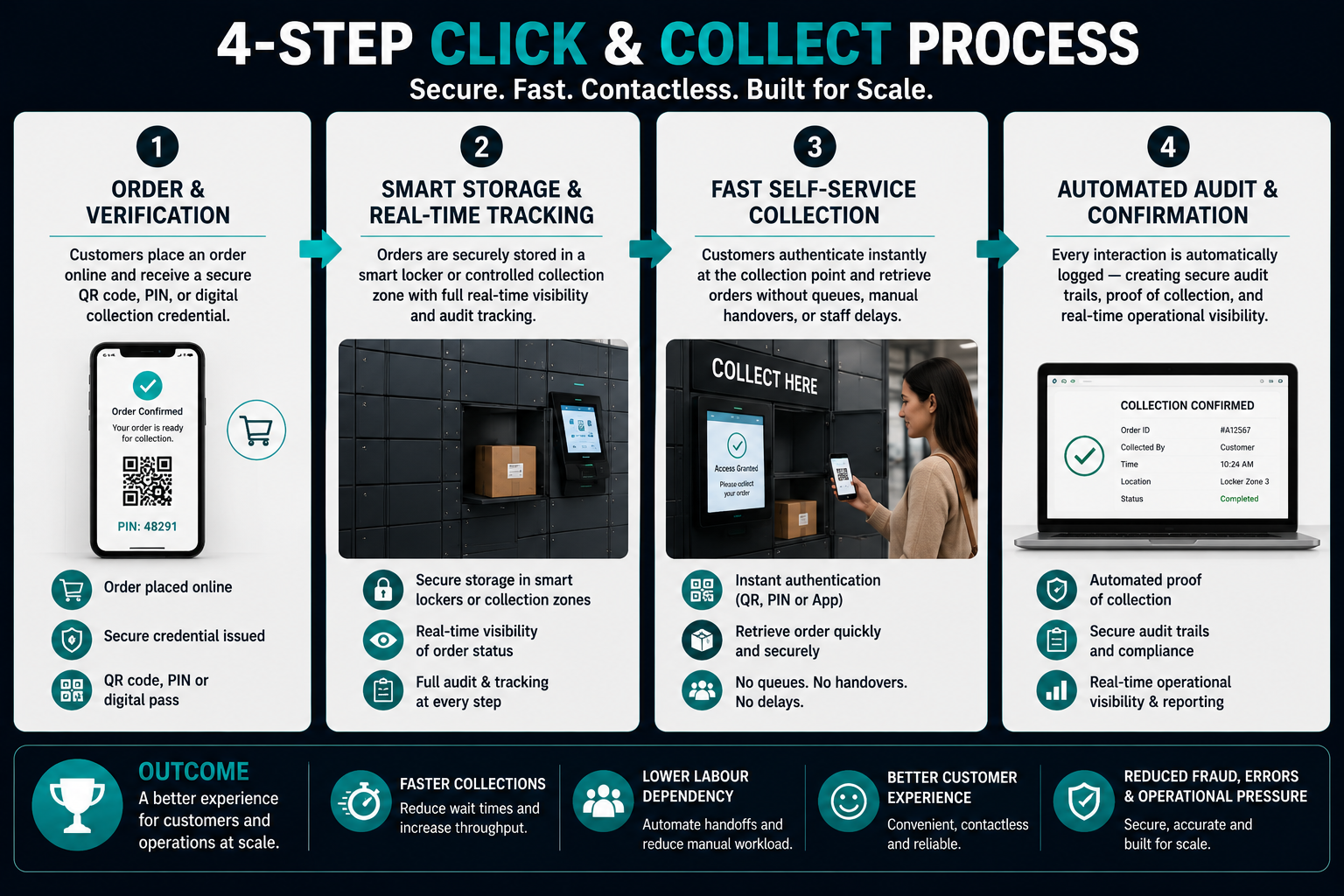
Secure, Fast & Scalable Click & Collect
Traditional Collection vs Smart Locker Solutions





Why Companies Choose Vpod
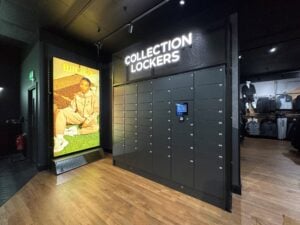
Retail Click N Collect
As a result, organisations can improve collection speed, reduce fraud, and scale operations without increasing operational pressure on staff.
- Real-Time Visibility
Track collections and locker activity in real time.
- Secure Access Control
Ensure only authorised users can access items.
- Faster Self-Service Collection
Reduce queues with automated locker workflows.
Retail Click & Collect
Designed for Operations Managers / Security & Loss Prevention Manager
Operations Manager / Retail Operations Director
Areas of Responsibility
- Click & collect operations
- Customer flow and queue management
- Store or venue efficiency
- Staffing and throughput performance
- Order fulfilment and collection processes
Concern Areas
- Queue reduction during peak demand
- Faster order collection
- Operational scalability
- Labour efficiency
- Customer satisfaction and retention
Pain Points
- Long collection queues
- Slow handover processes
- Rising labour costs
- Congestion at pickup points
- Delayed collections impacting customer experience
- Staff overwhelmed during peak periods
- Inconsistent operational performance
Security & Loss Prevention Manager
Areas of Responsibility
- Secure order handoff
- Fraud prevention
- Customer verification
- Asset and inventory protection
- Compliance and audit accountability
Concern Areas
- Preventing fraudulent collections
- Secure customer authentication
- Real-time tracking and audit trails
- Reducing theft and shrinkage
- Controlled access to collection areas
Pain Points
- Wrong person collecting orders
- Weak ID verification processes
- Missing or stolen orders
- Lack of accountability during handoff
- No audit trail for disputes
- High-pressure environments increasing risk
- Difficulty maintaining control at scale