


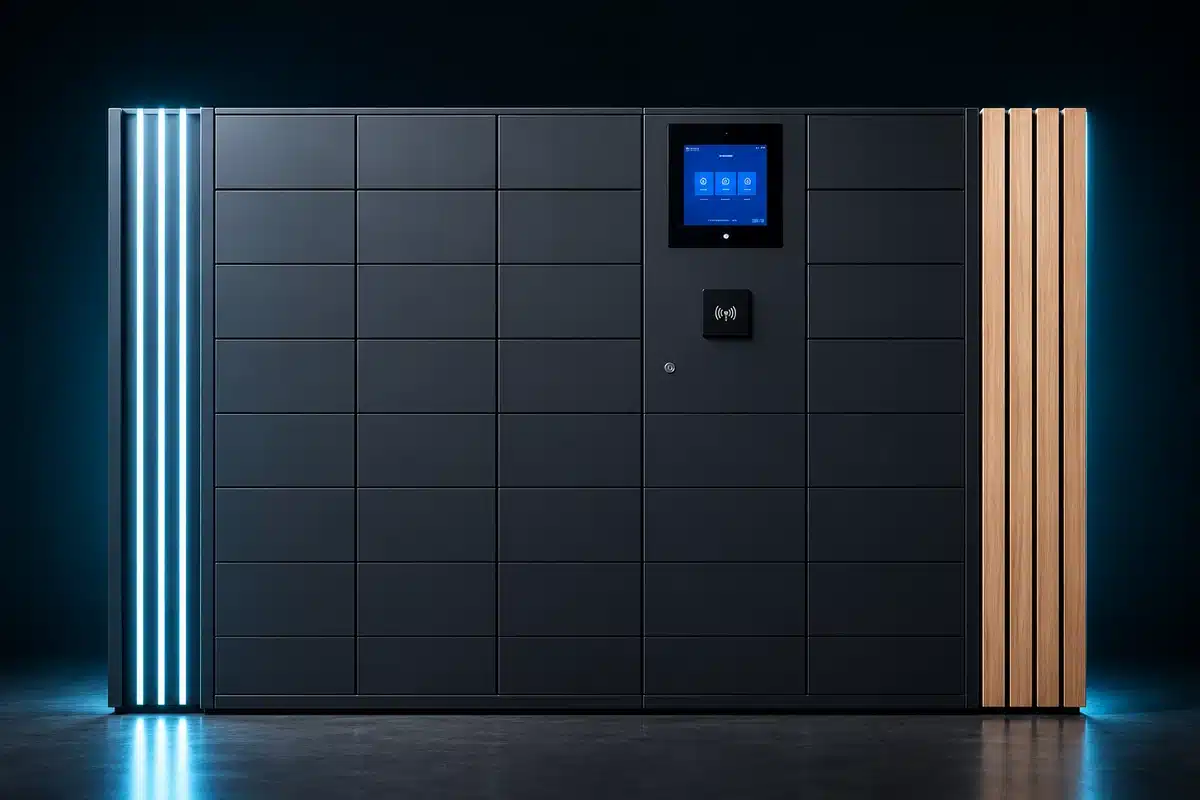





What Is Manual Storage in Leisure Venues?
Manual storage refers to systems where staff:
- Receive items (bags, luggage, belongings)
- Tag or label them
- Store them in a shared area
- Retrieve them on request
This is common in:
- Stadium cloakrooms
- Event bag drops
- Festival storage areas
- Entertainment venues
Why Manual Storage Fails at Scale
1. Sequential Processing Limits Throughput
Manual storage is linear:
- One staff member
- One item
- One interaction at a time
At scale:
Throughput is capped — demand is not.
This leads to:
- Immediate queue formation
- Long wait times
- System overload
2. Demand Arrives in Extreme Peaks
Leisure venues experience surge demand:
- Pre-event entry
- Just before security checkpoints
- Peak arrival windows
This creates:
- Hundreds or thousands of items arriving at once
- Instant pressure on storage systems
Manual systems cannot absorb sudden demand spikes.
3. Double Handling Doubles the Problem
Every item is handled twice:
- Drop-off
- Collection
This means:
- Two queue events per user
- Double the labour
- Double the congestion
4. Retrieval Is Slower Than Storage
Drop-off is quick.
Retrieval is not.
At collection:
- Users return simultaneously
- Staff must locate specific items
- Storage areas are disorganised
This leads to:
- Delays
- Queue buildup
- Frustration
Why Leisure Venue Queues Break Operations at Scale
5. Storage Areas Become Chaotic
Manual storage relies on:
- Open areas
- Shelving or stacking
- Staff memory
At scale:
- Items are moved frequently
- Organisation breaks down
- Retrieval time increases
The fuller the storage area, the slower the system becomes.
Why Luggage Storage Staffing Costs Spiral at Scale
6. Staff Become the Bottleneck
As demand increases:
- Staff are overwhelmed
- Speed decreases under pressure
- Errors increase
This creates a cycle:
More demand → slower service → longer queues → more pressure

The Hidden Impact of Manual Storage
Entry Delays Increase
Security and Crowd Risks Grow
Visitor Experience Declines
Operational Costs Rise
Venue Storage: The Key Issues
The Core Problem: Storage Systems Cannot Scale with Demand
Manual storage rarely fails because of a single delay.
It occurs when staff-managed storage, item retrieval, and cloakroom operations struggle to keep pace with high visitor volumes and peak demand.
1. Throughput Becomes Limited
Manual storage processes can only handle a limited number of visitors at a time. As demand increases, queues form and entry flow slows down.
Impact: Longer wait times and reduced venue throughput.
2. Retrieval Becomes More Difficult
Every item must be located, verified, and returned by staff. As storage volumes increase, retrieval times become longer and operational efficiency declines.
Impact: Slower collection, increased queues, and visitor frustration.
See how Martyn’s Law explains crowd flow, queue exposure, and operational risk
Compare event lockers vs cloakrooms
3. Staff Become the Bottleneck
Manual storage depends on staff availability and processing speed. During peak arrival and departure periods, service levels become limited by staffing capacity.
Impact: Increased operational costs, congestion, and reduced visitor experience
Explore leisure locker solutions
Compare coin lockers vs smart lockers
Why Traditional Venue Storage Systems Fail
Visitor Entry Becomes Slower
Many leisure venues still rely on cloakrooms, bag drops, and attended storage areas. As visitor numbers increase, these systems struggle to keep pace with demand.
Common challenges include:
- Entry congestion
- Longer waiting times
- Limited processing capacity
- Reduced venue flow
Finding Items Takes Longer
Storage areas become increasingly crowded during busy periods. Locating and returning belongings quickly becomes more difficult as volume grows.
Challenges include:
- Time spent searching for items
- Slower return processes
- Visitor frustration
- Reduced service speed
Crowd Pressure Increases
Arrival and departure periods generate significant spikes in demand. Traditional storage operations often struggle to absorb these surges efficiently.
This results in:
- Queue build-up
- Congested entrances
- Slower security screening
- Reduced visitor satisfaction
Explore leisure locker solutions
Compare coin lockers vs smart lockers
Calculate leisure ROI
How Smart Lockers Improve Venue Operations
Smart locker systems provide a secure, self-service alternative to attended storage facilities.
Benefits include:
- Independent item storage
- Faster access and collection
- Reduced operational workload
- Organised storage locations
- Improved crowd movement
- Greater capacity during peak periods
By replacing traditional storage methods with smart lockers, venues can improve visitor flow, reduce congestion, and create a more scalable storage operation.
Deploy scalable locker systems across locations
Secure belongings with self-service lockers
Locker systems for facilities managers
Leisure locker solutions
Automated Venue Storage Process
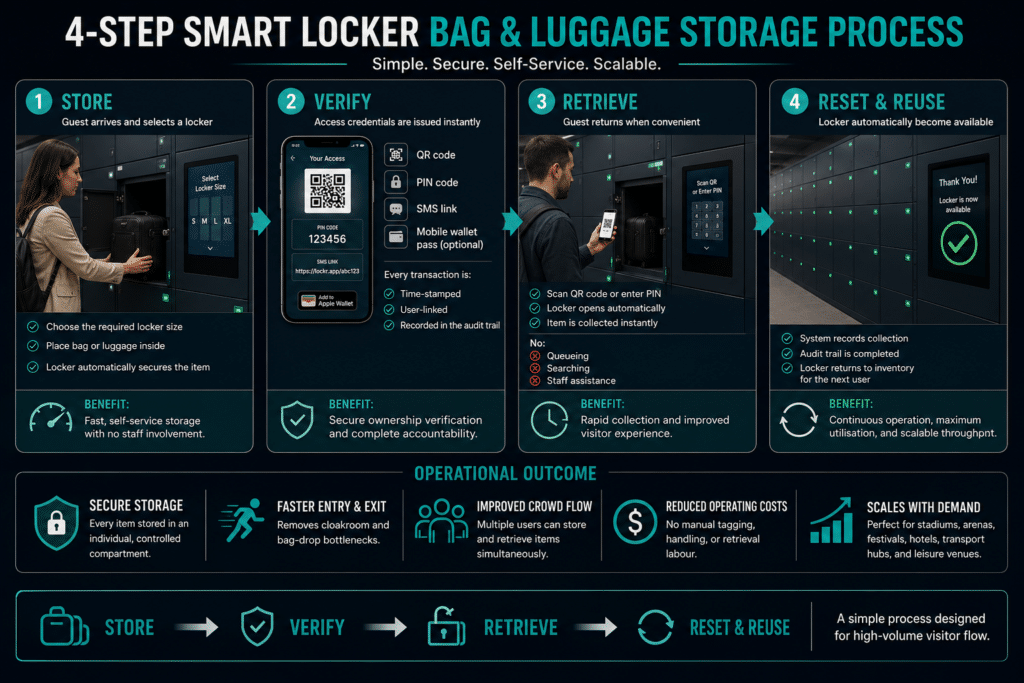
Traditional Venue Storage vs Smart Locker Storage





Case Study: Jassie & Smart Locker Storage
How Jassie Solved Manual Storage Challenges at Scale
Jassie deployed 512 Elite Plus smart lockers in Breda city centre to replace traditional storage methods and support high visitor volumes across nightlife venues and events.
By introducing automated self-service storage, QR-code access, and structured locker locations, Jassie eliminated many of the bottlenecks associated with manual storage systems. The solution improved visitor flow, reduced queue formation, and provided a scalable alternative to staffed cloakrooms and bag-drop operations.
Results Included:
- Reduced reliance on manual storage processes
- Faster storage and retrieval during peak demand
- Improved visitor flow and venue access
- Reduced storage bottlenecks and queue build-up
- Secure self-service storage for high-volume events
Who Is Affected by Manual Storage?
Venue Operations & Event Managers& Front Desk & Guest Services Teams
Venue Operations & Event Managers
Key Challenges
- Managing high visitor volumes during peak periods
- Maintaining smooth entry and exit flow
- Reducing storage-related congestion
- Controlling operational and staffing costs
- Supporting venue security and crowd management
Operational Pain Points
- Long queues at cloakrooms and bag drops
- Limited storage processing capacity
- Increased pressure during event peaks
- Reduced visitor flow efficiency
- Higher operational overheads