




What Are Courier Wait Time Issues?
Courier wait time issues occur when delivery drivers cannot complete deliveries efficiently due to:
- Access delays
- Handover delays
- Storage delays
This leads to:
- Congestion at entry points
- Missed deliveries
- Frustration for couriers and occupants
Why Delivery Congestion Breaks Buildings at Scale
Why Courier Wait Times Increase at Scale
1. Reception Becomes the Bottleneck
Most buildings rely on reception teams to:
- Accept parcels
- Contact recipients
- Log deliveries
- Store items
At scale, this creates:
- Queues of couriers waiting
- Staff overwhelmed during peak periods
- Slow, sequential processing
One desk cannot handle hundreds of deliveries per day efficiently.
2. Sequential Handover Processes
Manual delivery requires:
- Courier arrival
- Waiting for staff
- Logging the parcel
- Contacting recipient
- Storing the item
Each step adds delay.
At scale:
- Small delays multiply
- Multiple couriers queue simultaneously
Reception Parcel Handling vs Lockers
3. No Direct Delivery Destination
In many buildings, couriers:
- Cannot access secure areas
- Cannot leave parcels unattended
- Must wait for staff or recipients
This creates:
- Idle time
- Repeat visits
- Delivery failures
Why Missed Deliveries Break Offices at Scale
4. Peak Delivery Windows Overwhelm Systems
Delivery demand is not evenly distributed.
Peaks occur during:
- Morning delivery runs
- Lunchtime
- End-of-day business deliveries
At these times:
- Courier volume spikes
- Reception capacity is exceeded
- Wait times increase sharply
5. Poor Building Access Processes
Delays occur when:
- Couriers must sign in
- Access permissions are unclear
- Security checks slow entry
This results in:
- Slower throughput
- Congestion at entry points
Why Last Mile Delivery Fails at Scale
6. Storage Constraints Create Delays
When parcel rooms are full:
- Staff must reorganise space
- Couriers wait while storage is found
- Deliveries slow further
Storage inefficiency directly impacts courier speed.
Why Delivery Staffing Costs Spiral at Scale
7. Lack of System Integration
Most buildings lack integration between:
- Delivery systems
- Access control
- Occupant notifications
This leads to:
- Manual coordination
- Delayed communication
- Increased processing time

The Hidden Impact of Courier Wait Times
Reduced Delivery Efficiency
Increased Missed Deliveries
Increased Operational Costs
Tenant & Occupant Frustration
Courier Wait Times: The Key Issues
The Core Problem: Delivery Flow Depends on Throughput
Courier wait times rarely occur because of a single delayed delivery.
They happen when increasing delivery volumes, manual processes, and limited handling capacity create bottlenecks that disrupt the flow of deliveries through a building.
1. Reception Bottlenecks Slow Delivery Flow
Most buildings rely on reception teams to accept parcels, contact recipients, and manage deliveries.
Impact: Longer courier wait times, delivery queues, and slower processing.
2. Manual Handover Processes Reduce Throughput
Deliveries often require multiple steps, including parcel logging, recipient notification, and storage management.
Impact: Reduced delivery capacity, increased waiting times, and operational inefficiencies.
Reception Parcel Handling vs Lockers
3. Limited Delivery Access Creates Delays
Couriers are often unable to access secure areas or complete deliveries directly to recipients.
Impact: Repeat visits, failed deliveries, and wasted time.
4. Peak Delivery Volumes Overwhelm Capacity
Large numbers of deliveries arrive during concentrated periods throughout the day, placing pressure on reception and parcel handling teams.
Impact: Sharp increases in wait times, crowded entrances, and operational strain.
Why Delivery Congestion Breaks Buildings at Scale
5. Poor System Integration Increases Friction
Delivery management, access control, and occupant communications often operate as separate systems.
Impact: Manual coordination, slower processing, and additional pressure on delivery operations.
Why Traditional Delivery Management Approaches Fail
Growing Delivery Volumes Create Immediate Bottlenecks
As buildings become busier, delivery volumes increase across parcels, food deliveries, equipment shipments, and business logistics. Without a scalable delivery process, reception areas quickly become overwhelmed.
Common issues include:
- Long courier queues
- Delayed parcel handovers
- Crowded lobbies and entrances
- Increased delivery failures
Manual Processes Reduce Delivery Throughput
Many buildings still rely on reception teams to manage parcel acceptance, recipient notifications, and storage allocation.
Challenges include:
- Sequential delivery processing
- Staff-dependent handovers
- Slower delivery completion times
- Increased administrative workload
→ Compare delivery lockers vs failed deliveries
Limited Capacity Restricts Delivery Flow
Reception desks, parcel rooms, and building access points can only process a limited number of deliveries at one time.
This results in:
- Longer courier wait times
- Congestion at entry points
- Reduced delivery efficiency
- Greater operational pressure
How Smart Lockers Eliminate Courier Wait Times
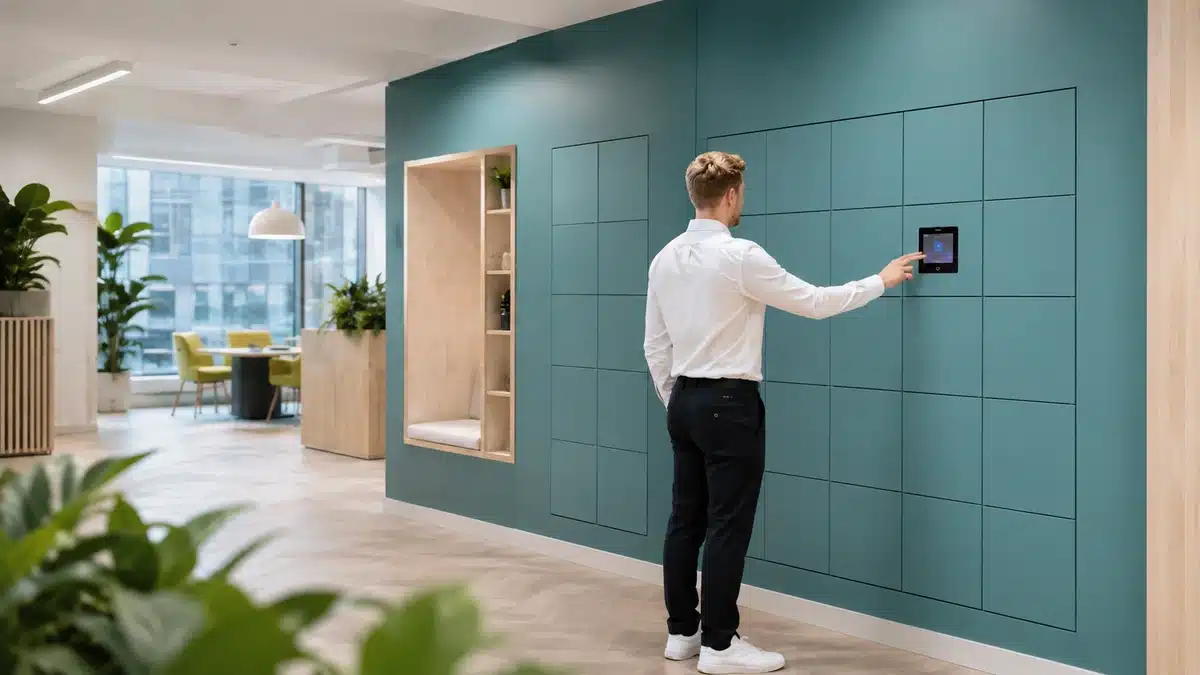
Smart delivery lockers improve delivery flow by removing the bottlenecks that cause delays.
Benefits include:
- Direct courier-to-locker delivery
- No reception involvement
- Faster parcel drop-off
- Reduced lobby congestion
- Improved delivery throughput
- Automated recipient notifications
Compare smart lockers vs mobile storage
By removing manual handovers and providing a dedicated delivery destination, smart lockers help buildings reduce wait times, improve operational efficiency, and support delivery volumes at scale.
Automated smart locker workflows can reduce courier waiting times by allowing deliveries to be completed securely without relying on manual reception or staff handovers.
How Smart Delivery Lockers Eliminate Courier Queues
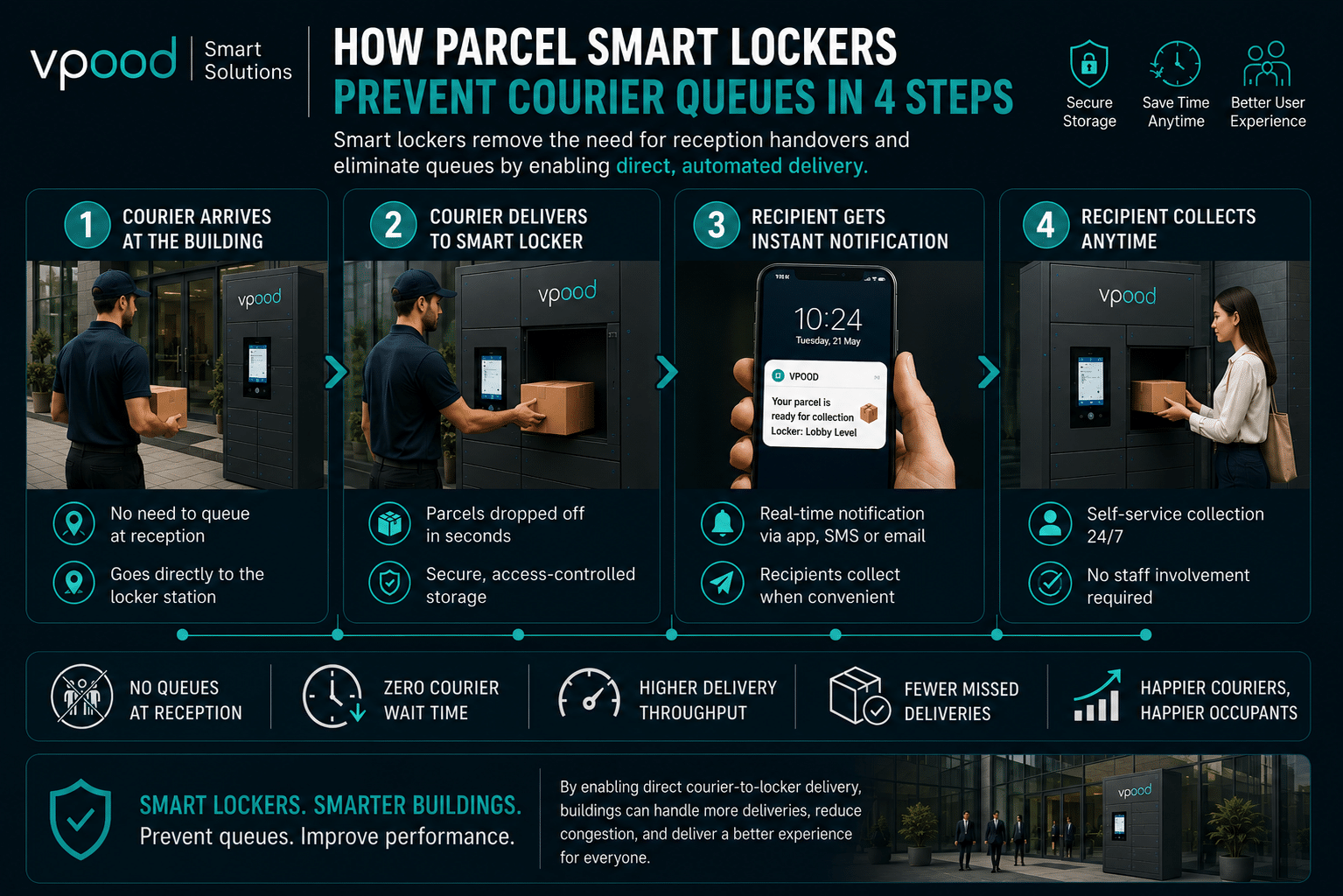
Traditional Delivery Flow vs Smart Delivery Lockers




Case Study: Sodexo & VPOD
How Skyscanner Eliminated Unauthorised Equipment Access Across Multiple Sites
Sodexo transformed its parcel management process by replacing manual reception-based handovers with automated smart locker workflows.
The result was a more efficient delivery operation, reduced administrative workload, and a better experience for both couriers and occupants.
Results Include:
- Reduced courier wait times
- Lower reception workload
- Faster parcel processing
- Improved delivery throughput
- Fewer manual delivery tasks
- Better occupant experience
- Scalable delivery management
READ THE FULL CASE STUDY →
Who Is Affected by Courier Wait Times?
Operations & Venue Management Teams / Tenants & Occupants
Facilities & Building Operations Teams
Key Challenges
- Managing growing delivery volumes
- Reducing reception bottlenecks
- Maintaining efficient building operations
- Managing parcel storage capacity
- Supporting smooth delivery flow
Operational Pain Points
- Congested reception areas
- Increased administrative workload
- More delivery-related complaints
- Higher operational costs
- Difficulty scaling delivery processes