01
HOSPITALITY
Hotels & hostels
Reduce front-desk handling, give guests independent storage and support early arrivals, late departures and group movements.
Hotel use cases

We design and deliver integrated systems for streamlined check-ins, secure storage, and enhanced visitor management. Our trusted partner network and focus on sustainability, data security, and customer success drives us to provide the most effective and user-friendly solutions.


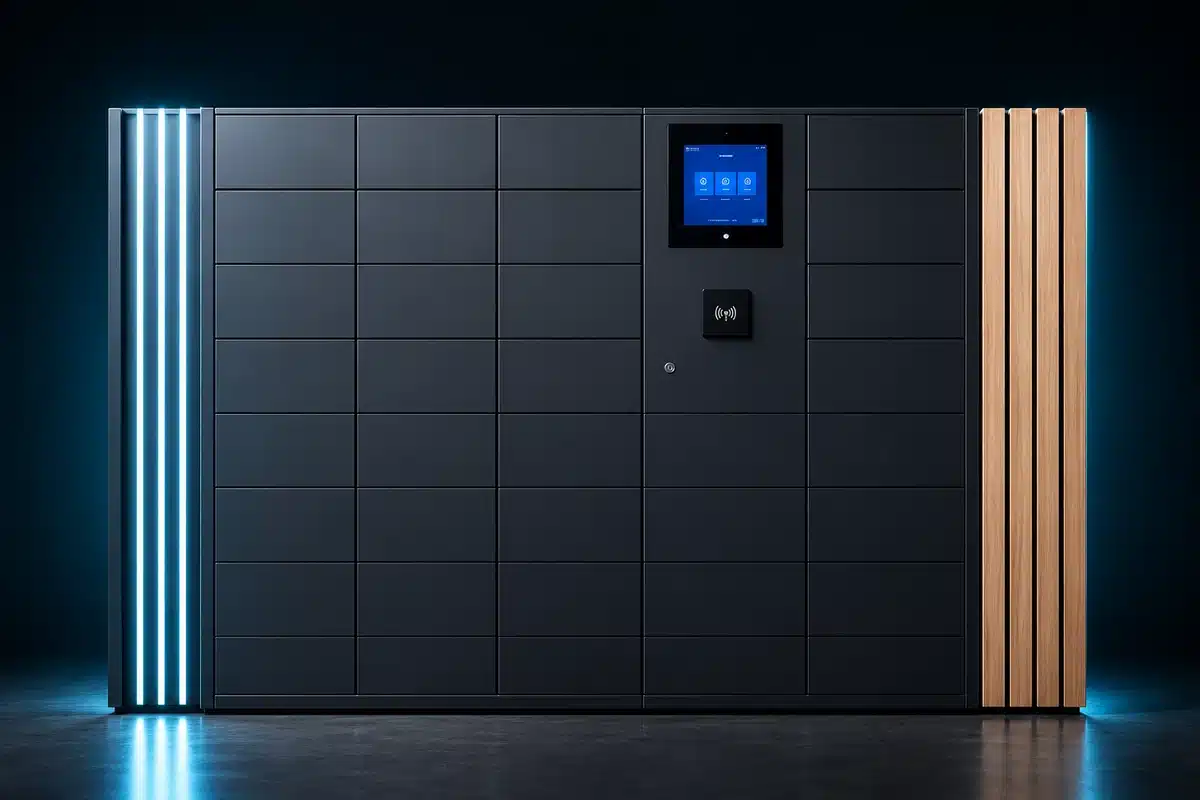
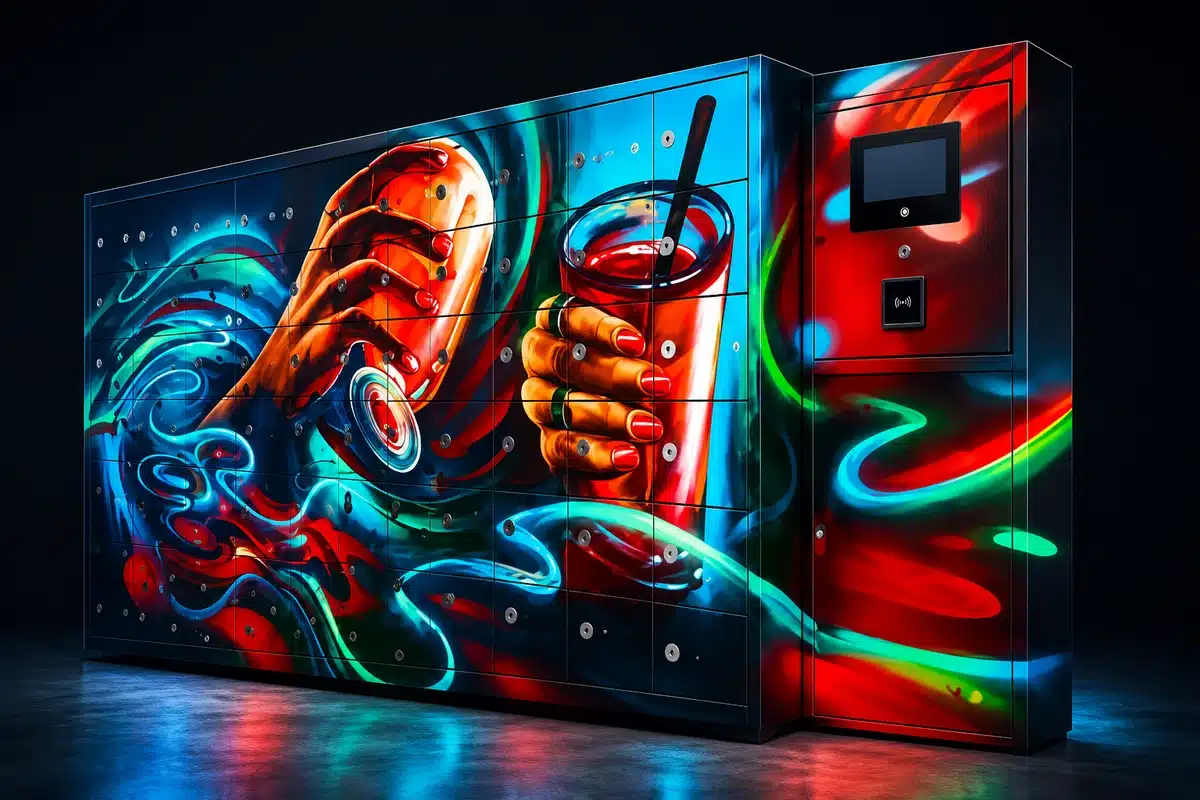
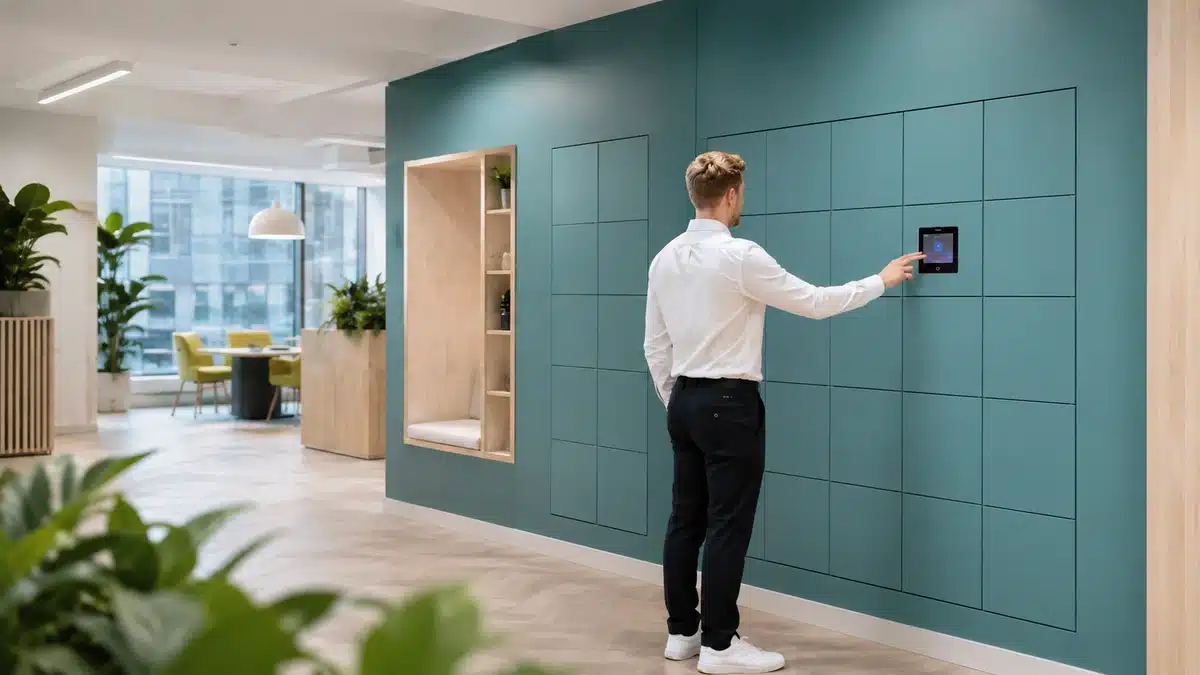

We design and deliver integrated systems for streamlined check-ins, secure storage, and enhanced visitor management. Our trusted partner network and focus on sustainability, data security, and customer success drives us to provide the most effective and user-friendly solutions.
We design and deliver integrated systems for streamlined check-ins, secure storage, and enhanced visitor management. Our trusted partner network and focus on sustainability, data security, and customer success drives us to provide the most effective and user-friendly solutions.
How to specify, compare and buy luggage locker systems for hotels, venues, transport locations, attractions and event environments — from bag sizes and peak capacity to self-service access, payments, security, installation and support.
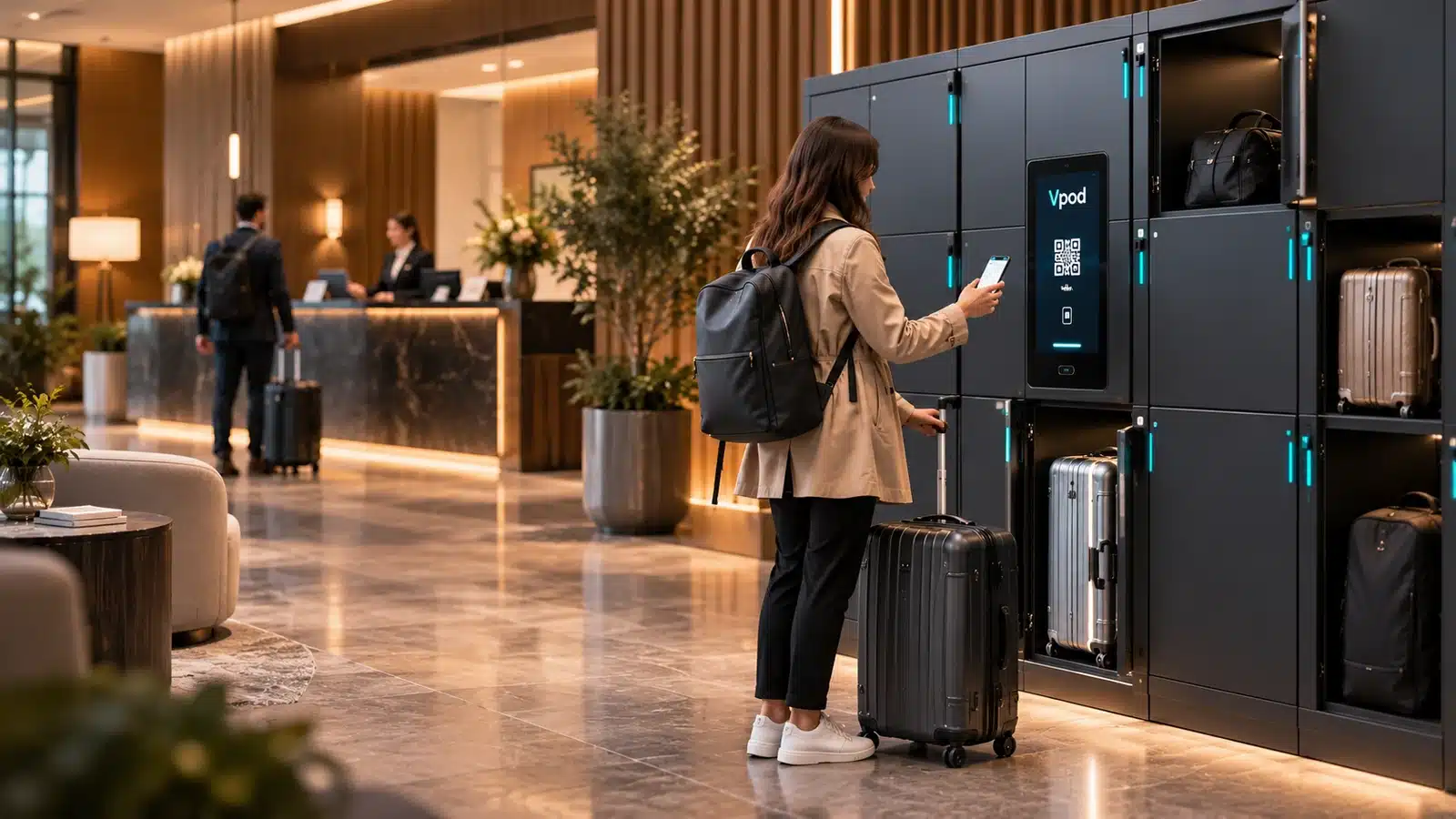
A strong luggage locker specification starts with who needs storage, when demand peaks, what they carry, how long items remain stored and whether the service is complimentary, charged or commercially shared.
For a hotel, the pressure may be early check-in and late check-out. For an arena, it may be restricted bags before security. At a transport hub, the priority may be rapid, independent short-stay storage with clear pricing and fast turnover.
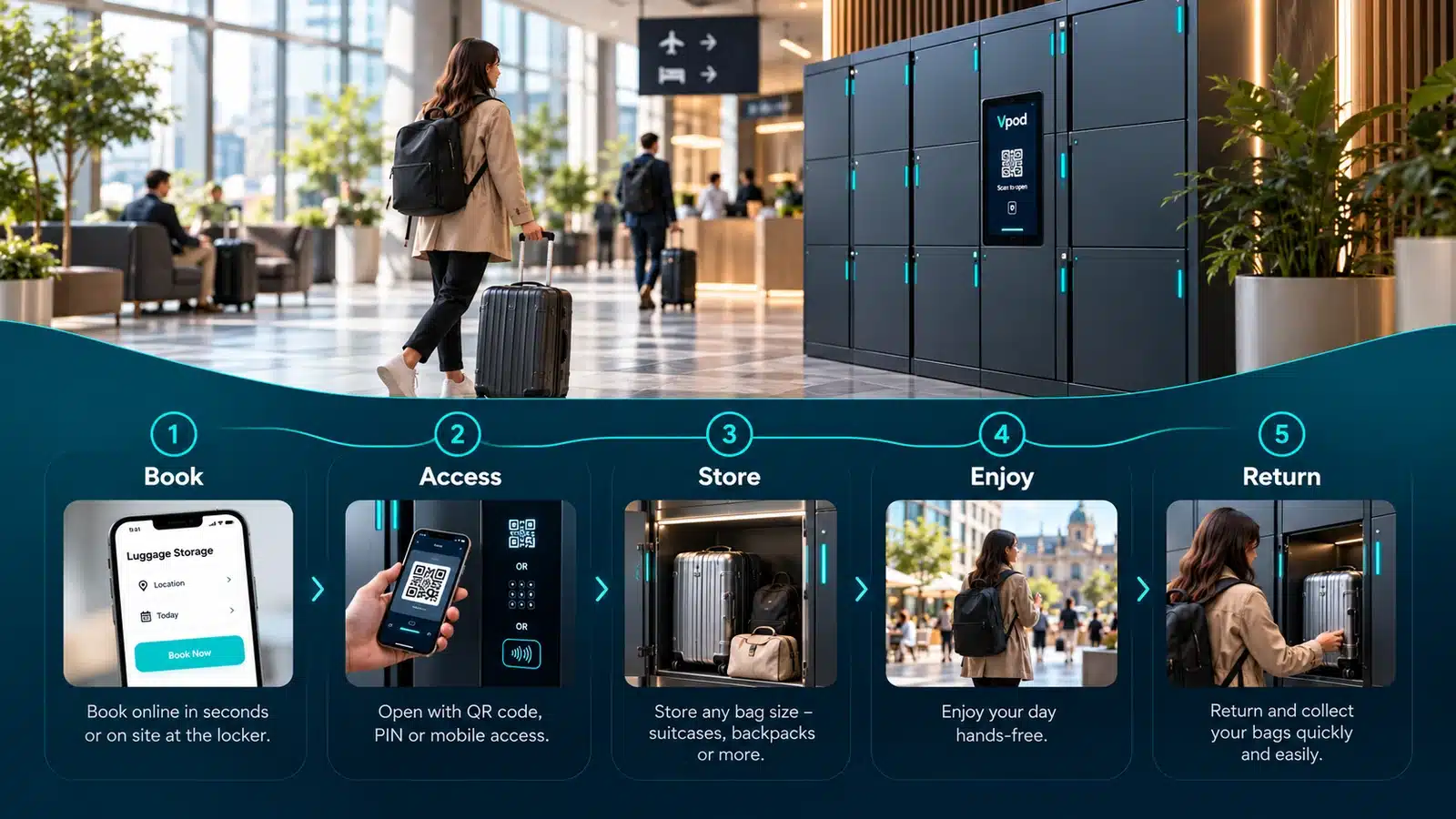
Choose the setting closest to yours. The right specification follows the guest, the operating pressures and the peaks—not a generic locker count.
Reduce front-desk handling, give guests independent storage and support early arrivals, late departures and group movements.
Hotel use casesPlace storage before security, support bag policies, manage event peaks and consider paid storage or eligible GainShare.
Venue use casesPrioritise intuitive self-service, mixed bag sizes, fast payment, robust construction and long operating hours.
Transport-ready luggage lockersUse storage to improve the visitor journey, reduce carried belongings and integrate booking or payment where useful.
Attraction use casesPlan around short, intense peaks, temporary demand and quick post-event collection.
Event lockersCombine visitor storage with cashless rental, self-service access and central management.
Leisure lockers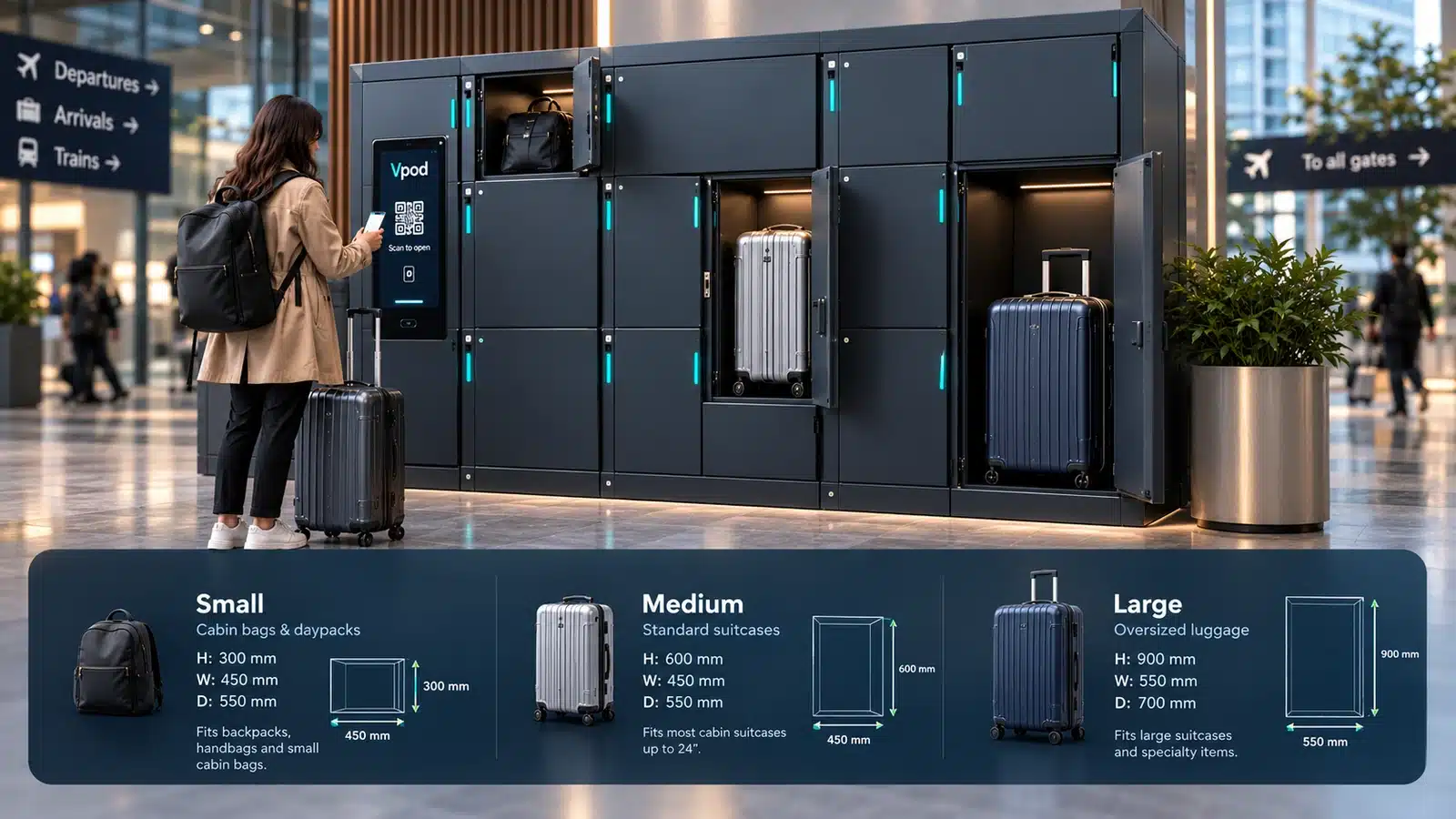
A locker wall full of identical doors is rarely the optimum answer. Model compact bags, cabin cases, standard suitcases and oversize items separately, then account for dwell time and turnover.
Make the credential fit the customer—not the other way around. Select accessible, intuitive access that works in your operating environment.
Useful for mobile-first journeys, pre-booking and linking storage to digital confirmations.
Simple for walk-up use and avoids requiring a physical token or app.
Strong for public environments where guests need to choose, pay and access on site.
Supports a low-friction journey where users are already interacting through their phone.
Makes storage discoverable before arrival and can link entitlement to the visitor journey.
Combine pre-booking with walk-up availability so visitors can still store when plans change.
The best option is the one guests can use first time. Ask your supplier to demonstrate the complete store-and-collect journey, including a failed scan, forgotten PIN and lost phone.
Compare luggage locker systems ↗| Model | Best fit | Buyer focus |
|---|---|---|
| Complimentary | Hotels, premium guest service, included visitor amenity | Operational savings, guest experience, reduced staff handling |
| Paid self-service | Transport, attractions, venues, leisure | Price, payment flow, utilisation, transaction reporting |
| Pre-booked paid storage | Venues, attractions, events | Ticketing/booking integration, entitlement, capacity reservation |
| GainShare | Suitable high-footfall venues with proven paid-storage demand | Demand assessment, responsibilities, revenue share, support and commercial terms |
Compare robust cabinet construction and electronic locking alongside credential control, time limits, event logs, remote oversight and exception handling. For public environments, ask how lost credentials, abandoned items, overstay, door faults and disputed access are managed.
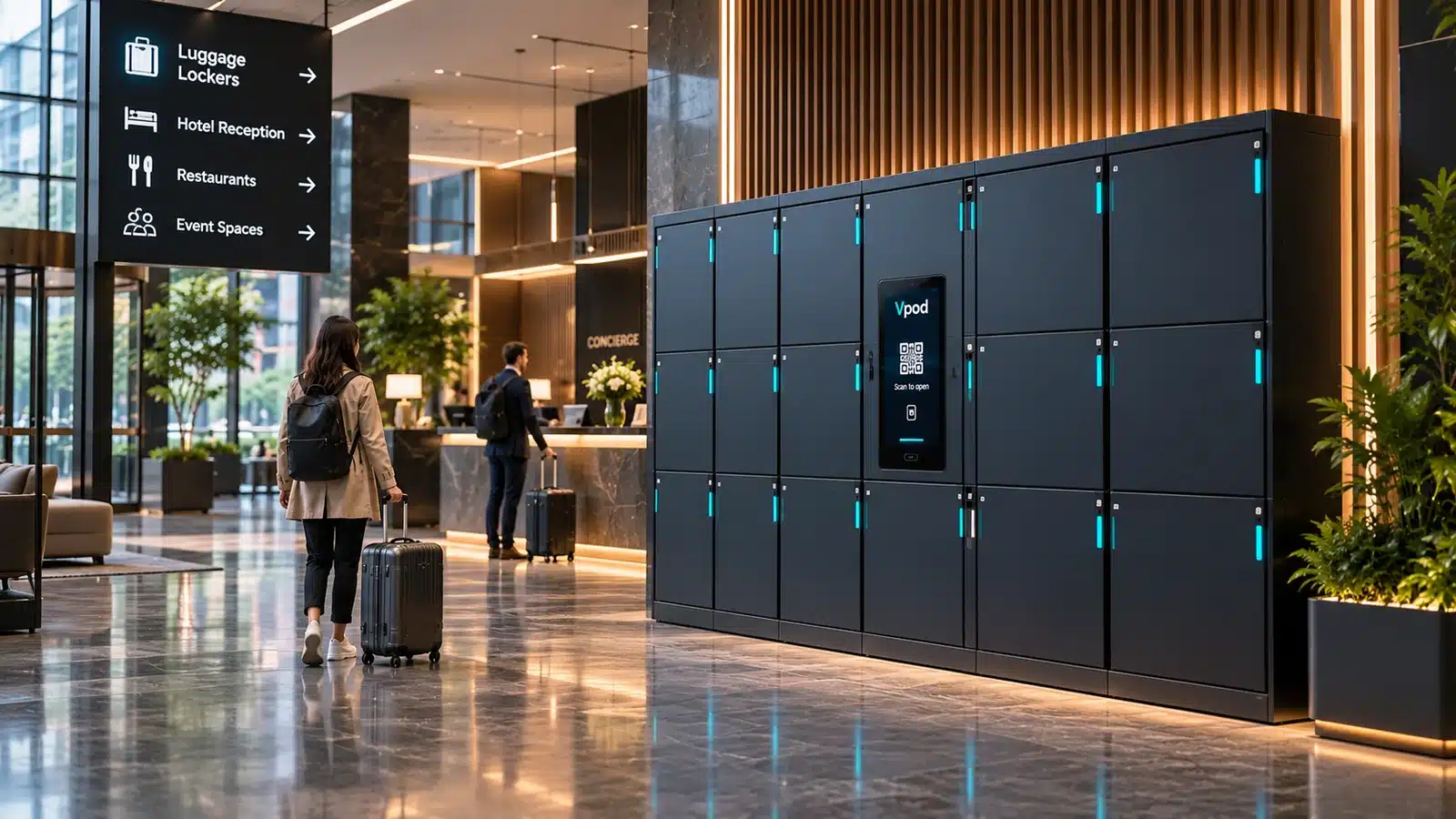
UK luggage locker cost varies with cabinet quantity and construction, compartment mix, electronic locks, kiosk or terminal requirements, software, payment hardware, integrations, delivery, site preparation, installation, support and the commercial model.
Best where the operator wants long-term ownership and can justify upfront investment.
Useful when operational flexibility or temporary/seasonal capacity matters more than ownership.
Revenue can offset whole-life cost, but forecasts should be based on realistic utilisation rather than headline footfall.
Ask suppliers to separate one-off hardware and installation costs from recurring software, payment processing, connectivity and support.
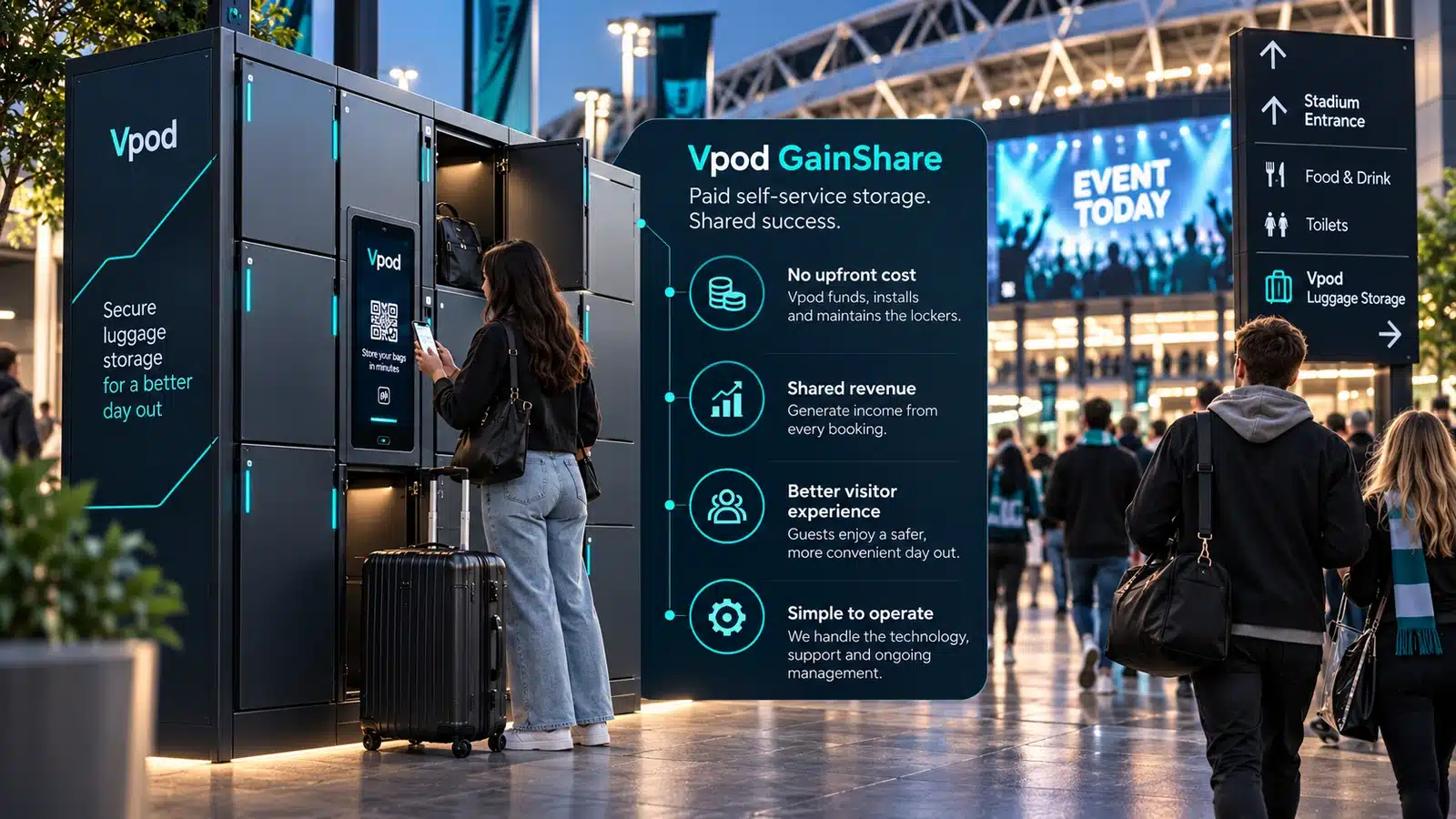
Placement affects adoption, queueing, security and revenue. For venues, storage before screening may remove bag-policy friction. In hotels, lockers should be convenient without creating reception congestion. In transport, visibility and intuitive wayfinding matter.
For qualifying venues, attractions and leisure destinations with genuine paid-storage demand, Vpod GainShare provides an alternative to a conventional upfront purchase. Vpod funds and manages the agreed deployment, visitors pay to use the lockers, and eligible revenue is shared under agreed commercial terms.
Suitability should be assessed from storage demand, footfall patterns, event frequency, location, pricing and realistic utilisation — not footfall alone.
Explore Vpod’s venue and attraction videos for the visitor journey, real deployment examples and the commercial considerations behind GainShare.
Opens the official Vpod Smart Solutions channel. No fragile third-party embedded player.
Bring Vpod your peak demand, bag mix, available footprint, preferred access journey and commercial model. The team can then map capacity, compartment sizes, payment, installation and support.