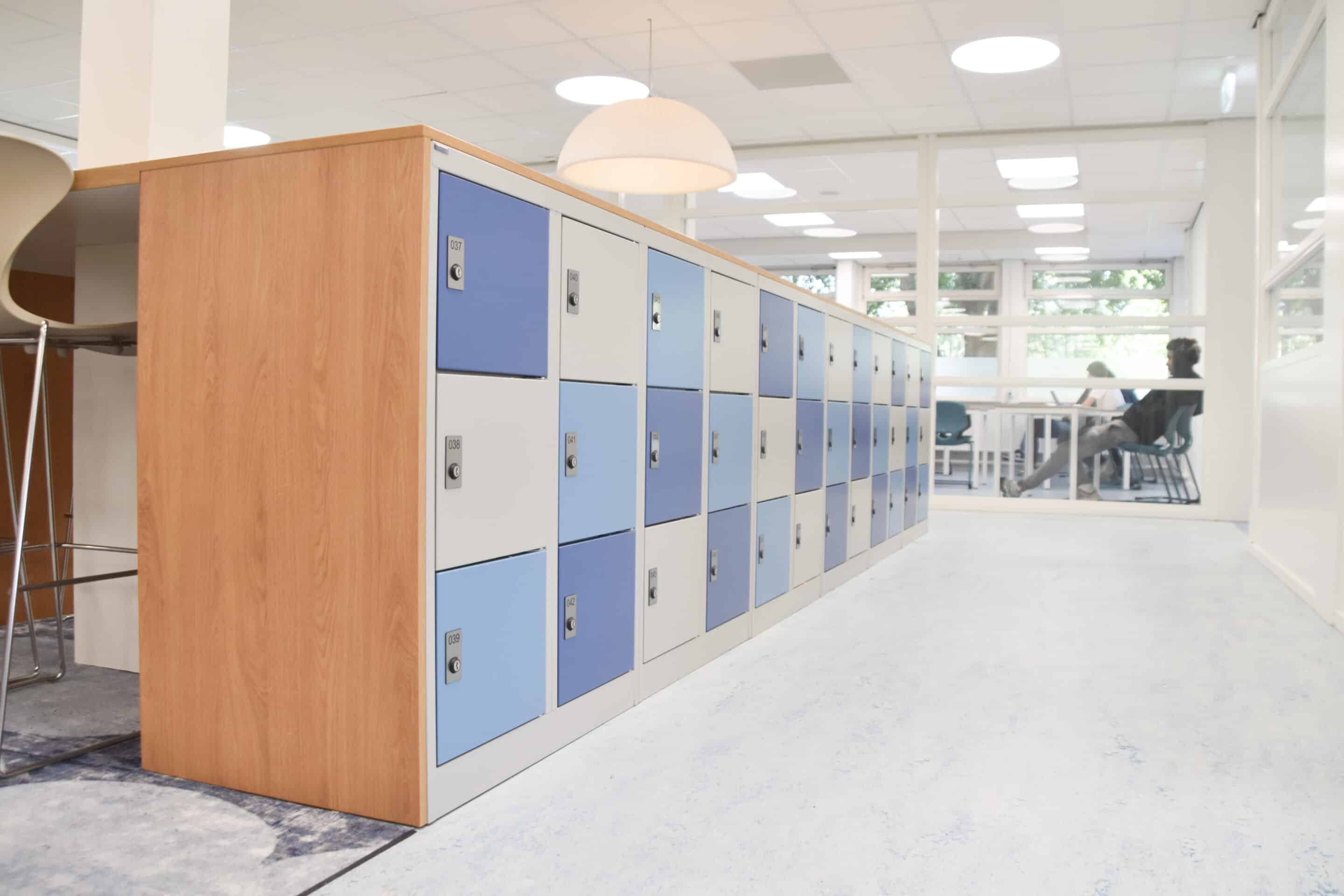



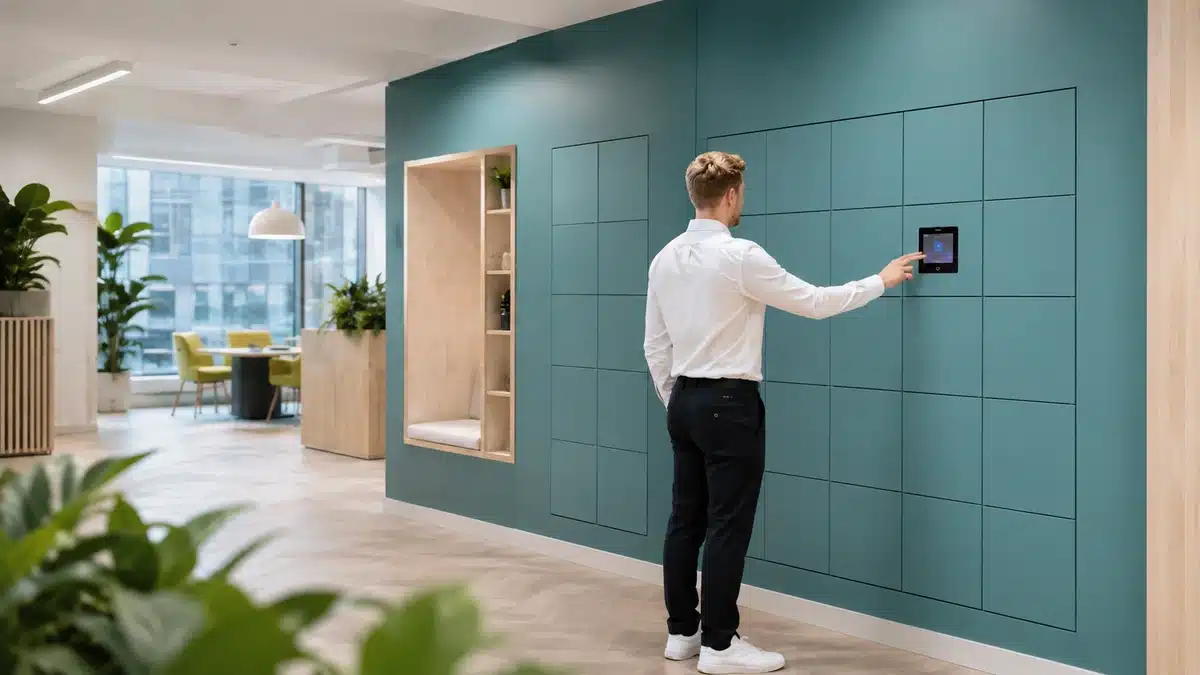


A desk can be booked for the day. A coat, cycle helmet or laptop bag still needs somewhere to go. When offices move to shared desks without revisiting storage, belongings often end up under workstations, in meeting rooms or in cupboards managed by reception.
Hot-desking lockers give employees secure storage without requiring a permanently assigned desk. They can be allocated for a day, a booking or another agreed period. The planning question is how to make the right compartment available when someone arrives.
Start with an ordinary office day
Ask employees what they bring and when they need access. A commuter may need bag storage beside the entrance. Someone carrying specialist equipment may need a larger compartment close to their team. Colleagues who cannot carry belongings home each day may need longer-term provision.
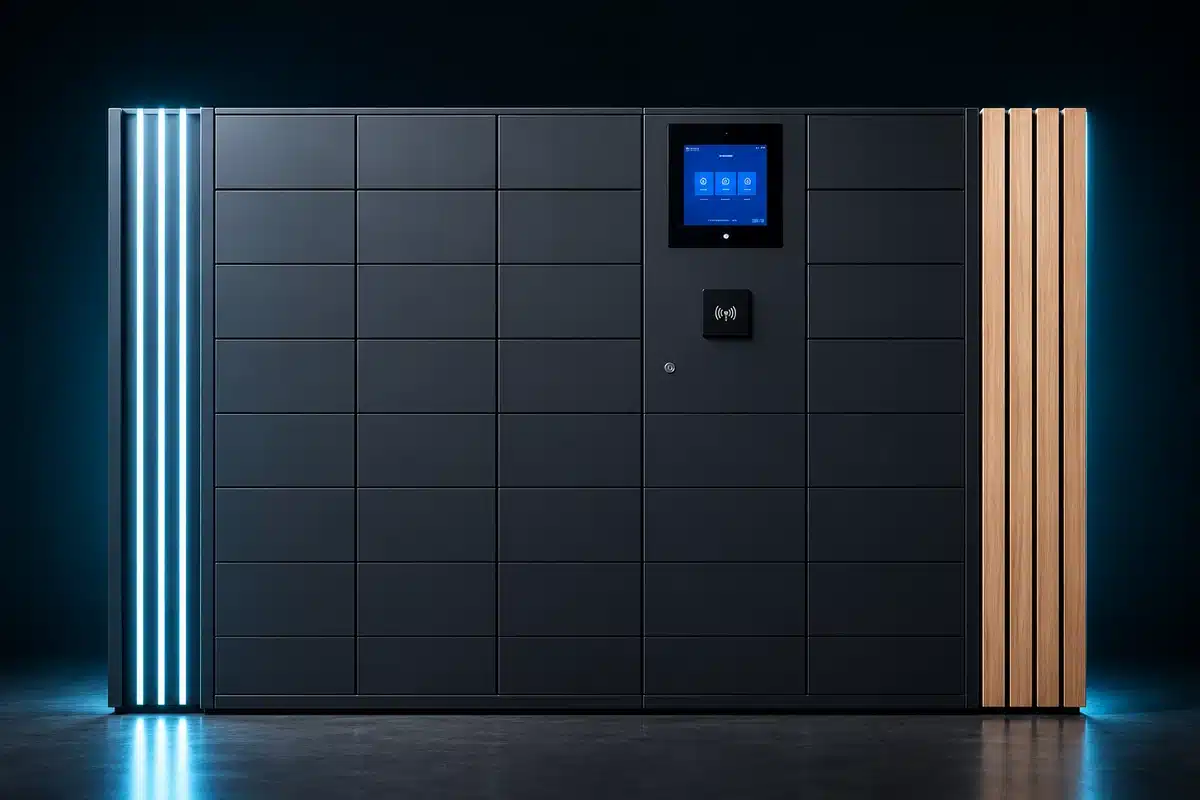
Review existing storage requests, team attendance patterns and busy-day observations. Include contractors and visitors only if they will use the same pool. For the available approaches, explore workplace locker solutions.
- Which items must fit, including bags with handles and bulky clothing?
- Are lockers used only during attendance, or left occupied overnight?
- Do different teams arrive together on particular days?
- Which users need accessible compartments or additional assistance?
Calculate capacity by demand group
Use a representative busy period rather than multiplying total employee numbers by an arbitrary ratio. Count the people likely to need storage at the same time, then add separately justified provision for longer-term users and operational exceptions.
| Illustrative planning input | Assumption |
|---|---|
| Peak simultaneous attendance | 160 people |
| Share needing day storage | 60%, giving 96 day-storage users |
| Separate overnight allocation | 12 compartments |
| Operational reserve | 8 compartments |
| Starting capacity for testing | 116 compartments |
This is a worked example, not a Vpod sizing recommendation. It assumes one compartment per user and separate pools for day and overnight storage. Validate the assumptions through a pilot; a reserve of eight would not suit every office. Check capacity for each size and location as well as the building total.
Choose allocation rules employees can understand
A shared pool works only if compartments return to circulation. Explain how long a reservation lasts, what counts as a no-show and what happens when someone forgets to empty a locker. Distinguish releasing an unused reservation from opening a compartment that may contain belongings.
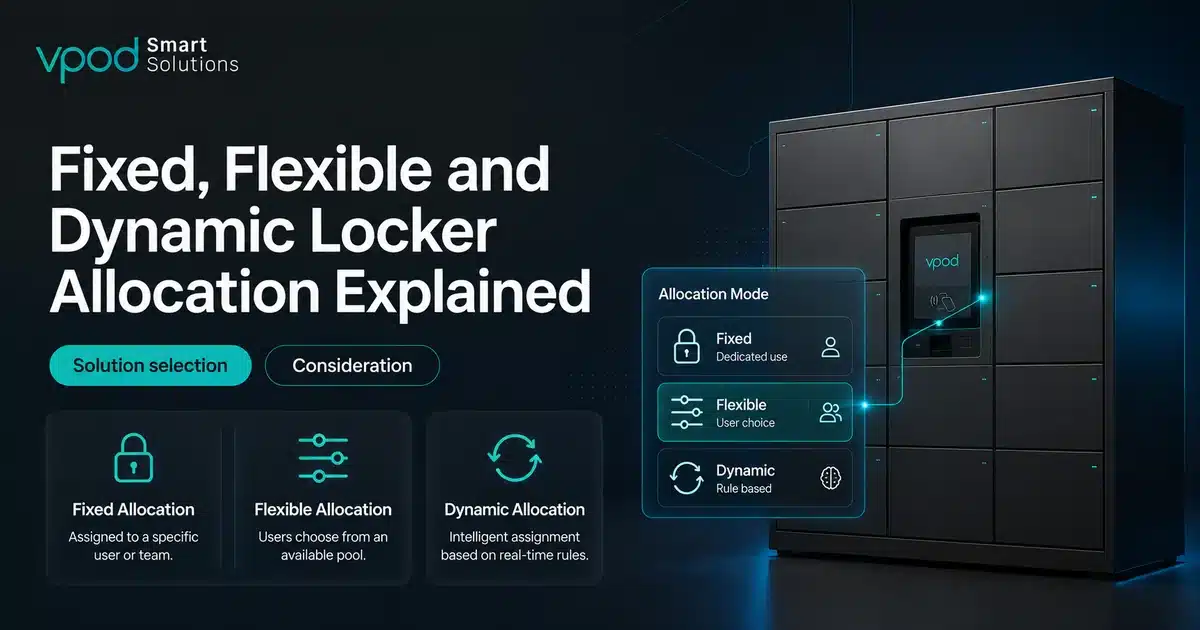
Some people need a consistent assigned space; others benefit from day use. A mixed model can accommodate both. Use the fixed, flexible and dynamic locker allocation guide to compare the rules before configuring them.
Make storage part of the arrival route
A spare locker on another floor may be technically available but inconvenient. Walk the route from entrance to desk and check whether employees can reach storage without crossing restricted areas or disrupting other teams. Keep doors and queues clear of circulation routes.
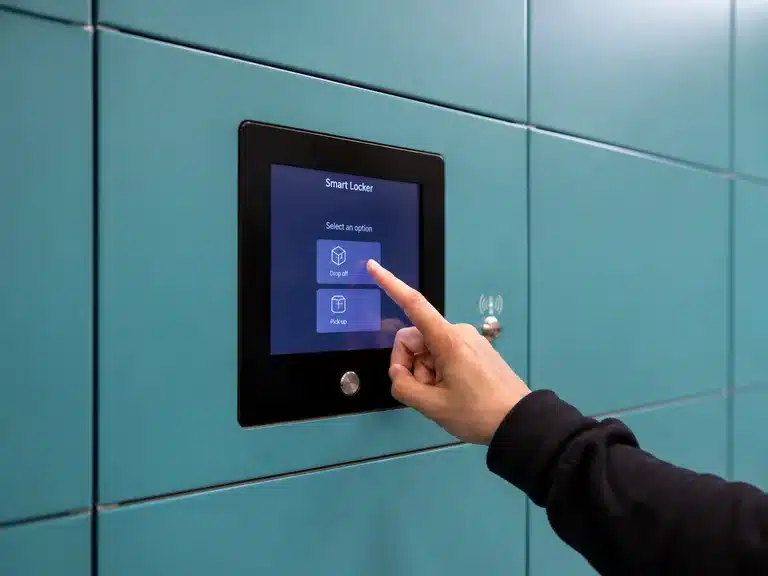
Test reach, screen readability, opening force and the available assistance route with people who have different access needs. A compartment labelled accessible is only useful if the whole journey works. Facilities managers planning workplace storage should also agree cleaning, servicing and responsibility for abandoned belongings.
Decide whether booking should include storage
Where a workplace system manages attendance or desk reservations, a locker request may fit into that journey. Decide whether the user actively requests storage or receives it automatically, and what happens when a desk booking changes.
Vpod’s YAROOMS workflow page is a starting point for this discussion. Supported triggers, credentials and data exchange need to be confirmed for the proposed setup; a desk reservation does not inherently create locker access.
Pilot the rules before extending the estate
Start with a clearly defined area and a period that includes busy and quieter days. Tell employees how the trial works and give them an obvious support route. Record unmet demand as well as successful sessions: a full locker bank can hide the number of people who gave up.
- Peak active allocations by location and compartment size.
- Requests that could not be fulfilled.
- Reservations released without use.
- Overdue occupation and assistance requests.
- Employee feedback on location and ease of access.
Review the findings before adding doors or removing capacity. Low uptake may indicate poor placement or unclear instructions rather than low demand. The aim is a usable storage service that supports shared desks, with policies the facilities team can maintain.
Plan your hybrid office storage
Bring your attendance patterns, current storage policy and a floor plan. Vpod can help assess capacity, allocation and the employee journey.
Discuss workplace lockers