▣
Backpacks & day bags
Small compartment
Daypacks, handbags, small shopping bags and compact personal items.
Prioritise frequent turnover and ease of reach.


We design and deliver integrated systems for streamlined check-ins, secure storage, and enhanced visitor management. Our trusted partner network and focus on sustainability, data security, and customer success drives us to provide the most effective and user-friendly solutions.


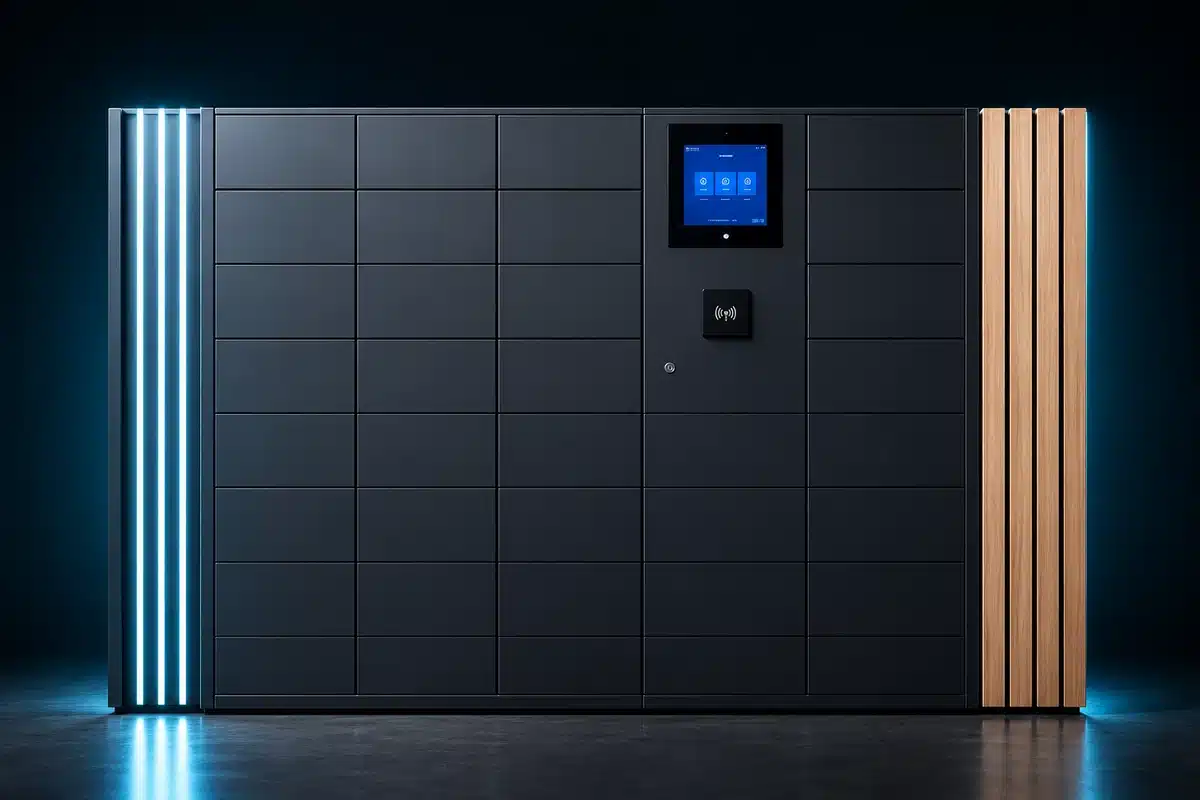
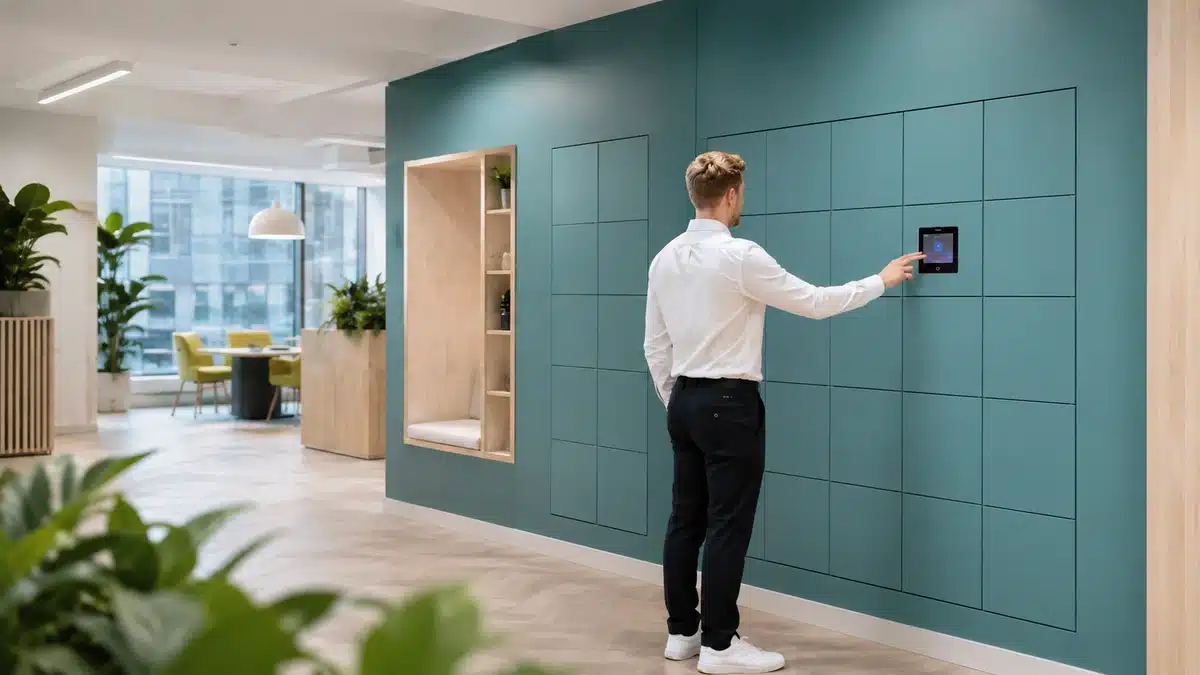

We design and deliver integrated systems for streamlined check-ins, secure storage, and enhanced visitor management. Our trusted partner network and focus on sustainability, data security, and customer success drives us to provide the most effective and user-friendly solutions.
We design and deliver integrated systems for streamlined check-ins, secure storage, and enhanced visitor management. Our trusted partner network and focus on sustainability, data security, and customer success drives us to provide the most effective and user-friendly solutions.
How many luggage lockers do you need? Specify sensible compartment sizes, plan for backpacks and large suitcases, and calculate demand around arrival peaks, storage duration and groups.
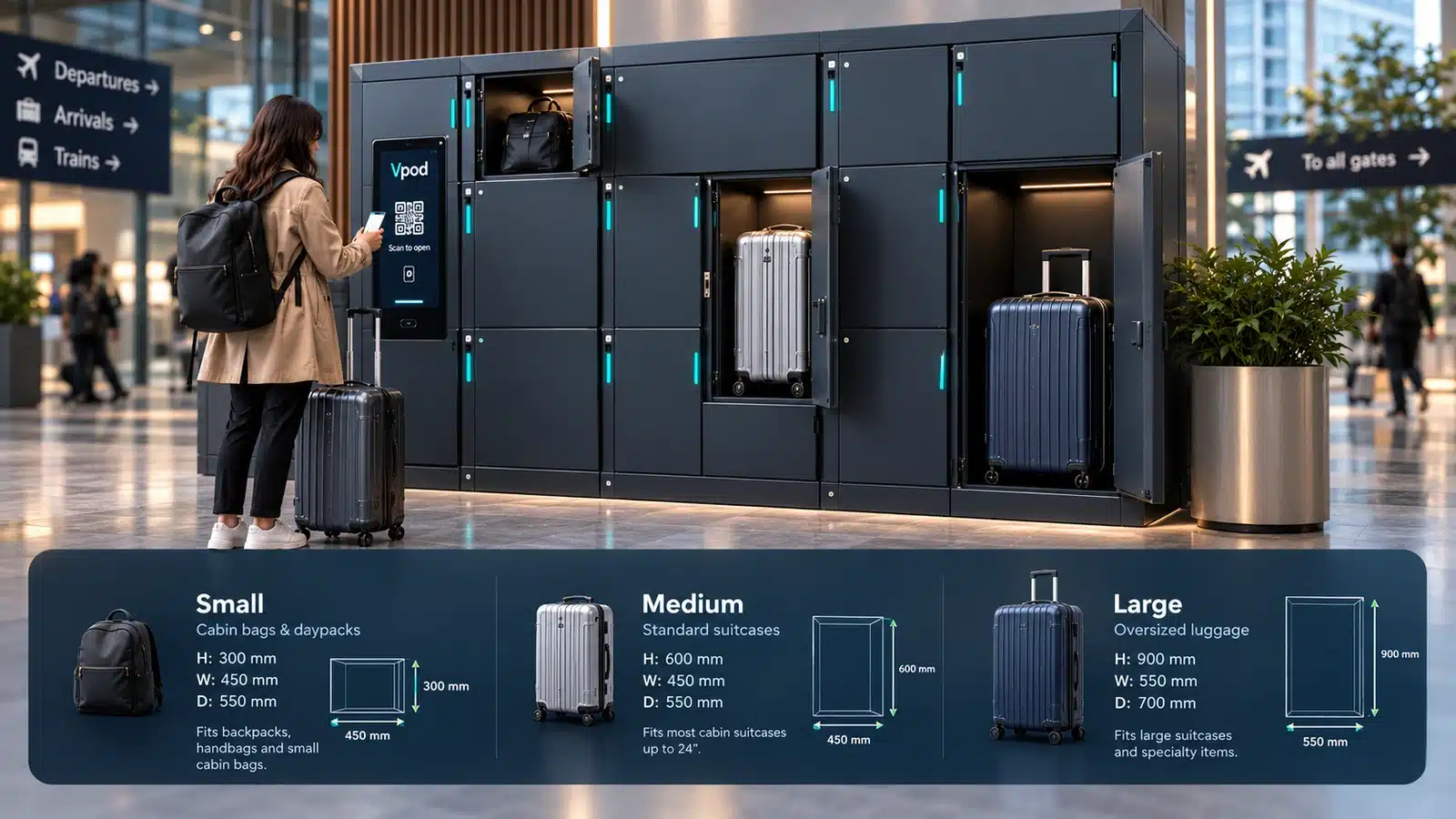
A strong luggage locker specification starts with bags—not cabinet door counts. Internal dimensions, hinges, handles and door openings all affect what will genuinely fit.
Daypacks, handbags, small shopping bags and compact personal items.
Prioritise frequent turnover and ease of reach.
Wheeled cabin luggage and backpacks with rigid frames.
Check full depth including wheels and telescopic handles.
Typical checked cases; verify width and height with real bags.
Allow clearance so guests can load without forcing doors.
Large cases, multiple bags, prams and special items may need a dedicated format.
Set a clear rejection or assisted-storage policy.
Measure the bag in its loaded state, including wheels, handles, straps and bulging pockets. Ask suppliers for the clear internal height × width × depth, the unobstructed door opening and any restrictions caused by locking hardware.
Airline cabin-bag allowances vary; they should not be treated as universal locker dimensions.
Daily transactions alone can hide a capacity shortfall. Estimate how many storage bookings overlap at the busiest time, then allow for bag mix, group use, unavailable doors and operating headroom.
Worked example, not Vpod deployment data: 30 × 2 = 60 occupied lockers; 60 ÷ 0.8 = 75 doors. It assumes one compartment per booking, relatively stable arrivals and 80% target design occupancy.
| Planning input | Measure | Why it matters |
|---|---|---|
| Demand by interval | Arrivals every 15–30 minutes | Captures short peaks hidden by daily totals. |
| Dwell time | Median and high-end stay duration | Determines turnover and overlap. |
| Compartments per booking | 1, 2 or more by group | Prevents treating a group as one bag. |
| Size mix | Share small / medium / large | Ensures the right capacity is available, not merely the total count. |
| Operational reserve | Chosen headroom and downtime | Allows for peaks, faults and oversize demand. |
Hotels see early check-out and later check-in waves. Venues may receive most bag deposits immediately before security, followed by mass collection after the show. Transport hubs can mix rapid turnover with all-day dwell time.
For events, add a short operational surge allowance even when the estimated daily utilisation looks comfortable.
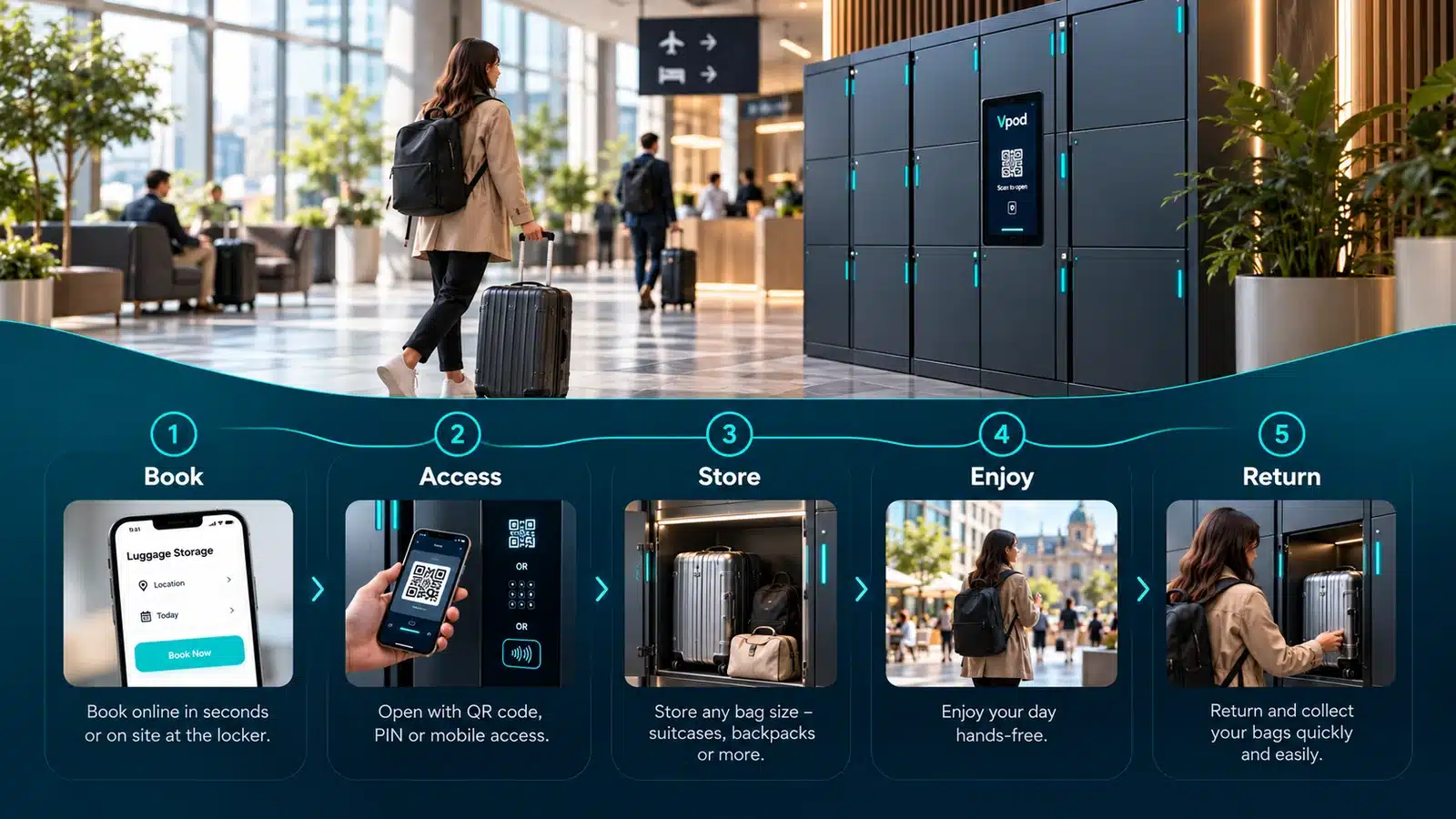
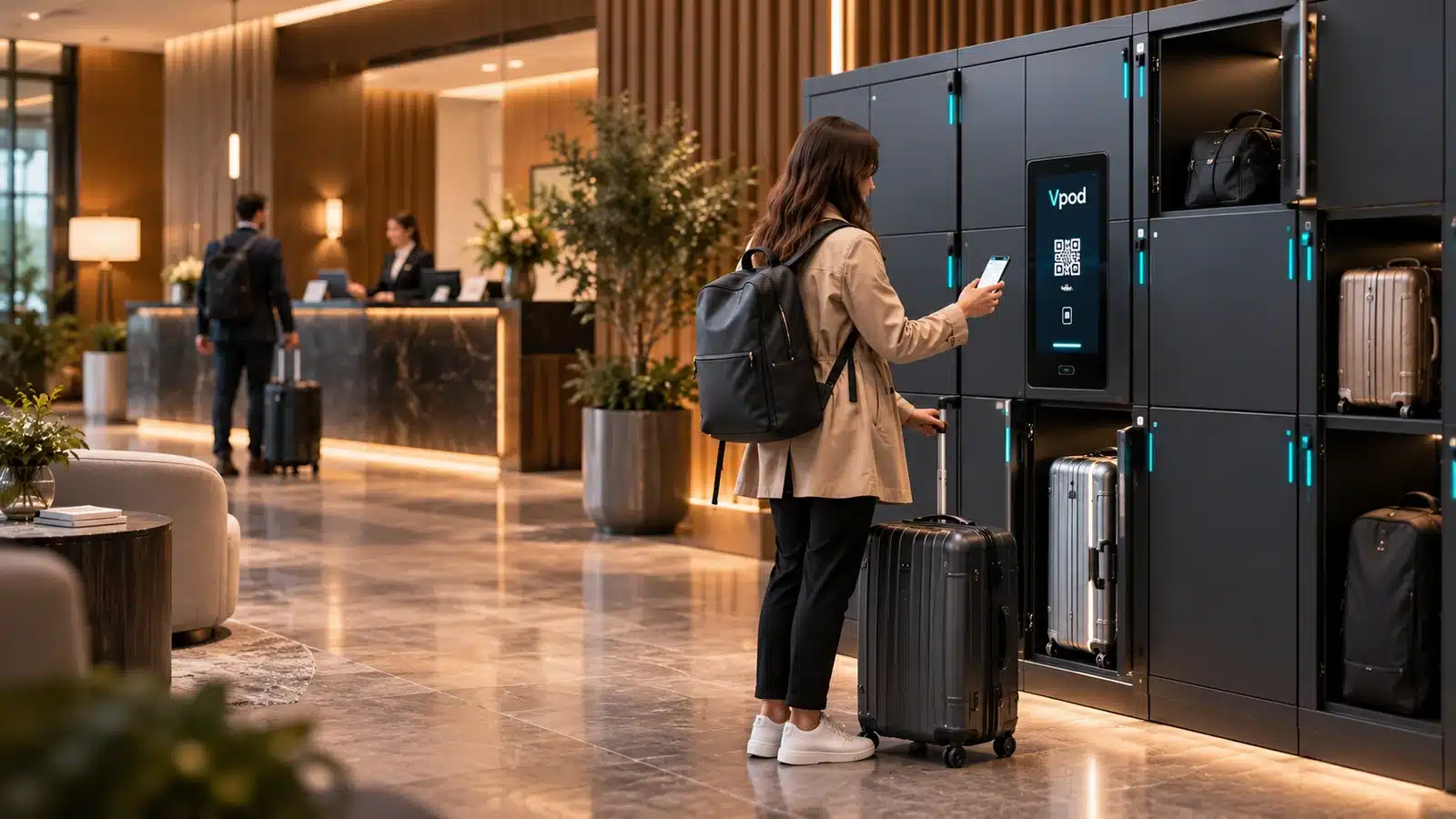
A family might need a large compartment for two suitcases plus a separate smaller door for backpacks, while one solo traveller may need only a compact door. Test real luggage combinations instead of assuming a fixed ratio of guests to lockers.
Not every item fits a standard locker. Account for unusually large cases, bulky sports equipment, pushchairs, damaged wheels, loose straps and luggage that cannot safely be lifted.
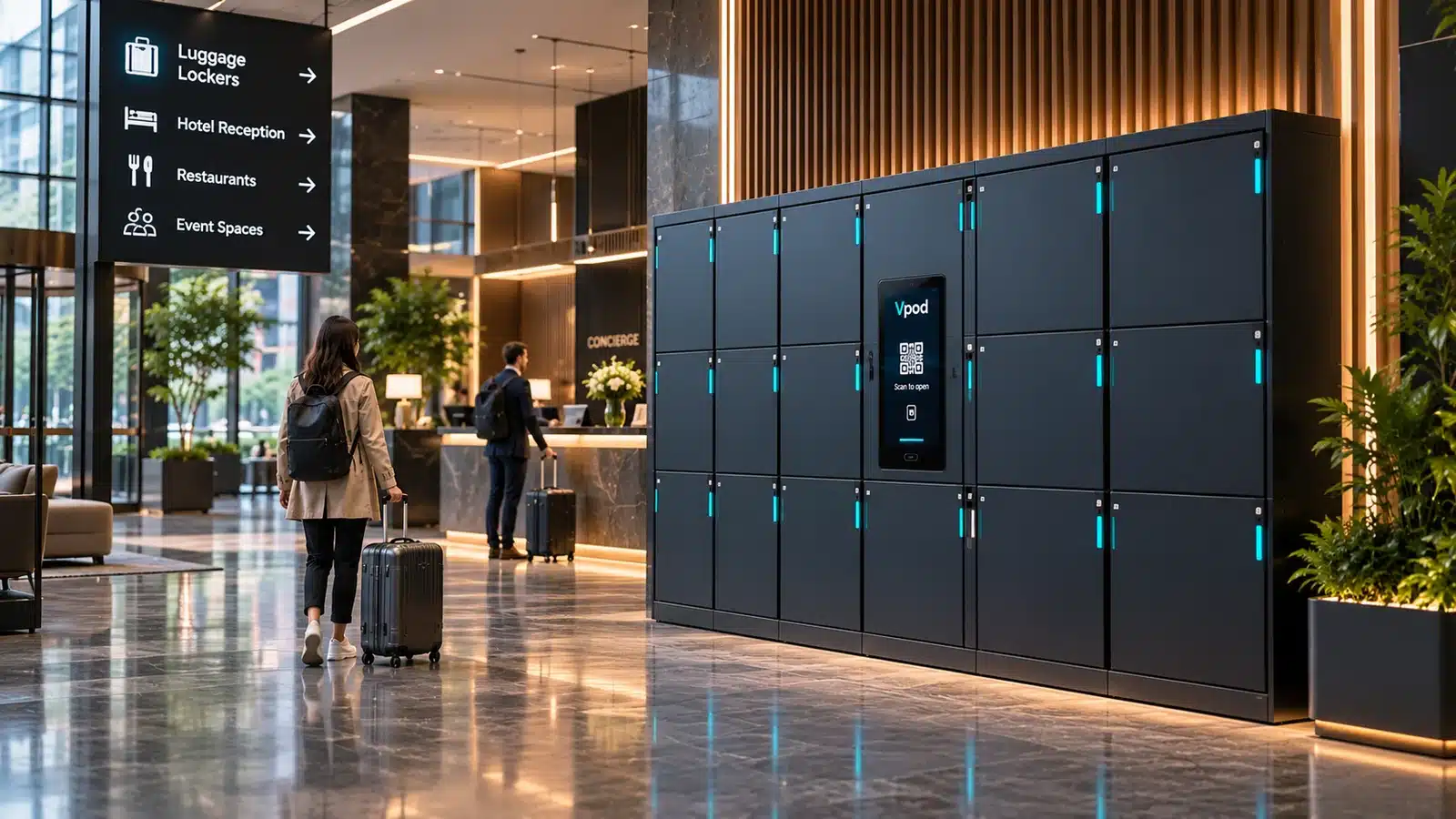
These deployments illustrate different operating scales. Door count is an outcome of each site's requirements, not a template to copy unchanged.
Connected hotel luggage lockers with mixed compartment sizes and a self-service guest journey.
View Ibis Geneva case study ↗Hostel deployment supporting arrivals and departures through self-service luggage storage.
View Ostello Bello case study ↗Lockers across London Central and Thameside, serving guest baggage outside room access times.
View YHA case study ↗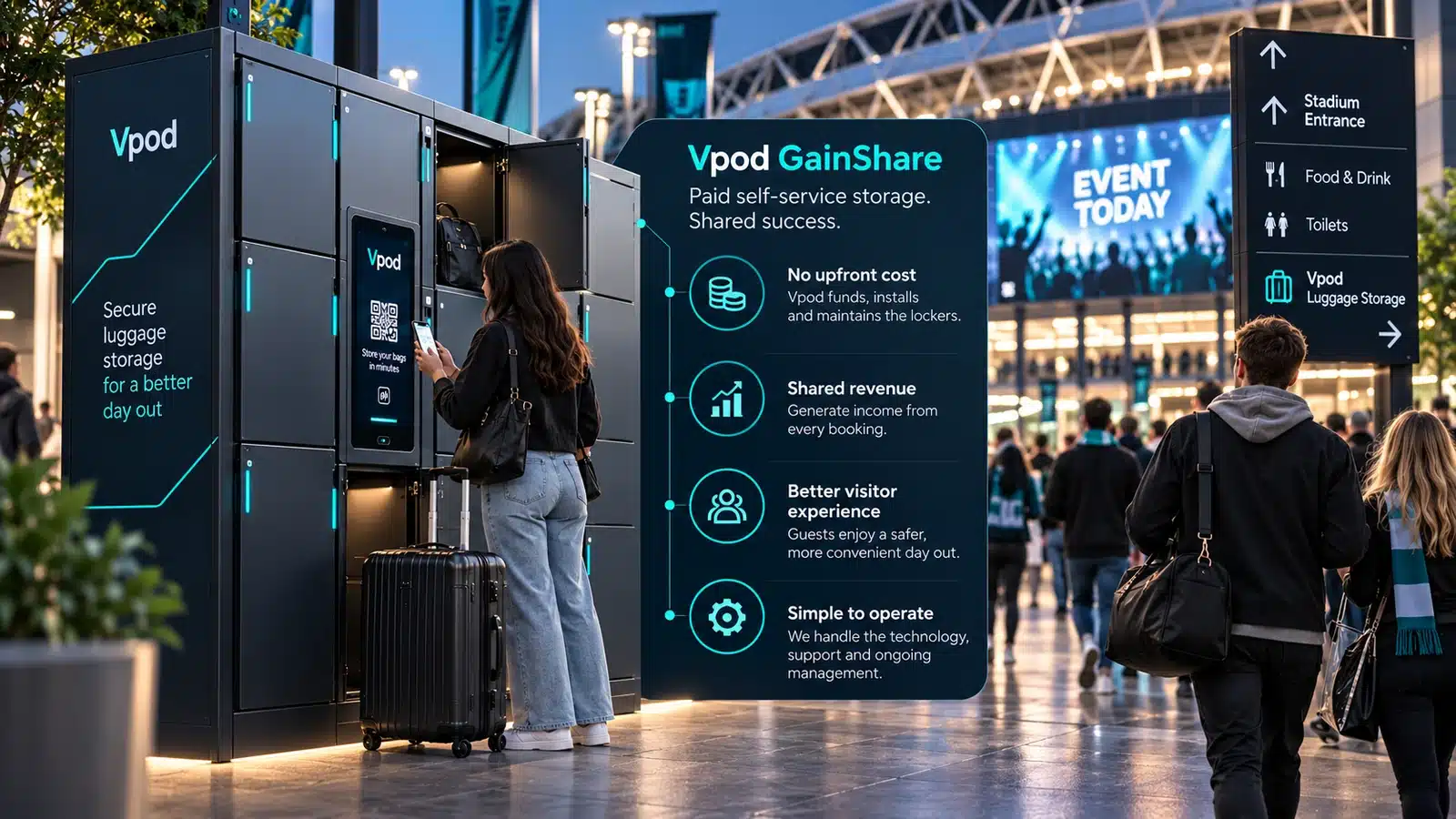
For arenas, attractions and busy leisure environments, locker count and mix should be planned alongside perimeter location, screening, payment, circulation and collection throughput. Qualifying paid-storage venues may also explore Vpod GainShare.
Use the official Vpod videos alongside the Ibis, Ostello Bello, YHA and attraction deployment case studies to understand self-service operation, guest arrival, storage and retrieval.
Official channel link; no unverified embedded player.
Bring your expected bag mix, arrival peaks and dwell-time assumptions to Vpod. Review the configuration, layout, access journey and service model before committing to a locker count.