






What Is Visitor Congestion in Attractions?
Visitor congestion occurs when:
- Too many people occupy a space
- Movement becomes restricted
- Waiting replaces flow
This typically happens in:
- Entrance areas
- Security and ticketing zones
- Popular attractions or rides
- Food and retail areas
- Corridors and walkways
The result:
- Slow movement
- Queue build-up
- Overcrowding
Why Visitor Congestion Increases at Scale
1. Demand Is Concentrated, Not Even
Attractions experience:
- Opening-time surges
- Peak midday traffic
- Event or seasonal spikes
This creates:
- Large volumes of visitors at once
- Immediate pressure on space and systems
Visitors arrive in waves, not a steady flow.
Why Ingress Delays Events at Scale (And Why Most Systems Fail)
2. Bottlenecks Limit Throughput
Every attraction has constraints:
- Entry gates
- Security checkpoints
- Ride capacity
- Narrow walkways
When demand exceeds capacity:
- Queues form
- Congestion spreads
Why Perimeter Security Crowd Risk Breaks at Scale | Event Security Flow
3. Popular Zones Attract Disproportionate Traffic
Certain areas receive:
- Higher footfall
- Longer dwell times
This leads to:
- Localised congestion
- Imbalanced crowd distribution
4. Manual Processes Slow Movement
Many attractions rely on:
- Staff checks
- Ticket scanning
- Bag inspections
These processes:
- Take time per visitor
- Limit throughput
- Create queues
Why Bag Checks Delay Security at Scale | Reduce Event Entry Bottlenecks
5. Space Is Not Designed for Waiting
Attractions are designed for:
- Flow
- Circulation
- Experience
Not for:
- Large stationary crowds
This leads to:
- Blocked pathways
- Congestion spillover
- Disrupted movement
6. Small Delays Compound Quickly
Even minor delays:
- Add seconds per visitor
- Increase queue length
- Slow overall flow
At scale, small inefficiencies create major congestion.

The Hidden Cost Multipliers
Cost Per Collection Increases
Operational Pressure Grows
Time Becomes a Bottleneck
ustomer Experience Suffers
Visitor Congestion Risks: The Key Issues
The Core Problem: Visitor Flow Depends on Throughput
Visitor congestion rarely happens because of a single busy period.
It occurs when increasing visitor volumes, bottlenecks, and limited processing capacity create pressure on key areas and disrupt the flow of people through an attraction.
1. Entry Bottlenecks Slow Visitor Flow
Entrance gates, ticket checks, and security screening can quickly become overwhelmed during peak arrival periods.
Impact: Longer queues, slower entry times, and increased congestion.
2. High-Demand Areas Create Crowding
Popular rides, attractions, food outlets, and retail zones attract large volumes of visitors at the same time.
Impact: Localised congestion, restricted movement, and reduced visitor experience.
Cloakroom vs Locker for Event Security
3. Manual Processes Reduce Throughput
Bag checks, ticket scanning, and other staff-dependent processes slow the movement of visitors through key touchpoints.
Impact: Reduced capacity, increased waiting times, and operational inefficiencies.
Event Storage Solutions | Cloakrooms vs Lockers vs Bag Policies
4. Poor Tracking Delays Issue Resolution
Unauthorised access is often discovered long after equipment has been used, moved, or removed.
Impact: Investigations take longer and accountability becomes harder to establish.
Why Traditional Congestion Management Approaches Fail
Peak Demand Creates Immediate Congestion
As organisations grow, equipment is accessed more frequently, by more users, across more locations. Without enforced controls, key access points quickly become unmanaged.
Common issues include:
- Untracked equipment usage
- Shared storage accessed without permission
- Unclear ownership and responsibility
- Increased risk of loss and misuse
Manual Processes Make Access Impossible to Control
Relying on sign-out sheets, shared keys, and trust-based procedures creates significant gaps in equipment control at scale.
Challenges include:
- No verification of who accessed equipment
- Incomplete and unreliable access records
- Difficulty investigating missing or misused assets
- Higher administrative workload for operations team
Fixed Capacity Limits Flow
Attractions can only process a limited number of visitors through entrances, rides, retail areas, and security checkpoints at one time.
This results in:
- Bottlenecks during peak periods
- Reduced capacity efficiency
- Overcrowded visitor zones
- A poorer guest experience
How Smart Lockers Reduce Visitor Congestion
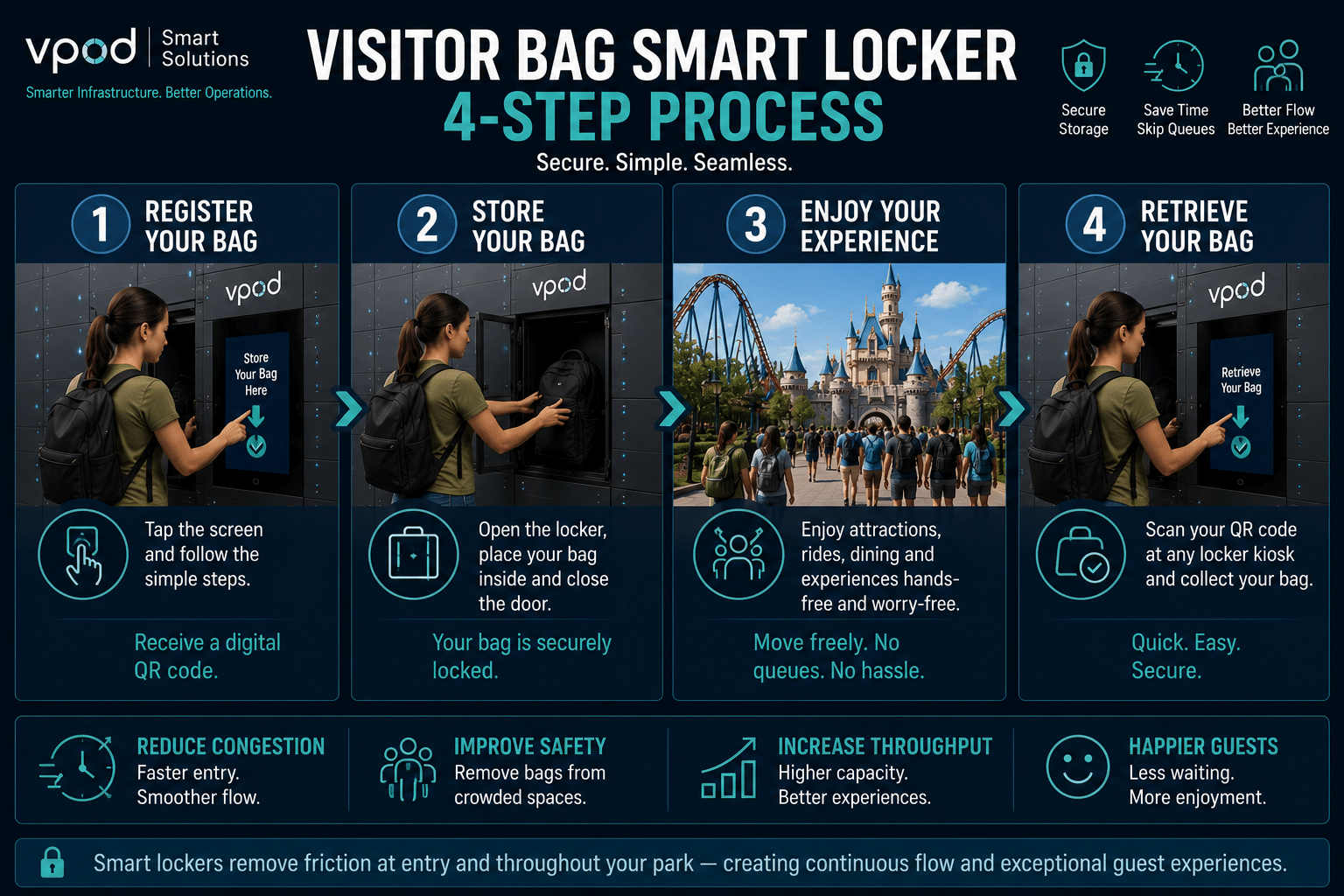
Smart locker systems help improve visitor flow by removing key bottlenecks before they create congestion.
Benefits include:
- Reduced bag-related delays
- Faster security processing
- Improved visitor throughput
- Less congestion at entrances
- Reduced cloakroom queues
- Better crowd flow management
By removing storage-related friction and reducing pressure on high-traffic areas, smart lockers help attractions improve flow, reduce queues, and create a smoother visitor experience at scale.
How Smart Locker Equipment Access Control Works
Traditional Visitor Management vs Smart Locker Systems




Case Study: Ziggo Dome & VPOD
How Skyscanner Eliminated Unauthorised Equipment Access Across Multiple Sites
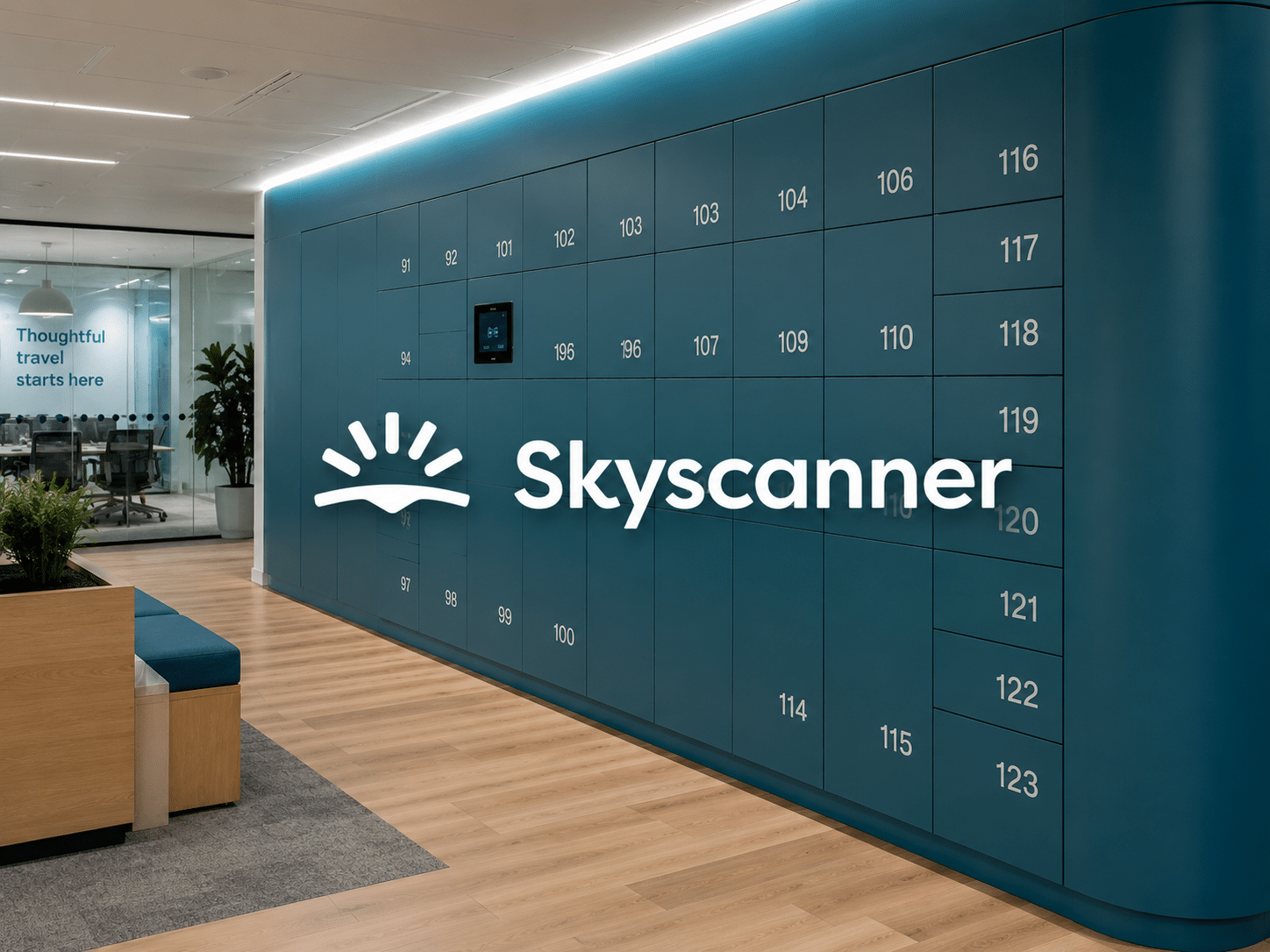
Skyscanner deployed Vpod smart lockers across its Edinburgh and Glasgow offices to replace uncontrolled, open-access storage. The system introduced verified, identity-based access control — eliminating unauthorised access, reducing administrative burden, and providing real-time visibility across all locations.
Results Include:
- Unauthorised equipment access eliminated
- Verified user access enforced at every locker
- Remote locker management across multiple sites
- Reduced administrative workload for workplace teams
- Improved space utilisation and equipment visibility
- Scalable access control aligned to hybrid working
Who Is Affected by Visitor Congestion?
Operations & Venue Management Teams / Visitors & Guests
Operations & Venue Management Teams
Key Challenges
- Managing visitor flow efficiently
- Reducing queue build-up during peak periods
- Maintaining throughput across key attraction areas
- Improving capacity utilisation
- Supporting safe crowd movement
Operational Pain Points
- Congestion at high-traffic locations
- Pressure on operational teams
- Reduced throughput and efficiency
- Managing crowd-related complaints
- Difficulty maintaining smooth visitor flow